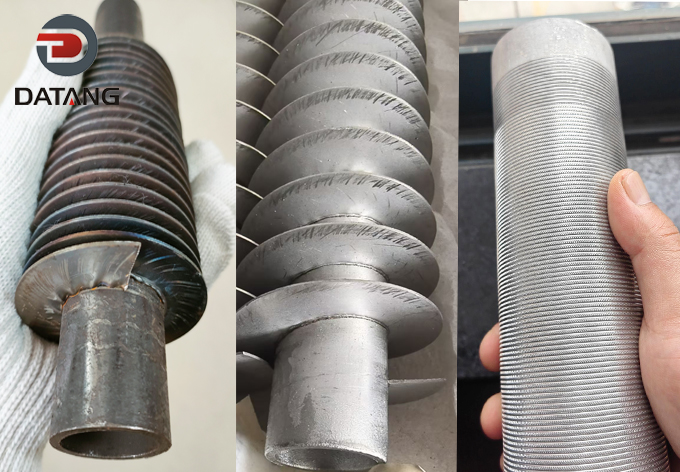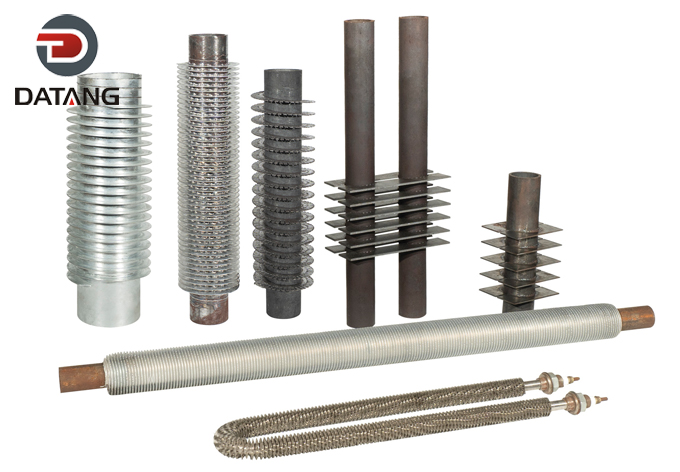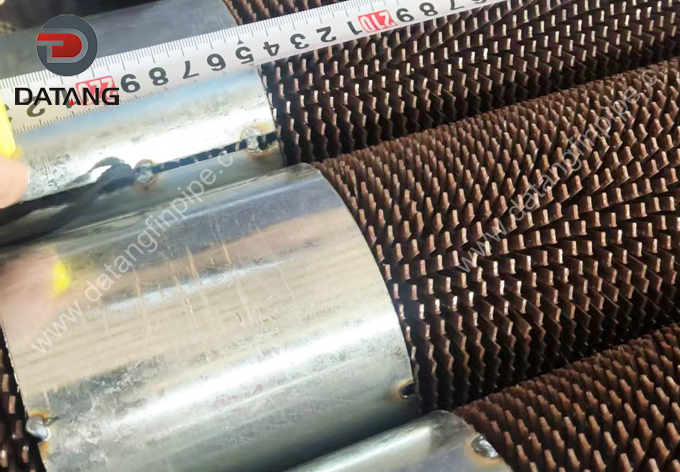


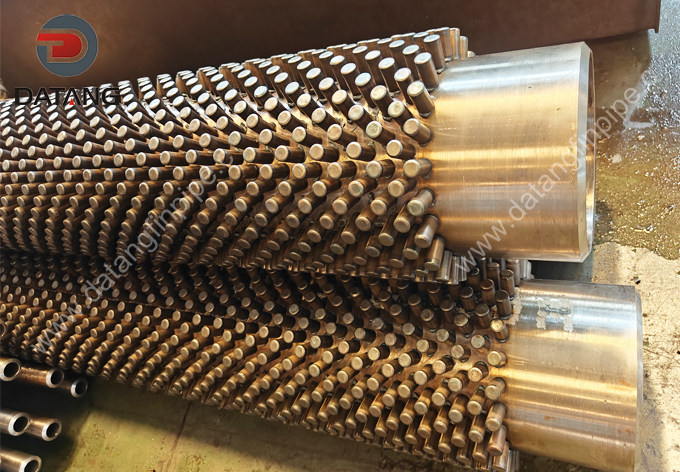
- Studded tubes, as high-efficiency enhanced heat transfer elements, are widely used in industrial scenarios such as waste heat boiler economizers, petrochemical fired heaters, power generation equipment, incinerators, and heavy oil hydroprocessing units in refineries. They consist of a base tube with high-density cylindrical metal studs welded onto its surface, typically using resistance welding or similar processes. Compared to bare tubes, studded tubes can increase the heat transfer area by 2 to 3 times, while the cylindrical studs aggressively disrupt the fluid boundary layer, significantly boosting heat exchange efficiency.
Given that studded tubes are primarily used in demanding petrochemical, boiler, and heat exchanger environments where heat transfer efficiency and pressure resistance are critical, it is essential to comprehensively evaluate suppliers across five core dimensions during procurement: operating condition compatibility, material selection, welding processes, geometric parameters, and quality control.
Clearly Define Application Scenarios and Operating Conditions
Because studded tubes enhance heat transfer efficiency by expanding surface area, it is essential to define the specific operating conditions prior to procurement:
-
Fired Heater Convection Sections: Used to intensify external heat transfer. With a surface area 2 to 3 times that of bare tubes, a properly designed setup can match the heat flux intensity of the radiant section.
-
Boiler Economizers: Must withstand high-temperature environments (400–600°C) and abrasive, particulate-laden flue gas.
-
Chemical Heat Exchangers: When exposed to corrosive media such as acids or alkalis, stud density must be adjusted according to corrosion severity, and corrosion-resistant materials (e.g., 316L stainless steel) should be selected.
-
Waste Heat Recovery & Marine Power Systems: Must optimize the utilization of low-grade thermal energy while ensuring strong resistance to flow-induced vibration in high-turbulence environments.
Studded Tubes Material Matching (Base Tube & Studs)
When selecting materials, the stud material must match the base tube in terms of thermal expansion coefficient and weld compatibility, while satisfying requirements for operating temperature and corrosion resistance:
| Application | Recommended Base Tube | Recommended Stud Material | Key Features |
| Standard Low/Mid Pressure (Non-corrosive) Temperatures ≤600℃ | Grade 20 Carbon Steel, ASTM A179 | Q235, Grade 20 Steel(Pressures ≤16MPa) | Cost-effective, high thermal conductivity |
| Mid/High Pressure (Mid-Temp Heaters) | 15CrMoG, 12Cr1MoVG, ASTM A335 P11/P22 | 15CrMo, P11 | High-temperature creep resistance, anti-hydrogenation |
| Severe Corrosion / High-Sulfur & Wet,Temperatures ≤800℃ | 304/304L, 316/316L | 304, 316 | Excellent corrosion and oxidation resistance |
| Extreme High-Temp / Refractory Environments | HK40, Cr25Ni20 | Cr25Ni20 (310S) | High-temperature resistance (>900°C), anti-coking |
Studded Tubes-Welding Process
Welding integrity directly dictates the service life, heat transfer efficiency, and operational safety of studded tubes. Cold welds (lack of fusion) or insufficient fusion area drastically increase thermal resistance and make studs prone to detachment under high-temperature thermal stress.
-
Welding Standard: Industry procurement typically adheres to SH/T 3422-2011 Technical Specification for Studded Tubes of Fired Heaters in Petrochemical Industry.
-
Fusion Ratio Requirement: The ratio of the welded fusion area between the stud and the base tube to the cross-sectional area of the stud (weld fusion rate) must be no less than 90%.
-
Process Control: Resistance welding (RW) or Argon Arc Welding (TIG) are predominantly used. These processes feature a small Heat-Affected Zone (HAZ), high joint bonding rate, and uniform weld points. The weld reinforcement height must be ≤ 1 mm with zero spatter.
Studded Finned Tubes Quality Inspection
During procurement acceptance, the manufacturer must provide a Material Test Certificate (MTC) along with the following verified inspection reports:
-
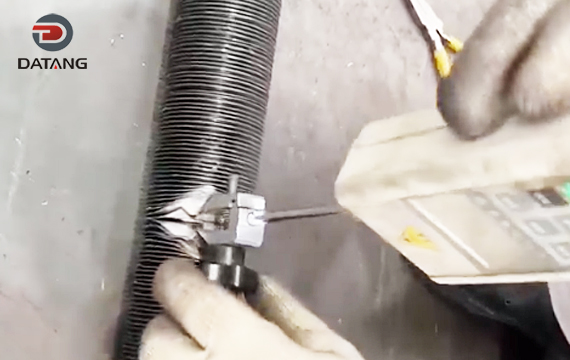
Non-Destructive Testing (NDT): The bevel ends of the base tube require 100% Magnetic Particle Testing (MT) or Liquid Penetrant Testing (PT), with an evaluation grade reaching Class I qualification.
-
Tensile & Bend Testing: During random sampling inspections, studs are subjected to a 90° bend test or a tensile pull-off test. The specimen passes only if failure/fracture occurs in the base metal or the stud body while the weld seam remains completely intact without cracking.
-
Dimensional & Straightness Inspection: Check the tube straightness (overall straightness deviation is typically required to be $\le$ 1.5 mm/m) and verify the unstudded bare length at the tube ends (to facilitate subsequent field butt-welding).
-
Rust Prevention & End Protection: Since tube ends are highly vulnerable to damage during transport, plastic protective end caps must be installed on both ends, and the tube body must be coated with weldable anti-rust oil.
Stud Pipes Geometric Parameters
Select appropriate geometric parameters based on the velocity, properties, and dust/particulate content of the flue gas or fluid medium:
-
Stud Shape & Dimensions: Round cylindrical studs are most common (typically 10–12 mm in diameter and 15–25 mm in height), though flat or rectangular studs are also specified for certain specialized conditions. To prevent ash bridging and maintain adequate flue gas passage, the minimum center-to-center or edge-to-edge spacing between studs is generally kept at ≥ 15–16 mm. Specific dimensions should be customized according to heat transfer requirements.
-
Layout Pattern (In-Line vs. Staggered):
-
Staggered: Delivers superior flow turbulence and higher heat transfer efficiency; best suited for clean, particulate-free media.
-
In-Line: Offers lower fluid pressure drop, minimizes ash accumulation, and facilitates sootblower cleaning, making it ideal for high-dust flue gas environments.
-
-
Pitch & Row Spacing: Increasing stud density expands the thermal surface area, but it also causes a significant increase in fluid pressure drop (resistance). A balanced thermal design must be calculated against the available static pressure allowance of system fans or pumps.
Note: A square or hexagonal uniform arrangement provides a more even flow field disturbance, maximizing the effective heat exchange surface area.
Conclusion & Recommendations
Prior to procuring studded tubes, it is recommended to request product samples for destructive testing (e.g., strike/hammer testing to verify weld joint integrity) and to audit the supplier’s manufacturing process flow diagram and quality inspection reports. This ensures that the final delivered products fully satisfy the requirements for long-term, high-efficiency operation.