


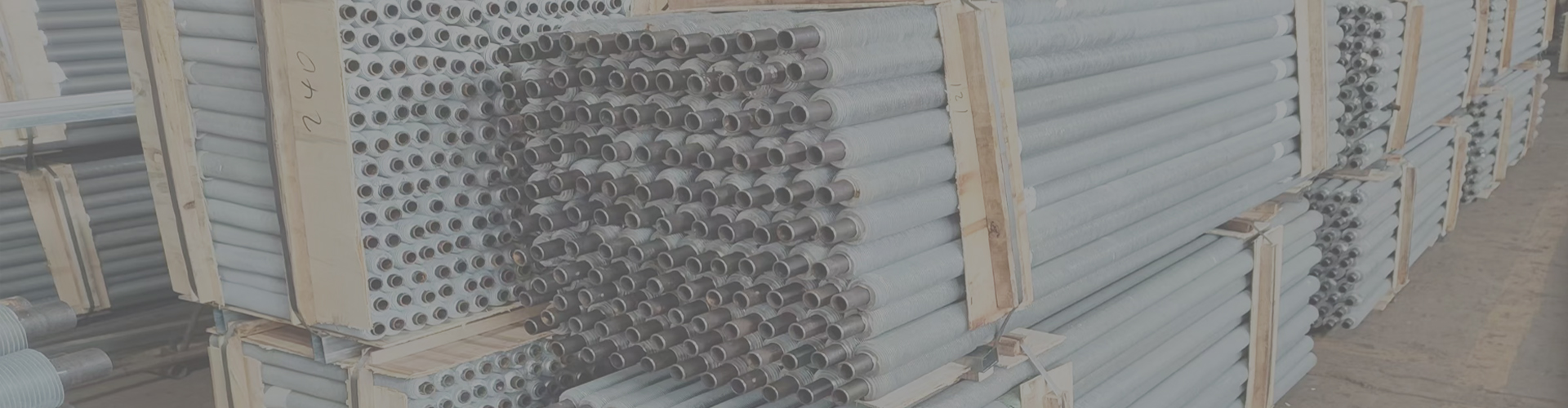
Extruded Finned Tubes(Bimetallic) for Industrial Heat Transfer
- The steel-aluminum composite extruded fin tube is rolled from an aluminum tube and a steel tube.
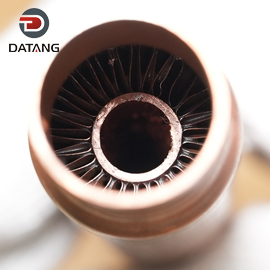
- The extruded finned tubes adopt the form of a base tube sleeved with an aluminum tube. The aluminum tube is tightly sleeved on the base tube and is extruded by a machine to form fins. The base of the fin fits tightly with the outer wall of the tube.
- Bimetallic finned tube is a wear-resistant, new and efficient hot-drying raw material. It will not break or melt at high temperatures.Extruded fin tubes are also commonly called bimetallic fin tubes when the outer fin layer and inner base tube are made from different metals.
Extruded Fin Tube | Bimetallic Finned Tube Supplier in China Factory
Datang supplies extruded fin tubes for industrial heat transfer applications. Our extruded fin tubes feature integral fins formed from an outer metal sleeve fitted over a base tube, creating a close mechanical bond between the fin layer and the tube.
We offer customizable tube dimensions, fin geometry and material combinations to meet different equipment requirements. Whether you are sourcing finned tubes for a new project or replacing existing components, our team can review your drawings and specifications to help identify a suitable configuration.
Extruded Fin Tube Construction
Base Tube → Aluminum Outer Sleeve → Cold Extrusion → Integral Fins
How to Fabricate the Extruded Aluminum Fin Tube?
Insert tube into the aluminum muff tube–>compressing or rolling–>strip peeling–>washing–pressure test–>blast blowing–>packaging.
Extruded Finned Tube Specification
| Bimetallic Extruded Fin Tube Size and Material | ||
| Tube OD | 10~60 (mm) | 0.4”~2.4” |
| Tube Wall Thk | 1.65~3.0 (mm) | 0.065”~0.118” |
| Tube Length | ≤18,500 (mm) | ≤60.7 ft |
| Fin Thk | 0.3~1.2 (mm) | 0.012”~0.047” |
| Fin Height | 5~16 (mm) | 0.2”~0.63” |
| Fin Pitch | 2.3~5.0 (mm) | 5 ~ 11 FPI |
| Fin Type | Extruded | |
| Material Combinations | ||
| Fin Material | Aluminum (most common grade:Alu.1100, Alu.1060, Alu. 6063) | |
| Copper | ||
| Tube Material | C.S. (most common grade: A179, A192,SA210 GrA1/C,A106 Gr B ) | |
| S.S. (most common grade: TP304, 316, 321, 347,A789) | ||
| Copper (most common grade:UNS12200,14200, 70600, CuNi70/30, CuNi 90/10) | ||
| Titanium (most common grade: B338Gr2) | ||
| Applied Temperature | 300°C | |
| Tube-to-Fin Bond | Mechanical bond formed by extrusion | |
| Type of Service | Medium temperature, severe atmospheric corrosive environment. | |
High-quality Extruded Fin Tubes Made From SA179/SA192 with ISO Certified. Request a Quick Quote Today!
Technical Note: Achievable dimensions depend on the selected base tube, fin material, and extrusion process. Please consult with our technical team to confirm your specific combination of specifications before placing an order.
Need non-standard specifications?
Please provide the required tube dimensions, fin geometry, material grade, tube length, and quantity. Our team will evaluate your requirements and confirm their manufacturing feasibility.
Quality Control for Extruded Fin Tube | Bimetallic Finned Tube
Bimetallic extruded finned tubes are key components in air-cooled heat exchangers and other heat transfer equipment. Their quality directly affects heat transfer performance, operating safety, and service life.
At Datang, quality control covers every stage of production, from raw material inspection and process monitoring to finished product testing and final inspection before shipment.
Depending on the product specifications and testing requirements, finished extruded fin tubes are assured by hydrostatic or pneumatic testing, eddy current testing and tensile testing to verify the mechanical bond between the inner tube and the outer fins.
Delivery Condition:
Tube ends are square cut, free burrs, internally dried and air blown clean, externally coated with Anti-rust at both ends of extruded fin tube.
Bimetallic Extruded Fin Tubes Types
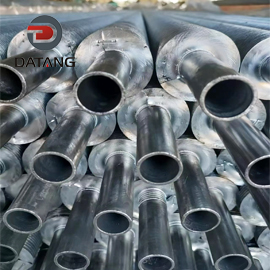
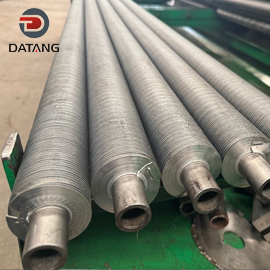
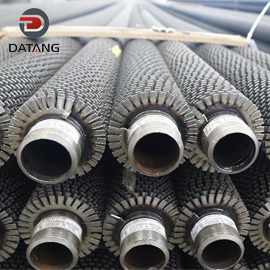
Extruded finned tubes can be classified by material configuration and fin shape. By material configuration, they are available as single-metal (integral) and bimetallic finned tubes. By fin shape, they can be classified as smooth spiral or serrated (helical-serrated) extruded fin tubes.

The base tube is made of stainless steel tube(Most common grade: TP304, 316, 321, 347,A789),the fins aluminum strips(Alu.1100,Alu.1060,Alu.6063)

ASTM A179 tube aluminum fin composited extruded finned tube is a high-efficiency heat transfer tube that combines aluminum fins
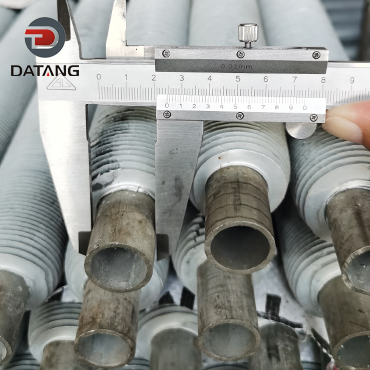
The base tube is made of carbon steel tube(Most common grade: A179, A192,SA210 GrA1/C,A106 Gr B),the fins aluminum strips(Alu.1100,Alu.1060,Alu.6063)
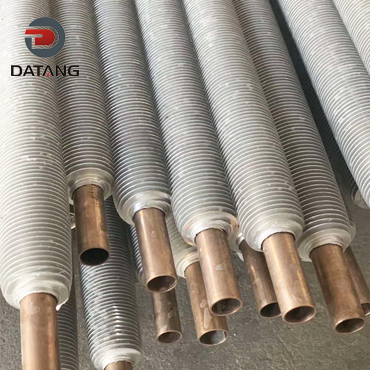
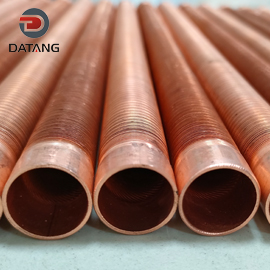
The base tube is made of copper(Most common grade:UNS12200,14200, 70600, CuNi70/30, CuNi 90/10),the fins aluminum strips(Alu.1100,Alu.1060,Alu.6063)

The base tube is made of copper(Most common grade:UNS12200,14200, 70600, CuNi70/30, CuNi 90/10),the fins copper.

The serrated extruded finned tube, through its integrated molding process and serrated fin design, improves heat exchange efficiency by 25%-40% and has a lifespan of 8-12 years.
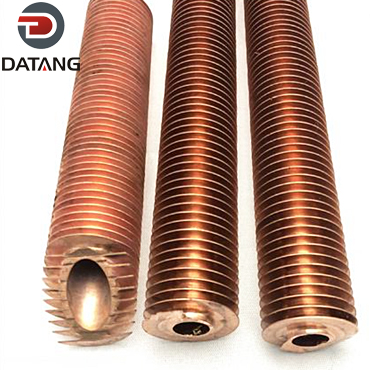
Extruded coper fin ubes are high-effclency heat exchanger tubes,its heat transfer effciency is increased by 20% to 30% compared to traditional welded or tension -wound finned tubes.
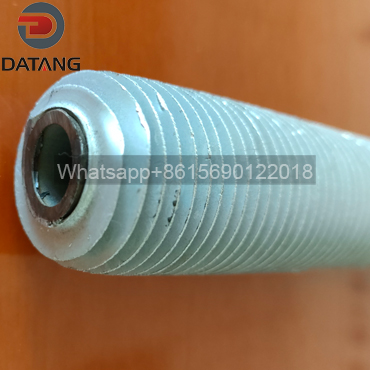
ASTM A213 T11 extruded bimetallic finned tubes combine T11 steel high-pressure tolerance with extruded aluminum fins for superior heat dissipation and corrosion resistance.
Extruded Fin Tube | Bimetallic Finned Tube By Industy
Steel-aluminum extruded fin tubes are widely used in various industrial fields such as refrigeration, air conditioning, petrochemical, and electric power. For example, in the refrigeration industry, finned tubes are often used as heat exchange elements for equipment such as evaporators and condensers; in the petrochemical industry, finned tubes are used for heat exchange in heating, cooling, condensation and other processes; in the electric power industry, finned tubes are used in heat exchange systems in equipment such as boilers, steam turbines, and generators.
Such as Air Cooler,Air preheater,Charge Air Chiller, Condenser,Evaporator, Fluid Cooler, Gas Cooler,Oil Cooler, Radiator, Refrigeration,Steam to Air Heat Exchanger etc.In addition,extruded fin tubes also play an important role in metallurgy,machinery,food and other industries.


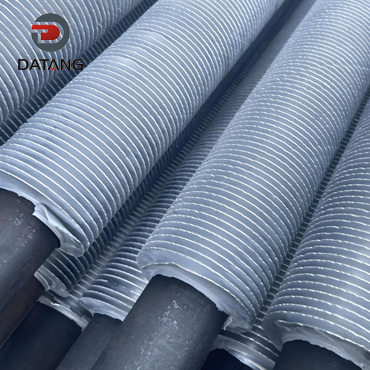
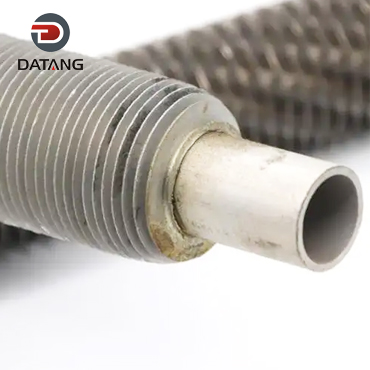
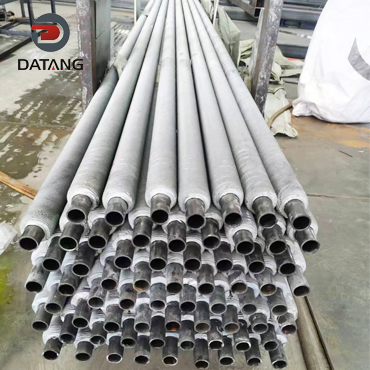


Extruded Aluminum Fin Tube Advantages
Datang offers the widest variety of sizes available for extruded fin tube in the industry.
1. 100% fin-to-tube bond providing exceptional efficiency and longevity.
2. Excellent corrosion protection on the base tube.
3. Easy to clean with a high-pressure water jet without deforming the fins.
4. As the outer sleeve is continuous No galvanic corrosion between the tube and fins.
5. The bonding of the outer and inner tubes removes the risk of loss of contact with the aluminium due to thermal stress and fins are vibration resistant.
6. Higher heat transfer performance for the life of the unit.
7. Extruded Fin tubes are commonly used in applications with temperature up to 325 °c.

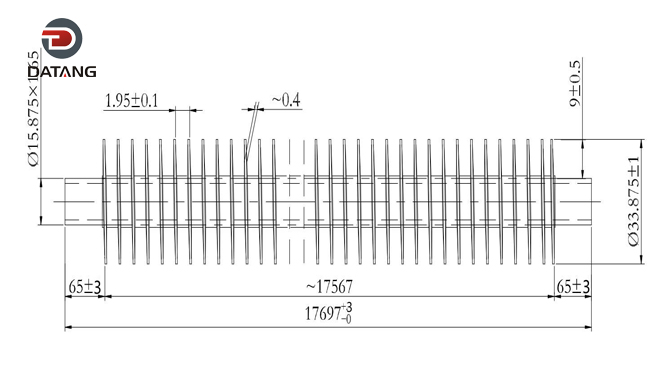
Customizable Extruded Fin Tube | Bimetallic Finned Tube
We can customize the material, specification and length according to your requirements.Solve your problems anytime and anywhere. Customize fin tubes and equipment according to your needs. Provide free technical guidance. Welcome to customize with drawings, so that you can purchase without worries.
Differences Between Extruded Fin Tubes and Aluminum Wound Fin Tubes
The structure of extruded fin tubes is usually more compact, and the connection between the fins and the base tube is more solid, which makes it excellent in heat dissipation performance and has higher mechanical strength.
The structure of aluminum-wound fin tubes is looser, and the connection between the fins and the base tube is relatively weak, but this also makes it more flexible.

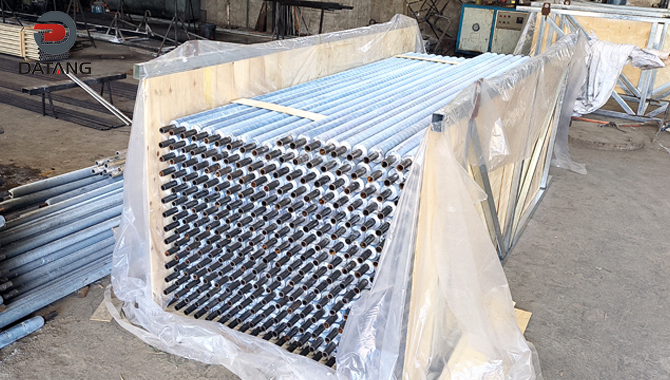
Extruded Fin Tube Package
Payment Terms:T/T, LC
Delivery: 15-30 days after payment
Marking: Standard + Steel Grade + Size + Heat No + Lot No
Package: Iron frame packing boxes and the desiccants are put into each package for continental transportation as well. or as required
Extruded Finned Tube Quality Checks

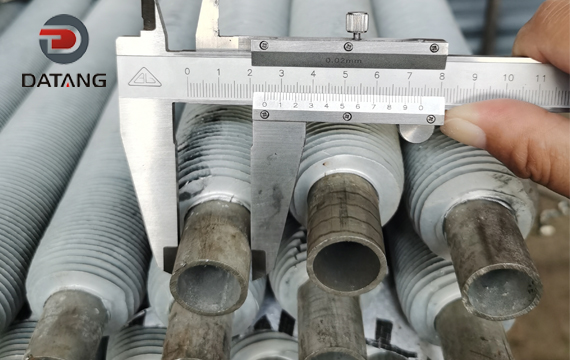

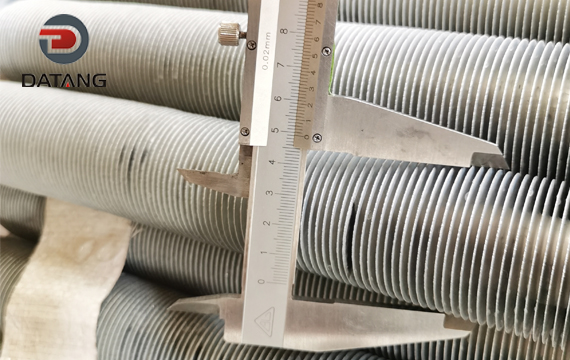


Each of our extruded fin tube is subjected to stringent quality checks.Inspection and Tests Performed:
1.Chemical Composition inspection.
2.Mechanical Properties Test(Tensile Strength, Yield Strength, Elongation, Flaring, Flattening, Hardness, Impact Test).
3.Surface and Dimension Test.
4.No-destructive Test.
5.Hydrostatic Test.
Case Study

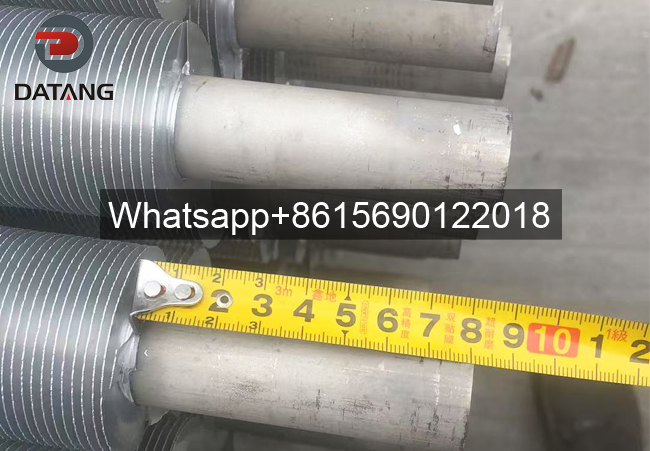
Case Study: 15.875×1.65x17697mm bimetal extruded fin tubes custom-made by Datang for Pakistan. Zero thermal resistance & full QA/QC loading video inside. Backed by 19 years of expertise and CNAS-certified testing, our premium tubes guarantee exceptional heat transfer efficiency and long-term reliability.
Boosting Efficiency with High-Performance Extruded Fin Tubes
When our client from Singapore approached us, they faced a critical challenge: their existing heat exchange equipment was inefficient, leading to escalating energy consumption and higher operational costs. They needed a solution that could maximize heat transfer within their current system constraints.

Tired of frequent downtime caused by corroded fin tubes? Read this case study to see how Datang’s robust extruded aluminum finned tubes saved a major Pakistan paper manufacturing plant from high maintenance costs. Discover how our 19 years of industry expertise and premium materials deliver lasting reliability and efficiency for your critical operations.
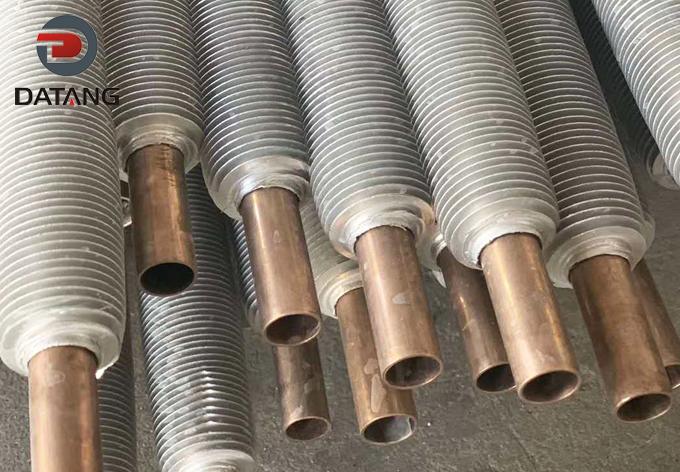
Discover how our custom air cooled heat exchangers with copper-aluminum extruded fin tubes optimized cooling for an Algerian refinery. Operating in intense desert heat, high-strength extruded fins completely shield inner copper tubes from sandstorms, boosting cooling capacity by 20% and maintaining maximum processing throughput during punishing peak-temperature months.

Recently, a valued client from Turkey ordered 1,860 pieces of high-precision extruded fin tubes (Fin OD: 57mm, Fin Pitch: 2.3mm). Discover how Datang Finned Tube delivered 1,860 high-precision extruded fin tubes to Turkey with 100% visible quality control and zero risk.
Extruded Fin Tube | Bimetallic Finned Tube Application

Cooling oil radiators element of the Extruded fin tubes.It can transfer heat quickly and improve the efficiency of thermal energy utilization.
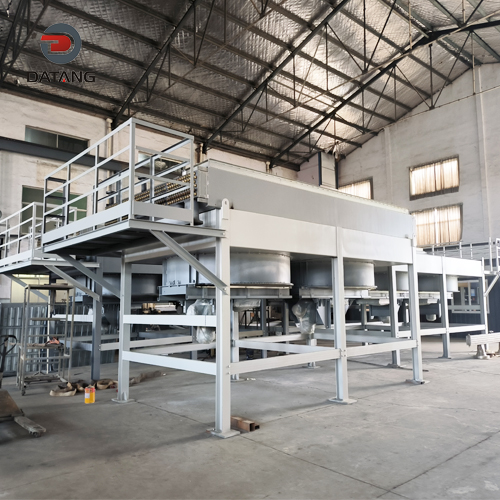
The main advantages of Extruded fin tubes for refinery air coolers include high efficiency, corrosion resistance, low noise, energy saving and environmental protection.

Extruded fin tubes for drying radiators,The extrusion process ensures a tight connection between the fins and the tube body, thereby greatly increasing the heat dissipation area and significantly improving the heat exchange efficiency. This design allows heat to be transferred to the material faster and improves drying efficiency

Extruded finned tubes for waste heat recovery equipment,aluminum extruded fin tubes have the characteristics of high heat transfer performance and low thermal resistance, which can quickly absorb and dissipate heat, further improving the heat exchange efficiency.

Extruded finned tubes for heat exchangers in food factories,The steel-aluminum extruded finned tube adopts a compact structure design, which can achieve efficient heat exchange in a limited space. At the same time, its compact structure is also easy to install and maintain.

Extruded finned tubes for milk pasteurization heat exchangers,extruded spiral fin tubes have excellent thermal conductivity and corrosion resistance, and can operate stably for a long time in harsh working environments.

Extruded fin tubes for thermal oil heat exchangers,aluminum fins have good thermal conductivity and can effectively transfer heat from the inside of the tube to the outside of the tube, thereby improving heat exchange efficiency. At the same time, the design of the fins can increase the heat exchange area and further improve the heat exchange performance.
Material selection affects corrosion resistance, mechanical properties, thermal expansion, and suitability for the intended operating conditions.
1.Steel Base Tube + 1060 Aluminum Fins
Carbon steel base tubes with 1060 aluminum fins are a common and cost-effective choice for industrial heat transfer applications. They are suitable for low- to medium-temperature service, including hot water systems, low-pressure steam, air heating, drying rooms, and workshop heating.
2.Steel Base Tube + 3003 Aluminum Fins
This combination is suitable for air heat exchangers operating in humid environments or under mildly corrosive conditions. It is also a practical option for equipment designed for continuous operation.
3.Stainless Steel Base Tube + Aluminum Fins
A stainless steel base tube can be used when the process fluid is more corrosive or when the application requires specific corrosion resistance or material compatibility. However, the aluminum fins still need to be protected from strongly corrosive environments.
4.Copper Base Tube + Aluminum or Copper Fins
Copper offers excellent thermal conductivity, but it comes at a higher material cost. This combination is mainly used in compact heat exchangers and specialized applications where thermal performance is a priority.
Need a custom bimetallic extruded fin tube?
Please provide your required material grades and operating conditions. Datang can review your requirements and recommend a suitable tube construction for your application.
Extruded finned tubes and L-footed finned tubes use different fin attachment methods, making them suitable for different operating conditions.The table below compares their key features to help you choose the right option for your application.
| Comparison | Extruded Bimetallic Finned Tubes | L-Footed Finned Tubes |
|---|---|---|
| Drawing | 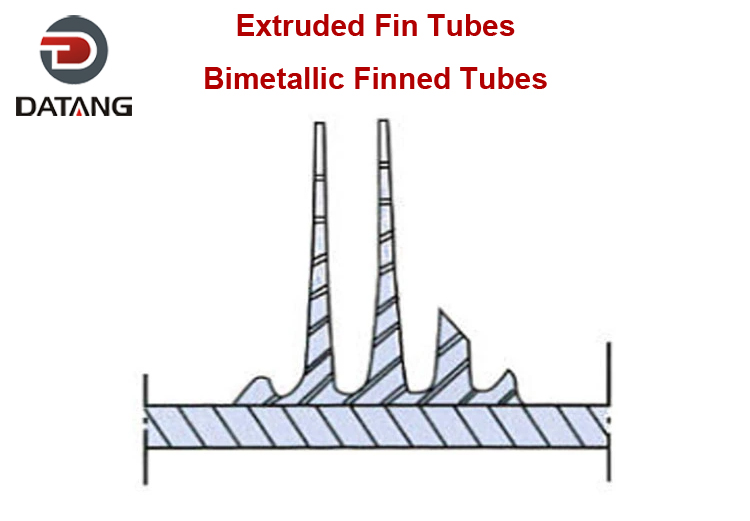 |
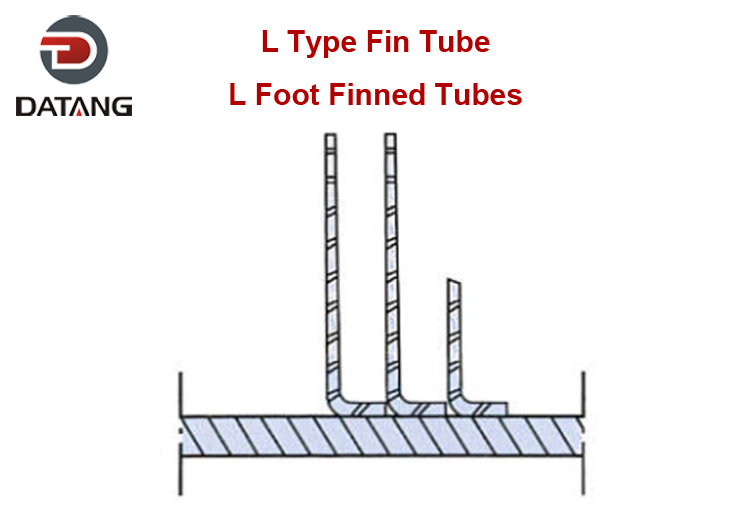 |
| Manufacturing Process | An aluminum outer sleeve is mechanically extruded over the base tube using multiple rollers, forming integral fins through plastic deformation. | An aluminum strip is bent into an L shape and helically wound tightly around the base tube under tension. |
| Fin-to-Tube Bond and Heat Transfer | The extrusion process creates a tight mechanical fit between the fins and base tube, providing low contact resistance and efficient heat transfer. | The fins rely on winding tension to maintain contact with the base tube. Contact resistance may be higher than with extruded fins. |
| Typical Operating Temperature | Often used at temperatures up to approximately 250–300°C, depending on the aluminum alloy, base tube material, and operating conditions. | Commonly used at temperatures around 150–230°C. Higher temperatures may reduce winding tension and compromise fin attachment. |
| Mechanical Strength and Cleaning Resistance | The thicker fin roots provide good mechanical strength and resistance to impact and thermal cycling. Suitable for high-pressure water cleaning when the fin design and cleaning pressure are appropriate. | The fins are relatively thin and rely on winding tension, making them more susceptible to deformation under mechanical impact. High-pressure water cleaning should be avoided unless the design has been confirmed suitable for it. |
| Corrosion Protection | The aluminum outer sleeve covers the base tube, reducing its direct exposure to the surrounding environment. Protection depends on the materials and operating conditions. | The base tube is less fully covered, and moisture or contaminants can collect around the fin contact areas. Corrosion risk depends on the environment and base tube material. |
| Cleaning and Maintenance | The relatively smooth, uniform fin surface makes routine cleaning by water washing or air blowing easier. | Cleaning requires more care to avoid bending or damaging the fins. |
| Cost | Generally higher due to the extrusion process, aluminum consumption, and equipment requirements. | Generally more economical, with an established manufacturing process and relatively low production costs. |
| Typical Applications | Air-cooled heat exchangers in petrochemical plants, power generation, and other demanding industrial environments. Also used for applications requiring regular water washing, subject to design suitability. | HVAC systems, low- to medium-temperature waste heat recovery, air heating, workshop heating, and other cost-sensitive applications involving relatively clean air. |
Note: The temperature ranges above are indicative rather than universal limits. The actual operating temperature depends on the fin and base tube materials, attachment method, process conditions, and thermal cycling requirements. High-pressure cleaning suitability should also be confirmed against the manufacturer’s specifications.
Extruded bimetallic finned tubes and G-type embedded finned tubes use different fin attachment methods. The main differences lie in their construction, operating temperature, mechanical strength, maintenance requirements, and manufacturing costs.
| Comparison | Extruded Bimetallic Finned Tubes | G-Type Embedded Finned Tubes |
|---|---|---|
| Drawing | |
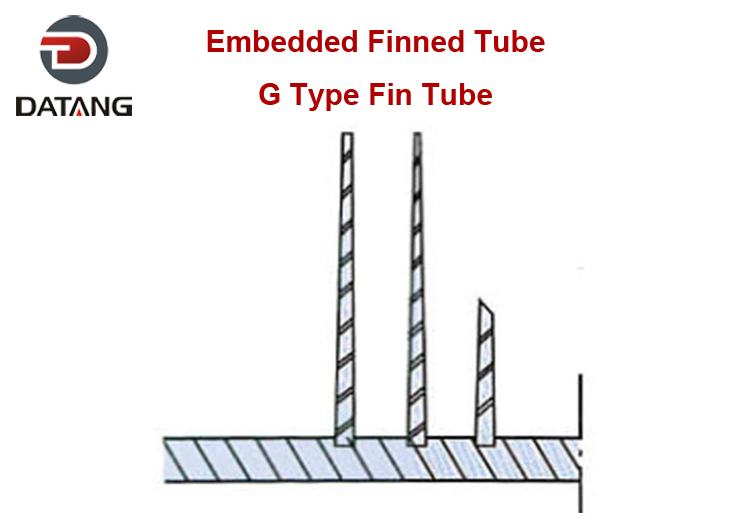 |
| Manufacturing Process | A bimetallic sleeve is mechanically extruded to form integral aluminum fins around the base tube. | A helical groove is machined into the base tube. An aluminum fin strip is wound into the groove and mechanically secured in place. |
| Fin-to-Tube Bond and Heat Transfer | The extrusion process creates a tight interference fit between the outer aluminum layer and the base tube, providing efficient heat transfer with low interfacial thermal resistance. | The fin strip is mechanically locked into the groove, providing a secure attachment and good heat transfer performance. |
| Typical Operating Temperature | Commonly used at temperatures up to approximately 250–300°C, depending on the aluminum alloy, base tube material, and operating conditions. | Can be suitable for higher temperatures, potentially around 400°C in certain designs. The actual limit depends on the fin and base tube materials, attachment integrity, and operating conditions. |
| Mechanical Strength and Resistance to Airflow or Cleaning | The integral fin structure provides good mechanical strength and resistance to thermal cycling and mechanical impact. Suitable for high-pressure water cleaning when the design and cleaning pressure allow. | The fins are mechanically secured in the grooves, reducing the risk of loosening or bending. They offer good resistance to mechanical stress and airflow, depending on the design. |
| Corrosion Protection | The outer aluminum layer covers the base tube, helping protect it from direct exposure to the surrounding environment. | Provides good performance when properly manufactured and used in a suitable environment. Moisture may enter the groove or fin interface if the joint is not adequately protected. |
| Cleaning and Maintenance | The relatively smooth surface makes routine cleaning easier and helps reduce the accumulation of dirt. | The fins are firmly secured, but the grooved construction requires careful manufacturing. Cleaning methods should be selected to suit the fin geometry and operating environment. |
| Cost | Generally more expensive than L-footed finned tubes. Costs may be lower than or comparable to G-type tubes, depending on specifications and materials. | Generally more expensive due to the additional machining and fin attachment processes. |
| Manufacturing Precision | Requires accurate extrusion rollers and consistent wall thickness in the outer aluminum sleeve. | Requires precise machining of the helical groove in the base tube to ensure a secure fin fit. |
| Typical Applications | High-performance air-cooled heat exchangers in petrochemical plants, offshore facilities, and industrial applications requiring regular water washing, subject to design suitability. | Industrial heat transfer equipment operating at elevated temperatures where secure fin attachment is important, particularly in relatively dry environments. |
Note: The temperature ranges are indicative, not guaranteed operating limits.Actual operating limits depend on the materials, fin attachment method, and working conditions. Please consult the manufacturer to confirm suitability for your application.
| Comparison | Extruded Bimetallic Finned Tubes | KL-Type Finned Tubes (Knurled L-Foot) |
|---|---|---|
| Drawing | |
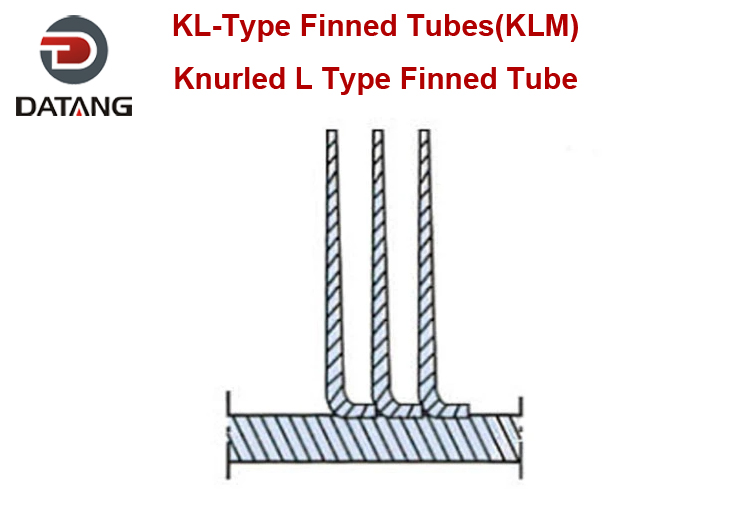 |
| Construction and Manufacturing Process | An aluminum outer sleeve is fitted over the base tube and mechanically extruded to form continuous fins. The aluminum layer covers the base tube. | An aluminum strip is bent into an L shape and helically wound around the base tube under tension. The tube surface is knurled beforehand so the L-foot can grip the textured surface more securely. |
| Fin-to-Tube Bond and Thermal Resistance | The extrusion process creates a tight interference fit between the aluminum layer and the base tube, providing low interfacial thermal resistance and consistent heat transfer performance. | The knurled surface improves fin grip compared with a standard L-foot design. However, some contact resistance remains between the fin and the base tube. |
| Typical Operating Temperature | Commonly used at temperatures up to approximately 250–300°C, depending on the aluminum alloy, base tube material, and thermal expansion effects. | Commonly used at temperatures around 230°C. Although knurling improves fin retention, the aluminum material and winding stresses can limit performance at elevated temperatures. |
| Mechanical Strength and Resistance to Cleaning | The integral fin roots provide good mechanical strength and resistance to impact and thermal cycling. Suitable for high-pressure water cleaning when the design and cleaning pressure allow. | Offers moderate mechanical strength. Knurling helps prevent the fins from loosening, but the thin fins can still bend under external force. High-pressure water cleaning should be avoided unless specifically approved for the design. |
| Corrosion Protection | The outer aluminum sleeve covers the base tube, reducing its direct exposure to air and moisture. | The knurled contact helps improve fin attachment, but the base tube remains partly exposed. Additional corrosion protection may be needed in humid or salt-laden environments. |
| Manufacturing Complexity and Cost | Generally more expensive due to specialized equipment, a more complex manufacturing process, and higher aluminum consumption. | Usually less expensive than extruded finned tubes. However, the additional knurling operation makes production more involved than standard L-foot finning. |
| Cleaning and Maintenance | The relatively smooth fin surface is easier to clean using water washing or conventional air blowing, subject to the design limits. | Can be cleaned using suitable methods, but care is needed to avoid bending or damaging the relatively thin fins. |
| Typical Applications | Petrochemical air-cooled heat exchangers, power plant air-cooled condensers, and demanding industrial environments requiring frequent high-pressure washing, where the design permits. | Low- to medium-temperature waste heat recovery, conventional air-cooled equipment, and cost-sensitive projects requiring more secure fin attachment than standard L-footed tubes. |
Note: The temperature ranges are indicative only. Actual operating limits depend on the fin and base tube materials, attachment method, and operating conditions. Confirm the suitability of the selected finned tube with the manufacturer before finalizing your design.
| Comparison | Extruded Bimetallic Finned Tubes | LL-Type Finned Tubes (Overlapping L-Foot) |
|---|---|---|
| Drawing | |
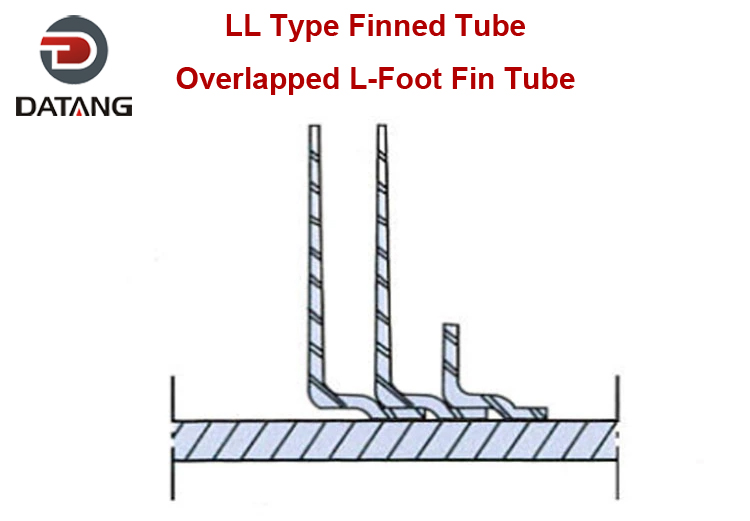 |
| Construction and Manufacturing Process | An aluminum outer sleeve is mechanically extruded using multiple rollers to form continuous fins integrally with the sleeve. | An aluminum strip is formed into an LL-shaped profile and helically wound around the base tube under tension. The overlapping foot edges provide greater coverage of the base tube. |
| Fin-to-Tube Bond and Heat Transfer | The extrusion process creates a tight interference fit between the aluminum layer and the base tube, providing low interfacial thermal resistance and consistent heat transfer performance. | The fins are held in place by winding tension and the overlapping foot structure. Some contact resistance remains, but the design generally provides better tube coverage and contact protection than a standard L-footed fin tube. |
| Typical Operating Temperature | Commonly used at temperatures up to approximately 250–300°C, depending on the aluminum alloy, base tube material, and thermal expansion effects. | Typically used at around 200–230°C. Differences in thermal expansion between the fin strip and base tube may affect fin tightness at elevated temperatures. |
| Mechanical Strength and Resistance to Cleaning | The thick, integral fin roots provide good mechanical strength and resistance to impact and thermal cycling. Suitable for high-pressure water cleaning when the design and cleaning pressure allow. | The overlapping foot provides better base tube coverage than a standard L-foot design. However, the fins are relatively thin and may bend under external force. High-pressure water cleaning should be avoided unless specifically approved for the design. |
| Cleaning and Maintenance | The relatively smooth fin surface makes routine cleaning easier using water washing or conventional air blowing, subject to the design limits. | Can be cleaned using suitable methods, but care is needed to avoid bending or damaging the fins. |
| Cost | Generally more expensive than LL-type finned tubes due to the manufacturing process, equipment requirements, and aluminum consumption. | Generally more economical and can be a cost-effective alternative to extruded finned tubes when improved base tube coverage is needed. |
| Corrosion Protection | The outer aluminum sleeve covers the base tube, reducing its direct exposure to air and moisture. | Offers better base tube coverage than a standard L-foot design because the foot edges overlap. This can help reduce moisture ingress, although corrosion protection depends on the environment and the quality of the fin attachment. |
| Typical Applications | Petrochemical air-cooled heat exchangers, power plant air-cooled condensers, and demanding industrial environments requiring frequent high-pressure washing, where the design permits. | Low- to medium-temperature waste heat recovery, conventional air-cooled equipment, and cost-sensitive projects requiring better base tube coverage than standard L-footed fin tubes. |
Note: The temperature ranges are indicative only. Actual operating limits depend on the fin and base tube materials, fin attachment, and working conditions. Confirm suitability with the manufacturer before finalizing your design.
Related Product
Manufacturing Process for Extruded Finned Tubes
- Base Tube Preparation: Check the base tube dimensions and material grade to ensure they meet the required technical specifications.
- Outer Sleeve Preparation: Select the sleeve material and dimensions according to the specified requirements.
- Extrusion: Use a specialized extrusion process to form the outer sleeve into continuous helical fins around the base tube.
- Fin Sizing and Straightening: Correct the fin height, fin pitch, and roundness as needed. End finishing, cutting, and chamfering are carried out where required.
- Heat Treatment / Stress Relief: Some products undergo heat treatment to relieve residual stresses caused by extrusion, helping improve dimensional stability and service life.
- Dimensional Inspection: Check the dimensions of the tube and fins, including fin height, fin thickness, and fin pitch.
Surface Treatment and Quality Inspection: Inspect the finished tubes for visible defects, overall appearance, fin-to-tube bonding, and other specified quality requirements. Pressure testing is carried out where required. Depending on the operating environment, cleaning, corrosion protection, or other surface treatments may also be applied. - Packaging and Shipping: Protect the finished fin tubes against damage during handling and transportation, and prepare them for shipment according to the agreed packaging requirements.
Key Features and Advantages of Extruded Fin Tubes
1. Integral Fin Construction
The fins are formed directly from the outer metal sleeve through an extrusion process, creating a tight, integral bond with no gaps at the interface. This provides an efficient heat transfer path and helps improve heat transfer performance.
2. Strong Mechanical Bond
During extrusion, the metal undergoes plastic deformation, allowing the fins to bond firmly to the base tube. This helps prevent fin loosening or deformation during operation.
3. Protection for the Base Tube
The outer aluminum fins cover the base tube, reducing its exposure to the surrounding environment and helping protect it against corrosion. This design is suitable for applications involving humid conditions and relatively clean air.
4. Lightweight Construction
Aluminum is lightweight, making extruded fin tubes easier to handle and install. Their lower weight also helps reduce the overall load on the equipment structure.
5. Easy Cleaning and Maintenance
The smooth, uniform fin surface makes cleaning easier. Extruded fin tubes can withstand high-pressure water washing when the tube design, materials, and cleaning pressure are properly matched. This makes them a practical choice for air-cooled heat exchangers that require regular cleaning, helping reduce maintenance time and costs.
Need a custom solution?
Please send us your drawings or technical specifications. Our team will review your requirements and assess the feasibility of your application.
How to Choose the Right Extruded Finned Tube
Choosing the right extruded finned tube starts with understanding your operating conditions, then selecting the appropriate materials and dimensions. Price and base tube size alone are not enough to make the right choice.
1. Check Whether Extruded Finned Tubes Suit Your Application
Start by defining your operating conditions, including the process medium (steam, hot water, flue gas, or corrosive gases), operating temperature and pressure, required heat duty, and available installation space. These factors determine the suitable materials and tube specifications.
2. Choose the Base Tube Material
- General workshop heating and drying: Carbon steel is a cost-effective option for many standard applications. Its suitability depends on the actual operating temperature, pressure, and process medium.
- Humid or corrosive environments: Stainless steel grades such as 304 or 316L may be suitable for chemical processing, food drying, and other applications where corrosion resistance is important.
- High-temperature applications above 300°C: Consider suitable heat-resistant alloy steels, but confirm that the complete finned tube construction can withstand the required operating conditions.
3. Select the Fin Material
Aluminum, copper, and other available fin materials each have their own advantages. Consider thermal conductivity, compatibility with the base tube, corrosion risk, and operating temperature before making a decision.
4. Determine the Fin Dimensions
Fin pitch: For relatively clean environments, a fin pitch of 2.5–4 mm may be suitable. In dusty environments, a wider pitch, such as 5 mm, may help reduce fouling and make cleaning easier. However, the best spacing depends on the dust characteristics, airflow, and required heat transfer area.
Fin height: Taller fins, such as 12–18 mm, can provide more external heat transfer area for drying equipment. Lower fins may be preferable where airflow resistance and installation space are major concerns.
Fin thickness: A thickness of 0.3–0.4 mm is common in some applications. Thicker fins, such as 0.5–0.6 mm, may be considered when additional mechanical strength or corrosion allowance is needed, subject to material and design requirements.
5. Confirm the Manufacturing Requirements
Before placing an order, specify the base tube dimensions and material grade, overall tube length, unfinned end lengths, fin dimensions, quantity, inspection requirements, and applicable technical standards.
Providing an approved drawing or technical specification helps ensure that the finished tubes meet your design and installation requirements.
6. Check Quality Before Acceptance
Inspect the finished tubes for uniform fin spacing, consistent fin height, clean edges, and visible damage or deformation. Where required, pressure testing can help verify the pressure integrity of the base tube. Additional inspections should be selected according to the product design, material, and purchase specifications.
Need help selecting an extruded finned tube?
Send Datang your operating conditions, material requirements, and drawings or technical specifications. We can review your requirements and recommend a suitable construction for your application.
Why Choose Datang Finned Tube as Your Extruded Finned Tube Supplier?
- Around 20 Years of Experience: Specialized in finned tube manufacturing for around 20 years.
- In-House Production: Equipped with extrusion and rolling production lines.
- Wide Range of Materials: Options include carbon steel, stainless steel, copper, aluminum, and steel-aluminum bimetallic constructions.
- Custom Solutions: Finned tubes tailored to your operating conditions, with support for thermal calculations and drawing design.
- Samples Available: Samples can be provided for evaluation before placing an order.
Extruded Fin Tube FAQs
A: Extruded fin tube production line 6.
A: We can provide extruded fin tube samples for free.
A: After you confirm extruded fin tube sample details, the samples will be ready for delivery in 3-7days,and will be sent to you via express and arrive in 3-5days.
A: extruded fin tube can be customized, we can make the new thermoforming or extruding mode based on your drawings and we can sign a confidentiality agreement about your patented product, pls contact us for any further information.
A: Always a pre-production sample,before mass production;always final inspection before shipment.
Inspection & Guarantee Certificate is supplied with shipment, and the Third Party Inspection is available.