



Fin Fans & Air Cooled Heat Exchangers(ACHEs) Manufacturer
Maximize thermal efficiency in the most demanding environments with custom-engineered cooling solutions from Datang Finned Tube.
High-Performance Industrial Cooling Solutions
At Datang Finned Tube, we design and manufacture high-efficiency Fin Fans (Air Cooled Heat Exchangers) tailored for the oil, gas, petrochemical, and power generation industries. Whether you are operating in the harsh deserts of the Middle East or high-pressure processing plants in Southeast Asia, our cooling systems provide reliable, water-free thermal management.
By combining advanced finning technology with robust structural engineering, our Fin Fans ensure maximum heat dissipation with minimal energy consumption.
What are Fin Fans?
Fin fans (commonly known as Air Cooled Heat Exchangers or ACHEs) are industrial heat transfer devices designed to cool or condense process fluids using ambient air. By utilizing high-performance fans to force air across a bank of finned tubes, these systems effectively dissipate heat without the need for cooling water.
In industries such as oil and gas, petrochemicals, and power generation—especially where water is scarce—fin fans are the preferred alternative to traditional water-cooled systems.
Core Structure and Working Principle
The efficiency of a fin fan relies on maximizing the surface area available for heat transfer. Datang Finned Tube specializes in the engineering of the most critical component: the Finned Tube.
-
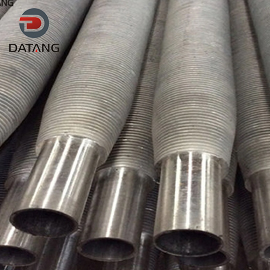
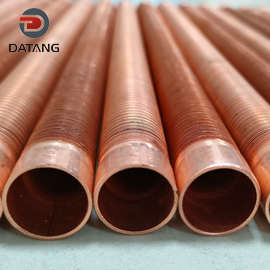
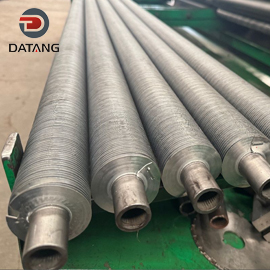
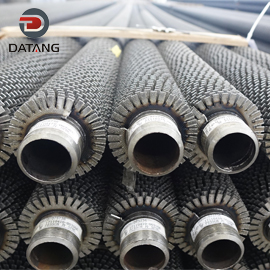
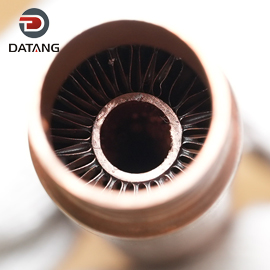
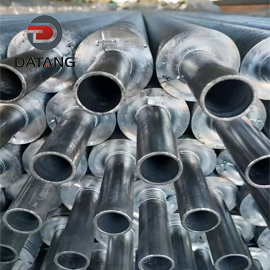
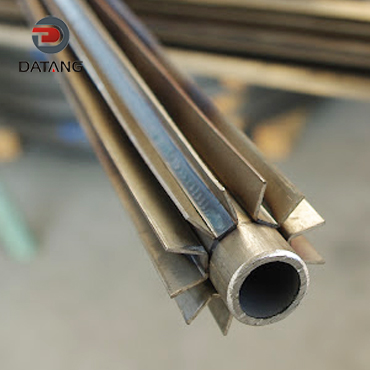
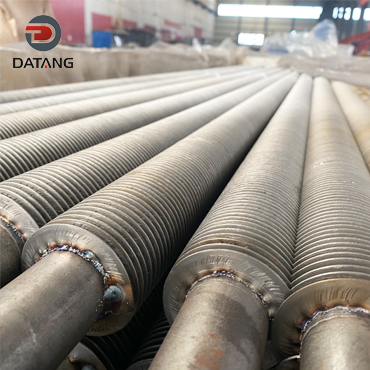
Finned Tubes: This is the heart of the equipment. Aluminum fins are either wrapped or extruded onto a base tube. These fins increase the heat transfer surface area by 10 to 20 times compared to bare pipes, compensating for the low thermal conductivity of air.
-
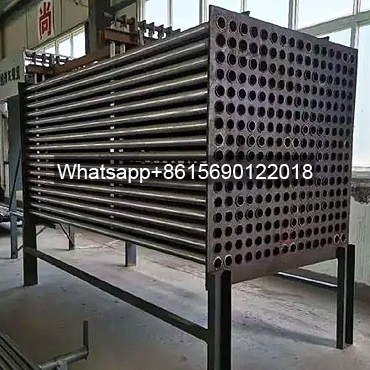
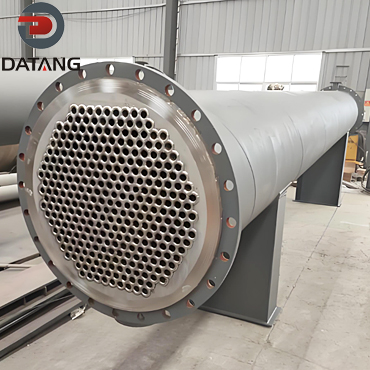
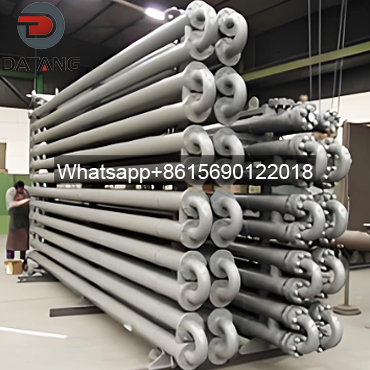
Tube Bundle: A rectangular assembly of multiple finned tubes connected to headers at both ends.
-
Fan and Drive System: Large-diameter fan blades powered by electric motors create a high-velocity airflow.
-
Structure and Louvers: A heavy-duty frame supports the assembly, while adjustable louvers help control airflow during extreme temperature fluctuations to prevent fluid freezing.
Technical Specifications
Our systems are built to international standards (API 661) and are available in various configurations to meet your specific process requirements.
| Feature | Specifications |
| Base Tube Materials | Carbon Steel, Stainless Steel (304/316L), Duplex Steel, Copper Alloys |
| Fin Materials | Aluminum (1060/1100), Copper |
| Fin Types | Extruded (High-Fin), G-Type (Embedded), L/LL/KL-Type (Wrap-on), High-Frequency Welded |
| Draft Types | Forced Draft (Fan below bundle) or Induced Draft (Fan above bundle) |
| Design Standards | ASME, API 661, GB |
| Max Operating Temp | Up to 400°C (depending on fin type) |
Fin Fans Main Configurations
Fin fans are generally categorized by the position of the fan relative to the tube bundle:
-
Forced Draft:
-
The fan is located below the tube bundle, pushing air upward.
-
Advantage: Easier maintenance and longer motor life, as the mechanical components are located in the cool intake air stream.
-
-
Induced Draft:
-
The fan is located above the tube bundle, pulling air through the tubes.
-
Advantage: Better air distribution and reduced risk of “hot air recirculation,” which can lower efficiency.
-
Fin Fans Common Applications
-
Refineries: Cooling refined oil products or condensing gases at the top of distillation columns.
-
Natural Gas Processing: Cooling compressed natural gas between stages.
-
Power Plants: Used in steam condensation, particularly in dry regions.
-
Chemical Plants: Managing heat for various exothermic chemical reactions.
In essence, a fin fan is a heavy-duty industrial radiator. By utilizing high-quality components from manufacturers like Datang Finned Tube, industries can ensure maximum thermal efficiency and long-term reliability in their cooling processes.
Why Choose Datang Fin Fans?
1. Superior Heat Transfer Technology
The heart of our Fin Fan is the Datang Finned Tube. We utilize specialized manufacturing processes to ensure a perfect mechanical bond between the fin and the tube, minimizing thermal resistance and preventing performance degradation over time.
2. Custom Engineering for Harsh Environments
From heavy-duty corrosion-resistant coatings for coastal plants to specialized louver systems for sub-zero climates, we customize every unit to its specific geographic and chemical environment.
3. Energy-Efficient Fan Systems
Our air-moving assemblies are designed for low noise and high static pressure, utilizing adjustable-pitch blades to optimize airflow and reduce electrical overhead.
Strict Quality Control & Testing
Reliability is non-negotiable in industrial cooling. Every Fin Fan assembly undergoes a rigorous inspection protocol at our Yanshan manufacturing facility:
-
Hydrostatic Pressure Testing: Ensuring tube bundle integrity under extreme pressure.
-
Fin-to-Tube Bond Verification: Pull-out force testing to guarantee maximum thermal conductivity.
-
Pneumatic Leak Testing: Verifying zero-leakage in all welded joints and headers.
-
Magnetic Particle & Ultrasonic Inspection: Identifying any sub-surface defects in critical components.
Operation & Maintenance Guide
Routine Maintenance:
- Clean the Finned Bundles: Critical for performance. Remove dust, catkins, and debris using compressed air or low-pressure water washing to prevent blockage.
- Fan System Care: Regularly inspect fan blades for deformation, check bearing lubrication, adjust belt tension, and monitor vibration/noise levels.
- Structural Integrity: Inspect connection bolts for tightness and check the steel frame/coating for corrosion.
- Winterization: In cold climates, ensure all internal fluids are drained during winter shutdowns to prevent freezing and tube rupture.
Operational Best Practices:
- Pre-Start: Ensure the unit is free of debris and all instruments/fans are functional.
- During Operation: Introduce hot fluid gradually to avoid thermal shock. Monitor inlet/outlet temperatures, pressure, and fan amperage closely.
- Optimization: Adjust fan speed (via VFD) or louver openings based on seasonal load changes to maximize energy efficiency.
Ready to Optimize Your Cooling Process?
Stop wasting water and start improving your plant’s ROI. Contact our engineering team today for a detailed thermal calculation and a competitive factory-direct quote.
Cangzhou Datang Steel Pipe Co., Ltd. Specialists in Industrial Heat Transfer & Finned Tube Technology.
Global Project Excellence
Datang Finned Tube is a trusted partner for international energy projects. Our recent success stories include:
-
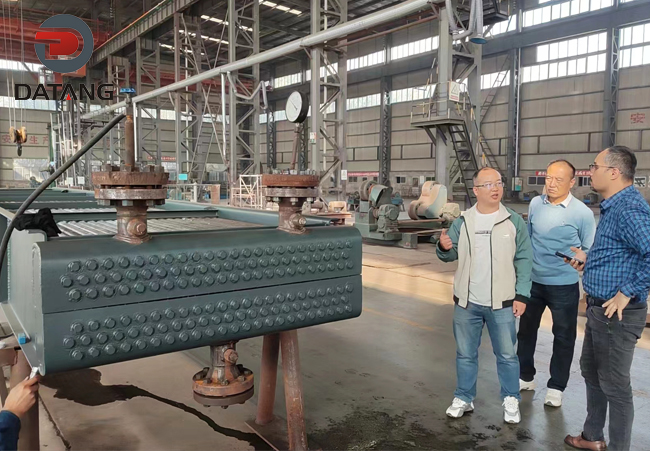
Delivered G-type embedded finned tube air coolers for crude oil cooling in high-ambient desert temperatures.
-
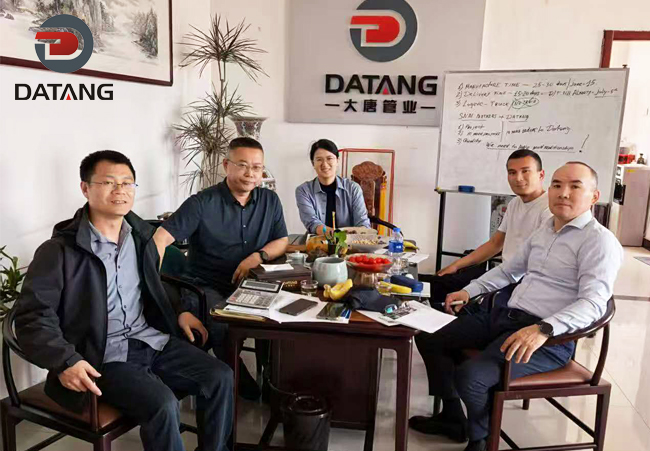
Custom-built high-frequency welded fin fan bundles for a major technical audit and upgrade.
-
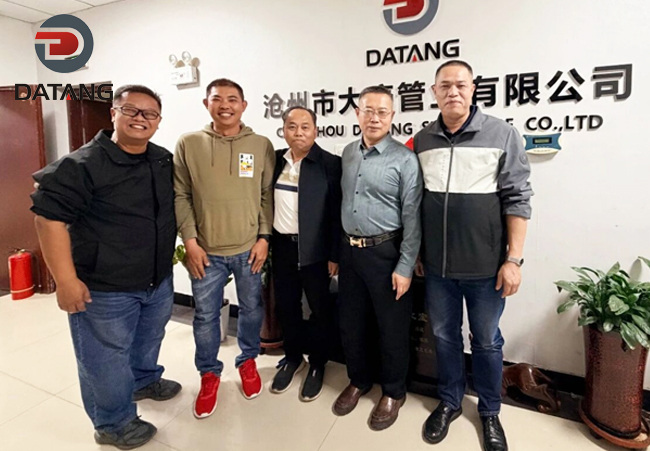
On-site installation and debugging of specialized heat exchange components for optimized steam condensation.
Fin Fans & Air Cooled Heat Exchangers(ACHEs) Elements
An Air-Cooled Heat Exchanger primarily consists of the following four core components, which collectively facilitate the heat exchange process between the fluid and the air. These components include the tube bundle, the fan and drive system, the fan hood and structural framework, and auxiliary accessories.
-
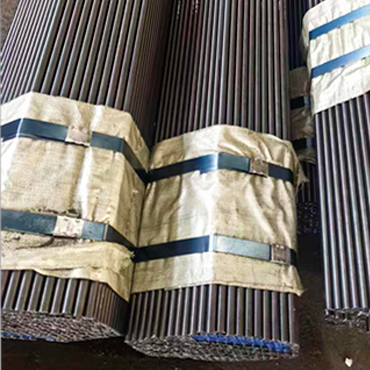 ASTM A179/ ASME SA179 Seamless Steel Pipe-Heat Exchanger Tubes
ASTM A179 (ASME SA179) is the standard specification for seamless cold-drawn low-carbon steel tubes specifically designed for tubular heat exchangers, condensers, and similar heat transfer apparatus. It is one of the most widely used carbon steel grades in the petrochemical, power generation, and manufacturing sectors.
-
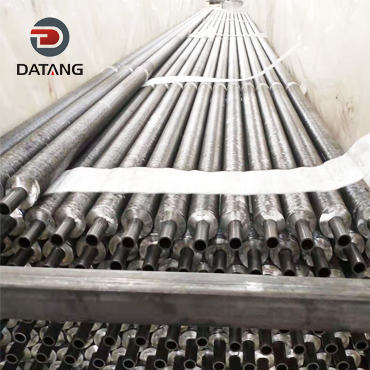
In the construction of an Air Cooled Heat Exchanger, the tube bundle acts as the core heat transfer unit, while the finned tubes serve as the fundamental heat exchange elements within that bundle.Common Types:Wrap-on L/LL-Fin,G-Fin / Grooved,Extruded Fin,HFW Fin.Material Combinations:Base Tube SA179/SA106,Fin:Aluminum
-
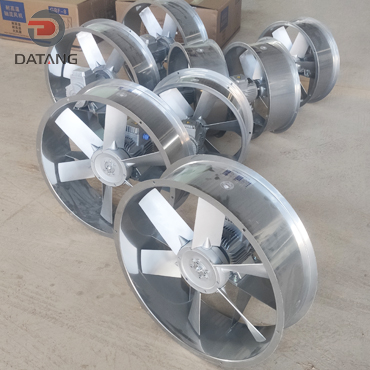
In the design and operation of Air Cooled Heat Exchangers (ACHE),the fan is the power core of an air-cooled system, responsible for forcing ambient air through the tube bundles to achieve thermal exchange for process fluids.Core Components:Blades,Hub and Fan Ring/Shroud. It compensates for the low density of ambient air by forcing convection.
-
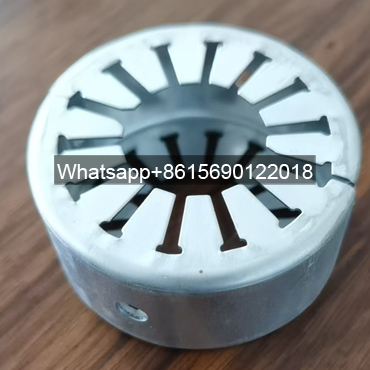
Fin tube support collar also known as a fin tube clamp, round spacer box, isolation ring,it is suitable for embedded G type finned tube,aluminum finned tube, extruded finned tube and L/ll / KL finned tube, and ismost commonly used in G-type finned tube.
-
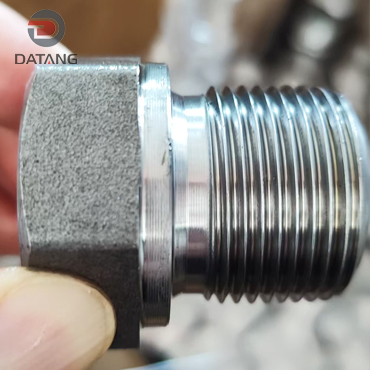 Air Cooled Heat Exchanger (ACHE) Plugs and Gaskets
In the structure of an Air Cooled Heat Exchanger (ACHE), the plug is a small but critical pressure-retaining component. It is installed on the plug header, positioned directly opposite the opening of each individual finned tube.Plug materials:Carbon Steel,Stainless Steel and Alloy Steel.Fin Fan Cooler Plugs are often used in conjunction with gaskets.
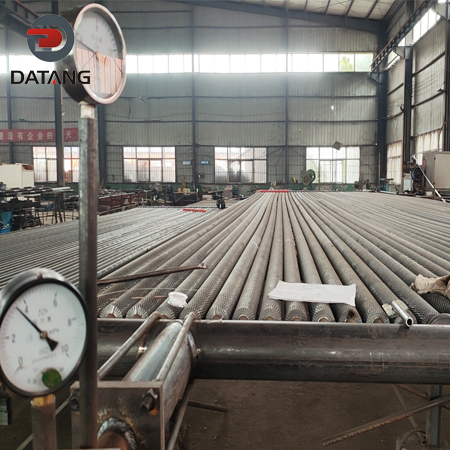
Fin Fan Cooler Water Pressure Test
An air cooler water pressure test uses water as the medium. Water is injected into the equipment and pressurized to test the equipment’s sealing and pressure-bearing capacity.
Pressure testing is crucial for the safe operation of air coolers. It allows for the timely identification and resolution of equipment problems, such as leaky seals and insufficient pressure-bearing capacity. Failure to identify and address these issues can lead to equipment failures and even accidents. Therefore, pressure testing is not only a test of equipment performance but also a safeguard for industrial safety.
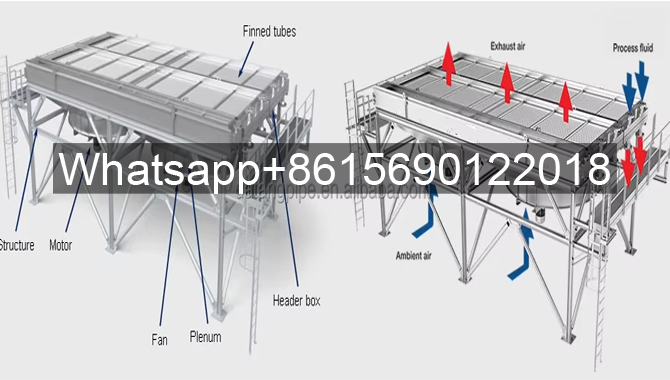
Induced Draft Air Cooler and Forced Draft Air Cooler
Applicable Applications and Features: Suitable for all applications. The tube bundle is placed horizontally, with a 3° or 1% inclination to prevent condensate from accumulating in the tubes.
Advantages: Simple structure, easy installation, and relatively uniform distribution of hot fluid within the tubes and air outside.
Disadvantages: Requires a larger footprint, and greater flow resistance within the tubes than with inclined top tubes.
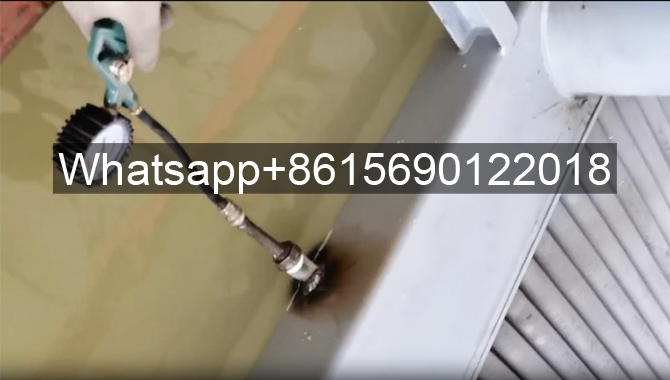
Air Cooled Heat Exchanger Air Pressure Test
An air pressure test on an air cooler uses gas as the medium. Pressure testing tests equipment performance by applying pressure. Strictly following operating procedures ensures the safety and reliability of the process and results.
Pressure testing is essential after equipment installation or maintenance. It helps verify the equipment’s sealing and pressure-bearing capacity, ensuring that safety incidents such as leaks or ruptures do not occur during operation.
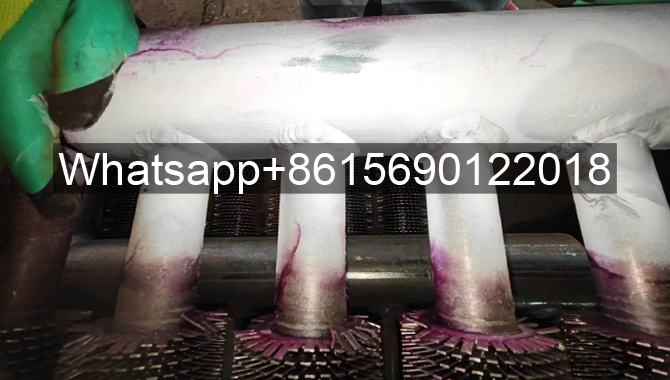
Nondestructive Magnetic Particle Testing of Air Coolers
Nondestructive magnetic particle inspection of air coolers uses magnetic particles as a detection medium to observe defects in air coolers.
Magnetic particle inspection has a sensitivity that can detect discontinuities as narrow as 0.1μm. By combining multiple magnetization methods, magnetic particle inspection is virtually unaffected by workpiece size and geometry, and can detect defects in all directions.
Fin Fan Cooler Package
Payment Terms:T/T, LC
Delivery: 15-30 days after payment
Marking: Standard + Steel Grade + Size + Heat No + Lot No
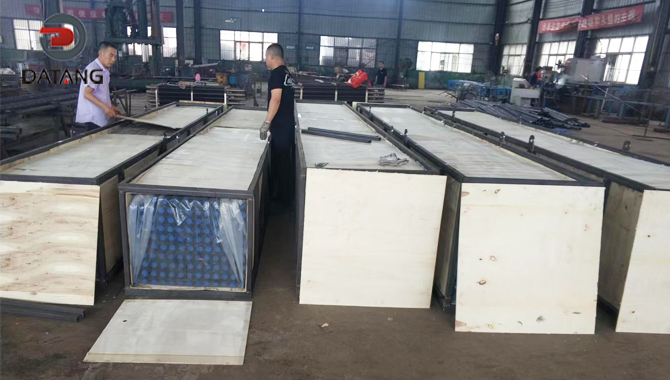
Package: Iron frame packing boxes and the desiccants are put into each package for continental transportation as well. or as required
Fin Fans & Air Cooled Heat Exchangers(ACHEs) Application
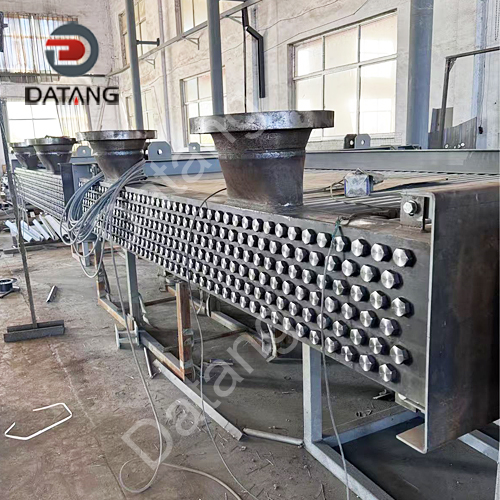
The spiral fin tube radiator for vegetable and flower greenhouse is an efficient and durable heating equipment, especially suitable for greenhouse cultivation in cold seasons.
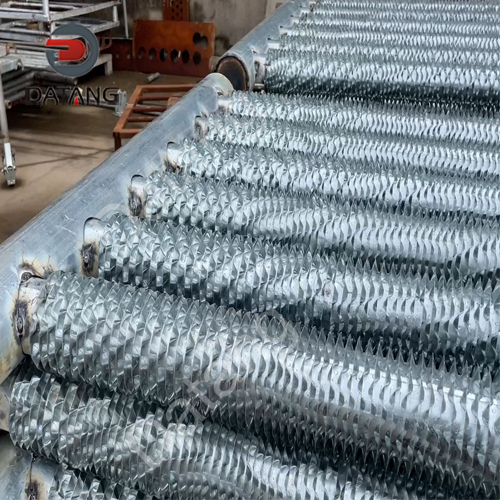
During the breeding and brooding process, the high-frequency welded fin tube radiator improves the heat exchange efficiency by increasing the heat dissipation area, and can raise the temperature in the brooding house to the required level in a short time. This design enables the farm to quickly reach and maintain a suitable temperature range (15-20 degrees Celsius) when heating in winter.
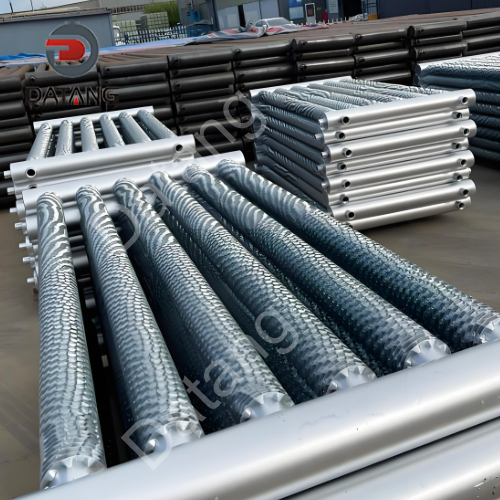
Hot-dip galvanized spiral wound fin tube for greenhouse heating, as a key component of the heating system, can efficiently and evenly transfer heat to keep the temperature in the greenhouse within a suitable range
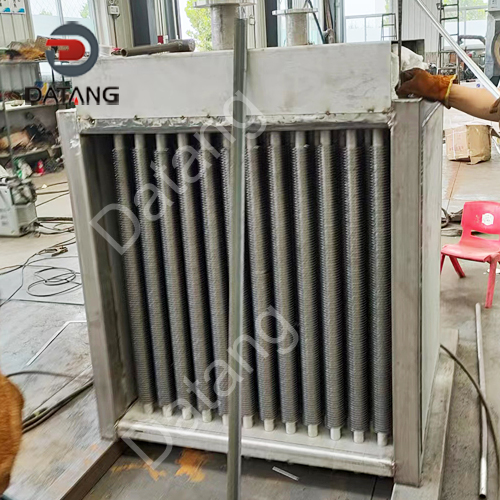
As a high-efficiency heat exchange element in modern industrial and civil heating systems, the unique design of the helical tension wound finned tube radiator for steam heating not only significantly improves the heat transfer efficiency, but also optimizes the space utilization rate, becoming an indispensable thermal energy source in many fields. equipment.
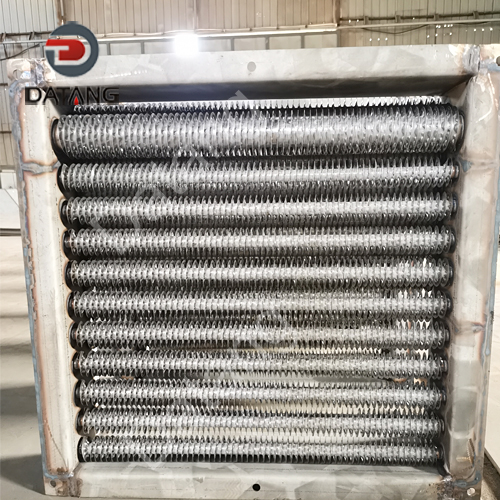
The working principle of the crimped fin tube is based on the principles of heat conduction and convection. When the hot water or steam of the heating system flows through the finned tube, the heat is quickly transferred to the heat sink through the fins and then dissipated into the air. This design makes the heat exchange more efficient and is particularly suitable for workshop environments that require a lot of heat dissipation.
Related Product
Fin Fans & Air Cooled Heat Exchangers(ACHEs) FAQs
A: The air cooler can be customized. We can produce it according to your drawings, and we can sign a confidentiality agreement for your patented products. For more information, please contact us.
A: Always a pre-production sample,before mass production;always final inspection before shipment.
Inspection & Guarantee Certificate is supplied with shipment, and the Third Party Inspection is available.
A: One year after shipping.
A: We have workshop can supply all parts of the air cooled heat exchanger, and 90% of spare parts can be distributed to any
place in the world within one week!
A: We can arrange for experienced engineers to provide online video guidance on product installation and train your staff on equipment operation and maintenance.
A: We have many professional and technical personnel, more competitive prices and better after-dales service than other companies.
A: Datang has high frequency resistance welding finned tube production line 18, extruded finned tube equipment 30, laser welding finned tube production line 2, wound finned tube production line 12. The annual capacity can reach 100,000 tons, the specification φ 18-273mm finned tube, according to the customer requirements of the standard production, service has exceeded 3000+ enterprises.