


Custom Industrial Gas Cooler Heat Exchangers
A gas cooler is a specialized heat exchanger designed to cool a gas stream, typically by transferring heat to a liquid (usually water or a glycol mixture) or to the ambient air. Unlike a condenser, which changes a gas into a liquid, a gas cooler typically operates at pressures where the gas remains in a gaseous (or supercritical) state throughout the process.
Gas cooler heat exchanger widely applied in fields such as chemicals, petroleum, electric power, refrigeration, and semiconductors.
1. Core Function and Operation
In most industrial and HVAC applications, a gas cooler serves as the heat rejection component.
-
Supercritical CO2 (R744) Systems: This is the most common modern use. In “transcritical” refrigeration, the CO2 is at such high pressure that it cannot condense into a liquid at ambient temperatures. The gas cooler simply lowers the temperature of the high-pressure gas before it reaches the expansion valve.
-
Intercooling/Aftercooling: In air compressors, gas coolers are used between stages (intercoolers) or after the final stage (aftercoolers) to reduce the volume of the gas and remove the heat generated during compression.
2. Common Structural Types
Depending on the environment and the required efficiency, gas coolers generally fall into three categories:
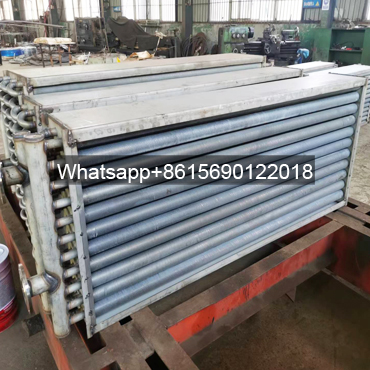
Air-Cooled Gas Coolers
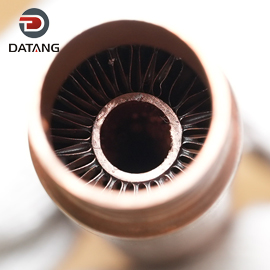
These resemble large radiators. Fans blow ambient air across a bank of tubes (often finned tubes) through which the hot gas flows.
-
Pros: No water consumption, lower maintenance.
-
Best for: Outdoor installations where water is scarce or expensive.
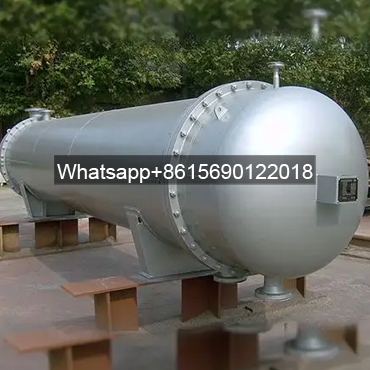
Shell and Tube Gas Coolers
The gas typically flows through the tubes while cooling water circulates through the surrounding shell.
-
Pros: Capable of handling extremely high pressures and high temperature differentials.
-
Best for: Heavy industrial processes and large-scale gas compression.
Plate Heat Exchangers (PHE)
These consist of multiple thin, corrugated plates stacked together. The gas and cooling medium flow in alternating channels.
-
Pros: Highly compact and extremely efficient heat transfer.
-
Best for: Space-constrained environments.
3.Technical Specifications & Standards
| Feature | Datang Standard Specifications |
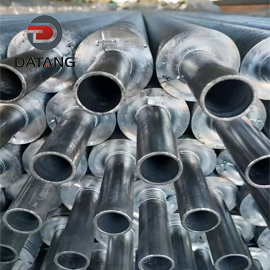
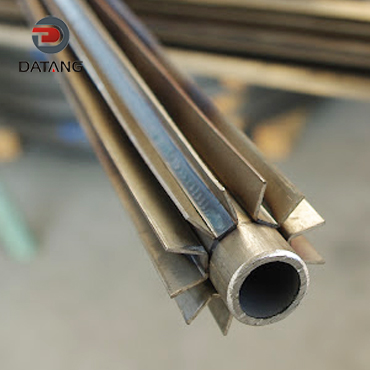
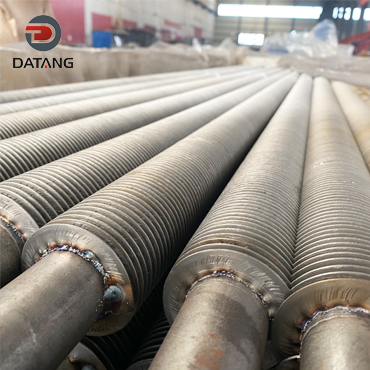
| Tube Type | Laser-welded, H-type, or High-frequency Spiral Finned Tubes |
| Max Working Pressure | Standard up to 15.0 MPa (Custom high-pressure designs available) |
| Manufacturing Standards | ASME, GOST, CE, and GB compliant |
| Testing Protocols | 100% Hydrostatic testing, Air-tightness check, and NDT |
| Service Scope | Custom design, manufacturing, and global technical support |
4.Core Applications
-
Transcritical CO2 Refrigeration: A vital component for eco-friendly commercial cooling and heat pump systems.
-
Air Compressor Systems: Functions as an Intercooler between stages or an Aftercooler at the discharge point to remove heat of compression.
-
Oil & Gas Processing: Used for cooling natural gas or process gases in harsh environments, such as desert oil fields.
-
Hydrogen Energy: Essential for temperature control in hydrogen refueling stations and industrial production.
- Industrial Waste Heat Recovery
In industries such as chemical engineering, metallurgy, and power generation, these units are essential for recovering thermal energy from high-temperature flue gas and exhaust fumes. For instance, they can transfer heat from tail gases (above 90°C) to combustion air that needs preheating, raising the air temperature to over 60°C and significantly reducing fuel consumption.
5.Features & Technical Advantages
-
High Efficiency & Energy Saving
By optimizing internal flow channels and heat exchange structures (such as employing finned tubes) to maximize surface area, the heat exchange efficiency remains stably above 85%, realizing cascaded energy utilization. -
Diverse Materials & Adaptability
Materials are selected based on specific operating conditions (e.g., high temperature, corrosive environments). Common materials include Carbon Steel, 304/316L Stainless Steel, and Aluminum Alloy. For extreme conditions, advanced materials like pressureless sintered silicon carbide are ideal due to their exceptional resistance to high temperatures (up to 900°C) and corrosion. -
Customized Design
Products are typically customizable to meet non-standard client requirements. Options include structural forms (plate, shell-and-tube, finned tube), dimensions, heat exchange capacity, and interface configurations to perfectly match the actual production environment. -
Stable Operation & Long Lifespan
The equipment features a mature structural design with stable operation, low vibration, and minimal noise. High-quality materials and anti-corrosion treatments ensure long-term stability in harsh environments, often lasting for many years.
6.Why Choose Our Gas Cooler Solutions?
-
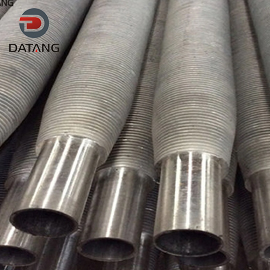
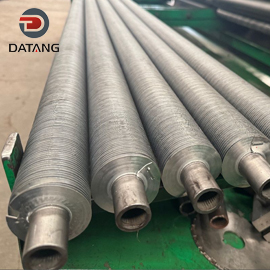
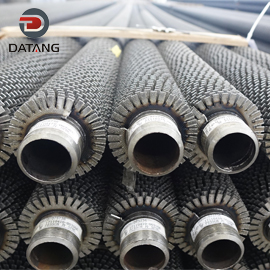
Optimized Heat Transfer: We utilize advanced finned tube technology (including Laser-welded, H-type, and High-frequency welded fins) to maximize the surface area, ensuring superior cooling efficiency even for low-conductivity gases.
-
High-Pressure Reliability: Engineered to withstand extreme operating pressures, our gas coolers are ideal for the demanding requirements of CO2 refrigeration and industrial gas compression.
-
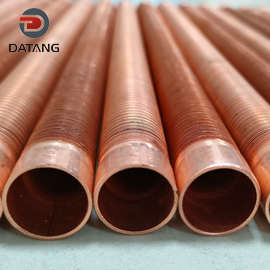
Customized Material Selection: To combat corrosion and ensure longevity, we offer tubes and fins in various materials, including Stainless Steel, Carbon Steel, Copper, and specialized alloys.
-
Minimal Pressure Drop: Our precision-engineered internal headers and tube circuits minimize resistance, reducing the energy load on your compressors and lowering overall operational costs.
7.The Datang Commitment: Quality You Can Trust
At Cangzhou Datang Steel Pipe Co., Ltd., we don’t just sell equipment; we deliver peace of mind. Every Datang Gas Cooler undergoes a rigorous quality control process—from raw material inspection to final performance testing. Our commitment to excellence has earned us a loyal global client base, including successful project deliveries in Singapore, Turkey, and Syria.
Looking for a reliable manufacturing partner for your next project?
Contact Datang Finned Tube Today for a Technical Consultation
Types of Flue Gas Heat Exchangers
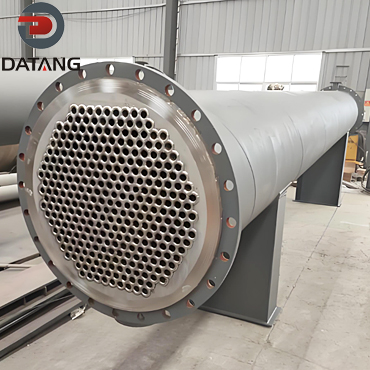
- Consist of a large outer “shell” with a bundle of smaller tubes running through the inside.
- Typically, the high-pressure gas flows through the tubes, while the cooling liquid circulates through the shell.
- Best for extremely high pressures and high-volume industrial streams.
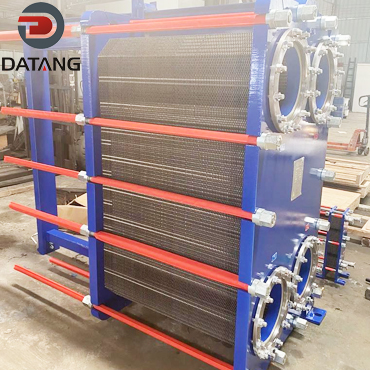
- Utilize a series of thin, stacked, corrugated metal plates.
- The gas and the cooling fluid flow through alternating narrow channels between the plates.
- Highly prized for their compact footprint and extreme thermal efficiency
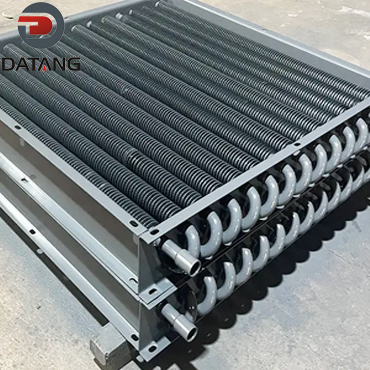
- Consist of tubes carrying the hot gas, heavily lined with metal fins to increase the external surface area.
- Large axial fans blow ambient air across the fins to carry the heat away.
- Ideal for locations with limited water supplies.
Related Product
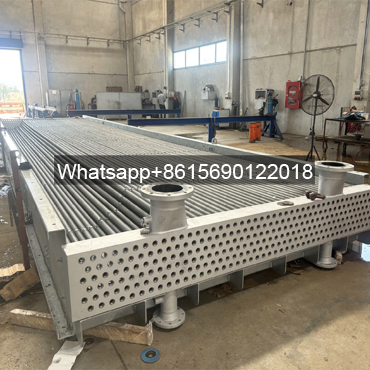
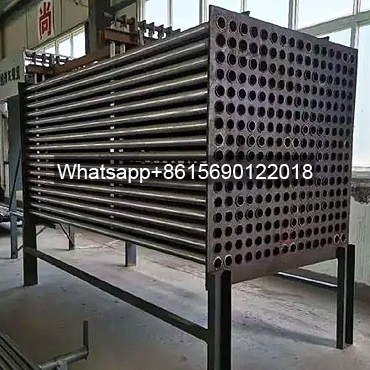
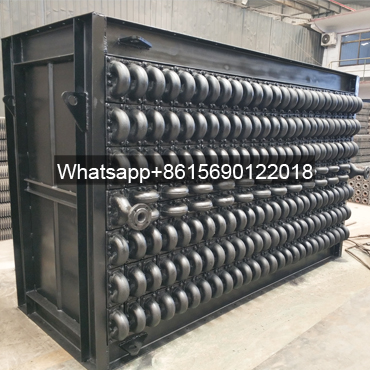
Gas Cooler Heat Exchangers FAQs
A: The gas cooler heat exchangers can be customized. We can produce it according to your drawings, and we can sign a confidentiality agreement for your patented products. For more information, please contact us.
A: Always a pre-production sample,before mass production;always final inspection before shipment.
Inspection & Guarantee Certificate is supplied with shipment, and the Third Party Inspection is available.
A: One year after shipping.
A: We have workshop can supply all parts of the finned tube radiator, and 90% of spare parts can be distributed to any
place in the world within one week!
A: We can arrange for experienced engineers to provide online video guidance on product installation and train your staff on equipment operation and maintenance.
A: We have many professional and technical personnel, more competitive prices and better after-dales service than other companies.
A: Datang has high frequency resistance welding finned tube production line 18, extruded finned tube equipment 30, laser welding finned tube production line 2, wound finned tube production line 12. The annual capacity can reach 100,000 tons, the specification φ 18-273mm finned tube, according to the customer requirements of the standard production, service has exceeded 3000+ enterprises.