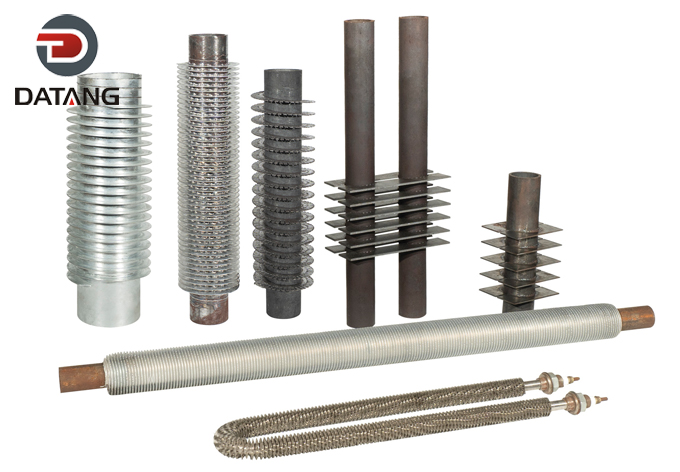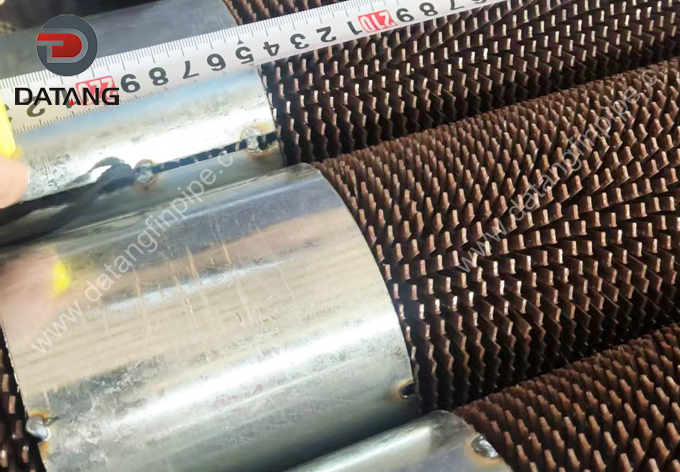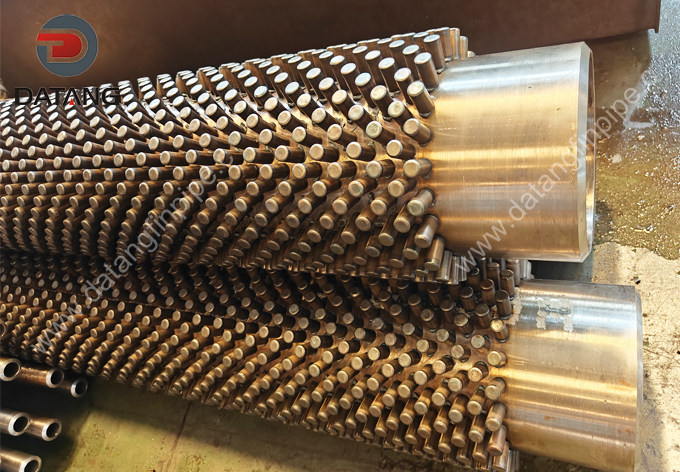


The Ultimate Guide to Fin Tube Selection: Balancing Lifespan and Cost
In industrial heat exchange, selecting the right material for your fin tubes is a critical decision that impacts initial investment, maintenance overhead, and the total life cycle of your equipment. At Datang Finned Tube, we provide precision-engineered thermal solutions designed to withstand the toughest global industrial conditions.
This guide explores the three most common materials—Carbon Steel, Stainless Steel, and Titanium Alloy—to help you make the most profitable procurement choice for your project.
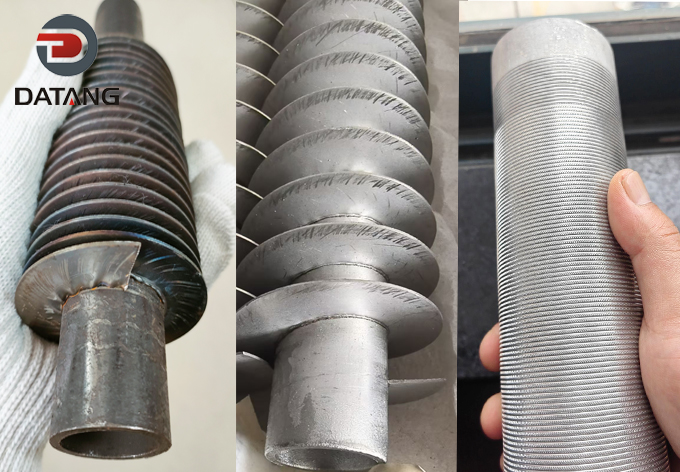
1. Material Properties and Environmental Suitability
Each material utilizes a different mechanism to handle thermal load and chemical exposure.
Carbon Steel Fin Tubes
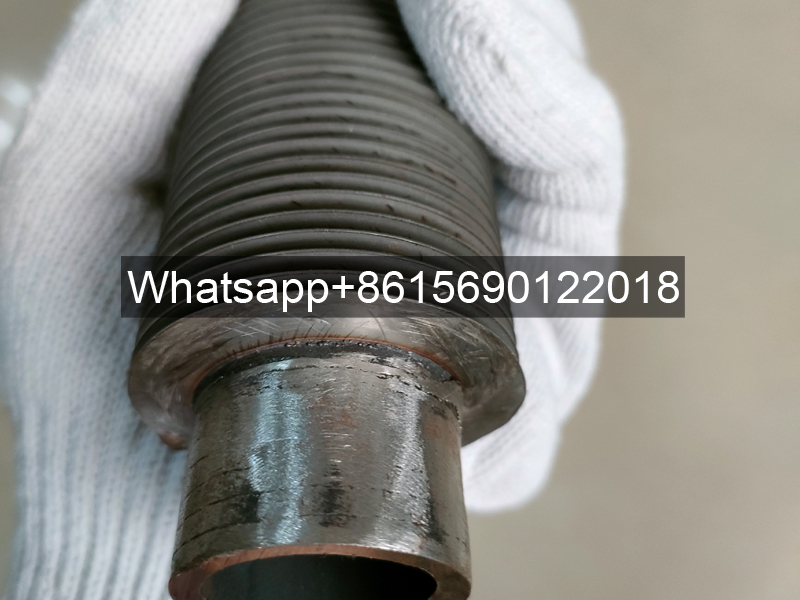
Carbon steel is the “workhorse” of the industry, offering maximum economy for non-corrosive applications.
-
Pros: High thermal conductivity(~45 W/(m·K)), excellent mechanical workability, and the lowest initial cost.
-
Cons: Poor corrosion resistance. It rusts easily in humid, acidic/alkaline, or sulfur-containing environments and oxidizes at high temperatures.
-
Best Use Case: Dry air heating, clean flue gas heat recovery, and non-corrosive oil cooling systems.
Stainless Steel Fin Tubes (304/316L)
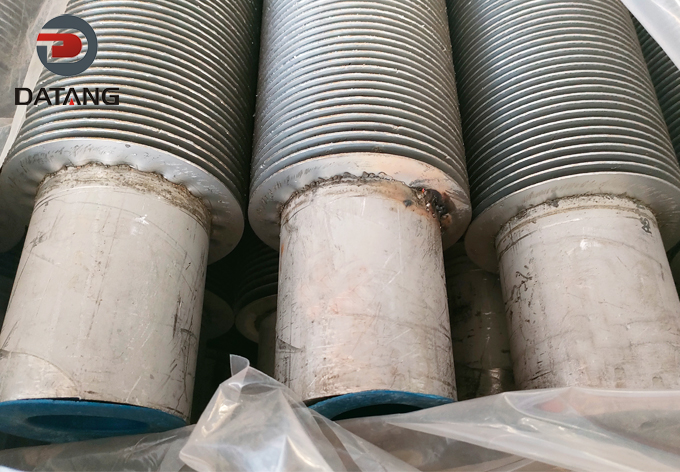
Stainless steel relies on a chromium-rich passive film to resist corrosion.
-
Pros: Excellent atmospheric corrosion resistance, high mechanical strength, and superior performance in mildly acidic or alkaline settings.Grades 304 and 316L are the representatives that meet most industrial needs.
-
Cons: Higher cost than carbon steel (approx. 2-4x), and lower thermal conductivity (~16-21 W/(m·K)).
-
Best Use Case: Food and beverage processing, mild chemical exhaust, and steam condensers.
Titanium Alloy Fin Tubes
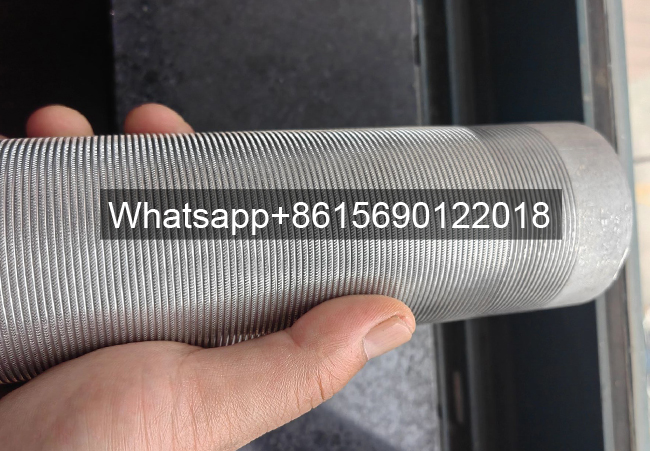
Often referred to as the “Ocean Metal,” titanium offers unparalleled stability in extreme environments.
-
Pros: Unparalleled corrosion resistance. It is virtually immune to seawater, chloride ions, and strong acids. It features low density, high strength, and an extremely long lifespan.
-
Cons: High initial investment; requires specialized laser-welding expertise.
-
Best Use Case: Desalination plants, high-salinity brine heat exchangers, and aggressive chemical processing (e.g., wet chlorine).
2. Lifespan vs. Cost: The “Value Engineering” Model
To help you visualize the long-term ROI, Datang Finned Tube has modeled these materials based on a medium-corrosion industrial environment:
| Metric | Carbon Steel (Coated) | Stainless Steel (316L) | Titanium (Gr2) |
| Initial Cost Index | ★ (1.0) | ★★★ (3.0 – 4.5) | ★★★★★ (10.0+) |
| Expected Lifespan | Short (2-5 years, depending on conditions) | Long (8-15 years) | Ultra-Long (15-20+ years) |
| Thermal Conductivity (W/m.K) | ~ 45 – 50 | ~ 14 – 16 | ~ 15 – 17 |
| Maintenance Frequency | High (Requires frequent anti-corrosion, descaling, replacement) | Low (Regular cleaning suffices) | Extremely Low (Virtually maintenance-free) |
| Life Cycle Cost (LCC) | High (due to replacement) | Optimized (Best Balance) | High Initial / Low Long-term |
Expert Tip: Don’t just look at the price tag. At Datang Finned Tube, we encourage calculating the Life Cycle Cost (LCC) by factoring in downtime losses and replacement labor.
Selecting the Right Corrosion-Resistant Materials: The Golden Rule
In the world of heat exchange, there is no such thing as the “best” material—only the “most suitable” one. At Datang Finned Tube, we believe that selecting the right material based on your specific operating conditions is the key to maximizing ROI and operational safety.
1. Mild or Non-Corrosive Environments: Cost-Efficiency First
-
Typical Scenarios: Waste heat recovery from industrial boilers (low-temperature flue gas), civil heating systems, dry/clean air heating, and neutral water heat exchange.
-
Primary Choice: Carbon Steel
-
The Datang Advantage: For environments with low chemical stress, Carbon Steel offers sufficient performance at a minimal initial investment. We often recommend Galvanized or Aluminized surface treatments to further enhance durability in mildly corrosive settings.
2. Moderate to Severe Corrosive Environments: The Performance Balance
-
Typical Scenarios: Acid-base solution exchange in the chemical industry, sulfur-containing flue gas treatment, coastal salt spray environments, and high-hygiene requirements in the Food & Pharma sectors.
-
Primary Choice: Stainless Steel (304 / 316L)
-
304: Best for mild acidity, food processing, and general atmospheric protection.
-
316L: Enhanced with Molybdenum, it offers superior resistance to chlorides and sulfuric acid.
-
-
The Datang Advantage: Datang Finned Tube supplies high-grade 316L solutions that effectively prevent pitting and leakage, drastically extending equipment service life. It is the most cost-effective choice for long-term reliability in chemical processing.
3. Extreme Corrosive Environments: The Sustainability Standard
-
Typical Scenarios: Desalination, offshore oil platforms, hydrometallurgy, oil/gas fields with high H₂S or Chlorine ions, and strong oxidizing acid production (e.g., Nitric Acid).
-
Primary Choice: Titanium Alloy
-
The Datang Advantage: While the initial CAPEX is higher, Titanium is often the only sustainable solution for marine or highly oxidizing environments. By avoiding frequent shutdowns and equipment failure, a 10-year lifecycle analysis proves Titanium to be the most economical choice for mission-critical infrastructure.
4. Why Partner with Datang Finned Tube?
Datang Finned Tube is dedicated to delivering high-fidelity heat transfer components to the global market.
-
Advanced Fabrication: We utilize state-of-the-art laser-welding and high-frequency welding to ensure a 100% bond between the fin and the base tube, maximizing heat transfer efficiency.
-
Certified Quality: All our materials are sourced from Tier-1 mills with full Material Test Certificates (MTC) to ensure compliance with international standards.
-
Global Logistics Expertise: From our base in Hebei, we manage technical audits and rapid shipping to clients in the US, Russia, Vietnam, and beyond.