

Ultimate Guide to Finned Tube Selection: How to Choose the Best Type for Your Operating Conditions?
In the design and procurement of heat exchangers, selecting the right Finned Tube directly determines heat transfer efficiency, equipment lifespan, and overall project cost. With various fin types available, how do you make the optimal choice based on medium temperature, pressure, and environmental corrosivity?
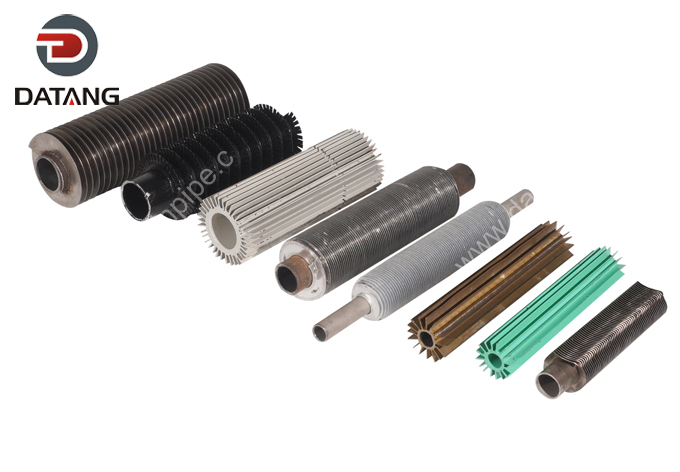
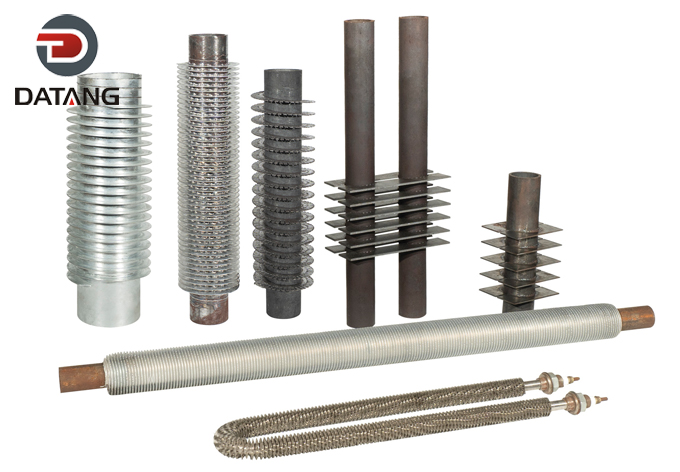
As a leading global supplier of heat exchange components, Datang Finned Tube leverages years of manufacturing expertise to provide this comprehensive analysis of the four most common industrial finned tubes: L-Foot, G-Type (Embedded), Extruded, and Welded.
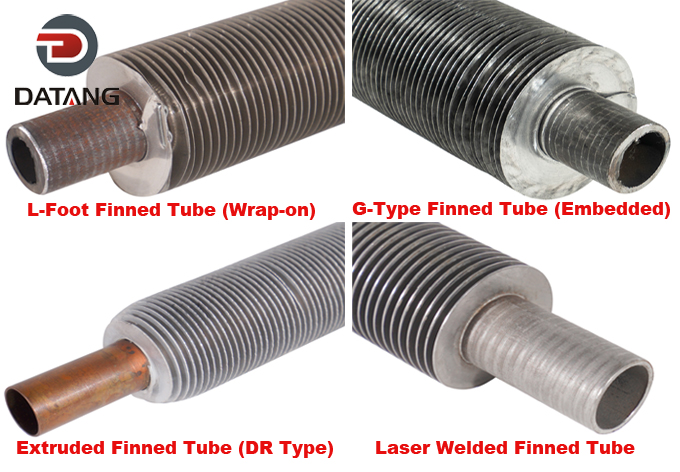
1. L-Foot Finned Tube (Wrap-on)
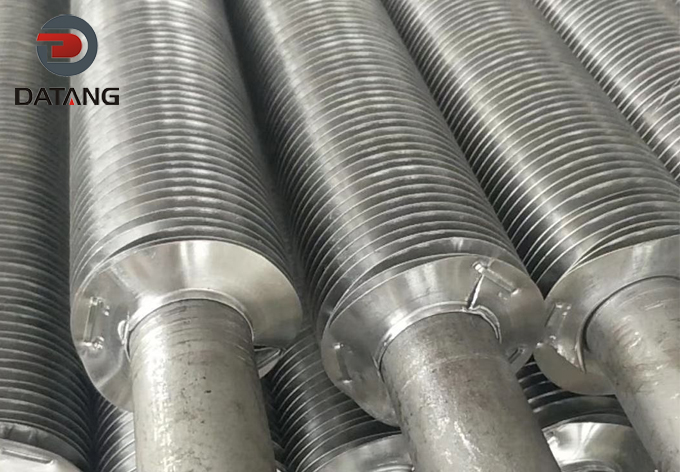
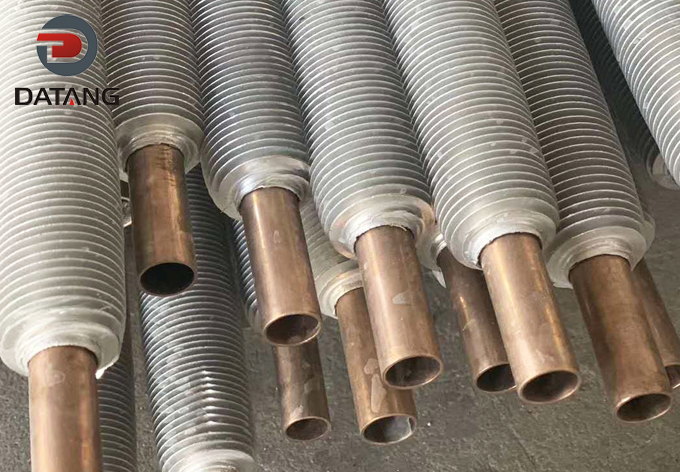
Structure: The aluminum fin(or copper fin) strip is wound onto the base tube under controlled tension, with the foot of the fin formed into an “L” shape to cover the tube surface.
-
Max Operating Temperature: Approx. 130°C – 150°C (266°F – 302°F).At high temperatures, due to thermal expansion and contraction of metals, fins fixed solely by tension can loosen, increasing contact thermal resistance and causing a sharp decline in heat transfer efficiency.
-
Pressure Range: Suitable for low to medium-pressure air cooling systems.Its mechanical strength relies mainly on the pre-tensioning force of the fin strip and cannot withstand high-pressure shocks or severe vibration.
-
Best For: General HVAC, ventilation units, and non-corrosive environments.Such as,civil air conditioning, air coolers, general factory heating.
Advantages & Limitations: The L-foot design is highly cost-effective and provides basic atmospheric corrosion protection by covering the base tube. However, because it relies on mechanical tension, the fins may loosen over time due to thermal cycling (expansion and contraction), leading to increased thermal resistance.
2. G-Type Finned Tube (Embedded)
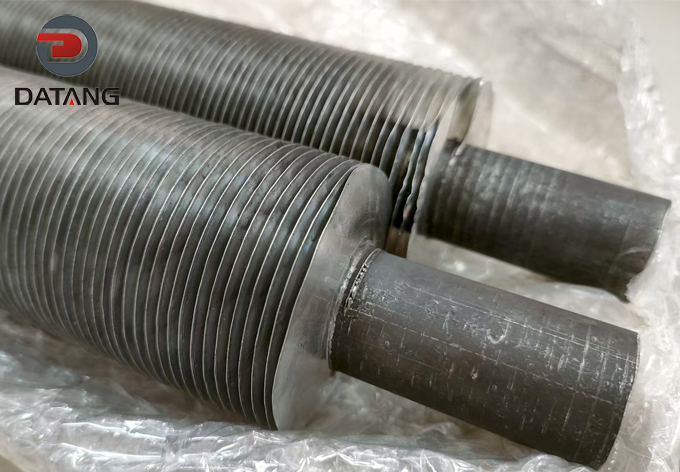
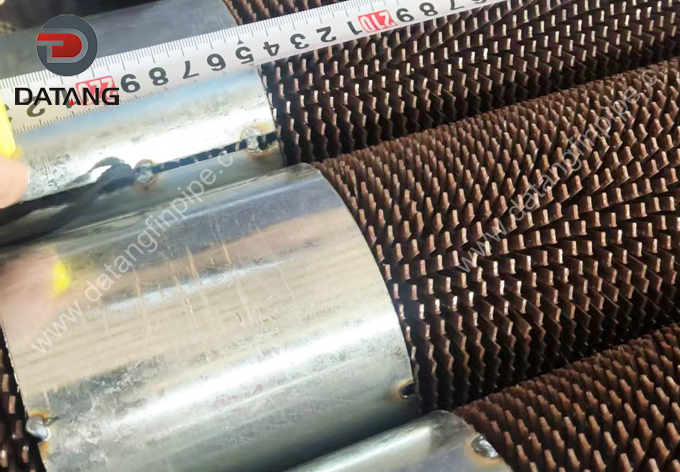
Structure: A spiral groove is mechanically cut into the wall of the base tube. The fin strip is then wound into the groove and locked into place by back-filling the displaced metal.To prevent spring-back and detachment, spot welding is usually applied at both ends for reinforcement.
-
Max Operating Temperature: Up to 400°C (752°F).The mechanical embedding structure is more stable than simple tension winding(L-type).
-
Pressure Range: High thermal load conditions; excellent resistance to frequent thermal cycling. However, since microscopic gaps still exist between the fins and the base tube, there remains a risk of loosening under prolonged high pressure or alternating stress.
-
Best For: Petrochemical air coolers, power plant condensers, and high-temperature applications.
Advantages & Limitations: The G-type fin offers exceptional mechanical bonding, ensuring no loosening or loss of thermal efficiency even at extreme temperatures. Datang Finned Tube recommends ensuring the base tube has sufficient wall thickness to accommodate the depth of the groove.
3. Extruded Finned Tube (DR Type)
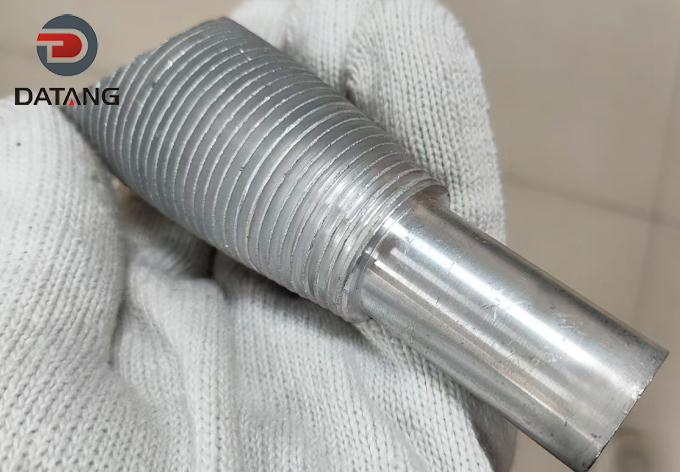
Structure: Extruded integral finned tubes, also known as roll-formed finned tubes,Formed by cold-extruding a bimetallic tube (an outer aluminum sleeve over a base tube). During this process, spiral fins are directly “extruded” from the wall of a thick-walled plain tube, making the fins and base tube a seamless, monolithic unit.The process creates a 100% metallurgical bond between the fin and the tube wall.
-
Max Operating Temperature: Approx. 280°C – 300°C (536°F – 572°F).Due to their integrated structure, they have no contact thermal resistance and excellent thermal conductivity. Their high-temperature resistance is superior, allowing for stable long-term operation in environments of 300°C or even higher.
-
Pressure Range: Ideal for high-pressure and high-vibration environments.Possesses extremely high mechanical strength and pressure-bearing capacity, making it an ideal choice for high-pressure fluid heat exchange. Its connection-free structure completely eliminates the risk of fin detachment.
-
Best For: Offshore platforms, high-humidity coastal areas, and heavy-duty industrial coolers.
Advantages & Limitations: This is the “gold standard” for durability. The fins are incredibly robust and can be cleaned with high-pressure water without deformation. Since the outer aluminum sleeve completely encases the base tube, it offers superior corrosion resistance and zero contact thermal resistance.
4. Welded Finned Tube (High Frequency / Laser Welded)
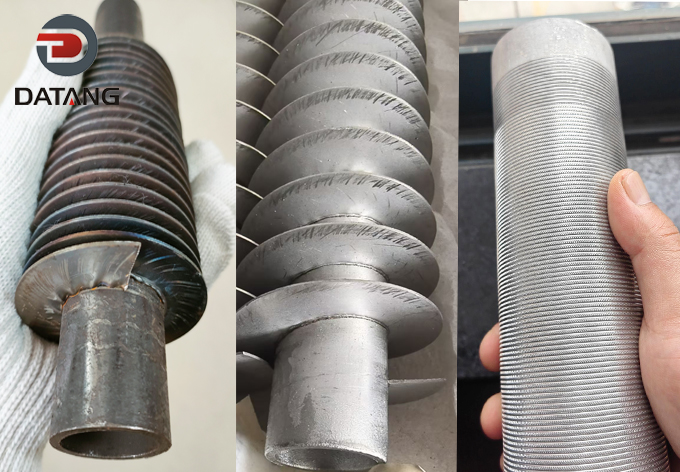
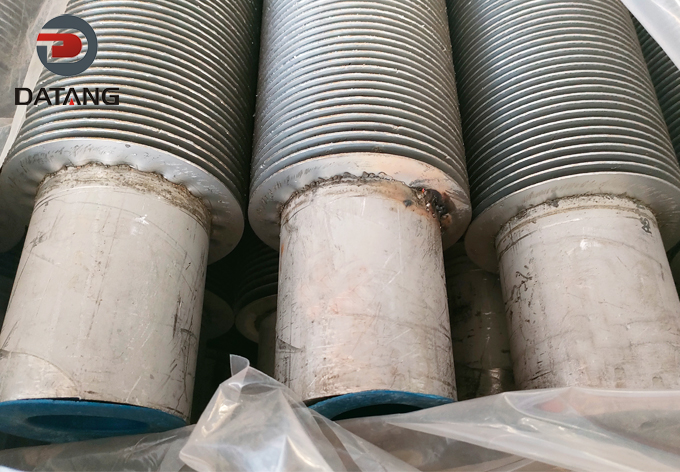
High-frequency welded steel finned tube for high pressure applications
Laser welded stainless steel finned tube for high temperature
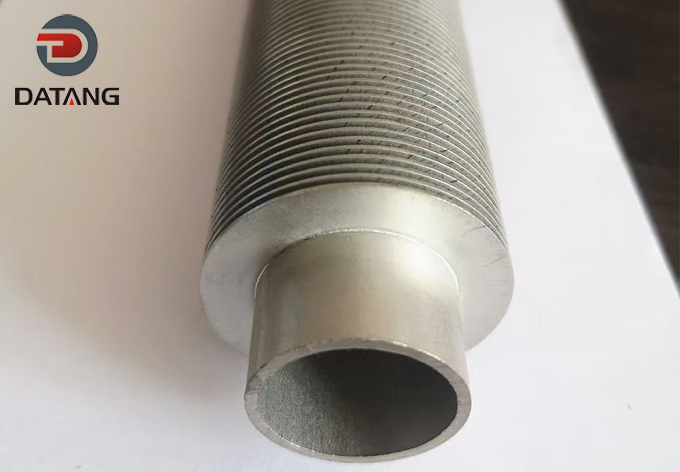
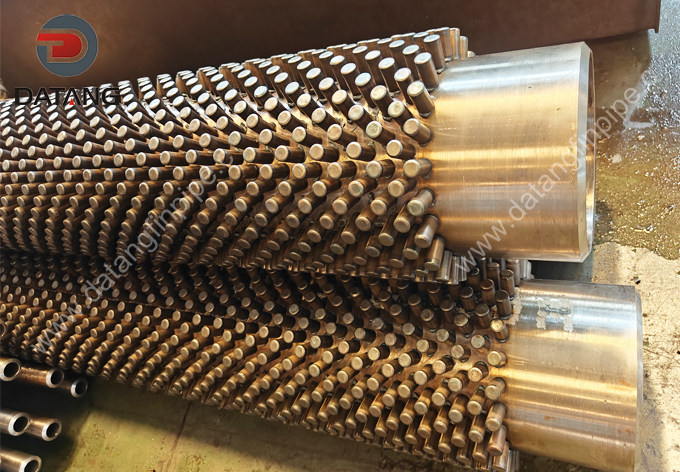
Structure: The fin is helically wound and continuously welded to the base tube using High-Frequency (HFW) or Laser welding technology.High-frequency welding is one of the most widely used advanced processes today. It utilizes the resistance heat generated by high-frequency current to instantaneously melt and fuse the edge of the fin strip with the surface of the base tube, forming a metallurgical bond.Laser welding utilizes a high-energy-density laser beam to instantaneously melt the contact surface between the fin and the base tube, forming a narrow and deep metallurgical bond. Compared to traditional welding, the heat-affected zone is extremely small, maximizing the preservation of the base material’s properties while achieving superior welding precision and strength.
-
Max Operating Temperature: Dependent on material (Carbon Steel, Stainless Steel, etc.), often exceeding 450°C – 600°C (842°F – 1112°F).
-
Pressure Range: The preferred choice for ultra-high-pressure applications.
-
Best For: Waste heat recovery, boiler economizers, and power generation.
Advantages & Limitations: Welded fins provide a permanent metallurgical bond. Laser welding, in particular, offers a minimal heat-affected zone and a nearly 100% bond rate. These tubes are incredibly tough and resistant to the abrasive forces of ash and soot found in flue gas environments.
Key Comparison Table
| Fin Type | Bonding Method | Max Temp | Corrosion Resistance | Durability | Relative Cost |
| L-Foot | Tension Wrap | 150°C | Moderate | Standard | Low (Economy) |
| G-Type | Mechanical Embedded | 400°C | Low | Excellent | Medium |
| Extruded | Bimetallic Extrusion | 300°C | Maximum | Superior | High (Premium) |
| Welded | Metallurgical Weld | 600°C+ | Material Dependent | Superior | Medium-High |
Expert Selection Advice: Which one should you buy?
-
Environmental Factors: If your project is near the ocean or in a high-humidity zone, Extruded fins are essential to prevent base tube corrosion.
-
Temperature Stability: For systems that cycle on and off frequently, avoid L-foot. Choose G-Type or Welded to maintain a consistent heat transfer rate over years of use.
-
Budget Optimization: For standard ambient air cooling where initial CAPEX is the priority, L-Foot remains the most economical solution.
-
Harsh Media: When dealing with abrasive flue gases or dusty environments, the structural integrity of Laser Welded fins is irreplaceable.
Datang Finned Tube is committed to providing high-quality heat transfer solutions that meet international standards (ASTM, ASME). Whether you are dealing with extreme cold or ultra-high heat, our engineering team is ready to assist with thermal calculations and product customization.
For specific technical specifications and project inquiries, please contact the Datang Finned Tube technical support team.