


In today’s industrial environment, the demand for energy efficiency and equipment durability in HVAC and industrial equipment heat exchange systems is unprecedented. As a leading global manufacturer, Cangzhou Datang Steel Pipe Co., Ltd. (Datang Steel Pipe) provides laser-welded finned tubes, which have become the gold standard in the field of high-performance heat exchange. This is especially true in the HVAC and industrial processing sectors, where there are higher requirements for performance, energy consumption, and equipment compactness.
Due to the superior thermal conductivity and mechanical strength imparted to finned tubes by the laser welding process, laser-welded finned tubes are becoming increasingly popular in high-performance heat exchangers. Unlike traditional tension winding or high-frequency welding fins, laser welding can form a 100% metallurgical bond between the fins and the base tube, thereby eliminating air gaps and contact thermal resistance. Laser welding technology improves durability, thermal conductivity, and overall operating efficiency. Therefore, it has become an important solution for modern HVAC heat exchanger systems.
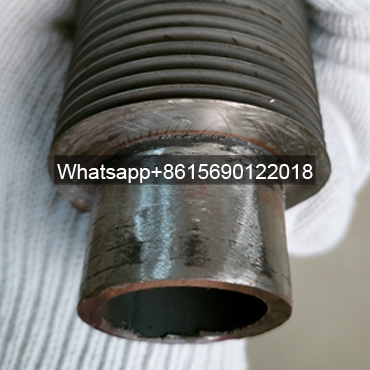
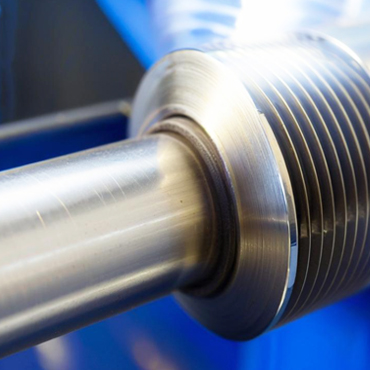
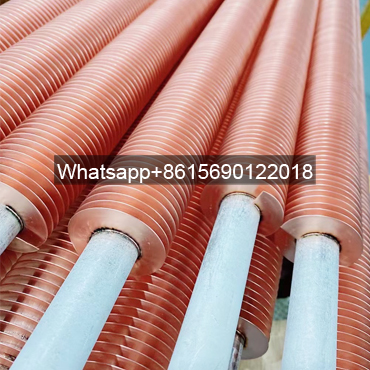
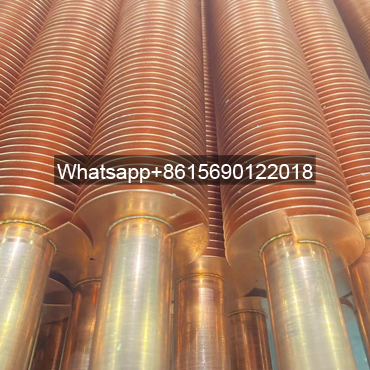
What Are Laser Welded Finned Tubes?
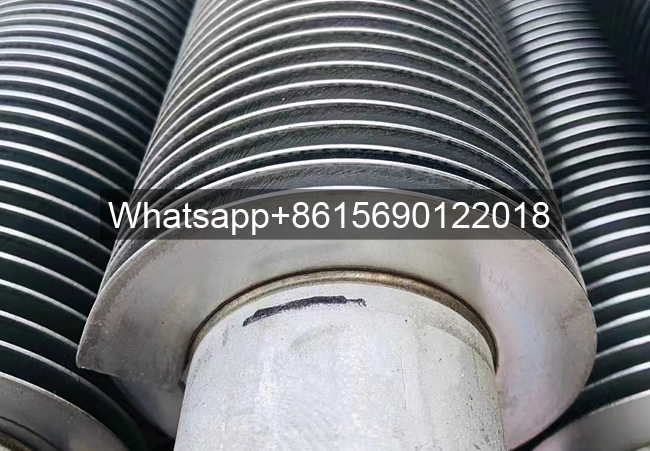
Laser welded finned tubes function by using a high-energy laser beam to create a strong, precise metallurgical bond between the fins and the base tube.
How to improve laser welded finned tubes heat transfer efficiency
Traditional welding methods sometimes leave gaps between the fins and the tube wall. These gaps reduce thermal conductivity, thus weakening overall performance.
Laser welded finned tubes function by using a high-energy laser beam to create a strong, precise metallurgical bond between the fins and the base tube.
The high precision of laser welding allows for a thinner heat-affected zone (HAZ). This maintains the mechanical properties of the tubes and fins, avoiding the brittleness issues common in other welding techniques.
Furthermore, laser welding can utilize a variety of material combinations—carbon steel or stainless steel finned tubes. Stainless steel offers greater flexibility in corrosive or high-humidity, high-temperature environments commonly found in HVAC and industrial cooling applications.
Laser welded vs. high-frequency welded finned tubes
- Superior Heat Transfer: The seamless weld creates a continuous thermal path, minimizing contact resistance and boosting heat conduction efficiency by up to 30% compared to conventional tubes.
- Enhanced Durability: The strong, permanent bond makes the tubes highly resistant to vibration, thermal shock, and corrosion, significantly extending their service life and reducing maintenance needs.
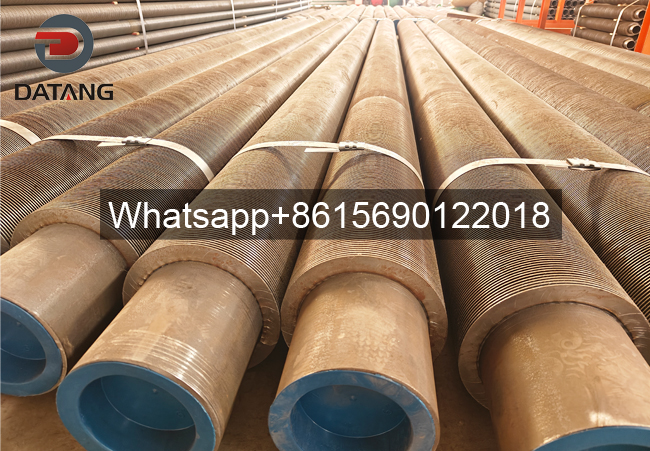
- Compact & Efficient Design: The technology allows for thinner and more densely packed fins, maximizing the heat transfer surface area in a smaller footprint, which leads to more compact and energy-efficient systems.
Why HVAC Systems Use Laser Welded Finned Tubes
A solution that reduces operating costs while improving thermal performance is what the HVAC and industrial heat exchange industries have been seeking. Therefore, laser-welded finned tubes have stood out among finned tubes made using various processes.
Laser-welded finned tubes offer several key advantages:
- Stronger fin strength
- Higher heat transfer performance
- Longer service life
- Stronger corrosion resistance
- Lower maintenance costs
Widespread Applications in the Field of HVAC and Industrial Heat Exchangers
Industrial production processes involve extensive heating, cooling, and waste heat recovery stages, placing extremely high demands on the efficiency and durability of heat exchange equipment. Thanks to their exceptional characteristics, laser-welded finned tubes have emerged as the ideal choice for a wide range of demanding operating conditions.
1. Power Generation and Energy
In the economizers and air preheaters of power plant boilers, laser-welded finned tubes play a pivotal role in enhancing heat recovery efficiency. By efficiently recovering waste heat from flue gas to preheat feedwater and combustion air, fuel consumption can be significantly reduced and the overall thermal efficiency of the power generation system improved; this constitutes a crucial technical means for achieving energy conservation and consumption reduction in power plants.
-
Waste Heat Recovery Units (WHRU): Laser-welded pipes are commonly used in waste heat recovery units (WHRUs).Capturing heat from gas turbine exhaust or industrial furnaces to preheat water or air.This significantly improves the overall efficiency of the power plant.
-
Boiler Economizers: Used to improve the thermal efficiency of steam boilers by extracting heat from flue gases.
-
Condensers: Their high heat transfer coefficient allows for more compact designs in thermal power plants.
- Air Preheater: Its exceptional corrosion resistance meets the rigorous requirements of equipment such as waste heat recovery systems, thereby significantly extending maintenance cycles.
2. HVAC and Refrigeration
In the HVAC sector, the primary goals are space optimization and energy savings. Datang Finned Tube solutions are increasingly utilized in:
-
Air-Cooled Heat Exchangers (ACHE): Used in large-scale commercial air conditioning and industrial cooling systems where water resources are limited.
-
Heat Pump Systems: Enhancing the evaporation and condensation phases in industrial-grade heat pumps to achieve higher CO2 efficiency.
-
Data Center Cooling: Managing the high heat density of modern server rooms requires the precision and reliability of laser-welded fins to prevent leaks and maximize cooling.
- Refrigeration Systems: Serving as high-efficiency evaporators and condensers in large-scale refrigeration installations.
3. Petrochemical and Chemical Processing
These industries require materials that can withstand corrosive fluids and extreme thermal cycling.
-
Oil and Gas Refineries: Used in crude oil heaters and gas coolers where high thermal stress can cause wound fins to loosen over time.
-
Chemical Reactors: Facilitating precise temperature control during exothermic or endothermic reactions.
-
Cryogenic Applications: The stability of the laser bond ensures performance at extremely low temperatures without fin separation.
4.Marine and offshore environments
By using corrosion-resistant materials such as duplex stainless steel or titanium, laser welded fin tubes can provide a long and durable service life in high salt spray environments.
Laser welded vs. High-frequency welded vs. Cold-wound finned tubes
Technical Specifications and Customization at Datang Fin Tubes
1. Laser Welded Fin Tube Material
Laser welding allows for the bonding of similar or dissimilar metals, providing high flexibility for corrosive or high-temperature environments.
- Carbon Steel: ASTM A179, A192, A106 Gr. B, A210
- Stainless Steel: TP304/304L, TP316/316L, TP321, TP347G, S31803 (Duplex)
- Alloy Steel: T1, T11, T22, T5, T9, P91
- Copper & Copper Alloys: C12200, CuNi 70/30, CuNi 90/10
Each material is suitable for different HVAC and industrial operating environments.
2. Base Tube Specifications
| Parameter | Range (Metric) | Range (Imperial) |
| Outer Diameter (OD) | 10 mm – 50 mm | 0.39″ – 2.0″ |
| Wall Thickness | 0.8 mm – 5.0 mm | 0.0315″ – 0.20″ |
| Tube Length | Up to 18,000 mm | Up to 60 ft |
3. Fin Specifications
| Parameter | Range (Metric) | Range (Imperial) |
| Fin Height | 5 mm – 25 mm | 0.20″ – 1.0″ |
| Fin Thickness | 0.4 mm – 1.5 mm | 0.015″ – 0.06″ |
| Fin Pitch (Density) | 2 mm – 25 mm | 1 to 12 Fins Per Inch (FPI) |
| Fin Material | Matching or compatible with base tube | (e.g., SS304 Fin on CS Tube) |
Related Case Studies
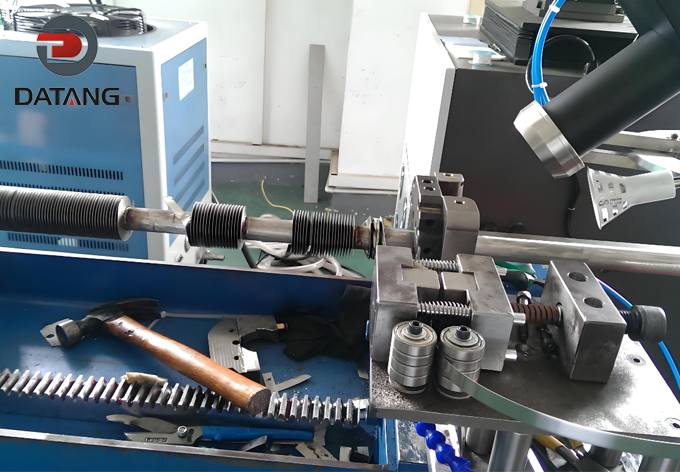
1.Delivers High-Performance Laser Welded Fin Tube Machine to Turkey
Manufacturing Advantages and Quality Assurance
Choosing the right heat transfer component partner is just as important as the technology itself. Datang adheres to stringent quality control standards throughout the entire laser welding process. Every batch undergoes hydrostatic or pneumatic pressure testing to ensure weld integrity and pipe pressure resistance. Our automated laser welding system guarantees consistency in high-volume production, crucial for OEM partners in the HVAC industry who require tight tolerances and repeatable results.
Embracing laser welding is also an inevitable trend towards energy conservation and environmental protection. This process is more energy-efficient than traditional welding, eliminating the need for filler metal, thus reducing material waste and environmental impact. For international buyers seeking reliable, high-quality products made in China, our factory perfectly blends technical expertise with cost-effectiveness.
By focusing on the synergy of materials science and advanced welding technologies, we help customers create more efficient, compact, and durable heat exchangers. Whether designing custom prototypes for new HVAC systems or undertaking large-scale replacements of industrial boilers, our team provides the necessary engineering support to help you address complex thermal challenges.
