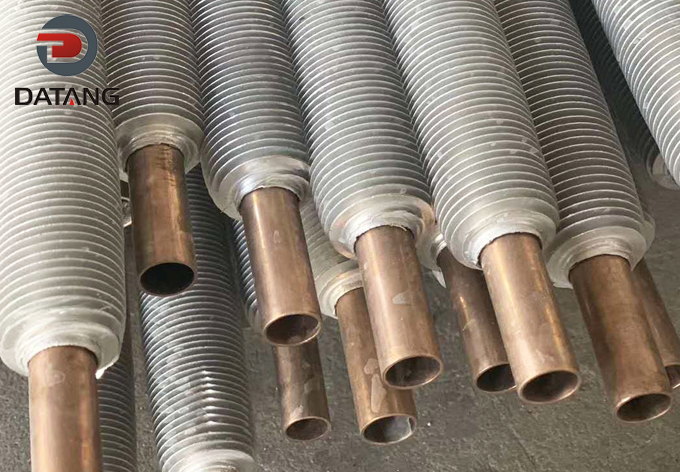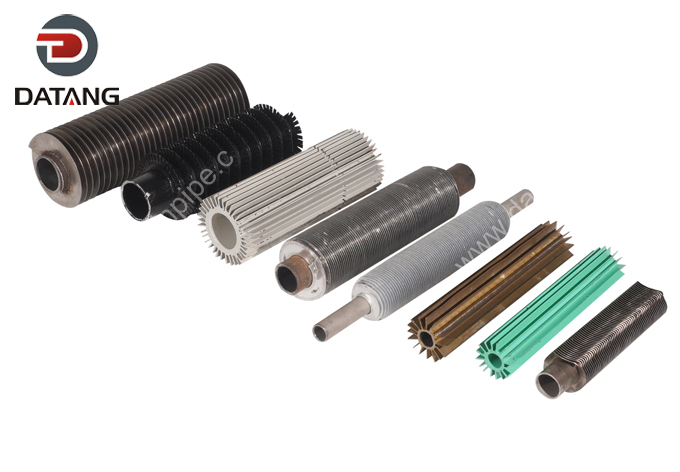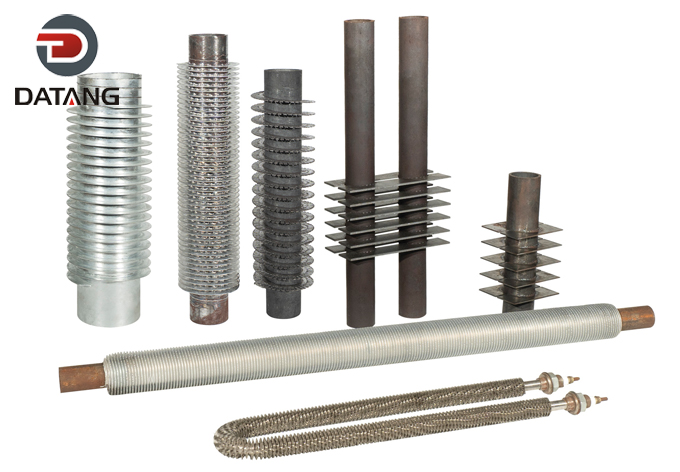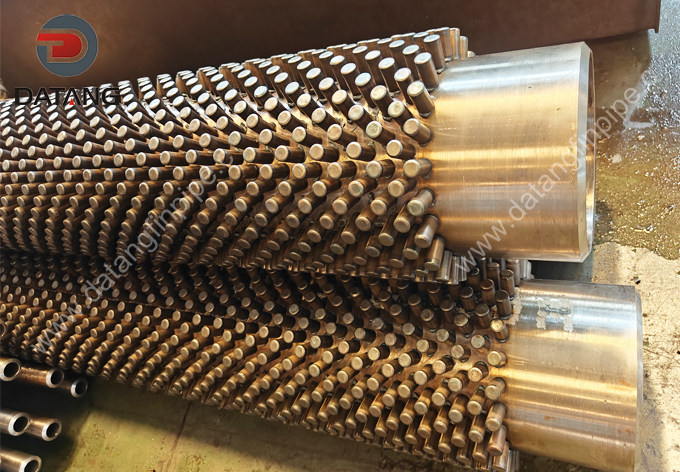


Serrated finned tubes are designed with teeth (serrations) along the fins to expand the heat transfer surface area and enhance thermal efficiency. Compared to solid (plain) finned tubes, radial serrations break up the boundary layer and enhance gas turbulence, boosting heat transfer efficiency by 15% to 20%. However, this also demands higher bonding strength between materials and cleaner operating conditions.
When purchasing serrated finned tubes, the key lies in balancing heat transfer efficiency, gas flow resistance, corrosion-resistant lifespan, and anti-fouling capabilities. Selection should follow the principle of “Operating Conditions Dictate Material, Parameters Dictate Structure, and Manufacturing Process Dictate Lifespan,” with particular focus on matching medium characteristics, temperature/pressure requirements, and high-frequency welding bonding strength.
Material Matching (Based on Medium & Temperature)
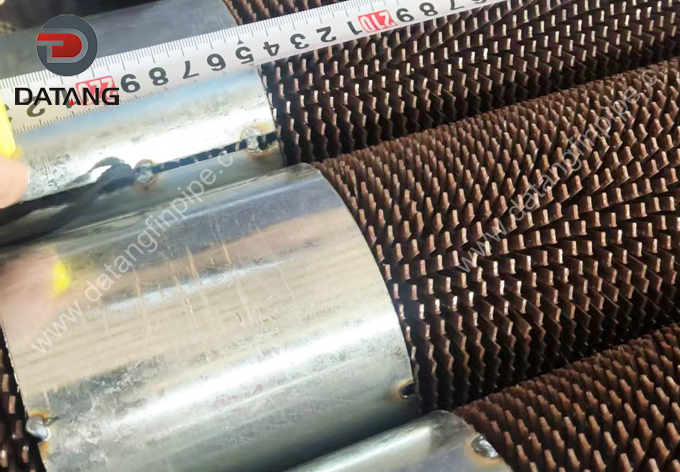
The base tube and fin materials must balance thermal conductivity with corrosion resistance. Select materials based on the corrosiveness of the working medium:
-
Clean water / Steam: Select 20# carbon steel (equivalent to ASTM A106/A179 Grade B).
-
Sulfur-bearing flue gas / High-corrosion environments: Select ND steel (09CrCuSb) or 304/316 stainless steel.
-
High-temperature alloy environments: Select alloy steel.
Ensure full material compatibility between the base tube and the fins to prevent galvanic corrosion.
| Material Combination | Suitable Operating Conditions | Common Applications |
| Carbon Steel + Carbon Steel (SA179 / SA210) | Low-to-medium pressure, non-highly corrosive flue gas, temp < 400°C | Petrochemical fired heaters, industrial boiler economizers |
| Stainless Steel + Stainless Steel (304 / 316L) | High temperature, sulfur-bearing/acidic corrosive gas, temp > 400°C | Waste heat recovery systems, flue gas desulfurization (FGD/SCR) |
| Alloy Steel (12Cr1MoV, P91) | Ultra-high pressure, extremely high wall temperatures | Power plant superheaters and reheaters |
| Bimetallic (Aluminum Fin + Steel Tube) | Lower medium temp (< 300°C), requiring maximum heat transfer efficiency | Air Cooled Heat Exchangers (ACHE), LNG vaporizers |
Noted: The thermal expansion coefficients of the base tube and the fins must match. Under large temperature differentials, High-Frequency Welding (HFW) is the optimal process to ensure long-term, tight bonding between the fins and the tube wall without loosening.
Geometric Parameters of Serrated Finned Tubes
-
Fin Profile: Serrated (sawtooth) fins increase the outer edge surface area and enhance fluid turbulence, delivering a higher heat transfer coefficient. This design is well-suited for conditions with low air velocity or a high risk of fouling.
-
Base Tube Specifications: Outer diameter ranges from 38 to 51 mm, with adequate wall thickness to meet pressure requirements (a wall thickness of $\ge 3\text{ mm}$ is recommended for steam applications).
-
Base Tube Length & Customization Capabilities
-
Single-Tube Length: Confirm the single-tube length capability (up to 12–24 meters to minimize the risk of joint leaks).
-
Layout & Connection Standards: Verify the tube-row layout, as well as flange or threaded connection standards.
-
Non-Standard Conditions: For non-standard operating conditions, the manufacturer must possess full customization capabilities across all parameters (including tube diameter, fin pitch, and tooth profile) alongside on-site survey and measurement capabilities.
-
-
Fin Dimensions:
-
Fin Height: 10 to 25 mm (typically kept to $\le 15\text{ mm}$). While taller fins increase heat dissipation, they also raise airflow resistance. Keeping the height in check prevents excess pressure drop and high energy consumption.
-
Fin Thickness: 1.0 to 2.0 mm. Thinner fins offer faster heat transfer but deform easily; overly thick fins increase fluid drag.
-
-
Fin Pitch / Tooth Spacing: Measured in teeth per inch (TPI) or as a pitch of 3 to 60 mm. A tighter pitch increases heat transfer area, but elevates airflow resistance and fouling risks. For dust-laden or easily scaling conditions, a pitch larger than 8 mm is recommended to prevent clogging and allow high-pressure water washing.
-
Serration Width & Depth: Tooth width typically ranges from 4 to 12 mm, with tooth depth set at 50% to 80% of the fin height. This geometry breaks up the boundary layer to enhance heat transfer—the closer the cut depth approaches the tube wall, the stronger the turbulent mixing effect.
Note: Please specify the above basic parameters to the manufacturer when placing an inquiry or order.
Welding Process Verification for Serrated Fin Tubes
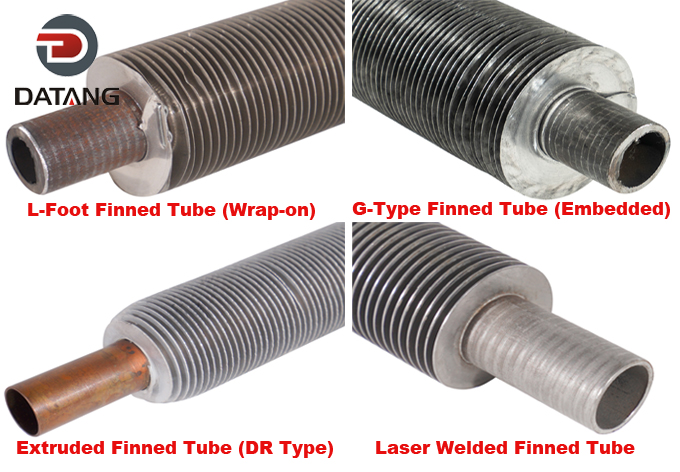
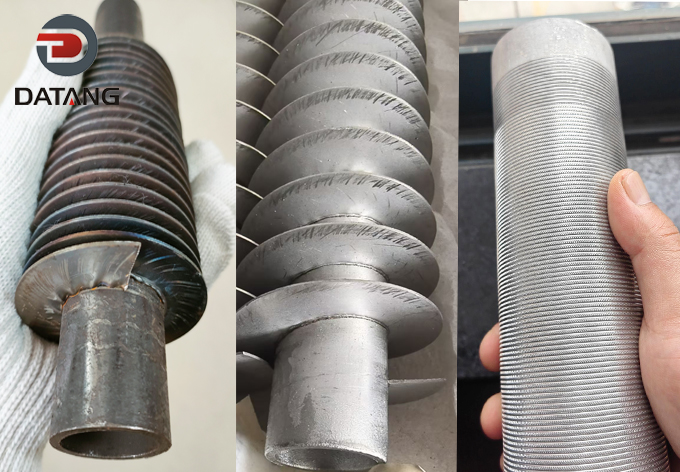
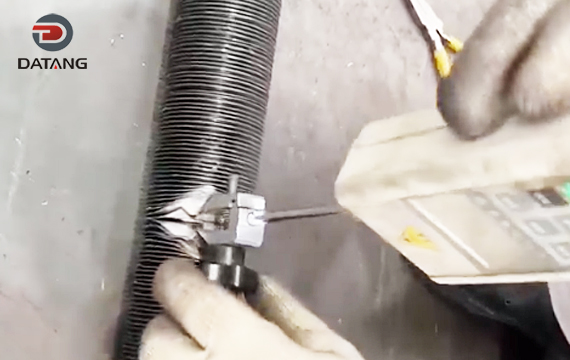
The vast majority of serrated finned tubes are manufactured using High-Frequency Resistance Welding (HFW). At Datang Finned Tube factory, we also offer Laser Welding, an upgraded alternative to HFW that achieves a welding bond rate of up to 99%. Both processes ensure a tight fit between the fins and the base tube, as well as a high bonding rate, thereby significantly reducing contact thermal resistance. Ultimately, weld quality directly determines contact thermal resistance and the service life of the heat exchange equipment.
Note: Cold-wrapped or embedded/slip-on finned tubes are strictly prohibited due to their tendency to loosen/detach and experience rapid efficiency decay. Suppliers must provide metallographic cross-section reports or destructive testing proof to demonstrate a gap-free bond.
Here is the precise, professional English translation tailored for engineering datasheets, technical specifications, or equipment selection guides:
Operating Condition Suitability & Matching
1. Medium Characteristics
Identify the medium type both inside and outside the tubes.
-
Dust-bearing media: The serrated (segmented) structure effectively breaks up the boundary layer, enhances airflow turbulence, and provides anti-fouling capabilities.
-
Sticky ash or unburned oil residue (e.g., heavy oil boilers): The serration gaps are prone to ash accumulation and clogging. In such cases, opt for a wider tooth pitch or integrate a soot-blowing system.
-
Corrosive media: Corrosion-resistant materials such as 316L stainless steel or titanium alloys must be selected.
2. Temperature & Pressure
-
High-Temperature Conditions (>300 C°): Select heat-resistant materials (carbon steel, high-temperature alloy steel) and prioritize the welding bonding strength between the fins and the base tube.
-
High-Pressure Applications (Tube-Side Pressure >1.6 MPa): Extruded (integrally rolled) finned tubes are preferred to prevent fin detachment.
3. Airflow Resistance & Pressure Drop
Serrated finned tubes generate 10% to 25% higher air resistance compared to solid (plain) finned tubes. During equipment selection, you must re-verify that the residual pressure of the draft fan or induced draft fan (IDF) meets system requirements.
Weld Quality
The weld quality of serrated finned tubes directly determines their contact thermal resistance and overall service life:
-
Weld Fusion Rate (Bond Rate): The fusion rate must reach over 90% (premium-grade products can achieve 95% to 98%). Poor fusion not only severely degrades heat transfer efficiency, but also causes fins to detach easily under thermal stress.
-
Visual Inspection: Welds must be uniform and smooth, free from incomplete fusion (cold welds), burn-through, undercut, and spatter. The bending angles of the tooth profile must remain consistent.
-
Tensile Peel Test: Random sampling should be conducted for fin peel/tear testing. A passing weld must result in the tearing of the fin body itself, rather than separation/peeling at the weld seam.
Key Pitfalls to Avoid & Acceptance Criteria
-
Reject Tension-Wound (Cold-Wrapped) Fins: Serrated finned tubes strictly refer to high-frequency welded (HFW) spiral structures. Mechanical tension-wound fins—even if serrated—are inefficient products that will inevitably loosen or detach over long-term operation.
-
Hydrostatic Pressure Test Requirements: Prior to bulk procurement, request a hydrostatic test report. Focus key inspections on leak-tightness and structural deformation under 1.5 times the rated pressure.
Matrix of Common Application Scenarios
-
Industrial Drying / Space Heating:
Top Choice: Carbon steel high-frequency welded (HFW) serrated finned tubes.
Key Focus: Corrosion-resistant protective coating and thick-walled pressure-bearing capacity.
-
Boiler Economizers / Waste Heat Recovery:
Top Choice: ND steel (09CrCuSb) or stainless steel serrated finned tubes.
Key Focus: Resistance to low-temperature acid dew-point corrosion and high-turbulent heat transfer efficiency.
-
Chemical / Pharmaceutical:
Top Choice: Customized stainless steel (304/316) or duplex stainless steel depending on the medium composition.
Key Focus: Sanitary-grade finish and 100% full-weld sealed construction.
Not sure which serrated finned tube specification fits your needs? Share your medium type, inlet/outlet temperatures, operating pressure, dust conditions, and space limits—the Datang Technical Team will deliver expert advice tailored for you.