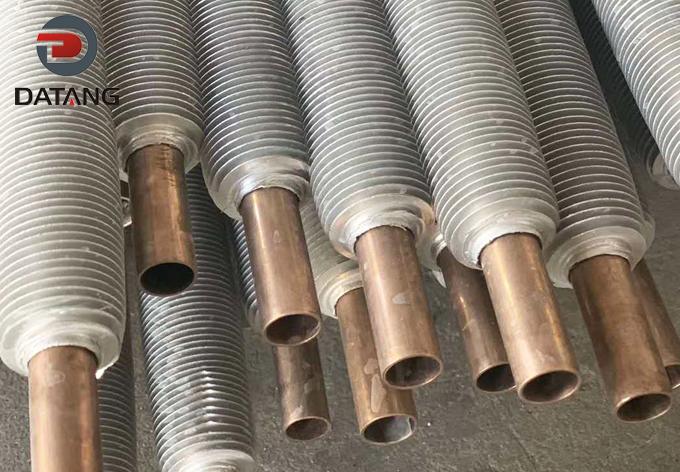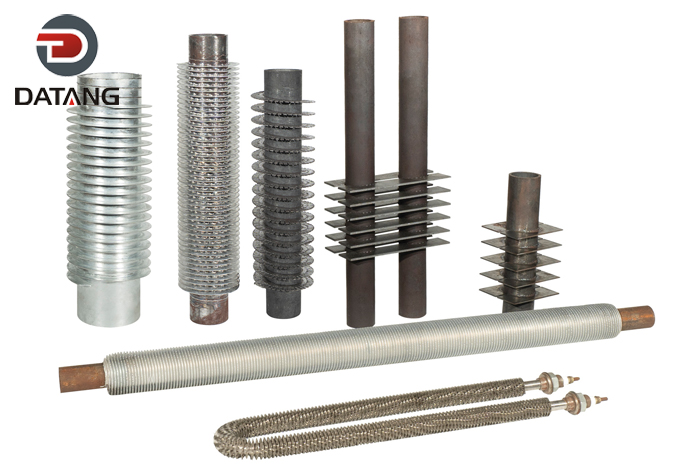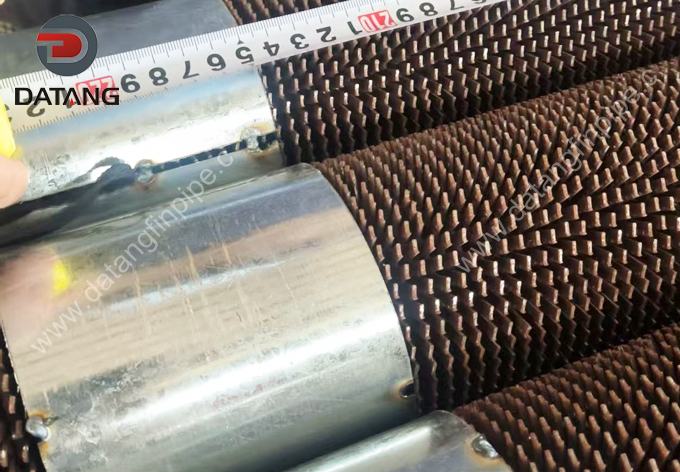


When purchasing finned tubes, appearance alone is not enough to determine product quality. Two tubes may look almost identical, yet differences in fin attachment, material selection, or dimensional accuracy can significantly affect their performance in service.
For example, a finned tube may meet the specified outside diameter and fin pitch but still have loose fins or inconsistent fin spacing. These problems may not be obvious in product photos, but they can affect installation, heat transfer, and long-term operating reliability.
So, what should you look for when evaluating finned tube quality?
Start by verifying that the materials and dimensions meet your technical specifications. You should also assess the fin-to-tube attachment, the manufacturer’s production controls, and the quality inspections performed before shipment.
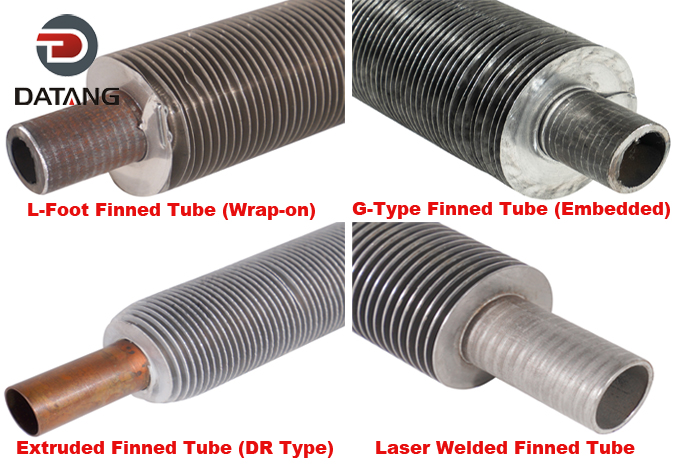
The specific inspection requirements depend on the type of finned tube you need. Extruded finned tubes, high-frequency welded finned tubes, and G-type embedded finned tubes, for example, have different structures and require different inspection methods.
This guide explains the key quality factors to check before placing an order. It also provides a practical checklist to help you compare suppliers and identify the questions you should discuss with a finned tube manufacturer.
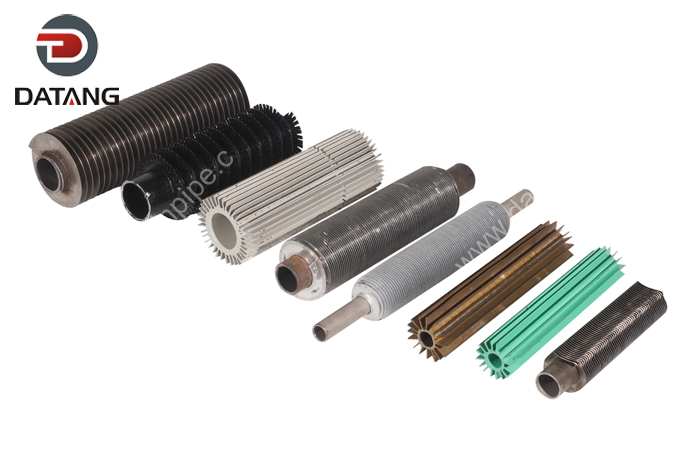
1. Material Selection: Match the Materials to the Operating Conditions
Material selection is the starting point for finned tube quality. Both the base tube and the fins must meet the design requirements and suit the intended operating environment.
Different applications have different requirements. Temperature, pressure, process fluids, corrosion mechanisms, mechanical loads, and project specifications should all be considered. Material selection should not be based on purchase price alone.
How to Select Materials for Different Applications
- Steam, hot air, and non-corrosive environments: Carbon steel base tubes with carbon steel fins may be suitable for high-frequency welded finned tubes, depending on the design conditions.
- Low-temperature applications, air cooling, and space heating: Aluminum-finned or copper-finned configurations, including suitable bimetallic finned tubes, may offer good heat-transfer performance. Their allowable operating temperatures depend on the fin material, base tube, attachment structure, and design conditions.
- Corrosive environments: Applications involving sulfur-bearing flue gas, chlorides, or chemical media require careful corrosion assessment. Depending on the corrosion mechanism, options may include stainless steel base tubes and fins, suitable coated or galvanized steel products, or corrosion-resistant materials such as ND steel for specific flue-gas dew-point corrosion conditions.
- High-temperature and high-pressure applications: Confirm the base tube material, wall thickness, design pressure, design temperature, and applicable pressure requirements. A thicker wall may be necessary, but the required thickness must be determined by the project design rather than a universal rule.
- Humid or dusty environments: Suitable galvanized or extruded finned tube configurations may be considered for greenhouses, drying rooms, and similar applications. In dusty environments, an appropriate fin pitch is important to reduce the risk of fouling and blockage.
Carbon steel, stainless steel, and alloy steel are commonly used for base tubes, while fin materials vary with the manufacturing process and application.
No single material is suitable for every operating condition. The right material combination depends on the operating temperature, working fluid, corrosion environment, and required service life. If you are comparing different finning structures, our finned tube selection guide explains the main differences between extruded, G-type, L-type, and welded finned tubes.
What Should You Check on the Base Tube?
The base tube carries the process fluid and must withstand the specified pressure, temperature, and mechanical loads.
When evaluating base tube quality, check the following:
- Material grade: Confirm that the base tube material complies with the purchase specification.
- Outside diameter and wall thickness: Verify that the dimensions meet the approved drawings and specified tolerances.
- Mechanical properties: Check the required properties against the applicable material standard and material test documentation.
- Corrosion resistance: Consider the process fluid, external environment, and potential corrosion mechanisms.
- Material certificates: Request material certificates or other verification records as required by the purchase order.
What Should You Check on the Fin Material?
Fin material affects heat-transfer performance, corrosion resistance, and compatibility with the base tube and attachment method.
Aluminum is commonly used for extruded finned tubes and L-foot, LL-foot, and KL-foot finned tubes. Other materials may be selected according to the manufacturing process and application requirements.
When evaluating the fin material, consider:
- Compatibility between the thermal expansion coefficients of the fin and base tube materials.
- Corrosion compatibility under the expected operating conditions.
- Operating temperature and thermal cycling.
- The fin attachment or bonding method.
- Potential galvanic corrosion when dissimilar metals are in contact.
The material combination should be assessed as a complete system rather than evaluating the base tube and fins separately.
2. Reliable Fin-to-Tube Attachment
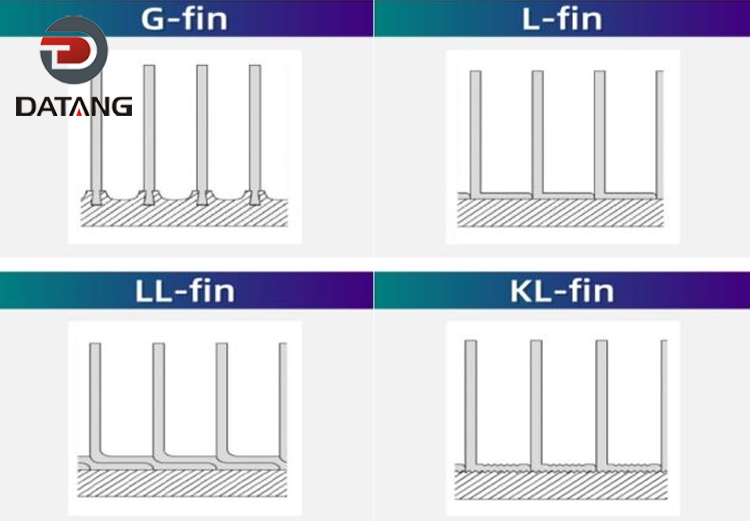
Fin attachment is one of the most important factors affecting finned tube quality. It influences heat transfer between the base tube and fins, as well as the mechanical reliability of the finished product.
Fins increase the external surface area available for heat transfer. However, heat must also pass from the base tube into the fins. Poor contact, incomplete bonding, or damage to the attachment can increase thermal resistance and reduce performance. It may also compromise the mechanical integrity of the tube.
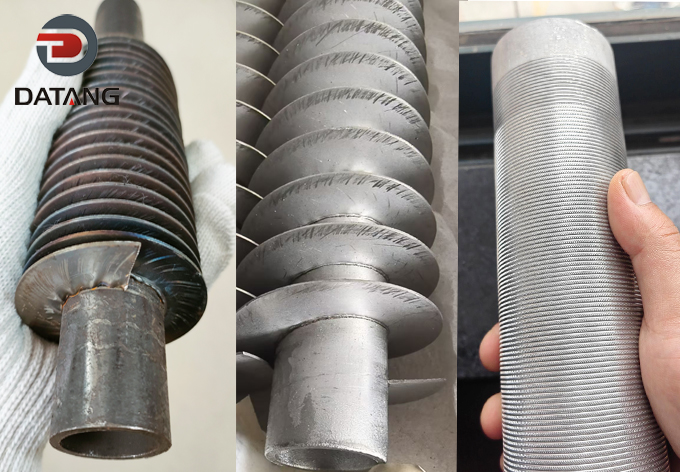
Poorly manufactured products may have loose fins, incomplete welds, or inconsistent contact. These defects can become more problematic during thermal cycling and long-term operation.
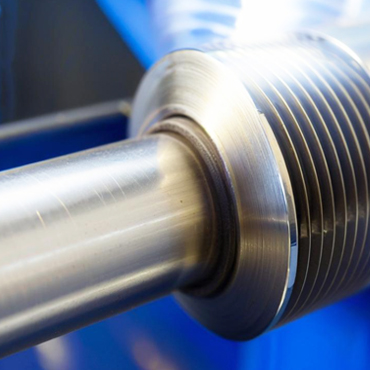
The appropriate inspection method depends on how the fins are manufactured and attached to the base tube.

How to Inspect Different Types of Finned Tubes
Extruded Finned Tubes
In an extruded finned tube, the fins are formed from the outer metal layer of the tube. For bimetallic construction, the aluminum outer layer is mechanically bonded to the inner core tube, and the fins are formed from the outer layer.Learn more about our extruded finned tubes.
This construction can provide consistent fin geometry and good fin-to-tube contact when properly manufactured. It is often considered for applications requiring stable heat transfer and a mechanically integrated fin structure, subject to material and temperature limitations.
Key inspection points:
- Fin profile and geometric consistency.
- Fin spacing and height along the tube.
- Condition of the outer metal layer.
- Integrity of the mechanical bond between the outer layer and the core tube in bimetallic construction.
G-Type Embedded Finned Tubes
G-type finned tubes are manufactured by inserting a fin strip into a groove machined into the base tube. The fin root is mechanically secured within the groove.See our G-type embedded finned tubes.
Key inspection points:
- Groove condition and consistency.
- Fin-root insertion and mechanical engagement.
- Fin alignment and spacing.
- Consistency of attachment along the full tube length.
L-Foot, LL-Foot, and KL-Foot Finned Tubes
For these finned tubes, a fin strip is helically wound around the base tube under tension. The fin foot makes mechanical contact with the tube surface.KL-foot finned tubes typically use a knurled tube surface to improve mechanical grip.Review our L/LL/KL type finned tubes for more details.
Key inspection points:
- Consistency of fin winding and spacing.
- Contact between the fin foot and the tube surface.
- Fin-end securing and resistance to loosening.
- Knurling condition and mechanical engagement for KL-foot designs.
High-Frequency Welded Finned Tubes
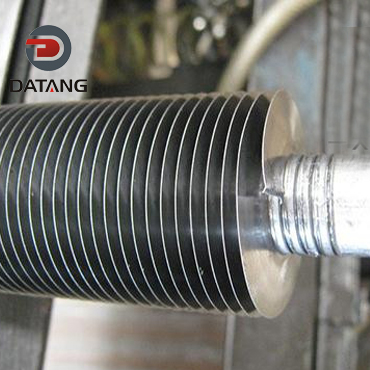
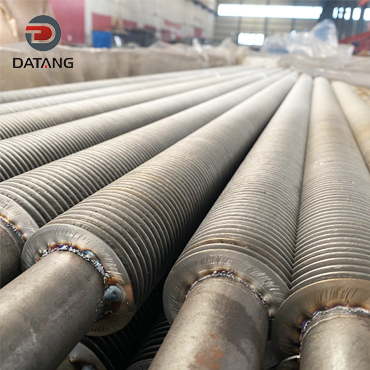
High-frequency welded finned tubes are manufactured by continuously welding a fin strip to the base tube using high-frequency resistance welding.They are used in various industrial heat-transfer applications, including power generation, petrochemical processing, waste heat recovery, and air-cooled heat exchangers.Fin attachment quality depends on the welding process and its control. Learn more about high-frequency welded spiral fin tubes.
Key inspection points:
- Weld continuity along the tube.
- Weld quality and attachment consistency.
- Fin alignment and spacing.
- Visible defects or other unacceptable discontinuities.
- Additional weld examination where required by the applicable specification.
Laser-Welded Finned Tubes
Laser-welded finned tubes use a controlled laser welding process to join the fin strip to the base tube, typically producing a narrow weld seam.For welded designs, inspection should address the weld continuity and the requirements specified for the application. See our laser welded fin tubes.
Key inspection points:
- Weld continuity and consistency.
- Fin alignment and geometry.
- Weld appearance and evidence of unacceptable defects.
- Additional inspection or testing required by the agreed quality plan.
Integral Low-Finned Tubes
Integral low-finned tubes are manufactured by forming fins directly from the base tube wall. Because the fins are not separate components attached to the tube, there is no separate fin-to-tube joint to inspect.
Key inspection points:
- Fin profile and dimensional accuracy.
- Consistency of fin height, thickness, and spacing.
- Surface condition and tube-wall integrity.
- Compliance with the specified tube and fin dimensions.
3. Surface Quality and Dimensional Accuracy
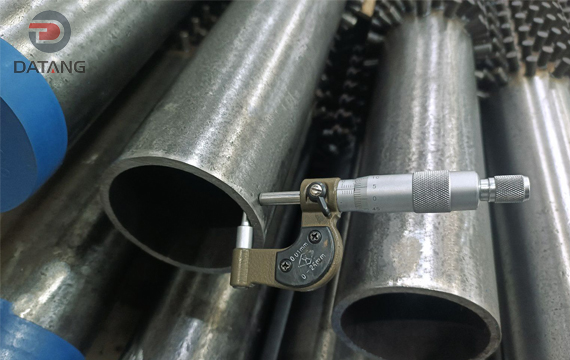
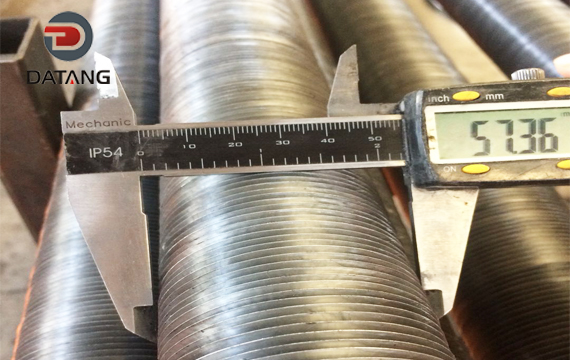
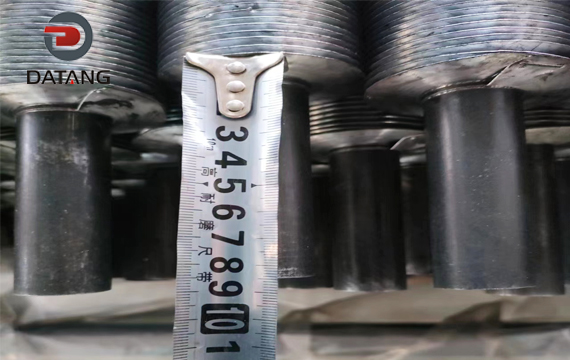
Dimensional accuracy is essential for installation, design compatibility, and consistent manufacturing quality.
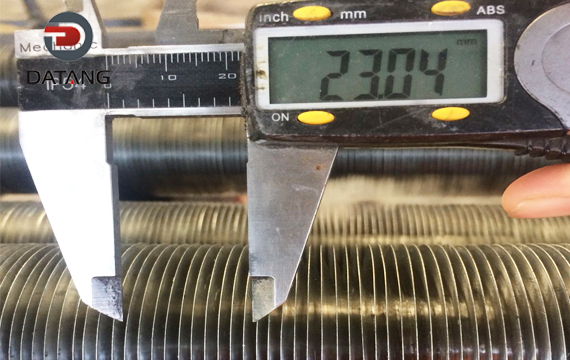
A finned tube may appear acceptable but still fail to meet the requirements of the approved drawing. Dimensional deviations can affect assembly, airflow passages, heat-transfer performance, and compatibility with the intended equipment.
What Should You Check?
Fin condition
Check for bent fins, excessive deformation, major cracks, burrs, or other unacceptable damage. Fin-edge cracking should be assessed against the applicable product specification and acceptance criteria.
Base tube condition
Inspect the base tube for dents, cracks, peeling, pitting, and other surface defects. Check for rust, oil, or contamination where these may affect product quality or subsequent installation. The required surface condition and any protective treatment should be specified before shipment.
Dimensional consistency
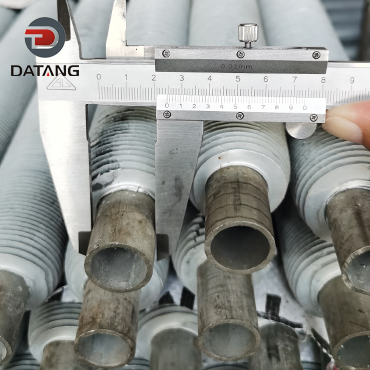
Verify that fin pitch, fin height, fin thickness, and fin outside diameter remain within the specified tolerances. Check tube straightness and overall length against the approved drawings.
Weld quality
For welded finned tubes, check that the weld is continuous where required and that there are no unacceptable defects, such as visible porosity, incomplete welding, or discontinuities. Plain ends should meet the specified length and finish requirements to facilitate installation and connection.
The actual acceptance limits should be defined by the product drawing, applicable manufacturing standard, and purchase specification. Values such as ±0.1 mm for outside diameter, ±0.2 mm for fin pitch, or a straightness limit of 1 mm per meter should not be applied universally to every finned tube type.
Key Dimensional Inspection Items
| Inspection item | Why it matters |
|---|---|
| Base tube outside diameter | Ensures compatibility with the specified design and connections. |
| Base tube wall thickness | Must meet the specified pressure and mechanical requirements. |
| Fin height | Affects the external geometry and available heat-transfer area. |
| Fin pitch | Influences fin spacing, airflow passages, and thermal and hydraulic performance. |
| Fin thickness | Determines fin geometry and must meet the material and design requirements. |
| Fin outside diameter | Must match the specified dimensions and installation requirements. |
| Tube length | Ensures the product fits the intended equipment and installation space. |
| Plain-end length | Provides the required unfinned section for welding, connection, or installation. |
A reliable finned tube manufacturer should use appropriate measuring instruments and compare the results with approved drawings and tolerances. Inspection records should identify the applicable requirements and document the results according to the agreed inspection plan.
4. Production Process Control
Consistent product quality depends on more than the final inspection. It also requires effective control throughout the manufacturing process.Cangzhou Datang Steel Pipe Co., Ltd. should establish and document appropriate production procedures and controls for each finned tube manufacturing method.Different finning methods require different production equipment and process controls. You can learn more about the equipment used for these processes on our finned tube manufacturing equipment page.
These controls may include:
- Verification of incoming raw materials.
- Setup, adjustment, and monitoring of production equipment.
- Control of fin geometry and fin attachment.
- Dimensional checks during production.
- Identification and disposition of nonconforming products.
- Final inspection against approved specifications.

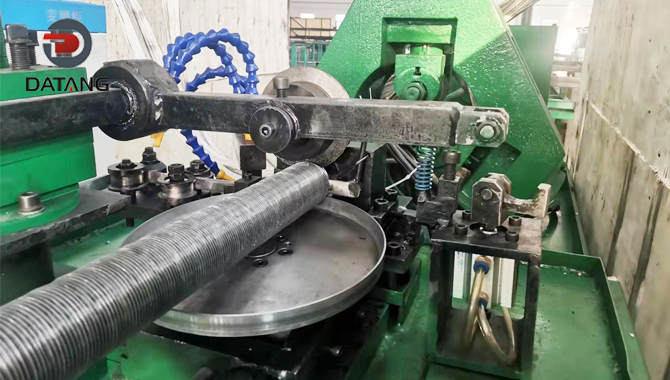


For large-volume orders, consistency across the entire production batch is particularly important. A sample that meets the requirements does not automatically demonstrate that every tube in the order will be consistent.
Ask your supplier how it monitors production quality, selects samples, records inspection results, and handles products that do not meet the requirements.
For Datang orders, the sampling plan should be defined according to the product specification, order requirements, and agreed inspection procedures. If a 30% sampling rate is specified for an inspection item, confirm how the samples are selected and which acceptance criteria apply.
5. Finned Tube Inspection and Quality Control
Quality inspection verifies whether the finished finned tubes meet the agreed technical requirements.
The inspection plan should take into account the product structure, applicable standards, operating conditions, and purchase contract. Not every finned tube type requires every possible test.
Datang’s quality control process should provide inspection records appropriate to the product and the requirements agreed with the customer.
Visual and Dimensional Inspection
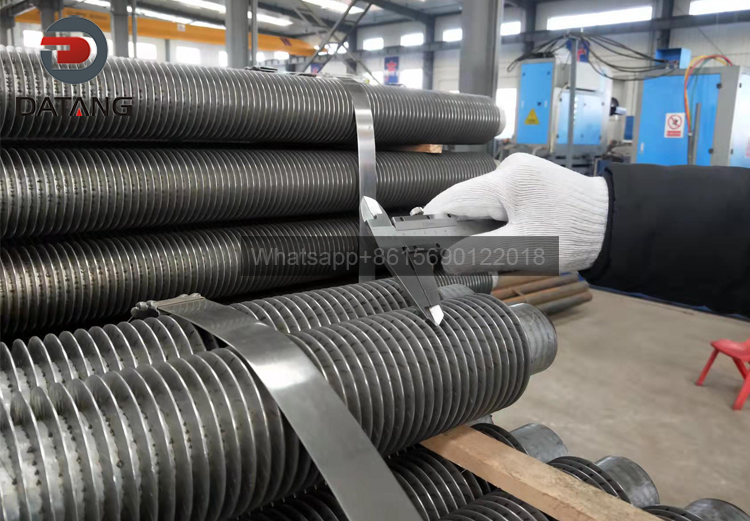
Visual inspection helps identify visible problems, including damaged fins, unacceptable deformation, surface defects, and irregular fin alignment.
Dimensional inspection verifies the specified tube and fin dimensions. Appropriate measuring instruments should be used, and the results should be evaluated against approved drawings and tolerances.
Material Verification
Material verification confirms that the base tube and fin materials meet the purchase requirements.
Depending on the project, this may involve:
- Reviewing material certificates.
- Checking material markings and traceability.
- Verifying material grades against the purchase specification.
- Conducting additional material testing when required.
Fin Attachment Strength Testing
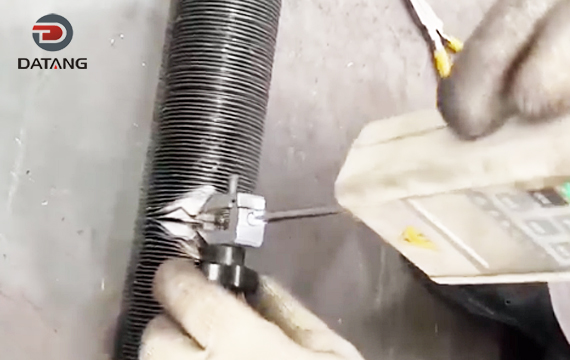
Depending on the finned tube design and applicable specification, pull-off, shear, or other attachment tests may be used to evaluate the mechanical integrity of the fin-to-tube connection.
The test method and acceptance criteria must be appropriate for the attachment structure. For example, the failure mode of an extruded finned tube differs from that of a high-frequency welded or mechanically embedded finned tube.
A result should not be judged solely by whether the fin breaks before the attachment separates. The relevant acceptance criteria must be established for the specific product and test method.
Sectioning and Weld Examination
For welded finned tubes, destructive examination of selected samples may be used to evaluate the weld interface or bonding condition.
For high-frequency welded finned tubes, the examination method and any required bonding or fusion criteria should be specified in the applicable manufacturing standard or purchase specification. A fixed fusion percentage should not be assumed to apply to every product.
Hydrostatic Pressure Testing
Pressure testing may be required to verify the pressure integrity of the base tube or finished product.
The test pressure, holding time, test medium, and acceptance criteria should be defined by the applicable standard, design requirements, and purchase contract. A pressure of 1.5 times the design pressure should not be treated as a universal requirement for all finned tubes.
Confirm whether testing is required for every tube or for a defined sample, and whether the test applies to the bare base tube or the finished finned tube.
Non-Destructive Testing (NDT)
Depending on the manufacturing process and project requirements, non-destructive testing may be used to identify unacceptable discontinuities.
Possible methods include eddy current testing and other suitable examination techniques. The selected method must be appropriate for the material, tube geometry, weld structure, and defect types being evaluated.
Additional Testing When Required
For demanding applications, the agreed inspection plan may include additional tests, such as:
- Thermal cycling tests.
- Corrosion testing, including salt spray testing where appropriate.
- Additional weld or attachment examinations.
- Other project-specific tests required by the customer or applicable standards.
These tests should be selected according to the expected failure mechanisms and operating conditions rather than applied indiscriminately.
Documentation and Acceptance Criteria
Before production begins, clearly define the inspection scope, applicable standards, sampling requirements, acceptance limits, and required documentation.
Depending on the purchase order, the required records may include:
- Base tube and fin material certificates.
- Dimensional inspection reports.
- Visual inspection records.
- Welding inspection or other relevant test reports, where applicable.
- Product identification and traceability records.
- A certificate of conformity or other specified quality documents.
Agreeing on these requirements in advance helps the manufacturer prepare the correct documentation and reduces the risk of delays during final acceptance.
6. Packaging and Transportation

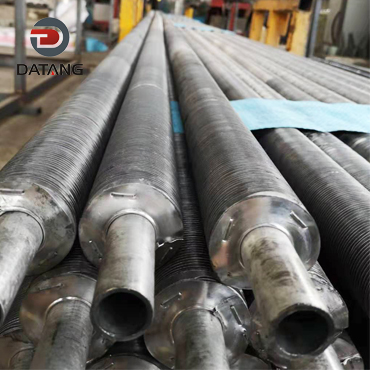
Finned tubes can be damaged during handling, storage, and transportation. Bent fins, localized deformation, corrosion, and damaged tube ends may cause problems during inspection or installation.
Packaging should therefore be considered part of the overall quality requirements, not simply the final shipping step.
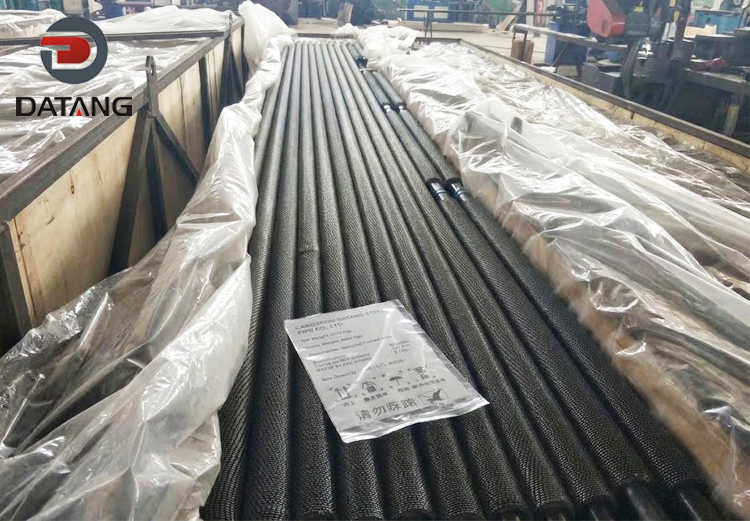
Datang can arrange export-oriented wooden crate packaging according to the order requirements to help protect finned tubes during handling and transportation.
Before shipment, confirm the packaging method, lifting and handling requirements, corrosion protection, tube-end protection, product markings, and any special storage or shipping instructions.
For long-distance or overseas deliveries, the packaging should be suitable for the product dimensions, shipment conditions, and agreed delivery requirements.
7. How to Evaluate a Finned Tube Manufacturer
High-quality finned tubes depend on both well-defined specifications and the manufacturer’s ability to meet those specifications consistently.
When comparing finned tube suppliers, look beyond product photos and price quotations. Evaluate manufacturing capability, quality control, technical communication, production consistency, and delivery requirements.
Manufacturing Capability
First, confirm that the manufacturer has the equipment, process knowledge, and production capacity required for your finned tube type, material combination, dimensions, and order quantity.
A supplier’s capabilities should be supported by relevant manufacturing information rather than broad claims that it can produce every type of finned tube.
Cangzhou Datang Steel Pipe Co., Ltd. offers customized finned tube manufacturing based on customer drawings and technical requirements, subject to manufacturing feasibility.
Quality Control and Inspection
Ask how the supplier verifies raw materials, controls production, inspects finished products, and handles nonconforming items.
Datang operates under an ISO 9001 quality management system. When evaluating the supplier, you can request relevant certification information and confirm the scope and validity of the certificate. You should also review the inspection procedures and records applicable to your order.
A quality management certificate is useful evidence of a formal management system, but it does not replace product-specific inspection and acceptance.
Technical Communication
A capable supplier should be able to review technical drawings, clarify ambiguous specifications, identify potential manufacturing issues, and discuss the suitability of materials and processes.
Datang works with customers to clarify technical requirements before production begins. Confirming these details in advance can help reduce misunderstandings, avoid unnecessary design changes, and minimize the risk of additional costs later.
Consistency and Delivery Requirements
For repeat orders and large-volume purchases, evaluate how the supplier maintains consistency in dimensions, product identification, inspection records, and packaging.
Ask whether the supplier can provide relevant production records, inspection documents, or previous project references, subject to customer confidentiality requirements.
Evaluate Total Procurement Risk, Not Just Unit Price
The lowest quotation is not necessarily the best choice if it excludes required inspections, documentation, packaging, or other contractual obligations.
When comparing quotations, make sure all suppliers are pricing against the same:
- Material grades and specifications.
- Tube dimensions and fin geometry.
- Manufacturing and attachment methods.
- Inspection scope and acceptance criteria.
- Documentation requirements.
- Packaging and delivery conditions.
A structured comparison helps you identify differences in scope and evaluate the actual value of each offer.
Finned Tube Quality Checklist for Buyers
Use the following checklist before placing an order to confirm that the main technical and commercial requirements have been agreed upon.
| Item | Questions to confirm |
|---|---|
| Application | Are the operating temperature, pressure, process fluid, and corrosion conditions clearly defined? |
| Materials | Are the base tube and fin material grades specified? |
| Dimensions | Are the tube dimensions, fin geometry, and tolerances clearly stated? |
| Fin attachment | Is the manufacturing method defined, with appropriate inspection criteria? |
| Production | Can the supplier manufacture the specified product consistently and in the required quantity? |
| Inspection | Are the inspection methods, sampling requirements, and acceptance criteria agreed upon? |
| Documentation | Are the required material certificates and inspection reports specified? |
| Packaging | Are marking, handling, storage, corrosion protection, and export packaging requirements clear? |
| Delivery | Are the order quantity, delivery schedule, and inspection milestones confirmed? |
The more clearly these requirements are defined before production, the easier it is to compare suppliers, inspect the finished product, and avoid disputes during acceptance.
Frequently Asked Questions About Finned Tube Quality
1. What are the main characteristics of high-quality finned tubes?
High-quality finned tubes meet the specified material and dimensional requirements, use a fin attachment method suitable for the intended application, and maintain consistent manufacturing quality. Inspection records, material traceability, and appropriate packaging provide additional evidence that the delivered products meet the purchase requirements.
2. Do higher fin density and smaller fin pitch always mean better quality?
No. Higher fin density does not automatically mean better product quality or better overall heat exchanger performance.
Reducing fin pitch can increase the external surface area within a given tube length. However, it may also increase air-side pressure drop, raise the risk of fouling, and make cleaning more difficult. The actual effects depend on the operating environment and heat exchanger design.
High-quality finned tubes should be designed around the required heat duty, available airflow, fouling risk, and maintenance requirements rather than a single standard fin density.
For example, in dusty industrial environments, fin spacing should be evaluated alongside the required heat-transfer performance and available airflow.
Fin height should also be selected carefully. The final geometry must match the thermal design, operating conditions, available space, and maintenance requirements.
3. How can I check whether the fins are securely attached to the base tube?
The appropriate method depends on the finned tube type.
For extruded finned tubes, inspect the fin profile and the integrity of the bond between the outer layer and core tube. For G-type finned tubes, examine groove condition and fin-root engagement. For L-foot, LL-foot, and KL-foot designs, check fin winding, contact, and end securing. For welded finned tubes, assess weld continuity and use additional examinations or tests where specified.
Visual inspection alone may not be sufficient. The inspection plan should identify suitable methods and acceptance criteria for the specific attachment structure.
4. Which finned tube type has the best fin-to-tube attachment?
There is no single attachment method that is best for every application.
Extruded, G-type embedded, L-foot, LL-foot, KL-foot, high-frequency welded, laser-welded, and integral low-finned tubes have different structural characteristics and manufacturing requirements.
The appropriate choice depends on operating conditions, material compatibility, temperature, corrosion exposure, performance requirements, and applicable inspection standards.
5. What tests are commonly included in finned tube quality inspection?
Common inspections include visual examination, dimensional measurement, and material verification.
Depending on the product type and purchase specification, additional checks may include fin attachment testing, weld examination, pressure testing, or suitable non-destructive testing.
The inspection plan should clearly identify the required tests, sampling frequency, acceptance criteria, and documentation before production begins.
6. How do materials and operating temperature affect finned tube quality?
Materials and operating temperature influence corrosion resistance, thermal expansion, mechanical properties, and the reliability of the fin attachment.
The combination of base tube material, fin material, and manufacturing method must be suitable for the actual operating conditions, including temperature fluctuations and thermal cycling.
Always confirm that the manufacturer’s stated operating limits are appropriate for your project and that the selected construction meets the applicable design requirements.
Need Finned Tubes for Your Project?
Choosing the right finned tube starts with a clear understanding of your operating conditions and technical requirements. Material selection, fin attachment, dimensional accuracy, and inspection requirements should all be considered before production begins.
Datang manufactures a range of finned tubes for industrial heat-transfer applications, including:
- Extruded finned tubes.
- G-type embedded finned tubes.
- L-foot, LL-foot, and KL-foot finned tubes.
- High-frequency welded finned tubes.
- Laser-welded finned tubes.
- Integral low-finned tubes.
- Other customized finned tube configurations based on project requirements.
If you are evaluating finned tube suppliers or preparing for a new procurement project, send our team your drawings, technical specifications, material requirements, and inspection criteria.
We can review your requirements, clarify manufacturing details, and discuss a suitable production solution for your application.
Visit Datang Finned Tube to explore our product range and discuss your project with our team.
Website: https://datangfinpipe.com
Contact: Sunny Yang
Email: info@datangpipe.com
WhatsApp / WeChat: +86 156 9012 2018