


What Is a T Shaped Fin Tube?
T shaped fin tube is a special heat transfer tube. It is also known as a T-type finned tube or Gewa-T tube.
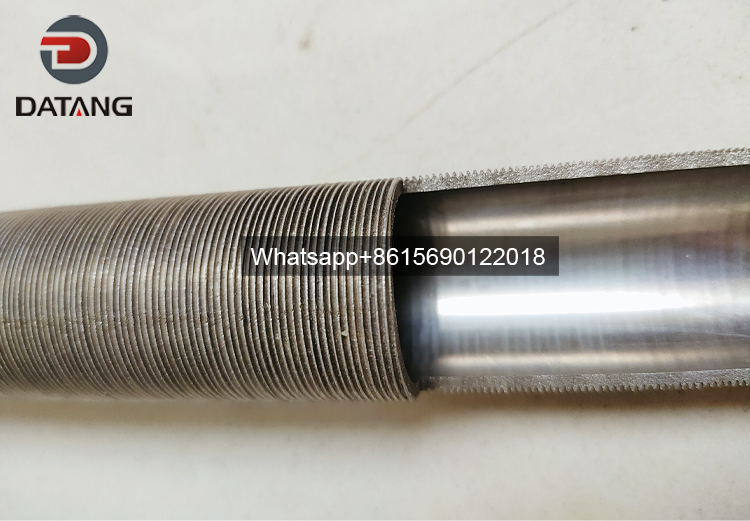
It was developed by the German company Wieland Werke in 1978. Unlike conventional finned tubes, this tube does not use external fin strips. Instead, it uses a special rolling process to form continuous spiral T-shaped tunnels on the outer surface of a plain tube.
These tunnels create small spaces for vapor bubbles to form and escape during boiling. This process improves the heat transfer between the tube wall and the surrounding liquid.
If you need to improve boiling heat transfer in a reboiler or industrial heat exchanger, a T shaped fin tube can be an effective option.
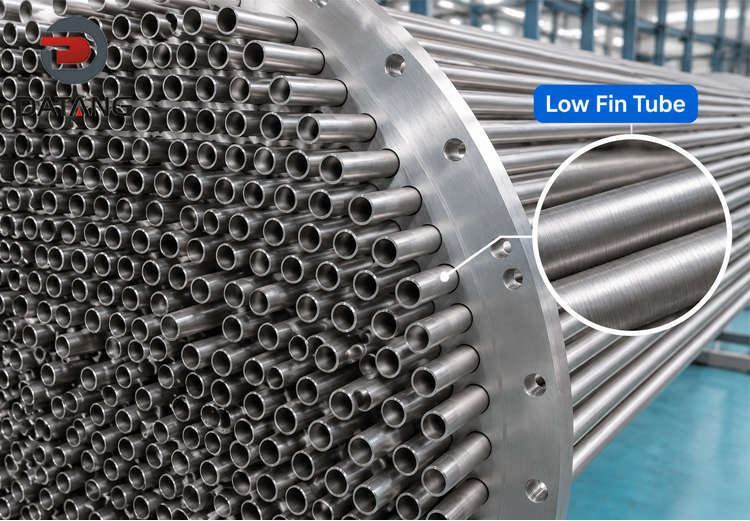
It is mainly used in applications where the shell-side fluid is clean and can boil on the outside surface of the tube.
T Shaped Fin Tube Structure and Manufacturing Process
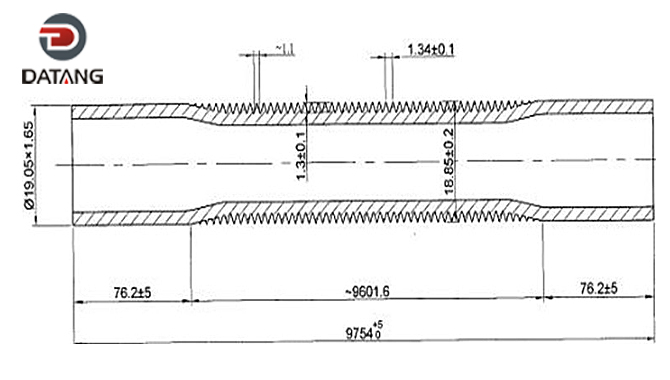
The main feature of a T shaped fin tube is its spiral tunnel structure.
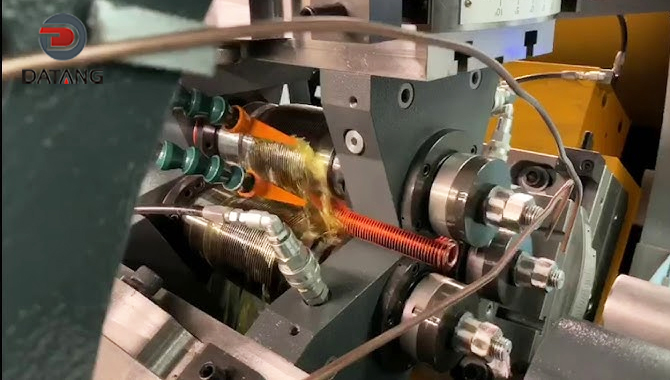
During manufacturing, a plain tube passes through special rolling equipment. The rollers form a series of continuous T-shaped grooves on the outer surface. These grooves create narrow tunnels along the tube.
The T-shaped structure provides a large number of small cavities. These cavities act as nucleation sites during boiling.
Unlike conventional finned tubes, the T-shaped structure does not depend on attached fin strips. The enhanced surface is formed directly from the tube wall through mechanical processing.
This design helps you improve boiling performance without adding separate fin materials.
How Does a T Type Finned Tube Work?
The working principle of a T shaped fin tube is based on enhanced nucleate boiling.
When the hot fluid heats the tube wall, the liquid outside the tube absorbs heat. Small vapor bubbles begin to form inside the T-shaped tunnels.
As the bubbles grow, their internal pressure increases. They then escape through the narrow openings of the tunnels.
This process pushes the surrounding liquid away and creates local pressure changes. Cooler liquid enters the tunnels to replace the vapor. The process repeats continuously.
This movement improves liquid circulation near the tube surface. It also increases the contact between the liquid and the heated wall.
As a result, you can achieve higher boiling heat transfer than with a conventional plain tube under suitable operating conditions.
The boiling process changes as the heat load increases. It may include natural convection, periodic bubble growth, nucleate boiling, thin-film evaporation, and finally vapor-film formation if the surface becomes dry.
This is why operating conditions matter. You should consider heat flux, fluid properties, pressure, and liquid circulation when selecting a T shaped fin tube.
Main Benefits of T Shaped Fin Tubes
1. Higher Boiling Heat Transfer
One of the main reasons to choose a T shaped fin tube is its improved boiling performance.
The T-shaped tunnels provide many nucleation sites. They help vapor bubbles form and escape more easily.
Experimental studies have reported boiling heat transfer coefficients around 1.6 to 3.3 times higher than those of plain tubes in certain fluids and test conditions.
Some single-tube tests have reported even higher improvements with specific refrigerants.
However, actual performance depends on the working fluid, operating pressure, heat flux, and tube design. You should not treat laboratory results as guaranteed equipment performance.
2. Lower Temperature Difference for Boiling
A conventional plain tube may require a relatively large temperature difference to start boiling.
Gewa-T tubes can promote boiling at a much smaller temperature difference. Some reported tests have shown an initial boiling temperature difference of approximately 2°C to 4°C.
This can help you improve heat transfer when the available temperature difference is limited.
3. Potential Reduction in Heat Exchange Area
Higher boiling heat transfer can help you reduce the required heat exchange surface area.
In reported industrial reboiler applications, T fin tubes have helped reduce heat exchange area by more than 30% compared with conventional plain-tube designs.
For your project, the actual reduction should be confirmed through thermal design calculations.
4. Improved Operating Flexibility
T shaped fin tubes have also shown good performance under different operating loads.
In one industrial reboiler application, the equipment operated at a load 33% above its design value while maintaining stable operation.
This shows their potential for applications with changing production requirements.
5. Good Resistance to Surface Fouling Under Suitable Conditions
The vapor and liquid movement inside the tunnels creates continuous surface disturbance.
This movement may reduce the accumulation of deposits on the heat transfer surface.
However, T shaped fin tubes are not suitable for every fouling condition. You should avoid using them with fluids containing solid particles, heavy deposits, or materials that can easily cause coking.
A clean shell-side fluid is important for maintaining stable heat transfer performance.
T Shaped Fin Tube vs. Plain Tube
When you select heat transfer tubes for a reboiler, you need to consider more than the initial purchase price.
The tube structure can directly affect boiling performance, heat exchange area, and equipment operating costs.
| Comparison | T Shaped Fin Tube | Plain Tube |
|---|---|---|
| Outer surface | Spiral T-shaped tunnels | Smooth surface |
| Boiling performance | Enhanced nucleate boiling | Conventional boiling |
| Nucleation sites | Multiple tunnel cavities | Fewer natural nucleation sites |
| Starting temperature difference | Can be lower | Usually higher |
| Heat transfer area | Can reduce required area | Usually requires more area |
| Manufacturing | Special mechanical rolling | Conventional tube production |
| Typical use | Reboilers and boiling applications | General heat exchange |
If your main goal is to improve shell-side boiling heat transfer, a T shaped fin tube may offer advantages over a plain tube.
If your process fluid contains solid particles or has a high risk of coking, a plain tube or another tube design may be a better choice.
Main Applications of T Shaped Fin Tubes
T shaped fin tubes are mainly used in industrial equipment where boiling heat transfer is important.
1. Petroleum Refining
In petroleum refining, reboilers provide the heat required for distillation processes.
You can use T shaped fin tubes in suitable reboiler applications to improve boiling performance on the shell side.
They have been used in equipment such as propane distillation tower reboilers and other refinery heat exchange systems.
2. Petrochemical Industry
Petrochemical plants often require stable heat transfer during separation and purification processes.
T shaped fin tubes can be used in reboilers and other boiling heat transfer equipment.
They are suitable for selected applications involving clean hydrocarbons and other compatible process fluids.
3. Chemical Processing
Chemical production often involves evaporation, boiling, and separation.
If your process requires efficient boiling on the shell side, T shaped fin tubes may help improve heat transfer and reduce the required equipment size.
You should check fluid compatibility and fouling risks before choosing this tube type.
4. Industrial Reboilers
Reboilers are one of the most important applications for T shaped fin tubes.
They supply heat to the bottom section of distillation columns. Better boiling performance can help you reduce the required heat transfer area and improve equipment efficiency.
T shaped fin tubes are particularly useful when the shell-side fluid is clean and suitable for nucleate boiling.
What Should You Consider When Selecting T Shaped Fin Tubes?
Choosing the right tube requires you to understand your actual operating conditions.
First, check the working fluid. Its boiling point, viscosity, thermal properties, and chemical compatibility all affect heat transfer performance.
Second, consider the operating pressure and temperature. These conditions influence bubble formation and the boiling process inside the T-shaped tunnels.
Third, evaluate the heat load and required heat transfer area. You should calculate the thermal performance before deciding on the tube quantity and equipment dimensions.
You also need to check the risk of fouling and coking. T shaped fin tubes work best with relatively clean shell-side fluids. They are not a suitable choice for every industrial process.
Finally, consider the base tube material, outside diameter, wall thickness, tube length, and applicable manufacturing standards.
Providing these details helps your supplier evaluate whether a T shaped fin tube is suitable for your project.
Why Work with Datang for Your Finned Tube Requirements?
When you source heat transfer tubes for an industrial project, you need a supplier who understands your technical requirements.
Cangzhou Datang Steel Pipe Co., Ltd. focuses on finned tube manufacturing and has around 20 years of industry experience.
Datang provides different types of finned tubes for industrial heat transfer applications. Its product range includes extruded fin tubes, embedded G-type fin tubes, L-footed fin tubes, high-frequency welded fin tubes, laser welded fin tubes, and integral low fin tubes.
You can discuss your project requirements with the Datang team before confirming the tube design.
For T shaped fin tubes, please provide your drawings or technical specifications. Datang can review your requirements and confirm manufacturing feasibility.
You can also discuss base tube materials, dimensions, production requirements, and inspection needs with the technical team.
Frequently Asked Questions About T Shaped Fin Tubes
1. What is another name for a T shaped fin tube?
A T shaped fin tube is also called a T-type finned tube, T tube, or Gewa-T tube. It is an enhanced boiling heat transfer tube with spiral T-shaped tunnels on its outer surface.
2. How much can a T shaped fin tube improve heat transfer?
The improvement depends on the working fluid and operating conditions. Some experiments have reported boiling heat transfer coefficients around 1.6 to 3.3 times those of plain tubes. Certain single-tube tests have reported higher values.
You should use actual process data for your thermal design calculations.
3. Can T shaped fin tubes be used in reboilers?
Yes. Reboilers are one of their main industrial applications. They can improve shell-side boiling heat transfer in suitable refinery and petrochemical processes.
4. Are T shaped fin tubes suitable for dirty fluids?
Generally, no. You should avoid using them with fluids containing solid particles, heavy deposits, or materials that can easily cause coking.
Clean shell-side fluids are more suitable for this tube design.
5. Can T shaped fin tubes reduce heat exchanger size?
They can help reduce the required heat transfer area because of their enhanced boiling performance. Some industrial applications have reported area reductions of more than 30%.
The actual result depends on the process conditions and thermal design.
6.What materials are available for T-shaped fin tubes?
Carbon steel, stainless steel, and alloy steel can be used depending on the application. You should select the material according to the working fluid, temperature, pressure, and corrosion conditions.
7. Are T-shaped fin tubes suitable for air-cooled heat exchangers?
T-shaped fin tubes are mainly designed to enhance boiling heat transfer. They are different from conventional air-side finned tubes used in air-cooled heat exchangers. You should select the tube type according to the heat transfer mechanism required by your equipment.
8. What information should you provide when requesting a quotation?
You should provide the base tube material, outside diameter, wall thickness, tube length, operating temperature, operating pressure, working fluid, and required quantity.
If you have an existing tube drawing or reboiler specification, you can send it to the supplier for technical review.
Contact Datang for Your Industrial Finned Tube Project
Are you looking for finned tubes for your reboiler or industrial heat exchanger?
Send us your technical specifications or drawings. Our team can review your requirements and help you find a suitable finned tube solution.
Website: https://datangfinpipe.com
Email: info@datangpipe.com
WhatsApp / WeChat: +86 156 9012 2018
