

Refineries operate under demanding conditions where reliable heat removal is essential for process safety, product quality, and continuous production. Cooling systems must handle high temperatures, elevated pressures, corrosive process fluids, and long operating hours while keeping operating costs under control.
For many refinery applications, fin fan coolers—also known as air cooled heat exchangers (ACHEs)—provide an effective alternative to water-based cooling systems. Instead of using cooling water, these systems use ambient air to remove heat from process fluids through finned tubes.
This guide explains what fin fan coolers are, why they are widely used in refineries, their typical applications, key components, and the main factors to consider when selecting a refinery air cooled heat exchanger.
What Is a Fin Fan Cooler?
A fin fan cooler is a type of air cooled heat exchanger designed to cool or condense process fluids by transferring heat to ambient air.
Unlike a conventional water-cooled heat exchanger, which circulates cooling water around tubes, a fin fan cooler uses fans to force or induce air across a bundle of finned tubes. The hot process fluid flows inside the tubes, while air passes over the external fin surfaces. Heat moves from the process fluid through the tube wall and fins and is then released into the surrounding air.
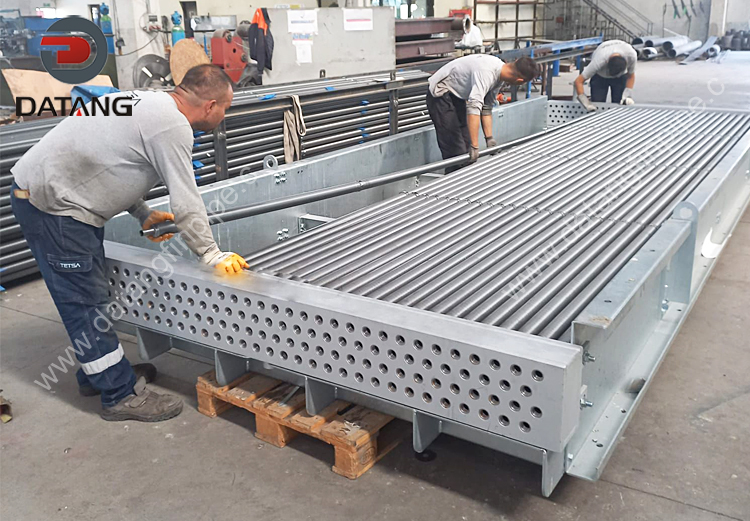
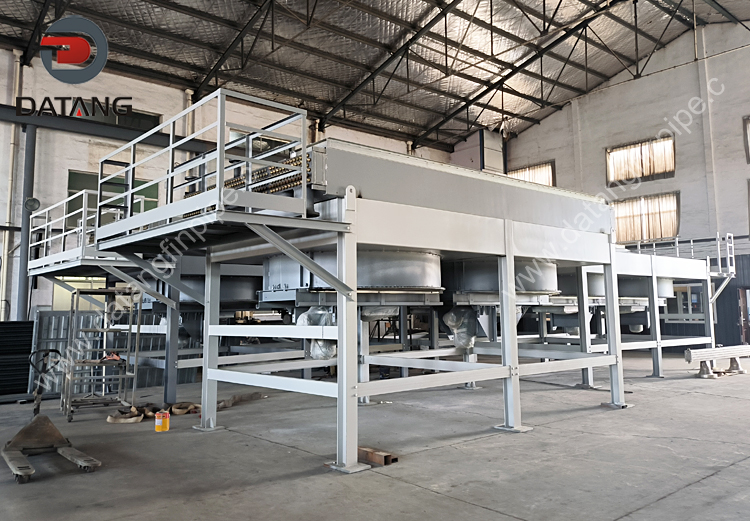
The basic heat transfer process can be summarized as:
Hot process fluid → Tube wall → Fins → Ambient air
The fins significantly increase the external heat-transfer surface area. This allows the equipment to achieve effective heat transfer without requiring large quantities of cooling water.
In refinery applications, an air cooled heat exchanger can be configured for different process requirements, including sensible cooling, condensation, and sometimes partial vaporization depending on the process design.
How Does a Fin Fan Cooler Work?
A typical fin fan cooler consists of a tube bundle with externally finned tubes, fans, motors, headers, and a supporting structure.
The process fluid enters the header and flows through the tubes. At the same time, one or more fans move ambient air across the tube bundle. As the air contacts the finned tube surfaces, it absorbs heat from the process fluid.
The heated air is then discharged into the atmosphere.
Air → Fan → Finned Tubes → Process Fluid
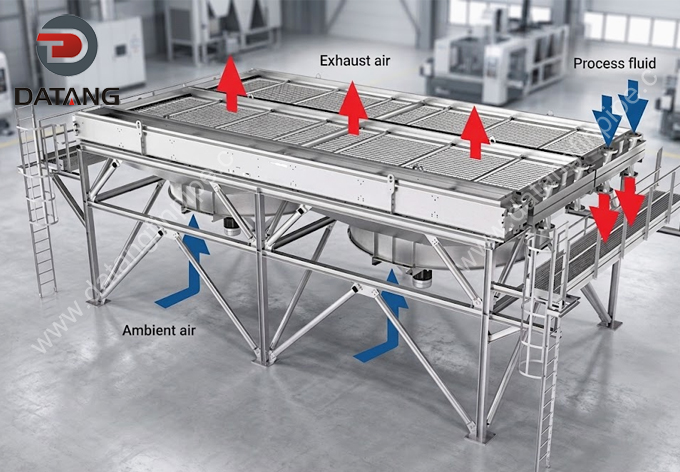
Because the cooling medium is atmospheric air rather than water, the system does not require the same continuous cooling-water circulation infrastructure as a water-cooled system.
The actual performance of a fin fan cooler depends on several factors, including:
- Process fluid temperature and flow rate
- Required heat duty
- Ambient air temperature
- Tube and fin geometry
- Airflow rate
- Fan performance
- Material selection
- Fouling and operating conditions
Proper thermal and mechanical design is therefore essential when specifying an air cooled heat exchanger for refinery service.
Why Are Fin Fan Coolers Used in Refineries?
Refineries contain numerous processes that require continuous cooling. Historically, cooling water has been widely used because water has strong heat-transfer properties. However, water consumption, treatment requirements, environmental considerations, and operating costs can make water-based cooling systems less attractive in certain locations.
This is where fin fan coolers for refineries offer important advantages.
1. Reduced Cooling Water Consumption
One of the biggest advantages of an air cooled heat exchanger is that it uses atmospheric air as the cooling medium.
A fin fan cooler does not need a continuous supply of cooling water for the primary heat-transfer process. This can significantly reduce dependence on cooling towers, water treatment systems, pumps, and associated piping.
For refineries located in regions where water availability is limited, reducing cooling-water consumption can be a major engineering and economic consideration.
2. Suitable for High-Temperature Refinery Service
Refinery processes frequently involve hot hydrocarbons and other process streams. Fin fan coolers can be designed to handle demanding temperature and pressure conditions when the tube materials, fin configuration, headers, and mechanical design are appropriately selected.
They are commonly integrated into process units where hot streams need to be cooled before downstream processing, storage, or further separation.
The exact pressure and temperature capability depends on the equipment design and applicable engineering standards, so operating conditions should always be specified during the design stage.
3. Lower Water-Related Operating and Maintenance Requirements
Because a fin fan cooler does not rely on cooling water as its heat-transfer medium, it can eliminate or reduce several water-system-related requirements.
These may include:
- Cooling-water pumps
- Cooling towers
- Water treatment
- Water circulation piping
- Water-side scaling and corrosion control
- Cooling-water blowdown
This does not mean that fin fan coolers require no maintenance. Fans, motors, finned tubes, bearings, and other mechanical components still need regular inspection. However, the absence of a large cooling-water circuit can simplify certain aspects of plant operation.
4. Well Suited to Water-Scarce Locations
Water availability is an important consideration when designing refinery cooling systems.
In arid or water-stressed regions, using large volumes of cooling water may be difficult or expensive. Air cooled technology provides an alternative by using naturally available atmospheric air.
This makes refinery cooling equipment based on air cooling particularly attractive for projects where water conservation is a key requirement.
5. Reduced Risk of Water-Side Issues
Water-based systems can experience problems such as scaling, biological growth, corrosion, and water-quality fluctuations. Air cooled systems avoid many of these water-side problems.
However, they introduce their own operating considerations, particularly related to ambient temperature, dust, fin fouling, fan operation, and airflow.
For this reason, refinery operators should evaluate the complete operating environment rather than selecting a cooling technology based on heat-transfer efficiency alone.
Fin Fan Cooler Applications in Refineries
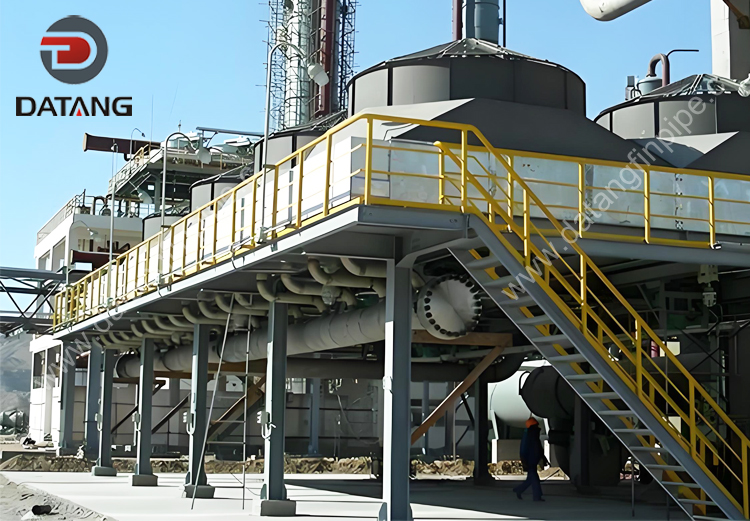
Fin fan coolers can be used across multiple refinery process units. Their specific configuration depends on the process fluid, required outlet temperature, heat duty, pressure, ambient conditions, and applicable design standards.
Hot Process Fluid (Inlet) ──► [ Upper Header Box ]
│
[ Finned Tubes ] ◄── (Forced Ambient Airflow)
│
Cold Process Fluid (Outlet) ◄─ [ Lower Header Box ]
Typical fin fan cooler applications include the following.
Crude Oil Processing
Crude oil processing involves multiple heating and cooling stages. Air cooled heat exchangers can be used to cool process streams associated with crude distillation and downstream units.
Depending on the process configuration, fin fan coolers may be installed where a hot hydrocarbon stream needs to be cooled before entering another process stage or before further handling.
Condenser Cooling
Fin fan coolers can be designed for condensing hydrocarbon vapors and other process streams.
In a condensing application, the equipment must be designed around the process fluid’s condensation characteristics, vapor flow, pressure, required outlet condition, and expected ambient temperature.
Proper thermal design is particularly important because condensation performance can change significantly as operating conditions vary.
Product Cooling
Refinery products and intermediate streams often need to be cooled before storage, blending, transportation, or subsequent processing.
Fin fan coolers can provide a practical cooling solution for products such as hydrocarbon streams and other process fluids, provided the required temperature approach and heat duty can be achieved under the site’s ambient conditions.
Compressor Discharge Cooling
Gas compressors can produce high-temperature discharge streams. These streams may need to be cooled before entering downstream equipment or additional compression stages.
Air cooled heat exchangers can be used as compressor discharge coolers, removing heat from the compressed gas while avoiding the need for a dedicated water-cooling circuit.
For these applications, engineers must carefully consider gas pressure, temperature, flow rate, allowable pressure drop, and the potential for condensation.
Lube Oil Cooling
Lubricating oil systems require reliable temperature control to maintain appropriate viscosity and protect rotating equipment.
A fin fan cooler can be used to remove heat from lube oil systems where an air-based cooling solution is suitable. Material compatibility, required oil temperature, pressure drop, and fouling characteristics should all be considered during selection.
Key Components of a Fin Fan Cooler
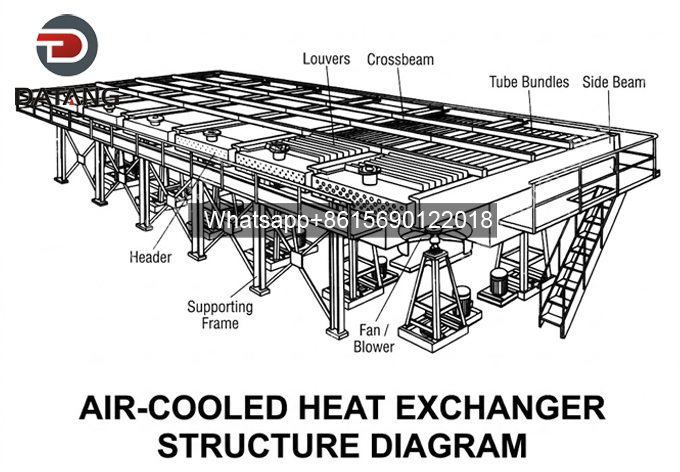
The operational life and thermal efficiency of an air cooled heat exchanger for refinery applications depend on the quality and integration of its structural and mechanical components:
- Finned Tubes
- Fans
- Fan Blades
- Motors
- Headers
- Supporting Structure
Finned Tubes
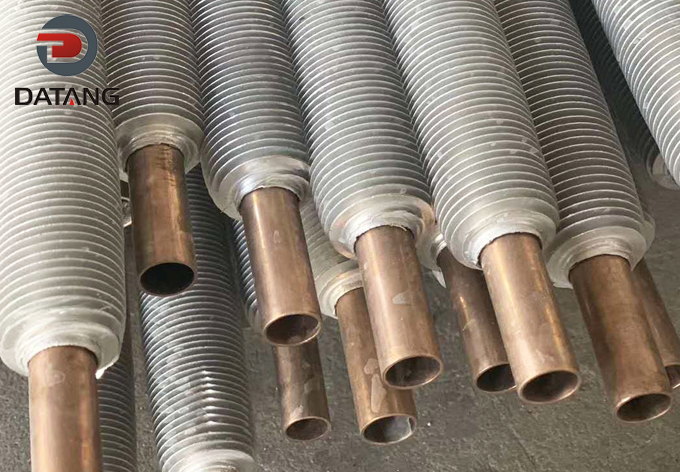
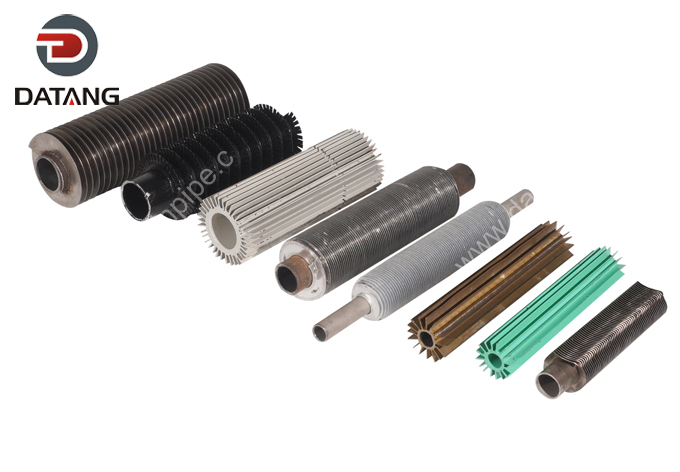
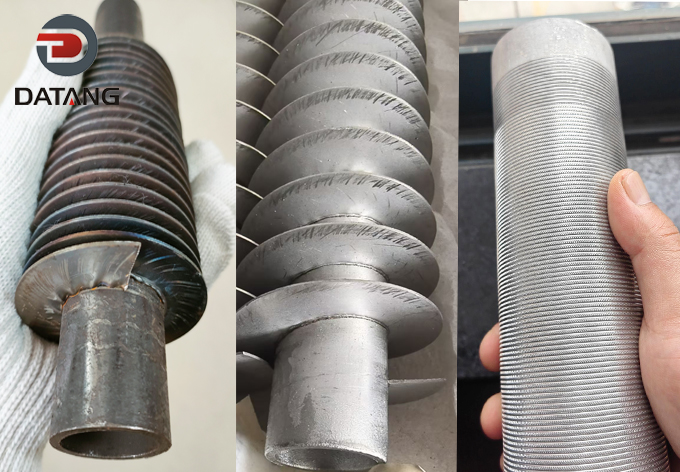
Finned tubes are the primary heat-transfer surface.
Tube material and fin material must be selected according to process fluid compatibility, temperature, corrosion conditions, mechanical requirements, and project specifications.
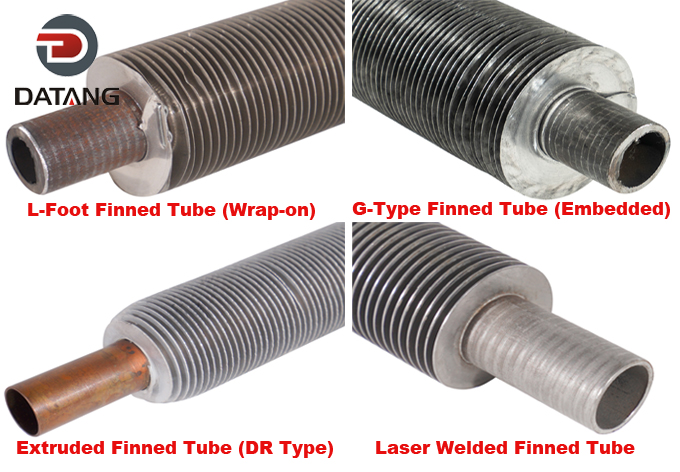
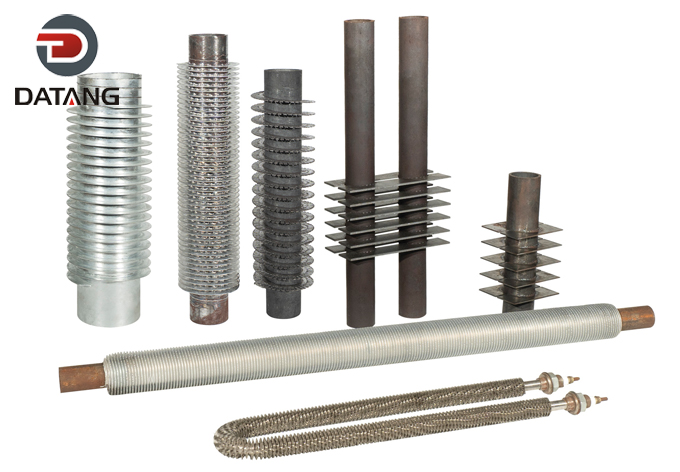
Common fin configurations include:
- Extruded Fin Tubes: High-stress, maximum-corrosion protection design where an outer aluminum sleeve is rolled continuously over the base tube. Excellent for severe atmospheric environments.
- Embedded (G-Type) Fin Tubes: Aluminum fins are mechanically embedded under tension into a machine-cut helical groove on the tube wall, rated for high operating temperatures up to 400°C.
- Tension-Wound (L / LL / KL-Type) Fin Tubes: Aluminum strip wound around the base tube to maximize thermal contact and external surface protection against light atmospheric exposure.
- High-Frequency Welded (HFW) Fin Tubes: Steel fins continuously resistance-welded to carbon or alloy steel base tubes for high-duty, heavy-fouling industrial gas services.
Fans
Fans provide the airflow required for heat transfer.
Depending on the equipment design, fans may be arranged for forced-draft or induced-draft operation. Fan diameter, airflow, rotational speed, pressure capability, and efficiency all affect cooler performance.
Fan Blades
Fan blades are responsible for moving air through the heat-transfer bundle.
Their geometry influences airflow, power consumption, noise, vibration, and overall thermal performance. Correct blade selection is therefore an important part of fin fan cooler design.
Motors
Electric motors drive the fans and must be selected for the required power, environmental conditions, electrical classification, and operating duty.
For refinery applications, motor selection may also need to comply with specific hazardous-area and plant electrical requirements.
Headers
Headers distribute the process fluid into and out of the tube bundle.
They must be designed to withstand the required operating pressure and temperature while providing appropriate flow distribution and maintainability.
Supporting Structure
The supporting structure holds the tube bundle, fans, motors, headers, and associated components in position.
The structure must account for equipment weight, wind loads, vibration, thermal expansion, maintenance access, and site-specific environmental conditions.
How to Choose a Fin Fan Cooler for a Refinery
Selecting a fin fan cooler should start with the process requirements rather than the equipment size alone. Accurate operating data allows the manufacturer to perform the necessary thermal and mechanical design calculations.Proper custom engineering ensures peak thermal performance and prevents premature fatigue or tube bundle corrosion.
Key parameters include:
Heat Duty
Heat duty is one of the most important design inputs.
It defines how much heat must be removed from the process stream and directly affects the required heat-transfer area and airflow.
Inlet and Outlet Temperatures
Specify the process fluid inlet temperature and required outlet temperature.
The design should also consider the expected ambient air temperature. A fin fan cooler’s performance is strongly influenced by the temperature difference between the process stream and surrounding air.
Operating Pressure
Process pressure determines important mechanical design requirements, including tube-wall thickness, header design, material selection, and applicable pressure-vessel or piping standards.
Both normal operating pressure and design pressure should be provided to the manufacturer.
Ambient Air Temperature
Ambient temperature is particularly important for air cooled systems.
A cooler designed for a moderate climate may perform differently in a hot desert environment. The maximum design ambient temperature should therefore be clearly identified during the specification stage.
Material Selection
Material selection depends on the process fluid, temperature, pressure, corrosion environment, and project standards.
Common considerations include:
- Tube material
- Fin material
- Header material
- Corrosion resistance
- Temperature capability
- Compatibility with the process fluid
- Local environmental conditions
For refinery service, material selection should be reviewed carefully to achieve the required service life and reliability.
Airflow
The required airflow depends on heat duty, ambient conditions, temperature approach, tube geometry, and fan configuration.
Insufficient airflow can reduce cooling capacity, while excessive airflow may increase power consumption, noise, and operating costs.
A good design seeks an appropriate balance between thermal performance and energy consumption.
Fan Type
Fin fan coolers can use different airflow configurations, most commonly forced-draft or induced-draft arrangements.
The appropriate configuration depends on factors such as:
- Ambient temperature
- Maintenance requirements
- Process temperature
- Air recirculation risk
- Site layout
- Fan accessibility
- Environmental conditions
A qualified fin fan cooler manufacturer can evaluate these factors and recommend a suitable configuration.
Fin Fan Cooler vs. Water-Cooled Heat Exchanger
Both air cooled and water cooled heat exchangers can be effective refinery cooling solutions. The better choice depends on the site’s water availability, climate, process requirements, energy costs, maintenance strategy, and overall project economics.
| Feature | Fin Fan Cooler | Water-Cooled Heat Exchanger |
|---|---|---|
| Cooling medium | Air | Water |
| Cooling water consumption | Very low for the cooling process | Required |
| Suitable for water-scarce areas | Excellent | Less suitable |
| Cooling tower required | Generally no | Often part of the overall system |
| Water treatment | Not required for the air side | Usually required |
| Water-side scaling/corrosion | Avoided | Must be managed |
| Mechanical equipment | Fans and motors | Pumps and water circulation equipment |
| Ambient temperature impact | High | Generally lower |
| Maintenance focus | Fins, fans, motors, tubes | Tubes, water system, pumps, water quality |
| Typical application | Large process cooling duties where air cooling is practical | Applications where cooling water is readily available |
The comparison should not be viewed as a universal rule. For some refinery services, a water-cooled heat exchanger may offer better thermal performance or a smaller footprint. For others, an air cooled system can provide significant advantages in water consumption and infrastructure requirements.
Preventative Maintenance Tips for Maximum Reliability
Maintaining peak heat transfer performance requires simple, scheduled preventative care:
Routine Fin Bundle Cleaning: Remove ambient dust, debris, and industrial grime using high-pressure air, low-pressure water wash, or specialized foam spray.
Inspect Fans and Fan Blades: Fan blades should be inspected for damage, deformation, corrosion, and abnormal wear.The fan assembly should operate smoothly without excessive vibration or unusual noise.
Check Motors: Inspect motors for abnormal temperature, vibration, noise, and electrical issues.Routine motor maintenance can help reduce unexpected fan shutdowns and associated production losses.
Tube Bundle Leak Detection: Perform non-destructive testing (NDT), hydrostatic checks, and acoustic leak detection during turnarounds to catch micro-fissures before tube failure occurs.
Louver Actuator Checks: Lubricate linkages and check auto-actuator responses to guarantee accurate air throttling during freezing ambient conditions.
Perform Regular Vibration Checks: Vibration monitoring can help identify developing problems in fans, motors, bearings, shafts, and other rotating components.Early detection can prevent minor mechanical issues from developing into major equipment failures.
Precision Thermal Solutions for Global Refineries
Custom engineering is essential for high-performance refinery cooling. Choosing the correct fin style, tube metallurgy, fan pitch, and header design ensures long-term operational uptime, lower total cost of ownership, and reliable cooling performance in any climate.
As a dedicated fin fan cooler manufacturer, Datang supplies finned tubes, replacement bundles, and fully integrated air cooled heat exchangers built to rigorous ASME, API 661, and ISO standards.
If you are planning a new refinery cooling system or replacing an existing unit, providing accurate process data to us will allow the cooler to be properly designed for your specific operating conditions.
Looking for a fin fan cooler or air cooled heat exchanger for your refinery project?Contact our application engineering team today to review your thermal duty specifications, request technical sizing support, or discuss upcoming turnaround replacement requirements.We can help evaluate the appropriate cooling configuration and develop a solution for your application.