


Datang Finned Tube — Premium Edge Tension Wound Finned Tubes
At Datang Finned Tube, we manufacture high-performance edge tension wound finned tubes,also known as tension-wound, “L” / “LL” / “KL” fin tubes, or wrap-on fin tubes—are enhanced heat transfer components formed by tightly winding a metal strip around a base tube using mechanical tension.These extended surface tubes are highly efficient, cost-effective, and engineered specifically for air-cooled heat exchangers, radiators, and industrial cooling systems.
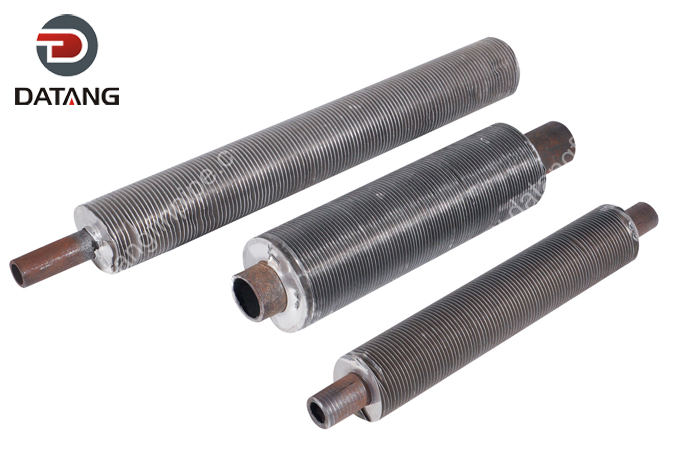
Edge Tension Wound Finned Tubes Process Principle
It belongs to the “tension winding” forming process. Using specialized finned-tube equipment, the fin material (such as aluminum or steel strip) is helically wound around the surface of the base tube under constant tension. The structural stability is maintained by relying on physical tension, and some variations of the process may also incorporate rolling or welding for further fixation.
Edge-Tension Finned Tube Specifications
Base tube material: Carbon steel(ASTM A179, A192, A210), stainless steel(304,304L,316, 316L), copper, or aluminum
Tube outer diameter: 0.250″ – 5.00″
Wall thickness: 0.8 mm (0.03″) – 2.5 mm (0.1″)
Fin materials: Aluminum or copper
Fin height: 0.090″ – 0.750″ (depending on tube outer diameter)
Fins per inch: 3 FPI – 24 FPI (depending on fin height)
Available dimensions are not limited to the specifications above—please contact us for custom applications.
While their basic manufacturing processes are similar—relying on mechanical tension to tightly wrap the fin strip around the base tube—there is a progression in structural design and performance at the fin base. Below is a detailed analysis of these three types:
L-Foot Finned Tube
Structural Features: The fin strip is pre-formed into an “L” shape; the short horizontal leg (the “L-foot”) sits flush against the base tube surface under tension, completely covering the base tube.
Performance and Advantages: This is the most basic and cost-effective winding type. It offers a degree of corrosion protection for the base tube and is well-suited for low-to-medium temperature environments (recommended operating temperatures typically do not exceed 150°C–200°C).
Limitations: High temperatures can cause tension loss due to thermal expansion, and tiny gaps between the L-feet may trap liquid, resulting in relatively limited corrosion protection capabilities.
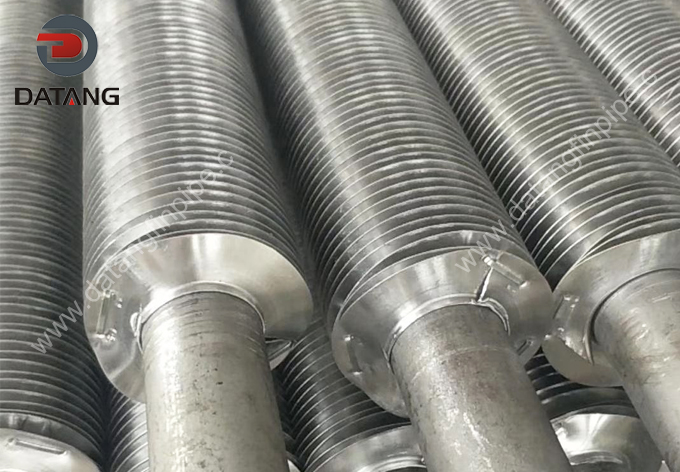
LL-Foot Finned Tube (Double-Overlap L-Foot)
Structural Features: An upgrade to the standard L-foot design. The L-foot is designed with a “double overlap” configuration, meaning the L-foot of a subsequent fin completely covers the L-foot of the preceding fin.
Performance and Advantages: This double coverage effectively creates a double-thickness metal layer around the base tube, providing excellent corrosion protection. It is often used as a cost-effective alternative to expensive extruded finned tubes in corrosive environments. Its maximum operating temperature typically reaches 170°C–180°C.
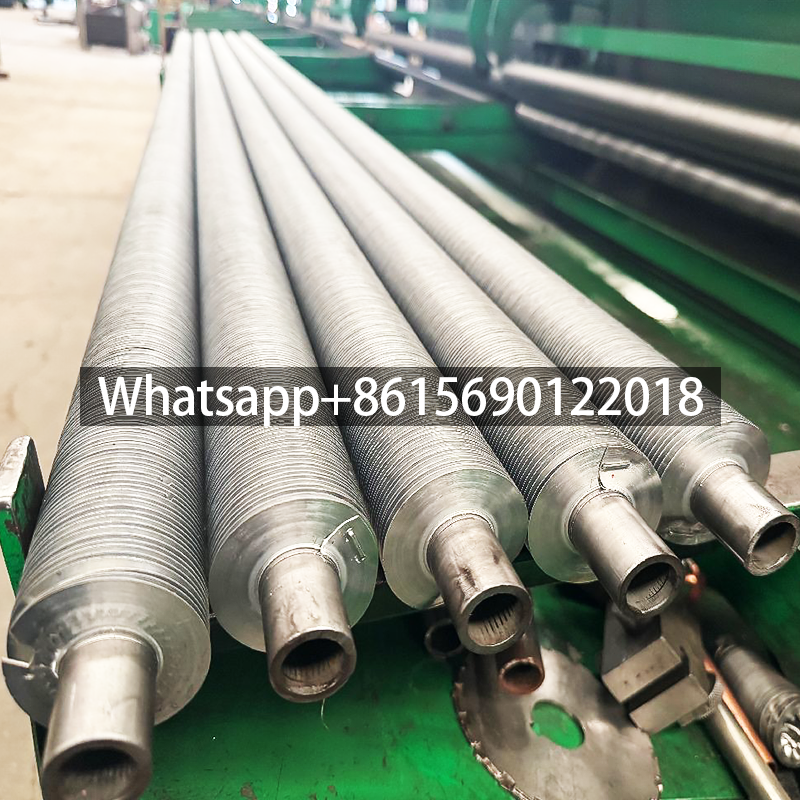
KL-Foot Finned Tube (Knurled L-Foot)
Structural Features: Before the fin is wound, the outer surface of the base tube undergoes a knurling process. After winding, the L-foot of the fin is pressed into these knurled grooves.
Performance and Advantages: The knurling process significantly increases the contact area between the fin and the base tube while providing superior mechanical interlocking. This gives KL-foot finned tubes enhanced heat transfer characteristics, as well as greater resistance to vibration and loosening. Temperature Limit: Due to tighter bonding, the KL type can withstand higher temperatures; the maximum operating temperature typically reaches 250°C–260°C (with some sources indicating up to 320°C), making it highly suitable for medium-temperature applications.
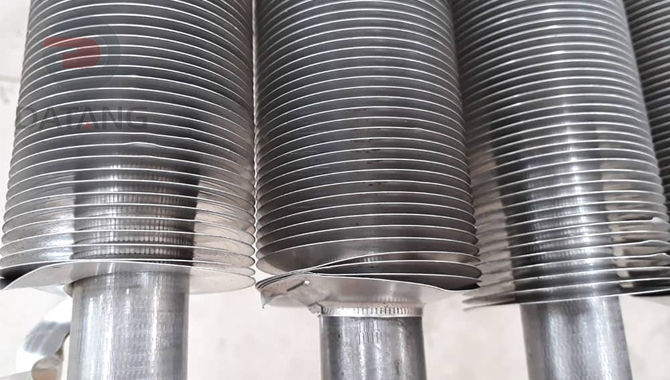
Engineers can flexibly select the most suitable fin type based on specific operating temperatures, corrosive environments, and budget constraints.
Wrap-on Fin Tubes Application
Due to their cost-effectiveness and excellent low-temperature performance, edge-tension-wound finned tubes are widely used in:
-
Air Cooled Heat Exchangers (ACHE) in petrochemical and chemical processing plants.
-
HVAC systems, industrial condensers, and evaporators.
-
Compressor Air Intercoolers & Aftercoolers.
-
Power Plant Cooling Towers and steam air heaters.
