


Welded fin tubes are essential components in high-performance heat transfer systems. By welding fins onto a base tube, the surface area is significantly increased, allowing for much more efficient thermal exchange between a liquid inside the tube and a gas (usually air) outside.
Depending on whether the welding method is High-Frequency (HFW) or Laser-welding, these tubes are used across various heavy industries:
Comparison of Welding Types
| Feature | High-Frequency Welded (HFW) | Laser-Welded |
| Bond Quality | 90% to 100% fusion | 100% full penetration |
| Heat Affected Zone | Larger; can slightly affect tube properties | Minimal; very precise |
| Materials | Carbon steel, low alloy steel | Stainless steel, Titanium, exotic alloys |
| Typical Use | Heavy industrial boilers, Economizers | Compact exchangers, highly corrosive environments |
Note:
- High-frequency welding is better suited for industrial applications involving medium-to-high temperatures and high flow rates;
- laser welding, conversely, offers distinct advantages in scenarios requiring high precision, extreme operating conditions, and lightweight designs.
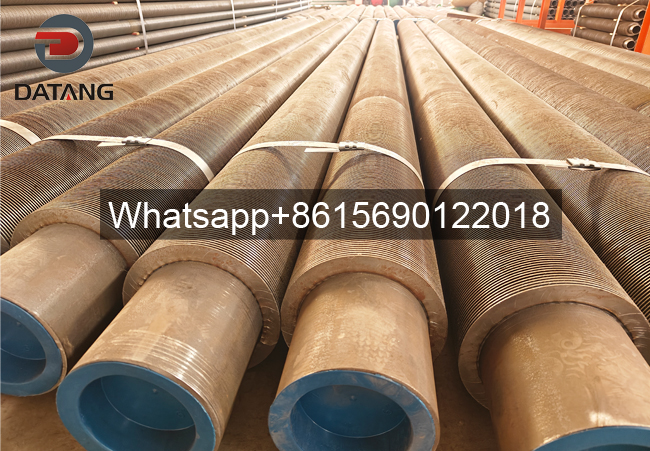
High-Frequency Welded (HFW) Finned Tube
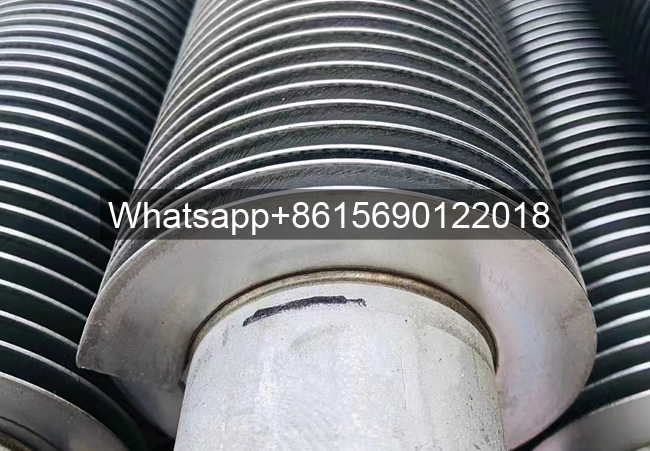
Laser-Welded Finned Tube
1. Power Generation
This is one of the most common applications. Welded fin tubes are built to withstand the high temperatures and pressures found in power plants.
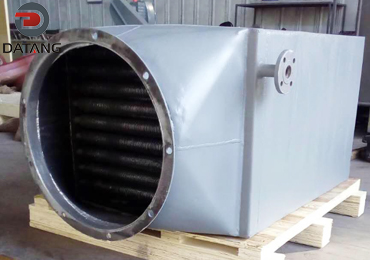
- Economizers: Used to recover heat from flue gases to preheat boiler feedwater.
- Heat Recovery Steam Generators (HRSG): Massive banks of finned tubes capture waste heat from gas turbine exhaust to create steam.
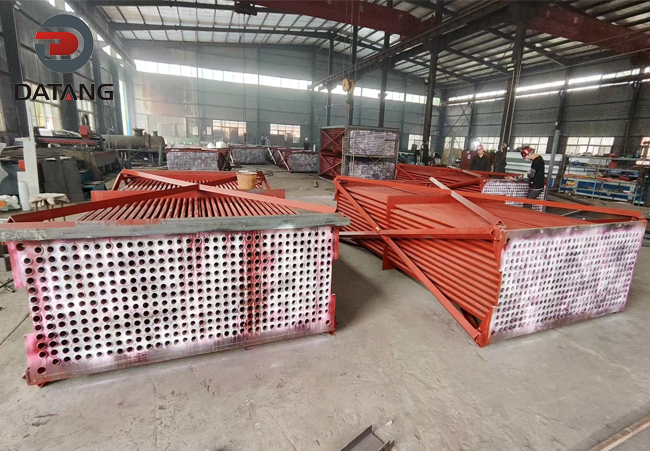
- Air Preheaters: Improving overall plant efficiency by heating combustion air.
They are utilized in boilers of various scales, ranging from small units to large subcritical and supercritical power plant boilers.
Boiler Economizer
Air Preheaters
2. Petrochemical and Refining
Refineries deal with aggressive fluids and extreme thermal gradients where mechanical bonds (like tension-wound fins) might fail.In the petrochemical industry, welded fin tubes are critical components in heat exchangers used for processing and refining operations, where efficient heat transfer is paramount.
- Crude Oil Coolers: Using ambient air to cool hot oil during processing.
- Convection Sections: Installed in process heaters and furnaces to maximize energy absorption from hot exhaust.
- Condensers: Converting hydrocarbon vapors back into liquid form.
3.Industrial HVAC and Large-Scale Cooling
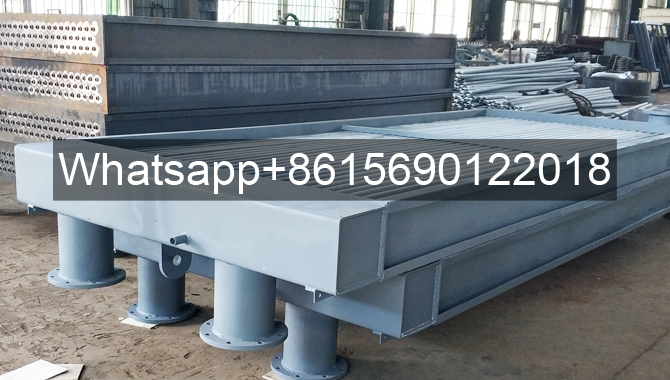
- Air-Cooled Heat Exchangers (ACHE): Often used in arid regions where water cooling is not feasible.
- Large Steam Air Heaters: Used in industrial drying processes (like paper or textile manufacturing).
Air-Cooled Heat Exchangers (ACHE)
4.Environmental and Waste-to-Energy
- Incineration Plants: Used in boilers that burn municipal or industrial waste to generate electricity.
- Flue Gas Reheating: Helping to reduce the “plume” visibility and manage emissions by controlling gas temperatures before they exit the stack.
5.Oil and Gas (Upstream/Midstream)
- Gas Compression Stations: Cooling natural gas after it has been compressed for pipeline transport.
- Glycol Dehydration: Managing heat during the removal of water from natural gas.
6.Food Processing Industry
- Used in temperature-controlled processes such as fruit and vegetable drying, meat thawing, and dairy product refrigeration.
- Constructed from food-grade aluminum or stainless steel, featuring smooth surfaces free of dead corners; units can be directly rinsed with high-pressure water or integrated with CIP (Clean-in-Place) systems to ensure hygiene and safety.
7.Edible Mushroom Cultivation (Mushroom Greenhouses)
- Serving as specialized temperature control equipment, these units provide a stable, constant-temperature, and high-humidity environment, preventing direct drafts that could cause mycelial scorching or cracking of the mushroom bodies.
- Characterized by moisture resistance, mold resistance, and silent operation, they are ideally suited for high-humidity and mildly acidic environments.
8.Other Industrial Applications
- Marine: Its corrosion resistance makes it suitable for marine cooling systems.
- Aerospace: Specialized finned-tube heat exchangers are used in applications such as helicopter oil coolers.
High-Frequency Welded (HFW) Fin Tubes
The Industry Standard for Heavy-Duty Heat Recovery
HFW fin tubes are manufactured using high-frequency current (typically $300kHz$ to $450kHz$) to create a skin effect that heats the contact surfaces to a plastic state, fusing them together under mechanical pressure.
-
Key Advantages:
-
Superior Bond Strength: Achieving a 90% to 98% fusion rate, the weld is often stronger than the parent metal.
-
High Production Efficiency: Ideal for large-scale industrial projects requiring thousands of meters of tubing.
-
Cost-Effective: Offers the best balance between high thermal performance and manufacturing cost.
-
-
Best For: Power plant boilers, economizers, and heavy-duty petrochemical heat exchangers.
-
Common Materials: Carbon steel, low-alloy steel, and specific grades of stainless steel.
Laser-Welded Fin Tubes
The Gold Standard for Precision and Efficiency
Laser welding represents the pinnacle of finning technology. A high-energy laser beam creates a deep-penetration weld with unmatched precision.
-
Key Advantages:
-
100% Fully Welded: Zero contact thermal resistance, ensuring the highest possible heat transfer coefficient.
-
Minimal Heat Affected Zone (HAZ): The focused beam prevents thermal distortion, preserving the mechanical properties of the base tube.
-
High Fin Density: Capable of much tighter fin pitches (under 2mm), allowing for more compact heat exchanger designs.
-
Premium Material Compatibility: Excellent for welding difficult materials like Titanium and high-grade Stainless Steel.
-
-
Best For: Compact heat exchangers, highly corrosive environments, and premium condensing boilers.
