


The distinction between integral fin tubes and low fin tubes is often a point of confusion because they share a similar manufacturing philosophy but serve different roles in heat exchanger design. Both involve fins that are “part of” the tube itself rather than being welded or tension-wound onto it.Both integral finned-tube and low-finned-tube heat exchangers are designed with the primary objective of enhancing heat transfer.
1. Technical Definitions
Integral Fin Tubes
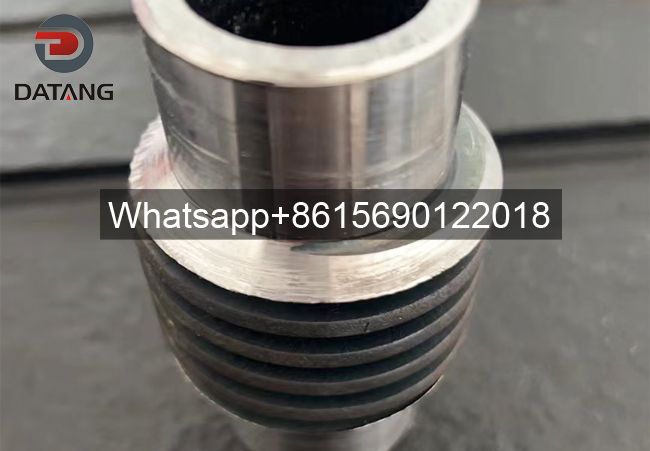
An integral fin tube is a broad category where the fins are formed by rolling the outer surface of a plain tube, displacing material to create fins. While “integral” can technically refer to any fin extruded from the base metal (including high fins), in design contexts, it often refers to tubes where the fins are significantly taller and more widely spaced than those on “low fin” tubes.Integral finned tubes emphasize the high efficiency and stability brought by the seamless integrated structure.
Integral Fin Tubes for Air-cooled Heat Exchangers
Low Fin Tubes
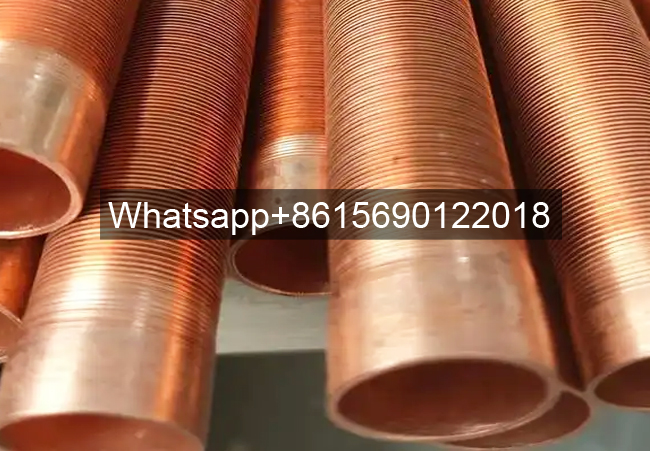
A low fin tube is a specific type of integral fin tube. The fins are typically very short (usually between 0.8mm and 1.5mm in height) and densely packed (roughly 19 to 40 fins per inch). The outside diameter of the finned section is generally slightly smaller than or equal to the diameter of the original plain tube ends, allowing the tube to be slid through standard shell-and-tube heat exchanger baffles and tube sheets.Low-finned tubes focus on achieving a balance between fouling resistance and energy saving by optimizing fin parameters.
Low Fin Tubes in Condensers and Oil Heat Exchangers
2.Key Design Comparisons
| Feature | Low Fin Tube | High Integral Fin Tube |
| Fin Height | 0.5mm – 1.6mm | 1.6mm – 15mm+ |
| Fins Per Inch (FPI) | High (19, 26, 30, 40 FPI) | Low to Medium (5 – 12 FPI) |
| Surface Area | 2x to 3x of a plain tube | 5x to 10x+ of a plain tube |
| Manufacturing | Cold rolling (displacement) | Extrusion or heavy rolling |
| Primary Use | Shell-and-tube exchangers | Air coolers or process heaters |
3.Key Design Points for Integral Fin Tube Heat Exchangers
Integral Fin Tubes refer to tubes where the base tube and fins are formed as a single body through rolling or casting—most commonly via the three-roll cross-rolling process. At Datang, our design philosophy leverages the following advantages:
- Zero Contact Resistance: Since the fins are an extension of the base metal, there is no thermal barrier caused by welding or mechanical bonding. This results in significantly higher heat transfer efficiency.
- High Stability & Corrosion Resistance: The weld-free structure eliminates the risk of electrochemical corrosion. This makes them ideal for high-temperature, high-pressure, and corrosive environments, such as boiler waste heat recovery.
- Versatile Material Compatibility: These can be manufactured from copper, aluminum, or steel. It is particularly effective for cold-rolled aluminum/copper high fin tubes.
- High Manufacturing Efficiency: The three-roll cross-rolling method ensures high production speed with minimal raw material waste, making it suitable for large-scale industrial projects.
Design Recommendation: Best suited for scenarios demanding maximum thermal efficiency in harsh operating conditions, such as high-temperature flue gas heat exchange in the power and metallurgy industries.
4.Key Design Points for Low Fin Tube Heat Exchangers
Low Fin Tubes feature short fins (with an enhancement factor of 2–3) machined directly onto the outer surface of a plain tube. Datang’s low fin solutions focus on the following technical characteristics:
- Integrated Structure without Thermal Resistance: Like their high-fin counterparts, these are manufactured using the three-roll cross-rolling process, ensuring seamless heat flow between the tube and the fins.
- Enhanced Anti-Fouling Capability: The wave-like profile of the fins creates an “accordion” effect during thermal expansion and contraction. This movement helps shed scale and prevents sediment buildup, which is particularly beneficial in oil-based or condensing applications.
- Inverse Relationship Between Fin Height and Efficiency: As fin height increases, the individual fin efficiency tends to decrease. Our engineers at Datang carefully balance total surface area against actual heat dissipation performance to find the “sweet spot” for your design.
- Standardized Materials and Specs: We utilize high-grade materials including Stainless Steel 304/316, Duplex 2205, and Titanium. Standard outer diameters are 19mm and 25mm, with a daily production capacity reaching 15,000 meters to meet global demand.
- Strict Pressure Drop Control: External pressure drop increases exponentially with fin height. When fin pitch exceeds 2mm, heat transfer performance typically declines. Precise fluid dynamic parameters are essential during the design phase.
Application Scenarios: Widely used in condensers and oil heat exchangers, especially where the heat transfer coefficient inside the tube is more than double that of the outside.
5. Applications
When to Use Low Fin Tubes
Low fin tubes are the “workhorse” for upgrading existing shell-and-tube heat exchangers.
- Space Constraints: Because the fin tips do not exceed the diameter of the tube ends (land), you can replace plain tubes with low fin tubes without modifying the tube sheet or shell.
- Viscous Fluids: They are ideal when the fluid on the shell side has a much lower heat transfer coefficient than the tube side (e.g., oil cooling with water).
- Condensation: The high fin density helps “pull” condensate away from the surface via surface tension, making them excellent for refrigerant condensers.
When to Use High Integral Fin Tubes
These are used when the heat transfer disparity between the inside and outside of the tube is extreme.
- Gas-to-Liquid Exchange: Commonly used in air-cooled heat exchangers where air (a poor heat conductor) flows over the outside.
- Mechanical Integrity: Because the fins are part of the parent metal, there is no “bond resistance” (the air gap that can form in tension-wound fins), and they handle thermal cycling much better than L-foot or G-fins.
- Corrosion Resistance: There is no risk of galvanic corrosion between the fin and the tube since they are the same material.
Why Choose Datang for Your Heat Exchange Projects?
Whether your project requires the high-surface-area boost of Integral High Fins or the anti-fouling efficiency of Low Fin Tubes, Datang provides precision-engineered components tailored to your specific thermal requirements. With decades of manufacturing expertise in Cangzhou, we ensure that every tube meets the highest international standards for durability and performance.
