


Selecting the appropriate industrial finned tubes for power plant applications involves balancing thermal efficiency, material durability, fin type and environmental conditions. Because power plants operate under high-pressure and high-temperature conditions, the choice of finned tube directly impacts the longevity and heat rate of the boiler or heat recovery system.
Industrial Finned Tubes for Power Plants Key Selection Criteria
Medium Characteristics: Common heat-carrying media in power plants include steam, hot water, and high-temperature flue gas (for waste heat recovery); certain scenarios involve flue gas containing sulfur or chlorine.
Operating Parameters: The temperature range typically spans 100°C to 500°C, while pressures can reach 0.6–6.4 MPa (in steam systems). Flue gas dust concentrations are often high (e.g., in pulverized coal boilers, levels may reach 50–200 mg/m³).
Heat Dissipation Requirements: Systems must accommodate substantial thermal loads (e.g., for plant heating, equipment cooling, and waste heat recovery) and demand highly efficient heat transfer (often requiring a heat transfer coefficient of 150–400 W/(m²·K)).
Installation Environment: Installations are frequently situated within large-span industrial buildings (8–15 m in height) characterized by significant vibration, high dust levels, and fluctuating humidity; consequently, measures for dust protection, corrosion resistance, and vibration resistance must be incorporated.
As a veteran manufacturer in the heat exchange industry, Datang Finned Tube has summarized the following core factors for your selection process:
Match the Tube Type to the Application
Different sections of a power plant require specific fin geometries based on the heat source and fluid media. Datang Finned Tube offers a full range of customized solutions:
-
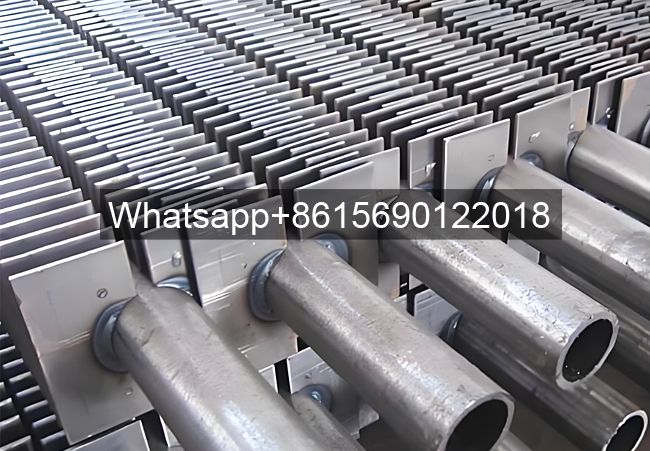
H-Type Finned Tubes: Specifically designed for boiler economizers. The unique “double H” shape creates straight channels for flue gas, minimizing ash accumulation and effectively reducing wear caused by abrasive fly ash particles.
-
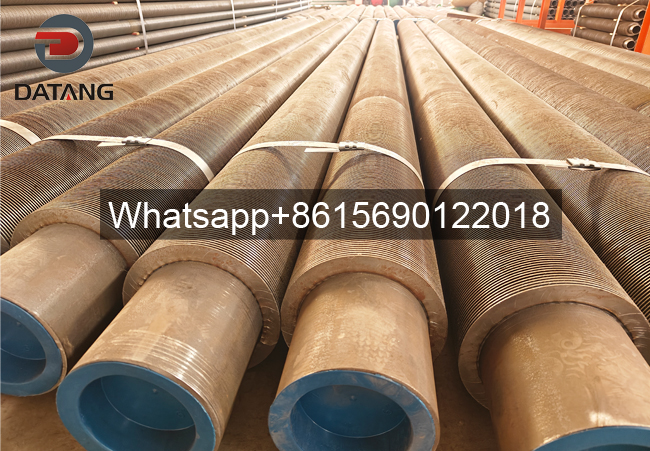
High-Frequency Welded (HFW) Spiral Finned Tubes: Known for high structural integrity, these are the standard for Heat Recovery Steam Generators (HRSG) in gas turbine plants. The continuous weld ensures excellent heat transfer and mechanical strength. Datang Finned Tube‘s HFW products are widely utilized in global power station projects.
-
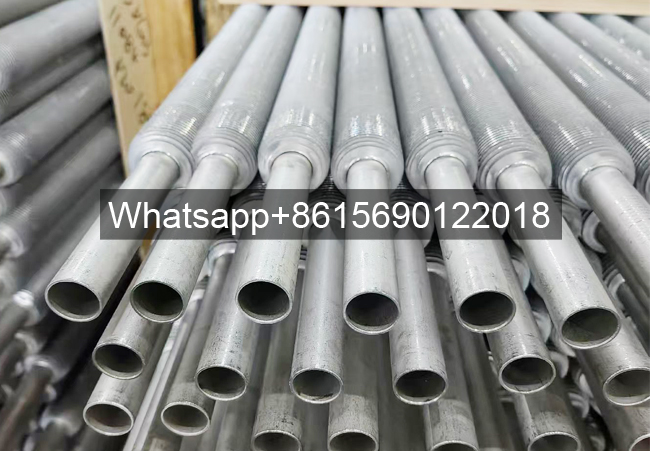
Extruded Finned Tubes: The fins are rolled directly from an external aluminum muff. Since the base tube is completely protected from atmospheric corrosion, they are ideal for Air Cooled Condensers (ACC).
-
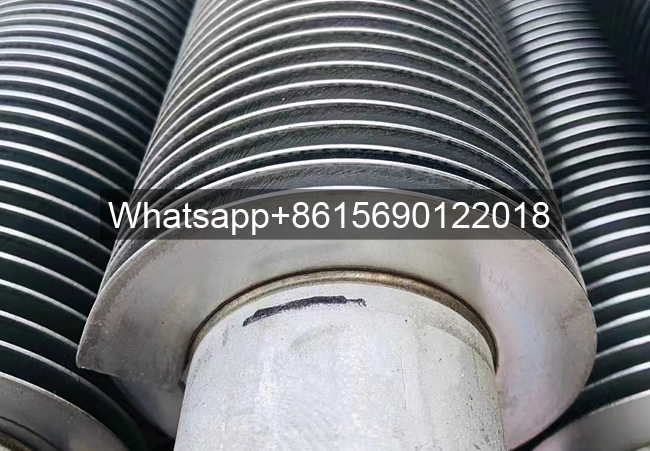
Laser-Welded Finned Tubes: Featuring a minimal heat-affected zone and a 100% metallurgical bond. Datang Finned Tube utilizes advanced laser welding technology to support heat exchangers requiring extreme thermal efficiency and compact footprints.
- L-Foot Wrapped Finned Tubes:
Construction: A fin strip with an “L” shaped foot is wound under tension around the base tube.
Advantages: Cost-effective and provides good heat transfer for moderate conditions.
Best For: Lower temperature applications (typically up to 150-180°C) where cost is a significant factor and the environment is not highly corrosive.
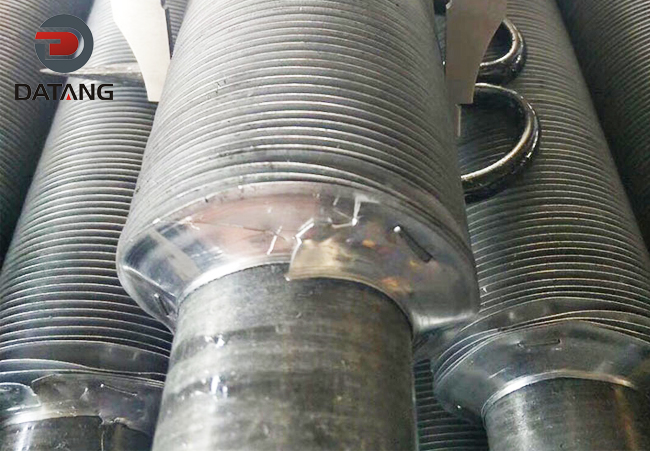
Fin Structure and Manufacturing Processes
Fin Types:
- Spiral Fins: Large heat exchange surface area (3–8 times that of bare tubes); low flow resistance; suitable for flue gas with low dust content (small-scale boilers).
- H-Type / Straight Fins: Wide gas channels (>20 mm); resistant to ash accumulation; suitable for flue gas with high dust content (boilers burning coal gangue or blast furnace gas).
- Serrated Fins: Enhances turbulence; suitable for applications requiring high-precision temperature control.
Joining Processes:
- High-Frequency Welding: Metallurgical bonding; low thermal resistance (≤0.0005 m²·K/W); temperature resistance ≥400°C; vibration-resistant; the preferred process.
- Mechanical Expansion / Winding: Low cost, but features higher thermal resistance; suitable only for low-pressure, vibration-free environments.
- Extrusion Forming: Gap-free interface; high heat transfer efficiency; however, costs are high; used in applications with stringent performance requirements.
Structure and Auxiliary Configurations
- Connection Method: Industrial flanges (slip-on/butt-weld types, compliant with GB/T 9119); sealing gaskets utilize graphite or PTFE materials; suitable for operating pressures of 0.6–6.4 MPa.
- Support Frame: Welded channel steel/angle steel construction; hot-dip galvanized for corrosion protection (withstanding over 500 hours of salt spray testing); suitable for humid and dusty environments.
- Auxiliary Functions:
- High-Dust Environments: Installation of guide vanes (to optimize airflow) or dust screens.
- Long-Term Operation: Equipped with drain valves (at the lowest point) and vent valves (at the highest point).
- High-Dust Flue Gas: Integrated with acoustic soot blowers or mechanical rapping devices
Material Selection Based on Temperature
Materials must withstand the operating temperatures of flue gas or steam to prevent oxidation and creep.
-
Carbon Steel (SA179, SA106): Suitable for low-to-medium temperature zones like the tail-end of an economizer.
-
Alloy Steel (T11, T22, P91): Specifically designed for high-temperature superheaters or reheaters exceeding 400°C.
-
Stainless Steel (304L, 316L): Used in environments prone to “dew point corrosion” or when processing flue gas with corrosive chemical components.
Consider Fuel Source and Fouling
The type of fuel burned largely dictates the fin pitch and arrangement:
-
Clean Gas (Natural Gas): Allows for higher fin density due to the minimal risk of soot buildup.
-
Coal or Biomass: Requires wider fin spacing. Datang Finned Tube recommends H-type fins for these conditions to facilitate soot blowing and prevent heat exchanger clogging.
Environmental Conditions
For air-cooled systems, geography is a primary concern. In coastal or industrial areas with high salt spray or sulfur content, traditional wrap-on fins are highly susceptible to interface corrosion. In these cases, Datang Finned Tube recommends Extruded Finned Tubes or Hot-Dip Galvanizing to completely isolate the base tube from environmental corrosion.
Thermal Resistance and Bonding
The long-term efficiency of a finned tube depends on the “contact thermal resistance” between the fin and the tube.
-
Mechanical Bonding: Lower initial cost, but thermal cycling over time can loosen the bond, leading to a drop in efficiency.
-
Welded/Extruded Bonding: The processes used by Datang Finned Tube provide a permanent metallurgical bond, ensuring stable heat transfer efficiency throughout the decades-long lifecycle of a power plant.
Core Parameter Comparison
| Feature | H-Type Finned Tube | HFW Spiral Finned Tube | Extruded Finned Tube |
| Best For | Coal-fired Economizers | HRSG / Gas Turbines | Air Cooled Condensers |
| Fouling Resistance | Excellent | Moderate | Low |
| Corrosion Protection | Low | Low | Excellent |
| Datang Recommendation | High-dust environments | High-pressure cycling | Exposed atmospheric conditions |
Adaptation for Typical Application Scenarios
- Boiler Flue Gas Waste Heat Recovery:
Flue gas temperature: 150–300°C; high dust content → H-type fins + ND steel/316L base tubes + High-frequency welding. - Steam System Heating/Preheating:
Pressure: 0.8–1.6 MPa; Temperature: 180°C → Carbon steel base tubes + Steel fins + Flange connections. - Compressed Air Cooling/Preheating:
Medium-to-low temperature (≤300°C); lightweight design required → Steel-aluminum composite finned tubes (Aluminum fins offer rapid thermal conductivity and reduce weight by 40%).
Ensure Compliance and Quality
- Standards: Ensure the product complies with relevant industry standards, such as ASME for boilers and pressure vessels, which guarantees material properties and manufacturing quality.
- Quality Assurance: Request material certificates and inspection reports (e.g., spectral analysis reports to verify alloy composition) to confirm the materials used match the specifications. Reputable manufacturers, including Datang Finned Tube, typically perform multiple layers of quality control, such as eddy current, ultrasonic, and hydrostatic pressure tests, to ensure every tube is defect-free.
- Installation Fit: Confirm that the dimensions, connection types, and overall layout of the finned tube bundle are compatible with the available space and piping in the power plant.
As a professional supplier of industrial heat exchange components, Datang Finned Tube is committed to providing high-performance, customized finned tube solutions to ensure your power plant systems operate more efficiently and reliably.
