


Refineries and petrochemical plants often face challenges with fin fan coolers, such as the costs of unplanned downtime, increased pressure drop, and reduced heat dissipation efficiency.Heat exchange equipment requires regular inspection and maintenance to ensure stable heat transfer performance, reliable operation, and a long service life.
What Is Fin Fan Cooler Maintenance?
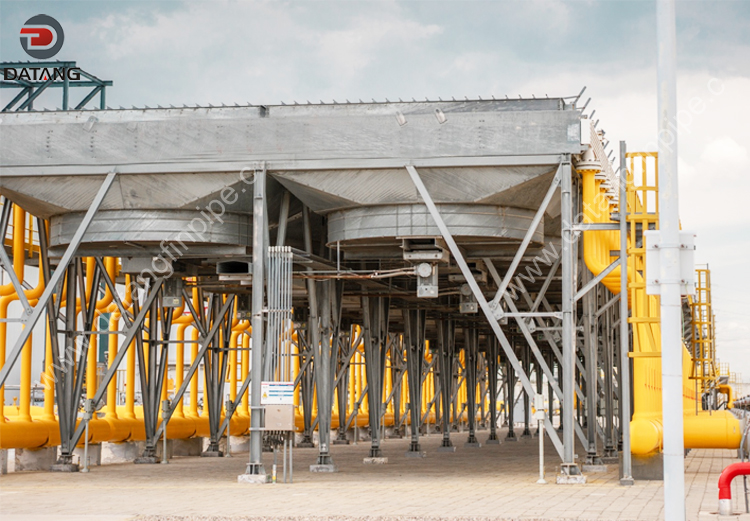
A fin fan cooler, also known as an air cooled heat exchanger (ACHE), relies on fans to force or induce ambient air across finned tubes. Its thermal performance depends on the cleanliness, condition and proper operation of the fans, finned tubes, motors, bearings and structural components.
Fin Fan Cooler Maintenance Schedule
Our factory has compiled a table detailing the maintenance frequency for the various components of the air cooler, which can serve as a reference:
| Maintenance Item | Daily | Weekly | Monthly | Quarterly | Annually |
|---|---|---|---|---|---|
| Fan operation | ✓ | ||||
| Unusual noise/vibration | ✓ | ||||
| Finned tube cleanliness | ✓ | ✓ | |||
| Fan blades | ✓ | ✓ | |||
| Motor condition | ✓ | ✓ | |||
| Bearings | ✓ | ✓ | |||
| Lubrication | ✓ | ✓ | |||
| Electrical connections | ✓ | ✓ | |||
| Tube inspection | ✓ | ✓ | |||
| Structural inspection | ✓ | ✓ | |||
| Performance test | ✓ |
Note: This is a general guideline for standard operating conditions. Always refer to your specific equipment manual.
In practice, relying solely on an annual maintenance schedule can lead to serious failures. You must dynamically adjust the actual maintenance frequency based on several key variables:
- Environmental factors: Ambient temperature, dust concentration, corrosive atmospheric conditions, and specific on-site operating conditions.
- Operational requirements: Total operating time and the nature of the process fluid (e.g., high-viscosity or corrosive fluids require closer monitoring of tube bundle integrity).
- Equipment specifications: Fan type, as well as the specific motor and gearbox designs used in the air-cooled heat exchanger.
Core components of Fin Fan Cooler inspection
Finned Tube Bundle Inspection
Periodically inspect the heat exchange tubes within the finned tube bundle to verify their condition, focusing on the following aspects:
- Bent or damaged fins
- Accumulated dust and dirt
- Corrosion
- Tube leaks
- Blockages in airflow passages
Noted: Dirty or damaged fins reduce airflow and heat transfer efficiency.
Inspect the fan system regularly:
- Check fan blades for cracks,deformation,Corrosion,Fouling,Blade pitch,Loose bolts
- Confirm the fan rotates in the correct direction and operates smoothly, without abnormal vibration.
- Check the fan hub, bolt tightness, corrosion, mechanical damage, and alignment.
- Inspect the fan guard for damage, loose fasteners, or corrosion.Ensure bolts and fasteners are tight
Motor and Bearing Inspection
The motor and bearings are important rotating components.Periodic inspections are required:
- Motor temperature
- Abnormal noise
- Vibration level
- Electrical connections
- Bearing lubrication condition
Noted:Do not over-grease bearings.
Proper lubrication helps extend bearing service life and prevents unexpected downtime.Excessive grease can lead to: increased bearing temperature, seal damage, and premature bearing failure.
How to Check Fin Fan Cooler Performance
How do I know whether my fin fan cooler is still performing properly?
You can check for anomalies in the finned air-cooled cooler by focusing on the following three main areas:
Air side: Check whether parameters such as ambient air temperature, air outlet temperature, airflow (air volume), fan speed, and air-side pressure drop are within normal ranges.
Process side: Check for significant fluctuations in fluid inlet temperature, fluid outlet temperature, flow rate, pressure, and pressure drop.
Motor: Check for significant deviations in motor current, motor temperature, and power consumption.
How to Clean Finned Tubes in Air-Cooled Heat Exchangers

Accumulated dust, dirt, and other deposits on finned tubes can reduce air-side heat transfer performance.
Common cleaning methods include:
Air cleaning: Compressed air can be used to remove loose dust and particulate matter.
Water washing: Water washing can be employed for cases of heavy fouling.
Precautions for Cleaning Finned Tubes
- Avoid excessive water pressure.
- Prevent fin deformation.
- Use suitable cleaning agents compatible with the tube and fin materials.
Fin Fan Cooler Maintenance Checklist
|
Daily Checklist |
Monthly Checklist |
Annual Checklist |
|
|
|
Common Fin Fan Cooler Problems & Troubleshooting
| Problem | Possible causes | |
| 1.Fin Fan Cooler Has Low Heat Transfer Performance |
|
|
| 2.Excessive Fan Vibration |
|
|
| 3. Fan Motor Overheating |
|
|
| 4. High Air-Side Pressure Drop |
|
|
| 5. Unusual Fan Noise |
|
|
| 6. Finned Tubes Corroding |
|
|
| 7. Fins Bent or Damaged |
|
|
| 8. Air Cooler Cannot Reach Design Outlet Temperature |
|
|
How to Extend Fin Fan Cooler Service Life
Maintenance Tips to Extend Service Life
- Keep finned tube surfaces clean
- Avoid damaging fins during cleaning
- Inspect corrosion regularly
- Maintain correct airflow
- Prevent excessive vibration
- Lubricate bearings correctly
- Monitor motor performance
- Keep accurate maintenance records
- Replace damaged components promptly
When Should Finned Tubes Be Replaced?
Replacement of finned tubes should be considered when heat transfer efficiency drops significantly and the existing tube bundles sustain severe, irreparable damage.
1. Highly Corrosive Operating Environments
|
Why |
Recommended Finned Tubes |
Result |
| Severe corrosion typically occurs under harsh operating conditions found in chemical plants, oil refineries, coastal areas, and humid environments. |
|
☐ Extruded finned tubes strong mechanical bond between fin and tube ☐ Better corrosion resistance compared with L-foot or embedded fins ☐ Improved protection of the base tube |
Noted:Stainless steel or alloy materials may be selected highly corrosive applications.
2. Repeated Tube Leakage
|
Why |
Recommended Finned Tubes |
Result |
|
☐ Extruded Finned Tubes ☐ High-Frequency Welded Finned Tubes ☐ Integral Spiral Finned Tubes |
|
3.Extensive Fin Damage
|
Why |
Recommended Finned Tubes |
Result |
|
|
Extruded aluminum fins
High-frequency welded fins
|
4.Severe Fouling That Cannot Be Effectively Cleaned
|
Why |
Recommended Finned Tubes |
Result |
| Severe operating conditions lead to scaling | ☐ High-Frequency Welded Finned Tubes ☐ Extruded Finned Tubes ☐ Low Fin Tubes / Integral Low Finned Tubes (depending on application) |
When designing the replacement plan, the following should be addressed:
|
FAQ:
1. How often should finned air-cooled coolers undergo maintenance?
Maintenance frequency depends on operating conditions, the environment, and equipment design.
2. How should the tube bundle of a finned air-cooled cooler be cleaned?
Cleaning method: First, use compressed air at 0.3–0.5 MPa to blow off loose dust in the reverse direction; next, use a fan-shaped nozzle with water pressure of 2–3 MPa and a suitable cleaning agent to wash the finned tubes; finally, rinse with deionized water until a neutral pH is achieved.
3. Why has the cooling performance of the finned air-cooled heat exchangers cooler declined?
Dust accumulation or fouling on the fins increases thermal resistance; tube bundle fouling or leakage; insufficient airflow; fan failure; insufficient cooling water flow or excessively high water temperature; damage to air-side baffles causing airflow short-circuiting.
4. How can fin corrosion be prevented?
Regular inspections, proper cleaning, and the selection of suitable fin and tube materials help minimize corrosion.
5. What is the service life of the fin fan coolers?
Under standard operating conditions, the metal fatigue life of the core cooling module can reach 80,000 hours, and the normal service life of the entire unit—given proper maintenance—is approximately 8 to 10 years; the actual lifespan depends on materials, operating conditions, maintenance quality, and environmental factors.
Need replacement finned tubes or technical support for your fin fan coolers?Please contact our engineering team for customized selection advice and high-quality finned tube replacement services.
