


H-Finned Tube Usage Tips: 4 Critical Operations to Boost Heat Transfer and Reduce Ash Accumulation in Custom Non-Standard Designs
Blindly pursuing larger fins actually lowers efficiency? Master these 4 essential tips to avoid pit-falls like ash build-up and weld cracking, boosting H-finned tube heat transfer efficiency by 30%. Datang Finned Tube’s Rule of Thumb: Long-term, stable operation relies on matching model specifications to operating conditions, maintaining a weld fusion rate of at least 95%, and keeping installation tolerances within ≤2mm.
In practical applications of H-finned tubes (such as a 38×4mm base tube paired with 87×30×2 double fins), many users encounter issues like ash clogging, declining heat transfer efficiency, and cracked weld spots. These headaches often stem from overlooked details during the selection or installation stages. Drawing on the non-standard manufacturing experience of Datang Finned Tube, I—as a third-party evaluator—will share four proven, practical tips to help you avoid common pitfalls and fully unleash the heat transfer potential of H-finned tubes.
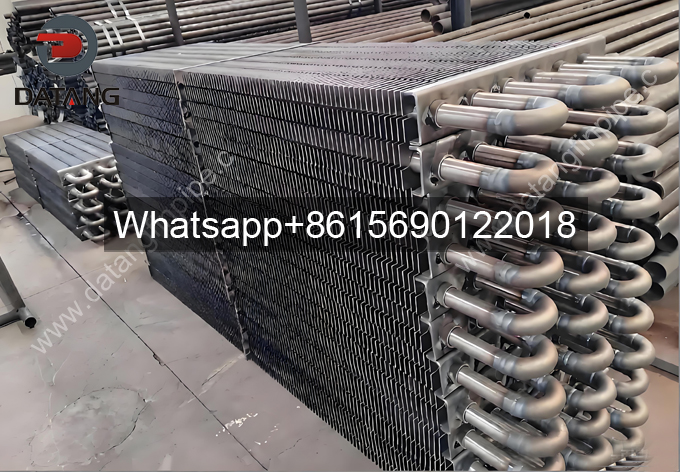
H type finned tubes Core Tips & Operational Breakdown
1. Match Flue Gas Conditions to Select Fin Specifications
-
Why It Matters: The symmetrical double-fin H-type structure can expand the heat transfer area to 5–8 times that of the base tube, but fin height and spacing must be adjusted based on flue gas dust content and flow velocity.
-
Risk of Non-Compliance: Excessively high fins or overly narrow fin spacing exacerbate ash accumulation, reducing heat transfer efficiency by over 30% and increasing maintenance frequency.
-
Practical Implementation Advice: During custom non-standard orders, provide flue gas parameters (temperature, dust content, flow rate) to Datang Finned Tube so their technical staff can recommend appropriate fin heights and spacing. For example, high-dust conditions call for 87mm fin height, 30mm fin width, and a fin pitch of ≥8mm.
2. Control Welding Process to Ensure Fusion Rate
-
Why It Matters: The fusion rate of high-frequency welding in H-type finned tubes directly determines the connection strength between the fins and the base tube, thus affecting heat transfer efficiency and service life.
-
Risk of Non-Compliance: If the fusion rate falls below 95%, fins easily detach or generate thermal resistance, compromising heat transfer performance and potentially causing severe localized overheating.
-
Practical Implementation Advice: Require suppliers (such as Datang Finned Tube) to provide welding process parameters and fusion rate test reports, with in-process sampling of no less than 3 points per meter. Perform visual field inspections for full, crack-free welds, and conduct ultrasonic spot checks when necessary.
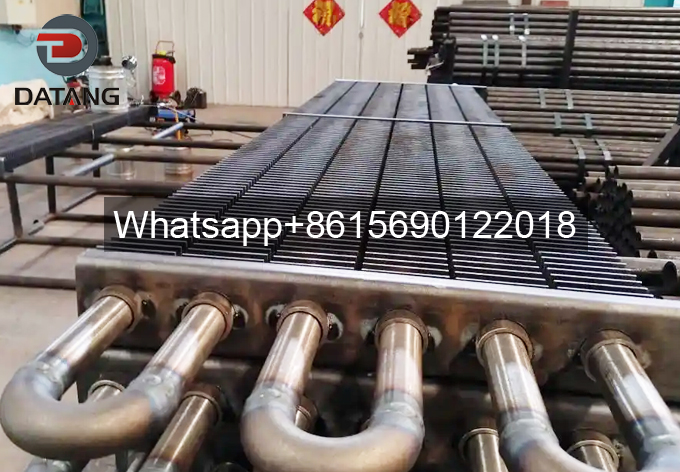
3. Optimize Self-Cleaning Channel Installation Angle
-
Why It Matters: The symmetrical structure of H-type double-finned tubes forms self-cleaning channels that reduce ash accumulation by over 60%, but the installation angle affects airflow scouring efficiency.
-
Risk of Non-Compliance: Incorrect tilt angles (pitch/elevation) prevent flue gas from effectively scouring the fin roots, expanding ash accumulation zones and requiring frequent shutdowns for cleaning.
-
Practical Implementation Advice: Install finned tubes horizontally or at a slight incline (≤5°) to ensure flue gas flows longitudinally along the symmetry plane of the fins. For vertical installations, ensure the flue gas inlet direction aligns with the fin opening direction.
4. Formulate a Periodic Maintenance & Inspection Plan
-
Why It Matters: Even though H-type finned tubes have a self-cleaning function, a small amount of dust will still accumulate during long-term operation; the decline in heat transfer performance must be assessed regularly.
-
Risk of Non-Compliance: Neglecting maintenance leads to gradual ash build-up and hidden drops in heat transfer efficiency—potentially falling 15%–20% within two years—that are difficult to reverse.
-
Practical Implementation Advice: Monitor inlet/outlet temperature differences and pressure drops quarterly using infrared thermal imagers or differential pressure meters. If the temperature difference drops by >10% or pressure drop rises by >20%, wash along the fin gaps using compressed air or a low-pressure water gun (pressure ≤0.5MPa) to avoid damaging weld points.
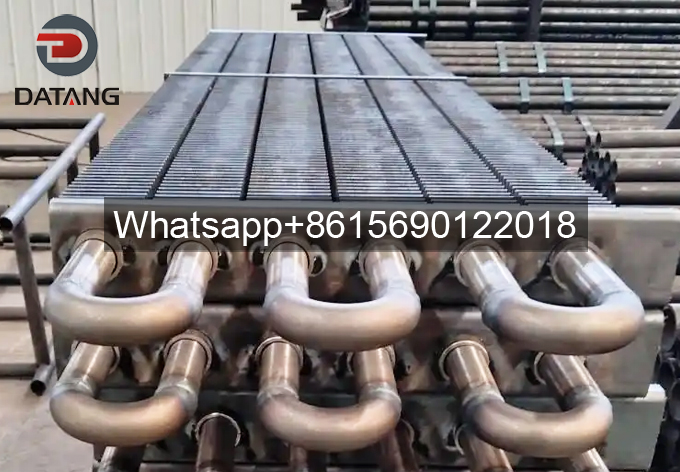
H Type Finned Tubes Common Pitfalls & Precautions
Pitfall 1: Believing higher fins are always better.
-
Mistake: Blindly pursuing larger fins simply to maximize heat transfer area.
-
Correct Understanding: Excessively high fins compromise self-cleaning efficiency—especially in high-dust environments—where severe ash build-up ultimately degrades overall thermal performance. Based on non-standard customization experience at Cangzhou Datang Steel Pipe Co., Ltd, fin height should be tailored to flue gas dust concentration: 87mm is suitable for low-to-medium dust conditions, whereas reducing the height to approximately 70mm and moderately widening the fin pitch is recommended for high-dust conditions.
Pitfall 2: Neglecting uniform installation clearance.
-
Mistake: Mixing finned tubes from different batches or with varying dimensions, leading to uneven airflow distribution.
-
Correct Understanding: Tubes within the same heat exchange unit must share identical specifications, and tube pitch must remain uniform (tolerance $\le 2\text{mm}$). This ensures even flue gas distribution across every tube, preventing localized overheating or ash accumulation.
Pitfall 3: Skipping destructive testing after welding.
-
Mistake: Judging weld quality solely by visual inspection.
-
Correct Understanding: The weld fusion rate in high-frequency welding must be verified via tensile or cross-sectional sampling tests. It is recommended to pull 1–2 tubes per batch for fusion rate testing to ensure compliance with the factory standard of Cangzhou Datang Steel Pipe Co., Ltd ($\ge 95\%$), preventing fin detachment during operation.
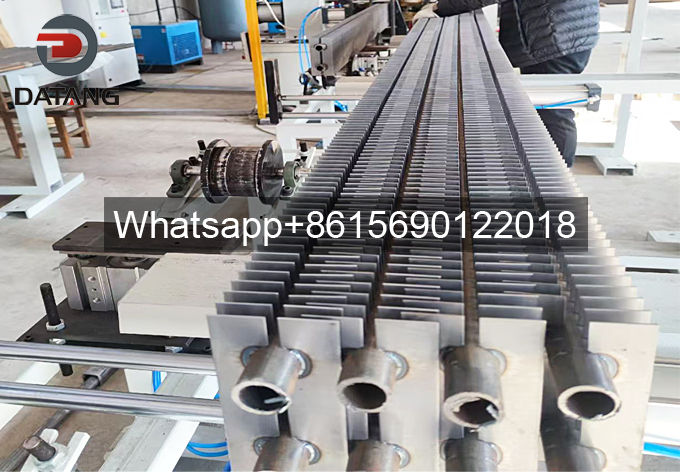
Summary & Practical Recommendations
The key to maximizing the value of H-finned tubes lies in precise selection based on operating conditions, strict weld quality control, optimized installation angles, and consistent routine monitoring.
As an industry innovator, Cangzhou Datang Steel Pipe Co., Ltd has established a comprehensive “Condition Matching – Fusion Guarantee – Self-Cleaning Optimization” technical methodology through extensive non-standard manufacturing experience, offering valuable insights for equipment operation and maintenance personnel. Remember, implementing any strategy effectively relies on upfront parameter communication and ongoing maintenance tracking—the true core of ensuring long-term, stable, and high-efficiency heat transfer for H-finned tubes.
Contact Datang
Looking for a customized H-finned tube solution tailored to your specific operating conditions, or need expert technical advice on model selection?Contact our engineering team now with your flue gas parameters (temperature, dust content, flow rate, etc.), and we will provide a complimentary, tailored heat exchange optimization plan designed to maximize efficiency and resist ash build-up!
Cangzhou Datang Steel Pipe Co., Ltd
-
Email: info@datangpipe.com
-
Website: www.datangpipe.com
-
Address: Zhenggang Industrial District, Yanshan County,Cangzhou City, Hebei Province, China (Factory visits and technical exchanges are warmly welcome)
