


Fin tube is the core heat transfer element of heat exchangers. Datang is a veteran enterprise in fin tube manufacturing, evolving from early tension-wound fin tubes to high-frequency welded fin tubes, laser-welded fin tubes, and now primarily embedded(G Type) fin tubes and wrapped fin tubes (L / LL / KL types). With rich experience and strict quality assurance across all these production processes, Datang leverages advanced manufacturing equipment to fulfill customized orders for every client.
Below, we will take a deep dive into the differences between embedded and wrap-on finned tubes. By evaluating their heat transfer performance, mechanical strength, and operating conditions, we will analyze their respective strengths to help you select the product best suited for your needs.
Structure of Embedded (G-Type) Fin Tubes
Embedded fin tubes involve a precise manufacturing process. A spiral groove of a specific depth (approx. 0.4 mm) is pre-machined onto the outer wall of the base tube. Under controlled tension, the fin strip is embedded into the groove, and the base tube metal at the groove edges is then rolled back (backfilled) under pressure to securely “lock” the fin root in place, achieving a mechanical interference fit.
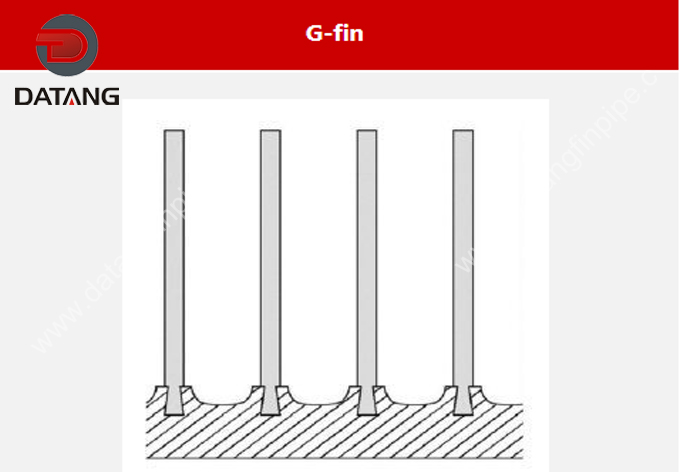
Key Features of Embedded Fin Tubes:
-
Extremely Low Contact Thermal Resistance: The interference fit and metal encapsulation generate massive contact pressure between the metals, eliminating air gaps and providing exceptional heat transfer performance.
-
Exceptional Mechanical Strength & Temperature Resistance: Because the fins are mechanically locked, they offer superior resistance to tension, vibration, and thermal fatigue. Operating temperatures can typically reach up to 400°C, maintaining stable contact thermal resistance even under repeated thermal cycling.
-
Excellent Corrosion Resistance: The absence of gaps at the fin root prevents ash and moisture accumulation, reducing the risk of crevice corrosion.
Core Advantages: High fin rigidity, resistance to deformation, extremely low contact thermal resistance, long-term heat transfer stability, and high tolerance to repeated thermal cycling. Maximum operating temperature reaches 280°C, with a maximum pressure rating of 3.2 MPa.
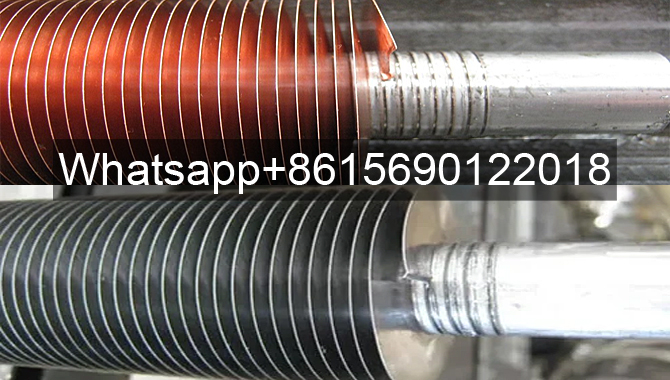
Limitations of Embedded (G-Type) Fin Tubes
-
High Manufacturing Threshold: Requires precision pre-grooving on the base tube surface. This places high demands on equipment and process accuracy, making production costs significantly higher than those of standard wrapped fin tubes.
-
Notable Corrosion Weakness: Corrosive media can easily accumulate in the microscopic seams where the fin and base tube join, leading to localized rusting over long-term use. Corrosion within these seams is difficult to clean and maintain.
-
Stress Concentration Risks: Grooving the base tube creates localized stress concentration. When paired with low-alloy steel tubes, work hardening can easily occur, rendering them unsuitable for medium-to-high pressure operating conditions.
Wrapped Fin Tubes (L / LL / KL Types)
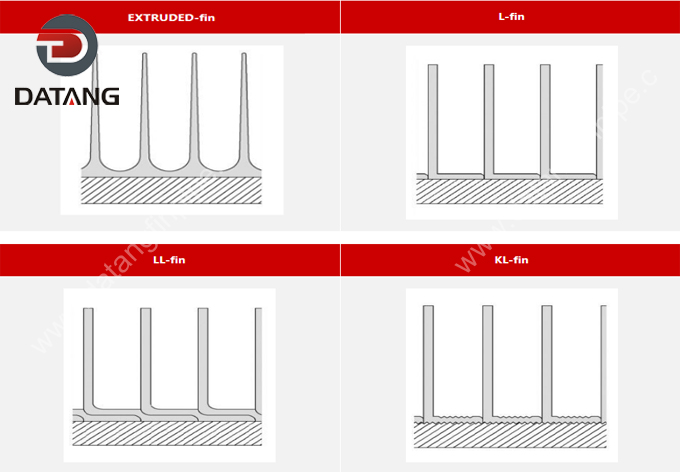
L/LL/KL type wrap-on finned tubes are manufactured using specialized wrapping machinery to tightly wind a metal strip (such as aluminum or copper) spirally around the outer surface of the base tube. Based on the geometry of the fin root and the bonding method, they are categorized into three main types:
-
L-Type (L-Foot): The aluminum fin is formed into an L-shaped foot and wound onto the base tube under tension, leaving parts of the base tube exposed. The short edge of the “L” rests against the base tube, offering basic atmospheric corrosion protection. It is the most cost-effective option, but it is primarily suited for low-temperature applications (typically up to 130°C to 150°C), as elevated temperatures can cause a loss of tension and fin loosening. Featuring high production efficiency and high finning ratios, it is widely used in air coolers and air heaters across the petrochemical and HVAC industries.
-
LL-Type (Double L / Overlapped): An upgraded variant of the L-type. The fin root features a double-L overlapping structure that completely encapsulates the outer wall of the base tube, preventing direct exposure to the atmosphere and delivering superior corrosion resistance. With maximum operating temperatures reaching 170°C to 180°C, it serves as an economical alternative to extruded fin tubes in corrosive environments. Ideal for outdoor ventilation or mildly corrosive heat exchange settings.
-
KL-Type (Knurled / Footing): Prior to wrapping, both the outer surface of the base tube and the fin root undergo a knurling process. After wrapping, the fin root is secondary-rolled to enhance contact adhesion. This mechanical interlocking substantially increases the contact surface area—by roughly 50% compared to the L-type—and boosts bonding strength. It yields lower contact thermal resistance and superior heat transfer performance while withstanding repeated thermal cycling without loosening. Capable of operating up to 250°C to 260°C with pressure ratings up to 3.2 MPa, it is exceptionally well-suited for medium-temperature applications.
Key Features of Wrapped Fin Tubes:
Manufacturing processes are relatively simple and cost-effective. However, because attachment relies on tension or knurling, thermal contact resistance may fluctuate under severe temperature cycling.
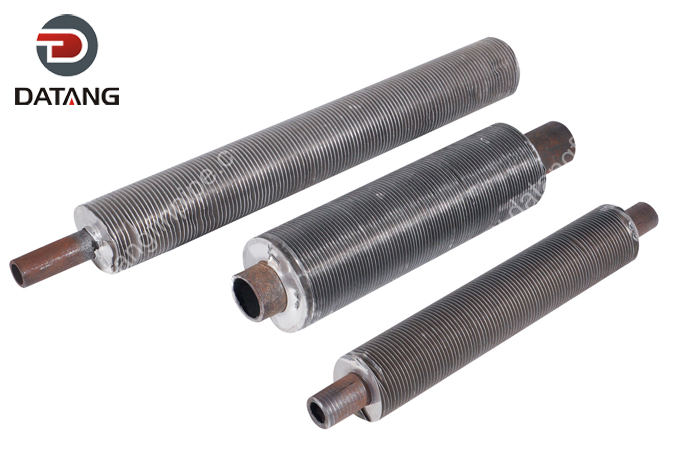
Limitations of Wrapped Fin Tubes (L / LL / KL)
-
L-Type Fin Tubes: The bonding pressure between the fin and the base tube is only 1/5 that of extruded fin tubes. When tube wall temperatures exceed 70°C, fins tend to loosen, leading to a dramatic increase in contact thermal resistance. Furthermore, aluminum fins lack sufficient work hardening during cold processing, remaining soft and highly susceptible to flattening or deformation from external impacts. In low-temperature, high-humidity conditions, frost buildup readily occurs, directly impairing heat transfer efficiency.
-
LL-Type Fin Tubes: Although corrosion resistance is improved over the L-type, the overlapping area at the fin root tends to collect dust and debris. Over long-term operation, localized fouling occurs that is difficult to clean. Additionally, its thermal conductivity offers no distinct advantage over the KL-type, making its cost-performance ratio less competitive.
-
KL-Type Fin Tubes: Requiring additional processing steps compared to standard L-types, production efficiency is lower and manufacturing costs are higher. If the knurling process falls short of standard specifications during production, the risk of fin loosening remains. Furthermore, stability drops noticeably under prolonged, high-vibration operating conditions.
Common Drawback: All wrapped fin tubes suffer from a tendency for dust and dirt to accumulate in the gaps between fins. Over extended operation, this significantly reduces heat transfer efficiency, requiring the installation of soot blowers or regular maintenance routines.
Key Differences Between Wrap-on and Embedded Finned Tubes
| Comparison Dimension | Wrap-on Fin Tubes (L / LL / KL Type) | Embedded Fin Tubes (G Type) |
| Bonding Method | Spiral wrapping + tension / knurled interlocking | Mechanical interference embedding + base tube metal backfill locking |
| Max. Operating Temperature |
L-Type: ~150°C
LL-Type: ~180°C
KL-Type: ~260°C |
Up to 400°C |
| Heat Transfer Performance | Good (KL-type performs better than L/LL) | Exceptional (extremely low and stable contact thermal resistance) |
| Thermal Fatigue / Vibration Resistance | Moderate (tension tends to decay at elevated temperatures) | Exceptional (mechanically locked, will never loosen) |
| Manufacturing Cost | Lower (simple process, highly cost-effective) | Higher (requires precision grooving and rolling processes) |
| Base Tube Requirements | Highly versatile; suitable even for thin-walled tubes | Requires sufficient wall thickness and ductility to withstand grooving |
Which Type Should You Choose?
When to Choose Embedded (G-Type) Fin Tubes:
G-type embedded fin tubes are the mandatory choice for severe operating conditions involving high temperatures, high pressures, and heavy vibration, delivering the highest level of heat transfer stability and mechanical reliability.
-
Petrochemical Refining, Power Boiler Air Preheaters, and High-Pressure Air Coolers: Choose G-type embedded fin tubes for these demanding applications.
-
Large Media Temperature Differentials & Severe Thermal Cycling: Ideal when long-term operation requires guaranteed zero fin loosening and no degradation in heat transfer performance.
-
Moist or Corrosive Gas Environments: G-type provides complete base tube protection, making it a more dependable option.
When to Choose Wrap-on (L / LL / KL Type) Fin Tubes:
L / LL / KL wrapped fin tubes offer an economical choice, balancing cost and performance through different root designs (flat contact, overlapping, or knurling).
-
Low-to-Medium Temperature Heat Transfer: Perfect for residential heating, ambient-temperature ventilation, HVAC systems, and low-to-medium temperature waste heat recovery.
-
Corrosive or Humid Environments on a Budget: LL-type also provides complete base tube protection, offering a reliable, cost-effective defense against corrosion.
FAQ: G Fin vs LL Fin
What are the main differences between LL fin tubes and G fin tubes?
When comparing LL-type and G-type finned tubes, the primary differences lie in the method of connecting the fin to the base tube, temperature and pressure resistance, heat transfer performance and stability, production efficiency, and suitable industrial applications.
Need Help Selecting the Right Fin Tube?
Not sure which fin tube best fits your application? Contact Datang Finned Tube today for expert advice and customized solutions.
