


Embedded “G” Fin Tubes Introduction
Embedded “G” Fin Tubes are widely used in petroleum refining and chemical processing, power plant boilers,air-cooled heat exchangers(ACHE). The aluminum fins are mechanically embedded into a helical groove—typically 0.25 to 0.5 mm deep—cut into the outer surface of the base steel tube. This process ensures high heat transfer efficiency and enables the tube to withstand operating temperatures up to 350–400°C, making it an ideal choice for high-temperature, high-pressure thermal transfer applications.
Why Choose the “G-Type” Fin Tube?
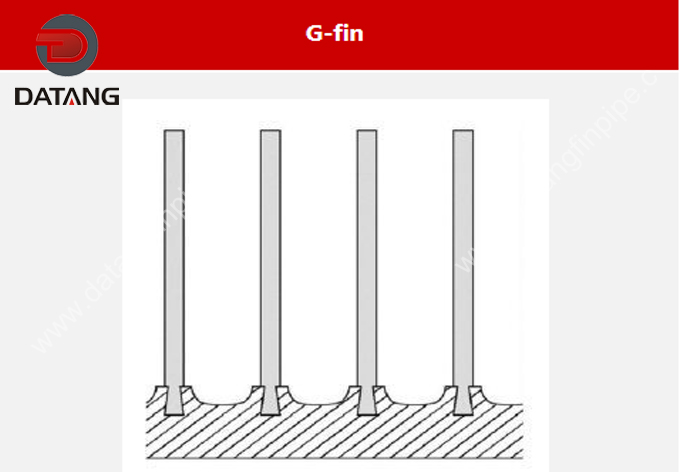
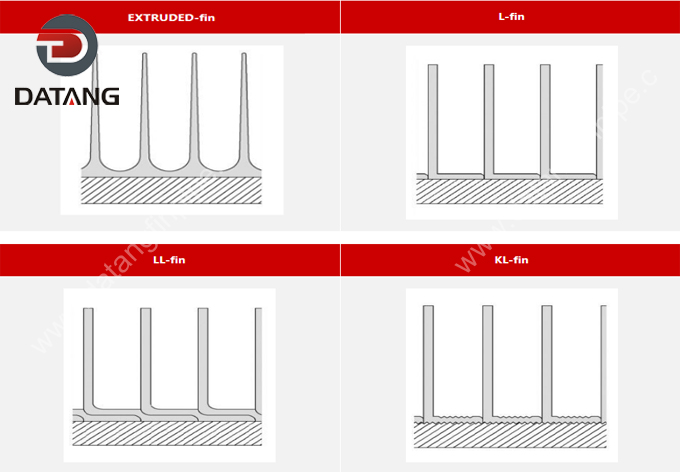
Unlike L-type (tension wrapped) or LL-type (double-L wrapped) fin tubes, the manufacturing process of the G-type utilizes a groove embedding and backfill locking system:
Grooving: A helical groove—approximately 0.25 to 0.5 mm deep—is cold-formed into the outer wall of the base tube. Instead of removing metal, the process displaces it to the sides, preserving the original tube wall thickness.
Embedding: Under precise tension, the fin strip is pressed firmly into the bottom of the groove, establishing maximum metal-to-metal contact with the base tube.
Locking: Heavy-duty rollers backfill and roll the displaced wall metal against the base of the fin, creating a robust mechanical interlock.
Value Proposition:
This unique structure eliminates the air gap between the fin and the base tube, dramatically reducing contact thermal resistance. Furthermore, it easily withstands differential thermal expansion at operating temperatures up to 400°C (and beyond), preventing fins from loosening or detaching over time.
Imbedded Finned Tubes Key Selection Parameter Guidelines (2026 Edition)
When requesting quotations or preparing technical agreements, please ensure the following core parameters are clearly specified:
| Parameter Dimension | Recommended Range / Standard | Selection Notes & Considerations |
| Max Wall Temp |
400 C° (Standard) Up to 450 C° (Extreme) |
Extreme conditions require evaluation of fin material creep. For temperatures above $450^\circ\text{C}$, welded fin tubes are recommended. |
| Base Tube Wall Thickness | 1.65 mm | Must satisfy the grooving depth (0.4mm) requirement; otherwise, structural integrity will be compromised, leading to reduced pressure resistance. |
| Fin Height | 6.35 mm to 25.4 mm (1/4” to 1”) | Taller fins provide a larger heat transfer area, but reduce resistance to mechanical damage. Select a balanced size based on application. |
| Fin Density | 5 to 12 FPI (Fins Per Inch) | High FPI is suitable for clean gases; low FPI is ideal for dusty, fouling-prone environments to allow for easier cleaning. |
| Operating Pressure | 32 MPa | Depends on base tube material and wall thickness. The G-type structure does not significantly reduce pressure rating, but remaining wall thickness at the groove root must be verified. |
Selecting the base tube material and fin combination
The greatest advantage of the G-type fin tube lies in its ability to combine dissimilar metals—ensuring high pressure and corrosion resistance while leveraging the high thermal conductivity of the fins:
-
Aluminum Fins (Al 1100/1060) + Carbon Steel (CS) / Alloy Steel Tubes:
-
Standard grades: ASTM A179, A192, SA210.
-
Application: Most cost-effective combination; widely used in petroleum refining and power generation.
-
Max Continuous Operating Temp: 400 C°
-
-
Aluminum Fins (Al 1100/1060) + Stainless Steel (SS)(304/316L) / Duplex Steel Tubes:
-
Standard grades: TP304/316L, Duplex S31803/S2205.
-
Application: Designed for corrosive process fluids or high-hygiene environments (food, pharmaceuticals).
-
Max Continuous Operating Temp: 500 C° to 540 C°
-
-
Copper Fins + Steel / Copper Alloy Tubes:
-
Standard grades: CuNi 90/10, Aluminum Bronze.
-
Application: Specifically engineered for seawater cooling, marine applications, and highly aggressive environments.
-
Max Continuous Operating Temp: 450 C°
-
Selection Note:
When operating temperatures exceed 180 C° to 200 C°, tension-wrapped fins (L, LL, or KL types) are prone to loosening due to the significant difference in thermal expansion coefficients between aluminum and steel, which creates an insulating “air gap thermal resistance.” For high-temperature conditions, G-type embedded or bimetallic extruded fin tubes are essential.
The DATANG Advantage
DATANG Fin Tube is a comprehensive ecosystem manufacturer built on Technology, Delivery, and Service. We are equipped with state-of-the-art production facilities and advanced manufacturing processes, including fully automated CNC finning machines, precision laser welding systems, and digital tension control technology. Leveraging advanced inspection methods such as High-Frequency Welding combined with Digital Non-Destructive Testing (NDT), we guarantee exceptional weld pass rates and joint bonding strength.
-
Expertise & Customization: Supported by an experienced technical team, DATANG possesses robust R&D capabilities to deliver tailor-engineered solutions for complex applications.
-
Rigorous Quality Control: Our dedicated QA/QC team enforces strict multi-tier quality gates—from raw material inspection and in-process monitoring to final product testing—ensuring 100% compliance before factory dispatch.
-
Proven Track Record: With deep industry experience, we have built a solid portfolio of successful projects across high-end sectors, including petroleum refining, power plant boilers, and power generation systems.
2026 Selection & Operation Pitfall Guide
1. Cleaning & Maintenance
Although G-type fins feature a tight mechanical bond, the aluminum fins themselves are relatively thin (0.3–0.5 mm).
-
Avoid direct high-pressure water jets aimed perpendicularly at the fin roots to prevent fin bending or collapsing.
-
Avoid strong acid or alkaline cleaning agents to prevent chemical corrosion and breakage at the fin root.
2. Atmospheric Corrosion Risk
At the root of a G-type fin, the underlying base tube is exposed to ambient air. In high-humidity or salt-spray environments (such as coastal power plants):
-
Select base tube materials that resist atmospheric corrosion.
-
Alternatively, apply anti-corrosion coatings or switch to LL-type fins for complete tube coverage.
3. Mechanical Protection
Because G-type fins are mechanically embedded rather than integrally extruded, their lateral impact resistance is lower than that of Extruded fin tubes.
-
Never step on or stack heavy loads directly on the tubes during transit or installation.
-
Collapsed fins act as a “thermal barrier,” causing localized overheating and potential tube bursting.
4. Standardizing Specifications
Whenever possible, stick to standard tooling dimensions (5/8” OD,10 FPI, 1/2” Fin Height).
-
Non-standard specifications (11.5 FPI) incur higher unit costs, longer lead times, and difficult spare parts procurement in the long run.
5. Key Acceptance Criteria
-
Fin Height Tolerance: Within 0.2 mm.
-
Fin Deflection/Bending Rate: Visual inspection must confirm flattened/collapsed area is < 1%.
-
Groove Insertion Rate: 100/% full engagement of the fin base into the helical groove.
-
Fin Pull-off Test: Sampling test for root bonding strength must yield a single-fin pull-off force of 70 N.
-
Hydrostatic / NDT Testing: Verify that the base tube has passed Eddy Current Testing (ET) and Hydrostatic Testing both before and after grooving to ensure zero leakage.
When to Choose G-Type Fin Tubes?
✅ Choose G-Type if:
-
Operating wall temperature is > 250 C° and < 400 C°.
-
The system experiences frequent start-stops or rapid thermal cycling.
-
The operating medium contains dust/particulates that require periodic sootblowing or cleaning.
-
You need a cost-effective solution that balances long service life with reasonable upfront investment.
❌ Avoid G-Type if:
-
Operating wall temperature exceeds > 450 C° (Opt for Welded Fin Tubes).
-
Exposed to full seawater immersion corrosion (Opt for Extruded / Bimetallic Tubes).
-
Low-temperature applications (< 150 C°) without vibration (Opt for L-Type or LL-Type).
Need Tailored Advice?
If you have specific operating parameters (process media, temperatures, operating pressures, or ambient conditions), we can assist you with detailed fin efficiency calculations or recommend precise base tube and fin material grades.
