


In a finned tube heat exchanger, fin spacing (often measured as “fins per inch” or FPI) is one of the most critical design parameters. It directly dictates the balance between heat transfer enhancement and the mechanical energy required to move fluid through the system.
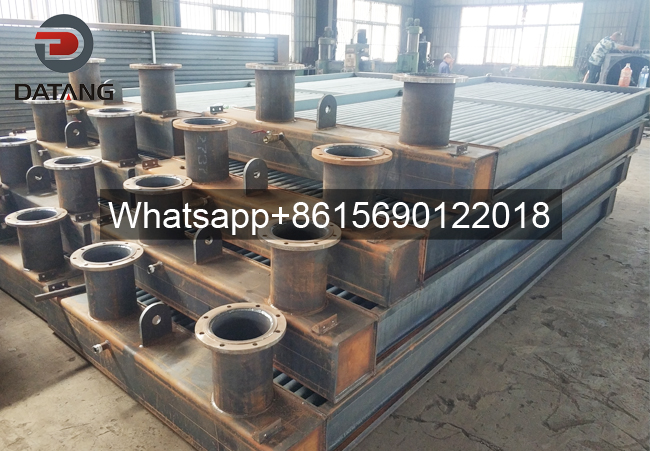
Here is a breakdown of how fin spacing affects overall efficiency.
1. Heat Transfer Coefficient and Surface Area
The primary goal of adding fins is to increase the total surface area (A) available for heat transfer.
-
Close Spacing: Increasing the number of fins per meter significantly increases the secondary surface area. This typically improves the rate of heat transfer, especially when the gas-side (outside the tube) heat transfer coefficient is much lower than the tube-side (inside the tube) coefficient.
-
The Limit of Diminishing Returns: As fins get closer together, the boundary layers from adjacent fins begin to overlap. This can lead to “dead zones” where the fluid becomes stagnant, actually decreasing the effective heat transfer coefficient despite the larger surface area.
2. Airside Pressure Drop
Efficiency isn’t just about heat moved; it’s about the energy cost to move it.
-
Resistance: Narrower spacing creates a more tortuous path for the air or gas. This increases the pressure drop (△P).
-
Power Consumption: A higher pressure drop requires more powerful fans or pumps, increasing the operational cost. An “efficient” design must find the “sweet spot” where the gain in thermal performance justifies the increase in fan power.
3.Fluid Flow Resistance and Energy Consumption
When fin spacing is too small, the channels between the fins narrow significantly, leading to a sharp increase in flow resistance for air or flue gas. To compensate for this resistance and maintain the required flow rate, fans or induced draft fans must consume considerably more power, thereby increasing the overall operational energy consumption of the system.
-
Impact on Power: Experimental data indicates that when fin spacing is reduced from 2.0 mm to 1.5 mm, fan power consumption increases by approximately 10%.
-
Design Recommendation: In applications characterized by low air volume or low flow velocities, it is advisable to appropriately increase the spacing to minimize pressure drop and optimize energy efficiency.
4. Boundary Layer Development
The efficiency of a fin is largely dependent on the development of the thermal boundary layer.
-
Wide Spacing: Allows for fully developed flow. While the pressure drop is low, much of the air passes through the center of the gap without interacting with the cold/hot fin surface.
-
Optimal Spacing: Ideally, fins are spaced so that the boundary layers almost meet at the exit of the finned section, ensuring maximum interaction between the fluid and the metal surface.
-
Finding the Optimal Spacing:Because of this trade-off, the relationship between fin spacing and overall efficiency is non-linear.
- As fin spacing is reduced from a large value, the heat transfer rate initially increases due to the growing surface area.
- It reaches a maximum point where the benefit of added surface area is perfectly balanced against the penalty of increased pressure drop. This is the optimal fin spacing for that specific set of operating conditions.
- If the spacing is reduced further, the sharp rise in pressure drop outweighs the marginal gain in heat transfer, causing the overall efficiency to decline.
Research has shown that this optimal point is not fixed. For example, one study found that under a constant pressure difference, the heat transfer of an exchanger peaked when the fin spacing was 1.4 mm. However, this optimal value will change if the operating conditions, such as the required pressure drop or airflow rate, are different.
5. Fouling and Maintenance
In industrial environments, “efficiency” also refers to how long a unit can operate before needing cleaning.
-
Fine Spacing: High-density fins act as a filter. In applications involving dust, oil mist, or moisture (like power plant cooling or oil refineries), tight spacing leads to rapid fouling.
-
Impact: As debris builds up, the air path is blocked, the pressure drop skyrockets, and the heat transfer efficiency plummets.
6.Other Influencing Factors
- Fluid Properties: The type of fluid (e.g., air, water, flue gas), its viscosity, and its velocity all play a crucial role.
- Other Geometries: Fin height, fin thickness, and the spacing between the tubes themselves (tube pitch) all interact with fin spacing to determine the final performance.
- Application Requirements: In applications where fouling is a major concern (e.g., with dirty flue gas), a larger fin spacing might be chosen to ensure long-term reliability, even if it means a slight sacrifice in peak thermal efficiency.
7.Recommended Fin Spacing for Different Application Scenarios
| Application Scenario | Recommended Fin Spacing | Rationale |
|
Clean Air Environments (e.g., Electronics workshops, Natural gas processing) |
6–10 mm | Low dust content (≤ 0.1 g/cm³), allows for maximized heat transfer efficiency. |
|
Medium Pollution Environments (e.g., Machining, Food processing plants) |
11–20 mm (Medium Pitch) |
Balances heat exchange performance with anti-clogging properties; easier to maintain. |
|
High Dust Environments (e.g., Steel mills, Cement plants) |
12–20 mm | Prevents dust blockage and ensures long-term stable operation. |
|
High Humidity / Sticky Impurity Environments (e.g., Refineries, Chemical plants) |
18–25 mm | Prevents condensation and the adhesion of viscous substances. |
| Domestic Heating / Low Air Volume & High Temp Difference | 2–3 mm | Dense fins significantly enhance heat transfer efficiency. |
| Universal Wide Spacing Type | ≥5 mm | Suitable for high air volume and scenarios prone to ash accumulation. |
Engineering Rule of Thumb
For clean air applications (like HVAC), fin spacing is typically dense (1.5 mm to 3.0 mm). For industrial process applications or heavy-duty cooling (like G-Type embedded fins or L-Type finned tube in oil/gas), the spacing is usually wider (2.5 mm to 6.0 mm) to accommodate higher velocities and potential particulate matter.
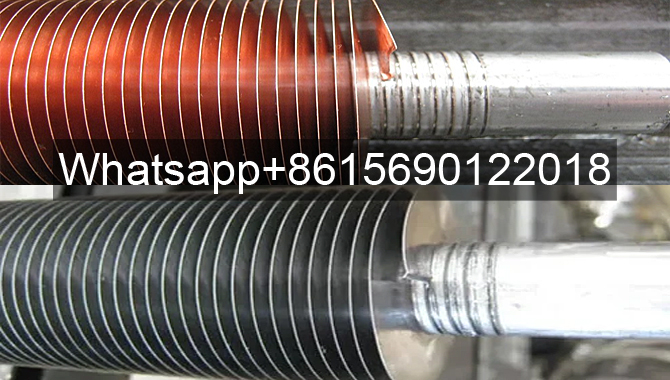
G-Type Embedded Fins Finned Tube
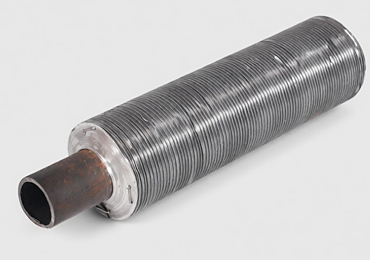
L-Type Finned Tube
The fin spacing requires striking an optimal balance among heat exchange efficiency, flow resistance, the risk of ash accumulation, and operating costs; a smaller spacing is not necessarily better, and the selection should be made scientifically based on the specific application scenario.
