


Technical Specifications: Welded Fin Tubes | Datang Finned Tube
Welded fin tubes are engineered for high-temperature, high-pressure, and severe corrosive environments. By utilizing advanced automatic high-frequency resistance welding (HFW) and precision laser welding technologies, we ensure a 100% molecular bond between the fin and the base tube, maximizing thermal efficiency and structural durability.By minimizing contact thermal resistance and maximizing structural durability, this solution delivers 3 to 7 times the heat transfer efficiency of standard bare tubes.
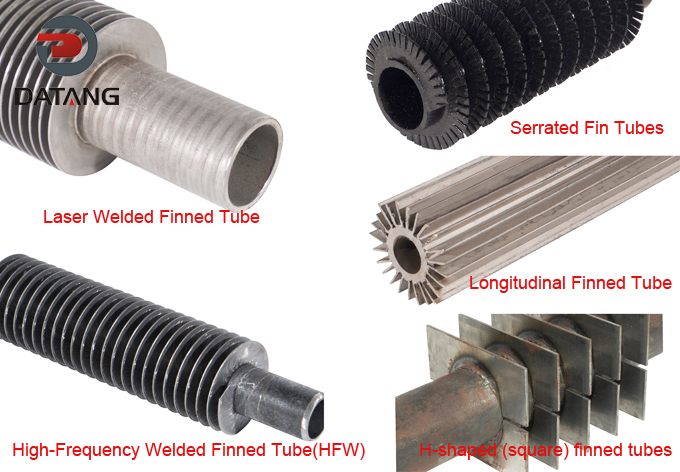
Comprehensive product catalog of welded fin tubes, showcasing HFRW spiral fins, laser-welded serrated fins, H-shaped square finned tubes, Serrated finned tubes and longitudinal welded fin tubes with specifications
Fin Tube Technical Specifications & Manufacturing Process
Main Processes
- High-Frequency Welded Finned Tube(HFW): Leverages the skin effect for instantaneous fusion, achieving a gap-free weld rate of ≥95%.
- Laser Welded Finned Tube: Utilizes precision laser beams to reach a weld rate of ≥99% with a minimal heat-affected zone (0.1–0.3 mm) for superior accuracy.
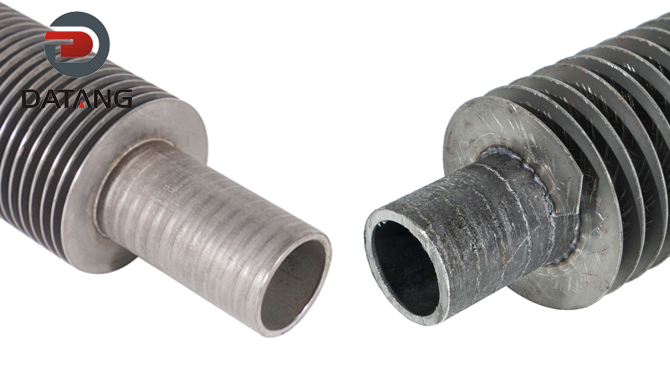
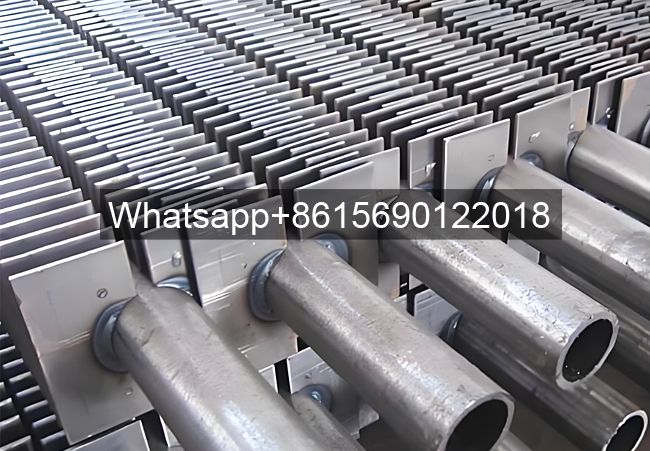
Welded Fin Tube Structural Configurations
-
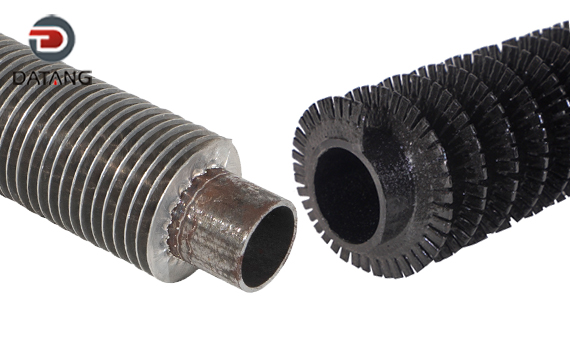
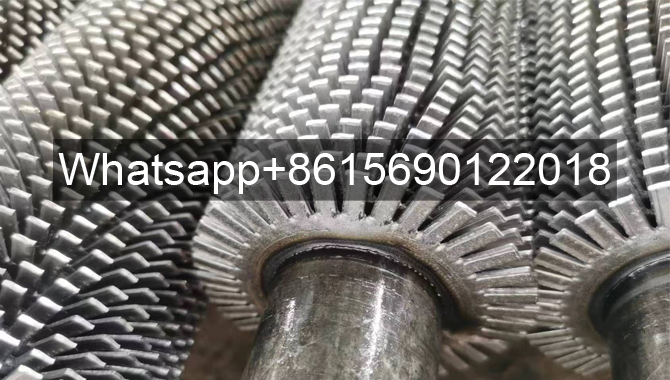
Helical/Spiral Fins: The most common configuration utilized for optimal flow.
-
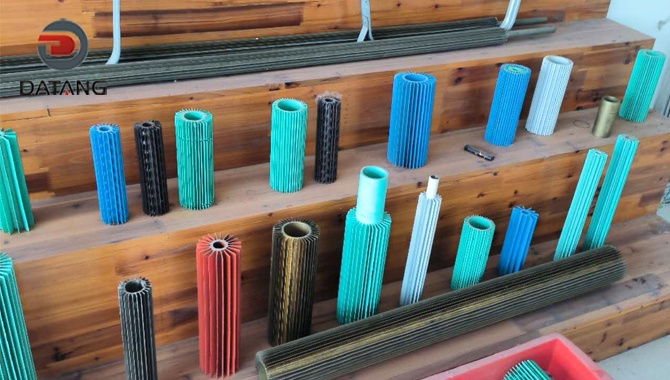
Specialized Designs: Longitudinal fins or H-shaped (square) finned tubes are also available to meet specific operational requirements.
Key Performance Indicators (KPIs)
-
Pressure Rating: Generally ranges from 1.6 to 10 MPa, depending on the material grade and wall thickness.
-
Operating Temperature: Spans a wide range from -20°C to 850°C.
-
Heat Transfer Efficiency: High efficiency tailored to and determined by fin density and the material’s thermal conductivity.
Welded Fin Tube Standard Technical Dimensions
Welded fin tubes tailored to precise global engineering standards (such as ASTM, ASME, and EN). Below is our standard dimensional manufacturing range:
| Parameter | Dimensional Range (Metric) | Dimensional Range (Imperial) |
| Base Tube OD | 15.88 mm – 273 mm | 5/8″ – 8″ |
| Base Tube Thickness | 1.5 mm – 15 mm | 0.06″ – 0.60″ |
| Fin Height | 6 mm – 38 mm | 1/4″ – 1.5″ |
| Fin Thickness | 0.8 mm – 3.0 mm | 0.03″ – 0.12″ |
| Fin Pitch (Density) | 45 – 287 fins per meter | 1.1 – 7.3 fins per inch |
| Tube Length | Up to 25,000 mm | Up to 82 ft |
Welded Finned Tube Material Selection
To optimize performance against corrosion, extreme temperatures, and budget constraints, choosing the right combination of base tube and fin materials is essential. Below is a breakdown of our standard material configurations:
Carbon Steel Finned Tubes
-
Base Tube Grades: ASTM A179, A192, A210, ST35.8, SA106 Gr. B seamless steel tubes.
-
Fin Material: Carbon steel strips.
-
Best For: High cost-effectiveness in neutral, dry environments with operating temperatures ≤ 450°C. Anti-corrosion surface treatments (such as hot-dip galvanizing) are highly recommended.
Stainless Steel Finned Tubes
-
Available Grades: SS304, SS316, SS321, SS310S, and Duplex Steel (SS2205).
-
Best For: Highly corrosive environments, chemical processing, and flue gas waste heat recovery. These grades withstand high temperatures (≤ 600°C+) and can handle extreme pressure ratings of up to 10 MPa.
Alloy Steel Finned Tubes
-
Available Grades: ASTM A213 / A335 (T11, T22, T5, T9, etc.).
-
Best For: Extreme industrial applications, including temperatures above 800°C or exposure to strong acids and alkalis.
Bimetallic / Composite Finned Tubes
-
Configuration: Steel-Aluminum composite (Inner steel tube with outer aluminum fins).
-
Best For: Applications requiring a balance of high pressure resistance and superior thermal conductivity.
⚠️ Temperature Limitation: Operating temperatures must be kept within 180°C. This option is not suitable for high-temperature steam systems.
Welded Finned Tube Key Advantages
-
100% Fusion Weld Bond: Welding process achieves a flawless structural bond. This eliminates air gaps and contact thermal resistance, ensuring the heat transfer performance never degrades over the lifespan of the equipment.
-
Serrated vs. Solid Options: Solid (plain) fins for uniform airflow and serrated (segmented) fins to create turbulence, which significantly increases the heat transfer coefficient in specific gas-flow applications.
-
High Thermal Efficiency: The metallurgical bond allows for continuous operation at temperatures exceeding 400°C to 600°C (depending on material selection) without risk of fin loosening.
Welded Finned Tube Primary Applications
Finned tubes are the backbone of modern industrial thermal management. Here is where our products deliver maximum value across various industries:
-
Industrial Waste Heat Recovery: Widely used in boiler economizers, air preheaters, and flue gas heat exchangers to capture waste heat, drastically reducing energy consumption and carbon footprints.
-
HVAC & Commercial Heating: Ideal for heavy-duty radiators in manufacturing plants, commercial greenhouses, and large-scale architectural facilities utilizing hot water or steam media.
-
Drying & Dehydration Equipment: Provides a stable, high-efficiency hot air source for drying grain, timber, food products, and chemical materials.
-
Specialized Heavy Industries: Critical for power plant air-cooling islands (ACC), petrochemical reactor cooling, and high-temperature metallurgical cooling systems.
Welded Finned Tube Expert Selection Guide: How to Choose the Right Finned Tube
To ensure optimal performance and longevity, always prioritize your system’s operating temperature, pressure, and corrosive potential before purchasing. Here is our quick recommendation:
-
Standard Drying & Heating: Opt for Carbon Steel High-Frequency Welded (HFRW) finned tubes. It is the most cost-effective solution for non-corrosive environments.
-
High-Moisture, Acidic, or High-Temp Environments: Stainless Steel is a must. It provides the necessary resistance against harsh flue gases and chemical corrosion.
-
Maximum Low-Temperature Efficiency: If you are chasing ultimate thermal conductivity and have a flexible budget, consider Copper or Steel-Aluminum Composite tubes.
⚠️ Note: Always keep the strict temperature thresholds of these materials in mind (e.g., steel-aluminum composites should remain below 180°C to prevent thermal degradation).
Why Choose Datang Finned Tube?
At Datang Finned Tube, we back our manufacturing precision with stringent quality control, including non-destructive testing (NDT), hydrostatic testing, and weld-pull tests to guarantee structural integrity. Our optimized production lines are designed to deliver shortened lead times without compromising on international engineering standards.
For detailed drawings, customized calculations, or a fast project quotation, please provide your specific base tube OD, fin height, pitch, and material requirements to our technical sales team.
