


In the field of industrial heat exchange, maximizing thermal efficiency and extending equipment service life remain paramount engineering objectives. As a premier manufacturer in the thermal process industry, Datang Finned Tube is committed to delivering high-quality, custom-engineered heat transfer solutions for global industrial applications.
This guide provides an in-depth technical analysis of the Embedded Finned Tube, commercially recognized as the G-Type Finned Tube or G-Fin.
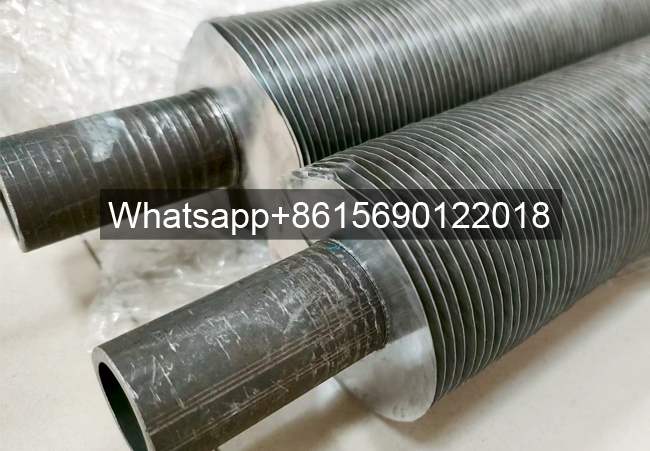
What is a G-Type Finned Tube?
An Embedded Finned Tube (G-Type) is a high-efficiency heat transfer element featuring fins that are mechanically locked into pre-machined helical grooves on the outer diameter (OD) of the base tube.
-
Working Principle: Utilizing specialized finning machinery, a continuous helical groove is cut into the external wall of the base tube. Simultaneously, a metal fin strip (typically aluminum or copper) is wound under high tension and inserted into the groove. The displaced base metal is then mechanically caulked and rolled against the root of the fin, locking it permanently in place.
-
Physical Characteristics: Because the fin root is deeply buried within the tube wall, this mechanical interference fit provides exceptional structural integrity, robust mechanical bonding, and outstanding resistance to vibration.
How Are G-Type Finned Tubes Manufactured?
Our production lines utilize fully automated CNC embedded finning machinery. The manufacturing process strictly follows three core steps to ensure zero-defect quality control:
-
High-Precision Grooving: Dedicated cutting tools plow a helical groove of uniform depth and pitch onto the external surface of the base tube.
-
Tension Fin Insertion: The metal fin strip is precisely wound and driven into the helical groove under constant, high-tension control.
-
Caulking and Locking: Specialized rollers apply mechanical pressure to the displaced base metal on both sides of the groove, causing plastic deformation. The metal backfills the groove and tightly clamps the fin root, forming a flawless mechanical bond between the fin and the tube wall.
Characteristics and Operating Temperatures of G-Fins
As a premium-spec heat transfer component, the g type finned tube exhibits superior physical and thermodynamic properties:
-
High Operating Temperature Capability: G-type finned tubes manufactured by Datang can withstand maximum design temperatures up to 400°C. This makes them highly reliable in extreme high-temperature and high-pressure industrial processes.
-
Constant Contact Thermal Resistance: Because the fin is mechanically locked into the base tube wall, the contact thermal resistance remains low and stable over time. Even when subjected to severe thermal cycling (frequent heating and cooling), the fin root does not loosen, ensuring that heat transfer efficiency does not degrade.
Material & Specification Capabilities
As an established finned tube manufacturer, Datang Finned Tube possesses advanced customization capabilities, offering a versatile range of material combinations and dimensional configurations to satisfy specific corrosion allowances and thermal requirements:
1. Available Material Combinations
-
Base Tube Materials:
-
Carbon Steel: ASTM A179, A192, SA214, etc.
-
Stainless Steel: TP304/304L, TP316/316L, 321, 347, Duplex Stainless Steel, etc.
-
Alloy Steel: P5, P9, P11, P22, etc.
-
Copper & Copper Alloys
-
-
Fin Materials:
-
Aluminum: Al1050, Al1060, Al1100
-
Copper
-
2. Standard Dimensional Range (Customizable)
-
Base Tube OD: 15.88 mm to 50.8 mm (5/8″ to 2″)
-
Base Tube Wall Thickness: Minimum 1.65 mm (Required to accommodate groove depth without compromising tube pressure ratings)
-
Fin Height: 6.35 mm to 15.88 mm
-
Fin Thickness: 0.3 mm to 0.5 mm
-
Fin Pitch: 5 to 11 Fins Per Inch (5 – 11 FPI)
Technical Comparison with Other Mainstream Finned Tubes
To assist engineering teams in product selection, Datang Finned Tube provides a comprehensive technical comparison between G-type fins and other mainstream profiles (Extruded, L-Foot, Welded):
| Finned Tube Type | Manufacturing Process | Max. Design Temp. | Contact Resistance Stability | High-Pressure Jetting Resistance | Primary Applications |
| G-Type Finned Tube (Embedded G-Fin) | Base tube grooved; fin strip inserted and mechanically caulked. | ~400°C | Excellent (Unaffected by severe thermal cycling). | Excellent | Severe high-temperature, high-pressure processes with frequent thermal cycling. |
| Extruded Finned Tube | Monometallic or bimetallic composite tube directly cold-extruded into fins. | ~300°C | Perfect (Zero contact resistance due to monometallic bond). | Excellent | Highly corrosive environments, low-to-medium temperature air coolers. |
| L-Type Finned Tube (L-Foot / Wrap-on) | Fin strip is formed into an ‘L’ shape and tension-wound onto the tube surface. | ~130°C | Poor (Susceptible to loosening under thermal expansion). | Poor (Jetting can displace or flatten fins). | Low-temperature applications with clean environments and tight budgets. |
| Welded Finned Tube (HF Welded / Laser Welded) | Fin strip is continuously fusion-welded to the base tube via high-frequency or laser welding. | ~500°C+ | Perfect (Continuous metallurgical fusion bond). | Strong | Boilers, economizers, fired heaters, and extreme high-temperature furnaces. |
Key Factors to Consider in Finned Tube Selection
When designing heat exchangers or specifying project procurement, we recommend evaluating the following four critical criteria to determine the optimal fin profile:
1. High-Temperature Capability
If your process design temperature falls between 150 C° and 400 C° under high-pressure conditions, the g fin tube offers the highest mechanical safety and thermodynamic stability. Below 130 C°, L-foot fins are often sufficient, while temperatures exceeding 450 C° typically mandate high-frequency welded tubes.
2. Heat Transfer Efficiency
While extruded and welded fins offer zero contact resistance, the g type finned tube provides an exceptionally reliable, non-degrading thermal performance under high-temperature thermal cycling. This makes it the core component for building robust g fin heat exchanger systems (air-cooled heat exchangers/fin-fan coolers).
3. Durability & Mechanical Strength
If the heat exchanger is installed in environments prone to heavy fouling, sandstorms, or dust accumulation, the fins must endure periodic maintenance cleaning. Because the G-fin root is locked into the tube wall, it tolerates high-pressure water jetting or steam air-blowing without fin deformation or delamination.
4. Cost-Effectiveness for Low-Demand Scenarios
For low-temperature applications (<120 C°) without severe mechanical vibration or strict reliability demands, L-type or KL-type wrap-on fins provide a lower initial capital expenditure (CAPEX). G-type fins require a thicker base tube wall to allow for grooving, which elevates the upfront material cost. However, their prolonged service life in harsh conditions results in a significantly lower Total Cost of Ownership (TCO).
Ideal Operating Environments for G-Fins
The g embedded fin represents the definitive choice for the following industrial environments:
-
Frequent Thermal Cycling: Systems subjected to rapid start-stop operations, causing intense thermal shock and differential expansion between the fin and tube.
-
High Mechanical Vibration & High-Velocity Air Streams: Convective sections in power plants or heavy-duty air fin coolers.
-
Harsh, Dusty Outdoor Environments: Applications where frequent high-pressure power washing is mandatory to maintain thermal performance.
Industrial Applications (G-Fin Heat Exchangers)
Heat exchangers equipped with Datang’s embedded fin tube are widely utilized across demanding heavy industrial sectors:
-
Petrochemical & Oil Refineries: Crude oil heaters, heavy oil coolers, and high-pressure hydrocarbon gas condensers in atmospheric and vacuum distillation units.
-
Power Generation & Utilities: Large-scale Air-Cooled Condensers (ACC), steam condensing systems, and Heat Recovery Steam Generators (HRSG).
-
Natural Gas Processing & Transmission: Compressor intercoolers and aftercoolers, gas dehydration systems, and high-pressure gas coolers.
-
Chemical & Metallurgical Processes: Blast furnace gas cooling and convection sections for high-temperature process gas cooling.
Global Case Study
Project Background: A major oil refinery in the Middle East operated an air-cooled heat exchanger (fin-fan cooler) fitted with conventional L-foot wrap-on finned tubes. Due to extreme ambient summer temperatures and a process fluid temperature of 260 C°, the L-fins experienced thermal relaxation and loosened after two years of operation. The resulting gap increased contact thermal resistance, causing a 35% drop in cooling efficiency.
The Solution: The refinery’s engineering procurement team partnered with Datang Finned Tube. Our technical department reviewed the thermal design and recommended custom-manufactured G-type embedded finned tubes consisting of ASTM A179 carbon steel base tubes + Al1060 aluminum fins.
1.Success Story: G-Type Finned Tubes Successfully Shipped to Jordan
Discover our latest project for a Jordanian client involving custom G-Type (embedded) finned tubes. Detailed insights into our precision measurement, professional export packaging, and shipping process.
2.Success Story: Embedded G Finned Tube Project for UAE Refinery
Discover how Datang Finned Tube supplied high-precision Embedded G Finned Tubes (58mm OD, 10000mm length) for a heavy-duty air cooler project in the UAE. Learn about our strict QC and desert-proof heat transfer solutions.
Conclusion
The Embedded (G-Type) Finned Tube eliminates the primary vulnerability of conventional wrap-on tubes—thermal decoupling caused by mismatched thermal expansion. In modern process industries demanding high efficiency and structural longevity, it stands out as the premium selection for high-temperature, heavy-duty applications.
Datang Finned Tube combines decades of metallurgical experience with state-of-the-art manufacturing standards. Whether your project requires standard dimensions or custom alloys for specialized embedded fin tube applications, we provide comprehensive services from material sourcing and thermal design verification to precision fabrication. Contact the Datang engineering team today for technical consultations, datasheets, and commercial quotations.
