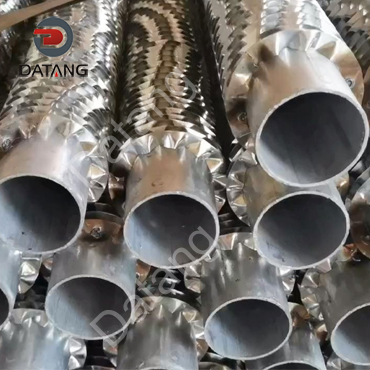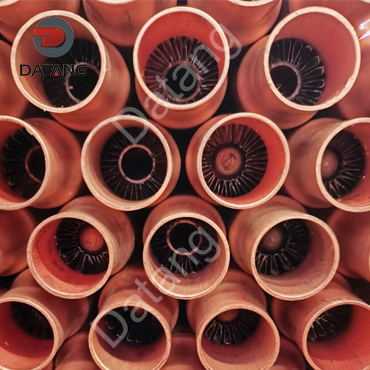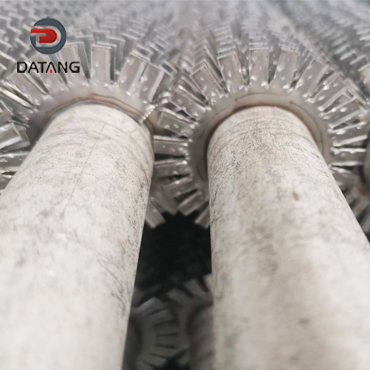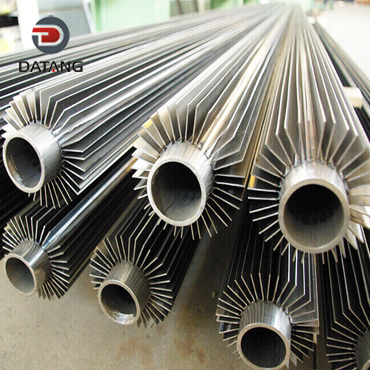


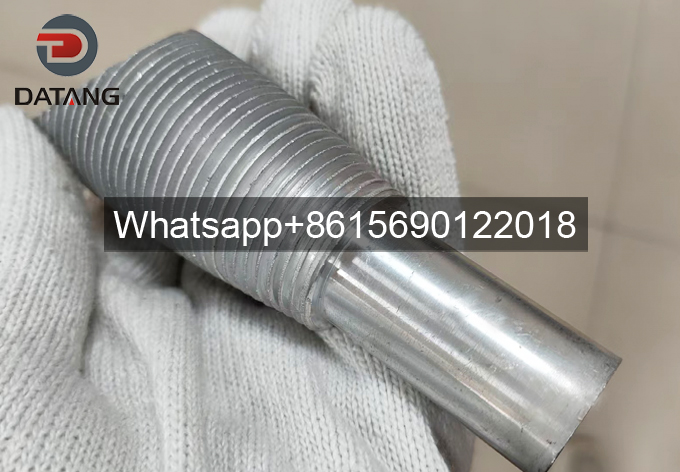
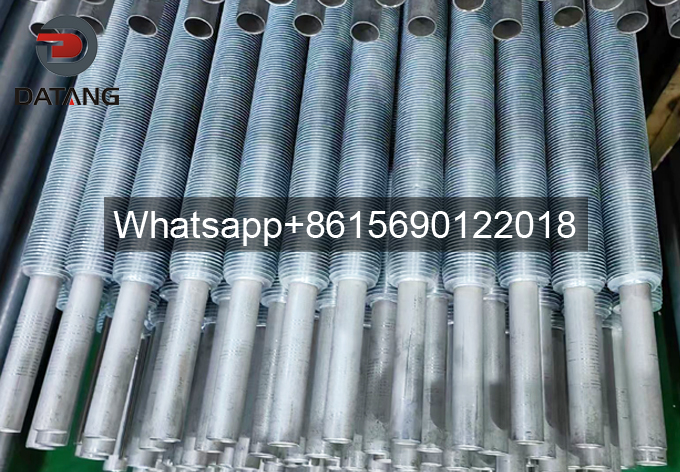
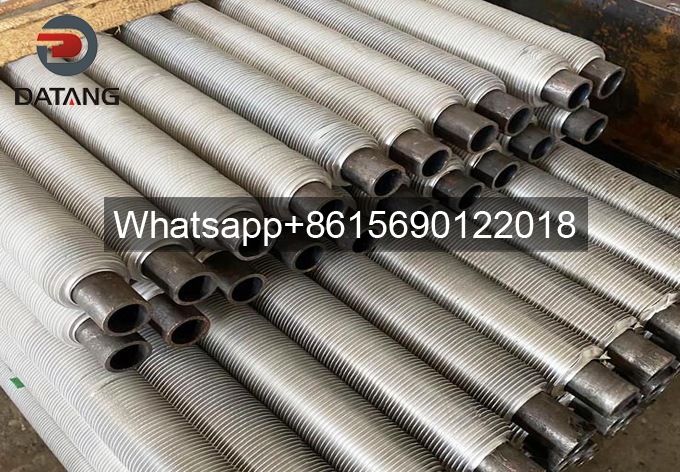
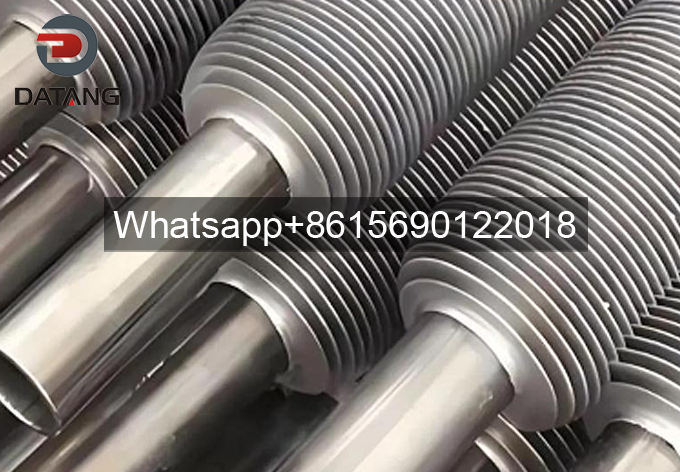
Aluminium Extruded Fin Tubes for Drying Kilns
- Tube Material:Carbon steel,Stainless steel
- Tube Diameter:16mm – 50.8mm,Wall Thickness:1.0-3.0 mm
- Fin Material:Aluminum
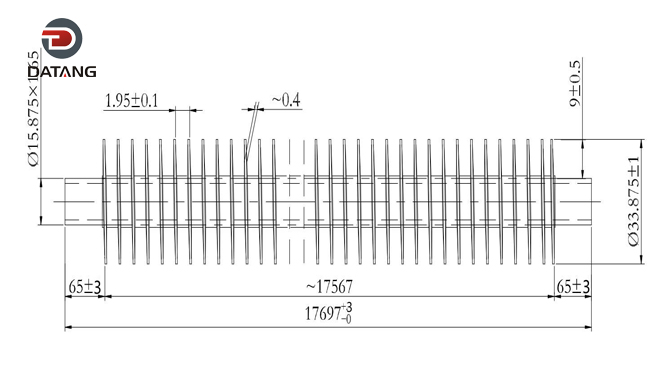
- Fin Thickness:0.4-0.5 mm,Fin Pitch: 2.1mm – 5.0mm (5-12 FPI),Fin Height: 9.5mm – 16mm
In the harsh operating conditions of drying kilns—characterized by high temperatures, high humidity, and continuous industrial-grade operation—the stability and lifespan of heat exchange elements directly determine the overall drying efficiency of the production line. Datang Finned Tube, leveraging years of technical expertise and strict manufacturing processes, provides high-performance Aluminium Extruded Fin Tubes specifically customized for drying kilns.
Backed by our manufacturing advantages located in Yanshan—the renowned “Home of Pipelines” in China—Datang Finned Tube utilizes advanced bimetallic cold extrusion technology to effectively solve common industry pain points such as thermal efficiency drops, metal corrosion, and difficult dust cleaning in drying equipment.
In drying kiln applications, the Aluminium Extruded Fin Tube (commonly known as the DR-type fin tube) serves as a core, highly efficient heat exchange element. Drying kilns—whether used for timber, food, or chemical processing—frequently subject components to prolonged high humidity, thermal cycling, and potentially corrosive gaseous environments. Aluminium extruded fin tubes are engineered precisely to withstand these harsh operating conditions.
Below is a detailed analysis, core advantages, and selection guide for aluminium extruded fin tubes used in drying kilns.
What is an Aluminium Extruded Fin Tube?
Aluminium extruded fin tubes utilize a “bimetallic composite tube” manufacturing process:
-
Core Tube (Base Tube): Selected based on the tube-side medium. For steam or high-pressure hot water, carbon steel tubes (e.g., SA179/A106) or stainless steel tubes (e.g., SS304/SS316) are typically used.
-
Fin: A pure aluminium sleeve (Al1050/Al1060) is fitted over the core tube, and the fins are formed through a cold-rolling extrusion process using specialized finning machines.
Under massive extrusion pressure, the aluminium sleeve is “stretched” and “shaped” into high fins, simultaneously creating an exceptionally tight mechanical bond with the inner core tube.
Why Choose Aluminium Extruded Fin Tubes from Datang Finned Tube?
In drying kilns (such as timber drying, food dehydration, and chemical material drying), traditional tension-wound fin tubes are highly prone to loosening during frequent “heating-cooling” cycles due to thermal expansion and contraction. This loosening causes a drastic increase in contact thermal resistance and a severe drop in heat transfer efficiency.Compared to tension-wound (L-Fin/LL-Fin) or embedded (G-Fin) tubes, extruded fin tubes offer unparalleled advantages in drying kiln environments:
Four Core Advantages of Datang Finned Tube’s Extruded Process (DR Type):
-
Perfect Bimetallic Bond (Zero Contact Thermal Resistance): Drying kilns undergo constant thermal expansion and contraction during heating and cooling cycles. With conventional tension-wound fins, repeated thermal cycling causes the fins to loosen, creating microscopic gaps between the fin and the base tube, which leads to a drastic drop in heat transfer efficiency. The extrusion process ensures a tight, permanent bimetallic bond; even under extreme thermal cycling, the contact thermal resistance remains virtually zero.Under immense pressure from our specialized cold rolling equipment, the outer pure aluminium tube (Al1050/Al1060) is directly formed into high fins while creating a tight mechanical interference fit with the inner core tube (carbon steel or stainless steel). Even under long-term operation with alternating temperature differences, the fins will never loosen, ensuring long-lasting, peak heat transfer efficiency.
-
“Zero Exposure” Core Tube Protection Against Corrosion: Materials like timber release a large amount of wood acids and volatile corrosive gases during dehydration. The extruded process of Datang Finned Tube allows the aluminium layer to act as a protective sleeve, completely and seamlessly encapsulating the inner core tube. Moisture and acidic gases cannot contact the core tube, vastly extending the service life of the heat exchanger in humid drying environments.
-
High-Pressure Wash Resistant & Easy Maintenance: Dust, wood chips, or material particulates inevitably settle inside a drying kiln. The roots of the extruded fins manufactured by Datang Finned Tube feature a smooth radius transition and high structural rigidity. They fully support direct online cleaning with high-pressure water guns or steam jets without flattening or deforming the fins.
-
Strict Total Quality Control: Every single fin tube undergoes rigorous pressure testing and bonding tightness inspections before leaving our factory, guaranteeing that our products can withstand long-term, heavy-duty industrial operations in your drying kilns.
Technical Specifications & Selection Guide for Kiln Drying Fin Tubes
To ensure your drying kiln achieves the optimal energy efficiency ratio, Datang Finned Tube recommends the following standard technical configurations and manufacturing standards:
| Parameter | Standard Range | Recommended Kiln Configuration | Datang Finned Tube Manufacturing Advantages |
|
Core Tube Material
(Base Tube) |
Carbon Steel, Stainless Steel, Copper |
Steam Heating: Carbon Steel (SA179/A106) High-End / High-Corrosion: Stainless Steel (SS304/SS316) |
Available in various wall thicknesses with high pressure resistance. Perfectly matches different pressure ratings of steam or hot water mediums. |
| Outer Fin Material | Pure Aluminium (Al1050 / Al1060) | Pure Aluminium (For exceptional thermal conductivity) | Uses high-purity industrial aluminium, ensuring an extremely high heat transfer coefficient and excellent thermal elongation properties. |
| Base Tube O.D. | 16mm – 50.8mm | 25.4mm (1″) or 31.8mm (Most common) | The “golden sizes” for drying kiln heat exchangers, balancing air resistance and flow cross-section. |
| Fin Height | 9.5mm – 16mm | 12.5mm or 15.8mm (To maximize heat transfer area) | Precision extruded with uniform fin thickness to maximize the external heat exchange surface area. |
| Fin Pitch (Pitch) |
2.1mm – 5.0mm
(5-12 FPI) |
2.5mm – 3.2mm (8-10 FPI) (Balances heat duty and fouling resistance) |
• 8 FPI: Ideal for high-dust or sawdust environments; delivers excellent anti-clogging performance. • 10 FPI: Ideal for clean air environments; maximizes heat duty. |
| Max. Operating Temp. | Up to 260°C – 300°C | Kilns typically operate between 80°C – 200°C, well within the safe margin | Superior bimetallic bonding maintains stable contact thermal resistance even under prolonged thermal cycling. |
| End-Face Protection | Optional Configuration | Highly Recommended for high-humidity kilns | For high-humidity environments, we offer zinc spraying, epoxy coating, or aluminium end cap installation at the bimetallic junction to completely prevent galvanic corrosion. |
Our Commitment at Datang Finned Tube
Whether upgrading existing equipment or manufacturing new drying kilns, aluminium extruded bimetallic fin tubes are widely recognized as the most cost-effective, durable, and thermally stable solution available today. They not only significantly reduce energy consumption (steam or hot water usage) during the drying process but also eliminate unexpected downtime and maintenance costs caused by heat exchanger corrosion and leakage.
As a professional manufacturer of industrial heat exchange elements, Datang Finned Tube does more than just supply high-quality extruded fin tubes. We optimize the fin pitch and row design based on your specific kiln operating temperatures (up to 300C°), circulating fan air velocity, and the precise characteristics of the materials being dried.
Whether you are building a brand-new drying kiln or retrofitting and upgrading old heat exchanger radiator banks, Datang Finned Tube provides cost-effective, long-lasting customized solutions to help you shorten drying cycles and reduce steam energy consumption.
- Datasheet
- Drawing
- Certificates
Aluminium Extruded Fin Tubes for Drying Kilns Core Technical Parameters & Specifications
| Parameter | Standard Range | Recommended Kiln Configuration |
| Base Tube Material | Carbon Steel, Stainless Steel, Copper | Carbon/Stainless Steel for steam; Stainless Steel for high-end or highly corrosive environments |
| Fin Material | Pure Aluminium (Al1050 / Al1060) | Pure Aluminium (for excellent thermal conductivity) |
| Base Tube O.D. | 16mm – 50.8mm | 25.4mm (1″) or 31.8mm (Most common) |
| Fin Height | 9.5mm – 16mm | 12.5mm or 15.8mm (To maximize heat transfer area) |
| Fin Pitch | 2.1mm – 5.0mm (5-12 FPI) | 2.5mm – 3.2mm (8-10 FPI) (Balances heat duty and fouling resistance) |
| Max. Operating Temp. | Up to 300°C (572°F) | Kilns typically operate between 80°C – 200°C, well within the safe margin |
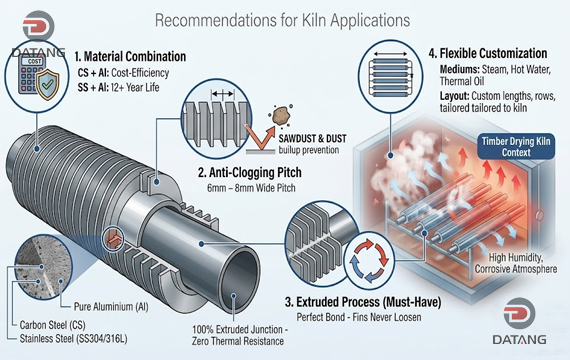
Recommendations for Kiln Applications
End-Face Protection: The cut ends (bimetallic junction) are vulnerable to moisture. Seal end faces using zinc spraying, epoxy coating, or aluminium end caps to prevent galvanic corrosion.
Fin Pitch (FPI) Selection:
8 FPI (3.2mm): Best for high-dust/sawdust environments to prevent clogging.
10 FPI (2.5mm): Best for clean air environments to maximize surface area and speed up drying.
Air Velocity & Row Design: Drying kilns require high-volume air circulation. A 2 to 4-row configuration is recommended to ensure low air resistance and optimal airflow penetration.
Quick Selection Guide for Drying Kiln Fin Tubes
Material Options: Carbon Steel + Al for cost-efficient high-pressure drying; Stainless Steel (SS304/SS316L) + Al for corrosive environments (chemical/food) with a 12+ year lifespan.
Anti-Clogging Pitch: 6mm – 8mm wide pitch effectively prevents dust, sawdust, and debris buildup, ensuring smooth airflow.
Extruded Process: DR-type extrusion delivers a 100% tight bond with zero thermal resistance. Fins will never loosen during thermal cycling.
Flexible Customization: Fully compatible with steam, hot water, and thermal oil; custom tube lengths, rows, and layouts tailored to your kiln.
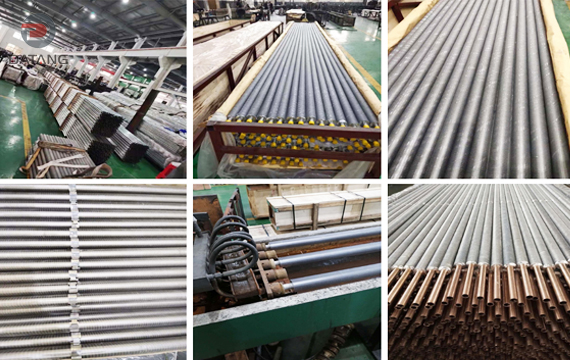
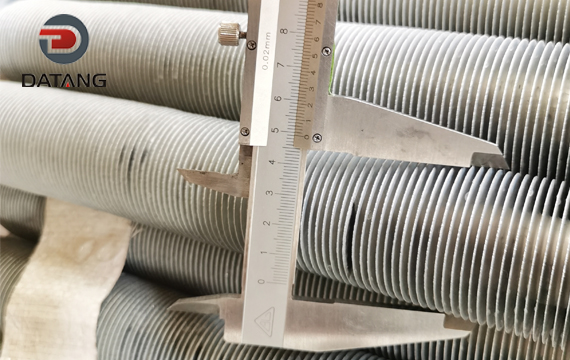
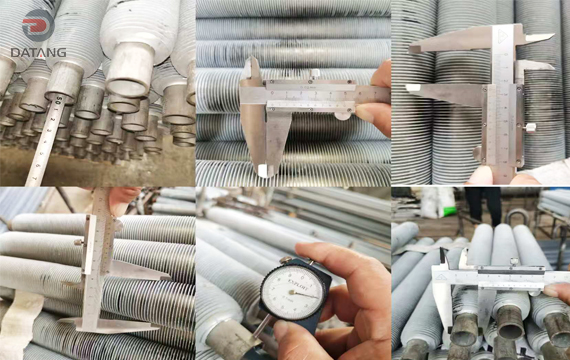
Extruded Finned Tubes for Drying Rooms Appearance Dimension Inspection
Extruded finned tubes for drying rooms appearance dimension inspection is one of the important links to ensure the quality and performance of fin tubes.
The inspection items mainly include fin height, fin spacing, fin thickness, base tube wall thickness and outer diameter, etc.
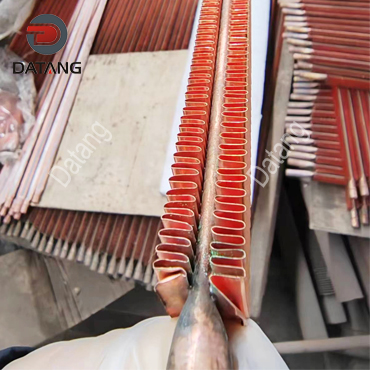
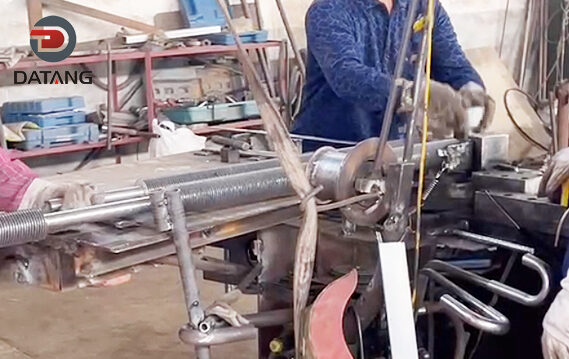
Extruded Finned Tubes for Drying Rooms Bending Processing
Bending of fin tubes is an important step in the production process of extruded finned tubes for drying rooms. Bending is to bend the astm a179 tube aluminum fin composited extruded finned tubes material through specific mechanical equipment to form a suitable curvature to meet different usage requirements.
This step requires strict control of the bending angle and curvature to ensure the fit between the fin and the base tube and the heat dissipation effect.
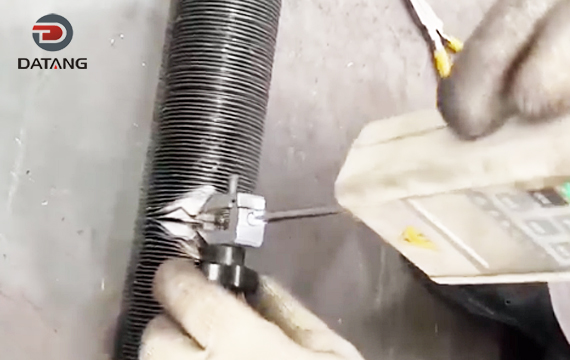
Extruded Finned Tubes for Drying Rooms Pull Off Test
Extruded finned tubes for drying rooms pull-off test is a test used to detect whether the fin tube will fall off when subjected to tension, mainly used to ensure the quality and reliability of the fin tube.
Datang’s this test is very important in the production process because the extruded finned tubes for drying rooms will be subjected to various stresses during operation, such as temperature changes and pipe expansion, which may cause the fin to fall off, thereby affecting the performance and safety of the heat exchanger .
Aluminium Extruded Fin Tubes Quality Control
Hydrostatic Test: Every single tube undergoes pressure testing (typically at 1.5x design pressure) to ensure 100% zero leakage under high-pressure steam/hot water.
Bonding Integrity Test: Destructive or ultrasonic testing to verify that the mechanical bond between the inner steel tube and outer aluminium fin is completely tight with zero gap.
Dimensional Inspection: Strict measurement of base tube wall thickness, fin height, fin thickness, and fin pitch (FPI) using digital calipers to match drawings perfectly.
End-Face Sealing Check: 100% visual and thickness inspection of the zinc spraying or epoxy coating at the bimetallic cuts to ensure perfect anti-corrosion protection.
Visual & Surface Quality Inspection: Ensuring fins are perfectly uniform, with smooth surfaces, no sharp burrs, and zero deformation.