


A ribbed tube (finned tube or internally rifled tube) is a type of tubing featuring raised ribs on its surface; these ribs may be located either externally or internally. It is a specialized heat transfer component designed to increase surface area and enhance thermal efficiency.
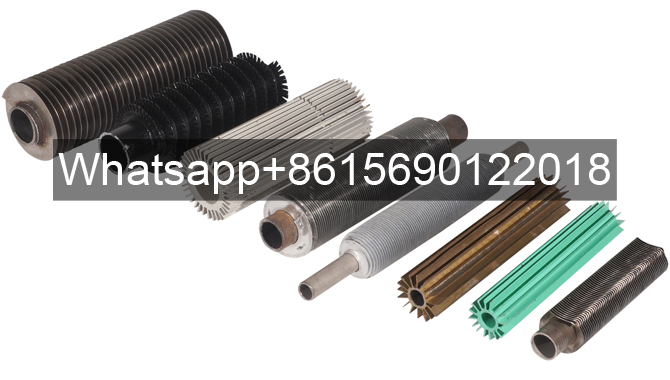
1. Ribbed Tube Main Functions and Principles
- Heat Transfer Enhancement: This is the primary application of ribbed tubes.
- Increased Surface Area: The ribs increase the contact area between the tube and the fluid, providing more space for heat exchange.
- Turbulence Promotion: The ribs disrupt the fluid’s boundary layer, causing flow separation, reattachment, and swirling. This creates turbulence, which mixes the fluid more effectively, reduces thermal resistance, and greatly increases the heat transfer coefficient.
- Prevention of Heat Transfer Deterioration: Under extreme conditions, such as in supercritical pressure boilers, internally ribbed tubes effectively prevent Departure from Nucleate Boiling (DNB), avoiding excessive wall temperatures that could damage the tube.
- Structural Support: In some applications, external ribs can increase the tube’s stiffness and resistance to external pressure.
In industrial thermal management, these are essential for optimizing heat exchange between two mediums with significantly different heat transfer coefficients (such as air and water).
2. Common Types of Ribbed/Finned Tubes
| Type | Design Characteristic | Primary Use Case |
| Extruded Finned | Fins are formed by “rolling” the outer wall of a base tube. | High-pressure environments; provides excellent corrosion resistance. |
| High-Frequency Welded | Helical ribs are welded onto the tube base. | Boilers, economizers, and heavy-duty waste heat recovery. |
| Internally Inner Ribbed (Rifled) | Spiral grooves on the inside of the tube. | Power plant boilers; prevents “dry-out” by spinning the fluid against the walls. |
| L/LL/KL Finned | Ribs are wrapped around the tube and tension-secured. | Air-cooled heat exchangers and radiators. |
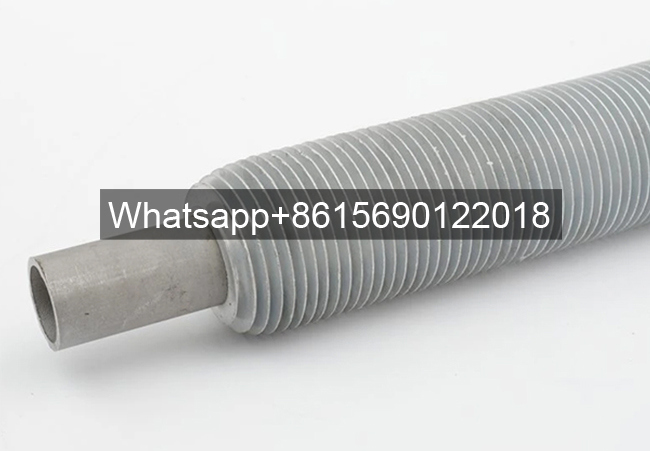
High-Frequency Welded Finned Tube(Ribbed Tube)
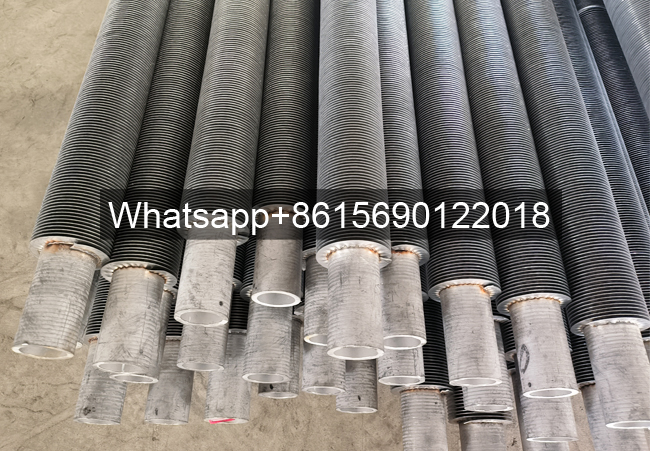
Internally Inner Ribbed (Rifled) Tube

L/LL/KL Finned Tube-Ribbed Tube(Wound Finned Tube)
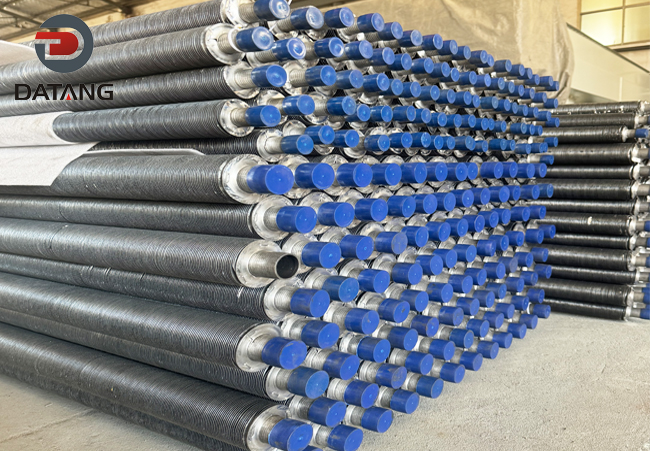
3.Ribbed/Finned Tubes Application Fields
- Power Industry: A key component of supercritical once-through boilers, ensuring the safe operation of water walls.
- HVAC (Heating, Ventilation, and Air Conditioning): Refrigerant pipelines that improve evaporation and condensation efficiency, leading to energy savings.
- Chemical and Petroleum Industries: Various heat exchanger equipment used for heating or cooling process fluids.
- Automotive Industry: Engine radiators, intercoolers, etc.
4.Ribbed/Finned Tubes Key Advantages
- Enhanced Heat Transfer: By increasing the “extended surface area,” these tubes allow for much smaller and more compact heat exchanger designs.
- Boundary Layer Disruption: The ribs create turbulence in the fluid flow, preventing the formation of a stagnant “boundary layer” that usually resists heat flow.
- Material Efficiency: Using ribbed tubes often reduces the total amount of raw piping required for a project, lowering overall material costs.
5.RFQ
1.Inquiry ribbed tube for section 305 – CDU/VDU 102 A/B air cooler —— March 23, 2026
- Standard:ASTM/ASME A/SA179 SA450,
- X/D:25.40 mm,
- D/Q: 2.77 mm,
- Wall type:Min,
- U: 8991 mm,
- Rib type: L,
- Rib x/D: 57.16 mm,
- Rib thickness: 0.40 mm,
- Number of fins per inch/m: 10,
- Plain ends: A 50 mm, B 50 mm,
- Length ofribbed section: 8891 mm,
- Rib material: AL1060
