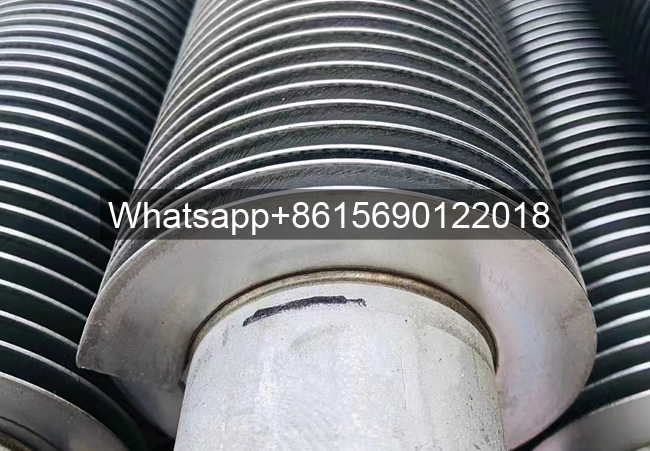


In the field of industrial thermal management, finned tubes are crucial heat exchange elements. Their core logic is quite simple: by adding metal fins to the surface of the base tube, the heat dissipation area is increased, thereby solving the problem of extreme imbalances in heat transfer coefficients between fluids.
For industries where energy conservation, process stability, and equipment lifespan are critical, integrating finned tubes into heat exchangers is not just an option, but a necessity. This article delves into the various applications of finned tubes across different fields, focusing on their key role in modern engineering.
In the realm of industrial thermal management, finned tubes stand as a cornerstone technology, bridging the gap between theoretical efficiency and practical performance. For industries where energy conservation, process stability, and equipment longevity are paramount, the integration of finned tubes into heat exchangers is not merely an option but a necessity. This article delves into the multifaceted applications of finned tubes across various sectors, highlighting their pivotal role in modern engineering.
1. Power Generation: Harnessing Waste Heat
One of the most critical applications of finned tube heat exchangers lies within the power generation industry, specifically in boiler systems. In both coal-fired and gas-powered plants, a substantial amount of heat is lost through flue gases. Finned tubes, often arranged in H-type or spiral configurations, are installed in the tail ends of boilers as economizers and air preheaters. By capturing the residual heat from exhaust gases (typically ranging from 300°C to 400°C), these exchangers preheat combustion air or boiler feed water. This process significantly boosts boiler efficiency, reduces fuel consumption by up to 8%, and lowers carbon emissions, making it an indispensable tool for sustainable energy production.
2. Chemical Processing: Precision Temperature Control
The chemical industry relies heavily on precise temperature control to ensure reaction efficiency and product quality. Finned tube heat exchangers are extensively used in reactors, distillation columns, and condensers. For instance, in the production of acrylic esters, maintaining a reactor temperature within a narrow band of 80-85°C is crucial. Spiral finned tubes, often made of corrosion-resistant materials like 316L stainless steel, provide a vastly increased heat transfer area compared to bare tubes. This allows for rapid and uniform heating or cooling, ensuring temperature control within ±1°C, thereby enhancing product purity and reducing energy costs associated with steam consumption.
3. Metallurgy and Heavy Industry: Cooling and Recovery
In the harsh environments of steel mills and foundries, finned tubes prove their mettle through durability and resilience. They are employed in cooling systems for molten steel and rolling oils, where they must withstand extreme temperatures (up to 1000°C) and abrasive dust. Materials such as Cr25Ni20 or 310S stainless steel are selected for their ability to resist scaling and deformation under high heat. Furthermore, finned tube exchangers are vital in recovering waste heat from furnaces. By utilizing this excess heat to preheat raw materials or generate steam, metallurgical plants can drastically cut down on natural gas usage and operational costs.
4. HVAC and Refrigeration: Air-Side Efficiency
Beyond heavy industry, finned tubes are the heart of Heating, Ventilation, Air Conditioning (HVAC), and refrigeration systems. In air-cooled heat exchangers, the extended surface area provided by the fins compensates for the relatively low heat transfer coefficient of air. Whether in chiller condensers, evaporators in freezers, or cooling towers, finned tubes ensure efficient heat exchange between refrigerants and ambient air. The use of aluminum fins paired with copper or stainless steel tubes maximizes thermal conductivity while minimizing weight and material costs.
5. Oil and Gas: Refining and Petrochemicals
Refineries and petrochemical plants utilize finned tube exchangers for a variety of processes, including the preheating of crude oil. In catalytic cracking units, for example, high-temperature flue gases (around 380°C) are routed through finned tube bundles to recover heat. This recovered energy is then used to preheat incoming crude oil, significantly reducing the load on fired heaters. The ability to customize fin spacing—using wider gaps to prevent clogging in dusty environments or tighter pitches for maximum efficiency—makes finned tubes adaptable to the specific fouling tendencies of different hydrocarbon streams.
Conclusion
From towering power plants to precision pharmaceutical labs, finned tube heat exchangers are the silent workhorses of industrial efficiency. They transform waste into value, stabilize critical processes, and ensure that energy is used not just consumed. As industries continue to push for greener and more efficient operations, the role of advanced finned tube technology will only grow in importance.
Why Choose DATANG Finned Tubes?
At DATANG Finned Tube Industry, we engineer solutions that power industrial progress. With years of expertise in thermal technology, we specialize in the design and manufacture of high-performance stainless steel finned tubes and heat exchangers. Our products, ranging from H-type to spiral finned configurations, are built to withstand the harshest conditions—from extreme temperatures to corrosive atmospheres. By choosing DATANG, you are selecting a partner committed to quality, durability, and energy efficiency. Let us help you optimize your thermal processes and achieve significant cost savings with our cutting-edge heat exchange solutions.
At Datang, the available finned tube processes include:
Embedded (G-type) finned tubes, L-type finned tubes, KLM-type finned tubes, extruded finned tubes, integral low-finned tubes, high-frequency spiral finned tubes, laser-welded finned tubes, H-type finned tubes, elliptical finned tubes, and others.
Technical Specifications: Finned Tube Materials & Dimensions
| Finned Tube Type | Base Tube Materials | Fin Materials | Base Tube OD (mm) | Base Tube WT (mm) | Max Temp. |
| Embedded (G-type) | Carbon Steel, SS, Copper | Aluminum, Copper | 15.88 – 50.8 | 1.5 – 5.0 | 400°C |
| L-type (Wrap-on) | Carbon Steel, SS, Copper | Aluminum, Copper | 15.8 – 38.1 | 1.0 – 3.5 | 130°C |
| KLM-type (Knurled) | Carbon Steel, SS, Copper | Aluminum, Copper | 15.8 – 38.1 | 1.0 – 3.5 | 250°C |
| Extruded (Bimetallic) | Carbon Steel, SS, Cu-Ni, Ti | Aluminum | 16 – 60 | 1.6 – 6.0 | 300°C |
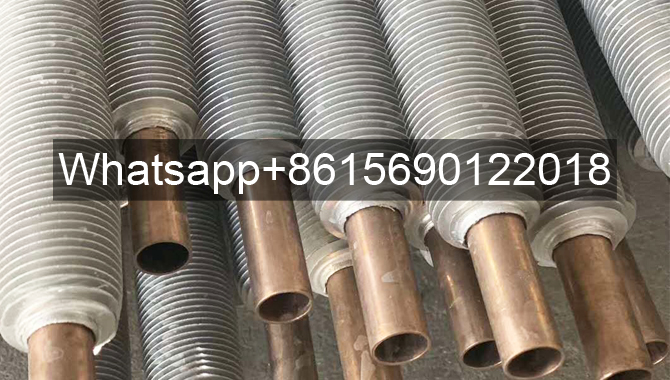
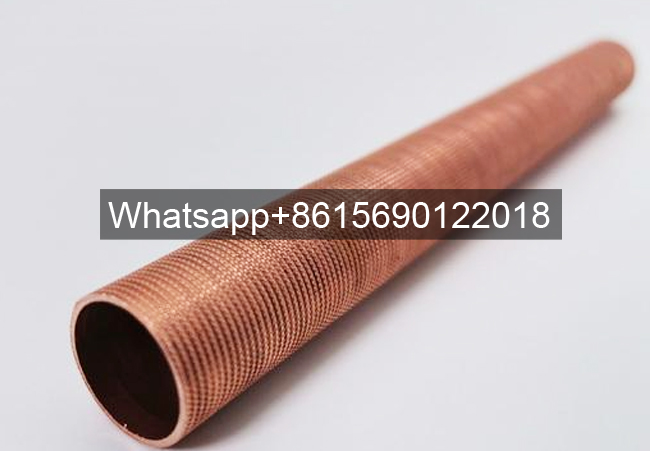
| Integral Low-finned | Copper, Cu-Ni, SS | Mono-metallic | 9.53 – 25.4 | 0.9 – 3.0 | 350°C |
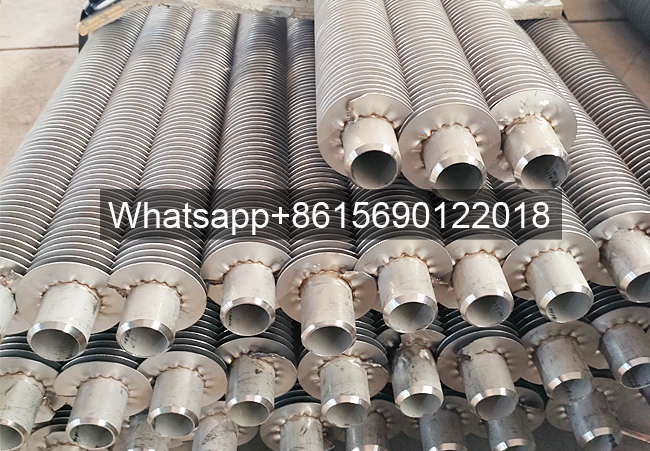
| H.F. Spiral Welded | Carbon Steel, Low Alloy, SS | CS, Stainless Steel | 18 – 273 | 2.0 – 15.0 | 800°C |
| Laser-welded | CS, SS, Titanium, Nickel | CS, SS, Al, Ti | 8 – 273 | 0.5 – 3.0 | 600°C |
| H-type / HH-type | Carbon Steel, SS | Carbon Steel, SS | 25 – 89 | 3.0 – 6.0 | 600°C |
| Elliptical Finned | Carbon Steel (Galvanized) | Carbon Steel | 36 x 14 (Oval) | 1.5 – 3.0 | 400°C |
Material Standards
Commonly used standards for these tubes include:
- ASTM A179 / A192: For carbon steel seamless tubes.
- ASTM A213 / A249: For stainless steel tubes.
- ASTM B111: For copper and copper alloy tubes.
-
Aluminum 1050/1060/1100: Most common for fin materials due to high thermal conductivity.
Key Technical Considerations
- Extruded Finned Tubes: These are widely considered the “gold standard” for corrosion resistance because the aluminum muff completely covers the base tube, preventing atmospheric oxidation.
- Laser-welded Tubes: Unlike High-Frequency welding, laser welding produces a very small heat-affected zone (HAZ), allowing for the use of thinner base tubes and specialized materials like Titanium.
- H-type Finned Tubes: These are primarily used in power plant boilers (economizers) because their rectangular shape is highly resistant to fly-ash erosion and fouling.
- Integral Low-finned Tubes: These are used in shell-and-tube heat exchangers where the fluid on the shell side has a low heat transfer coefficient. They usually have the same outer diameter as the plain tube ends to fit through tube sheets.
Detailed Dimension Breakdown
-
Wall Thickness (WT): For high-pressure applications (like H.F. spiral welded tubes in boilers), the wall thickness can exceed 10mm. Conversely, for Laser-welded or Low-finned tubes, we can achieve much thinner walls (<1.0mm) due to the precise heat control or cold-forming process.
-
Outer Diameter (OD): While the table lists standard ranges, large-diameter pipes (up to 219mm) are typically reserved for High-Frequency (H.F.) welding used in industrial heaters and petrochemical convection sections.
-
Fin Geometry: * Fin Height: Usually ranges from 5mm to 16mm.
-
Fin Thickness: Usually 0.2mm to 0.5mm for Aluminum fins, and up to 4.0mm for welded steel fins.
-
Fin Pitch (Density): Typically 5 to 14 fins per inch (FPI), depending on the airflow and fouling conditions.
-
These specifications ensure the thermal performance and mechanical integrity required for heat exchangers, air coolers, and boiler systems.
Embedded (G-type) Finned Tube
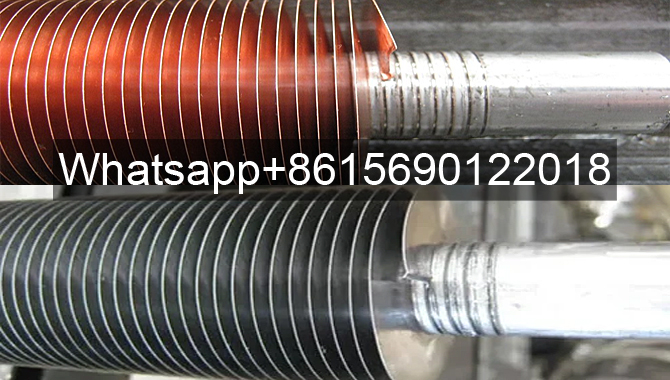
L-type (Wrap-on) Finned Tube
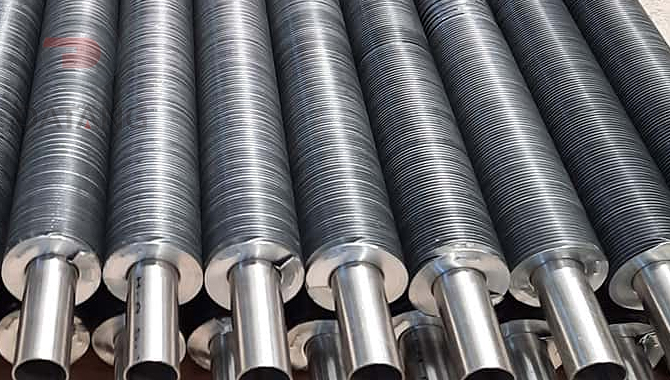
KLM-type (Knurled) Finned Tube
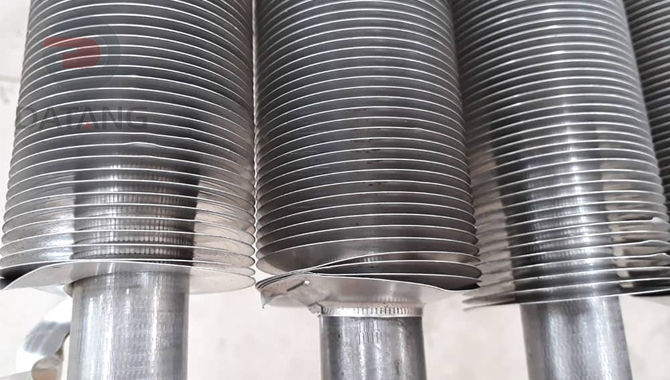
Extruded (Bimetallic) Finned Tube
Integral Low Finned Tube
H.F. Spiral Welded Finned Tube
Laser-welded Finned Tube