


Crimped Finned Tubes: Comprehensive Guide to Design, Manufacturing, and Applications
Crimped finned tubes are innovative heat transfer components designed to enhance thermal efficiency in industrial systems. These tubes feature spirally wound fins attached to a base tube through a crimping process, creating a robust mechanical bond without requiring welding. This design significantly increases surface area for heat exchange, making them indispensable in applications demanding high thermal performance.
What is a Continuous Spiral Crimped Fin Tube?
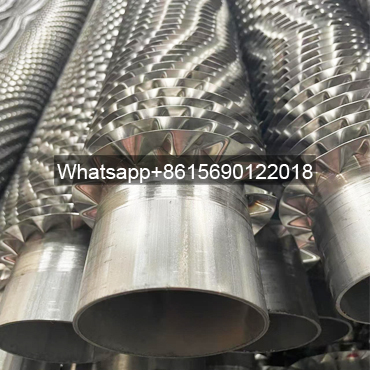
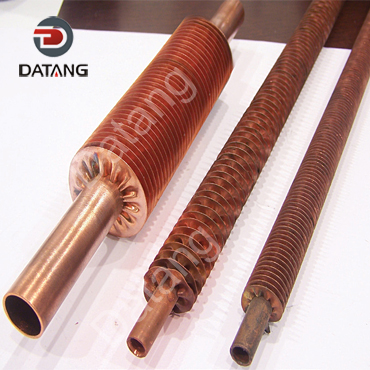
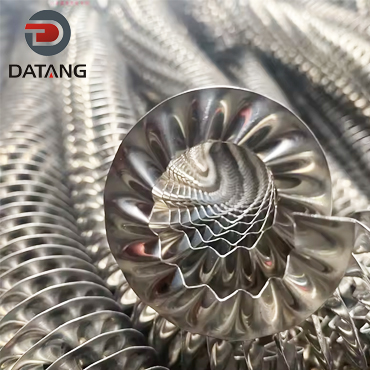
A crimped finned tube consists of a base tube (typically made of carbon steel or stainless steel) and a spirally wound fin strip. The fins are mechanically crimped onto the tube surface, forming a secure attachment that resists loosening under high temperatures and vibration. This method ensures excellent thermal contact between the fin and base tube, optimizing heat transfer rates.
Crimped fin tubes manufacturing process
The production of crimped finned tubes involves several key stages:
- Material Preparation: High-quality base tubes and fin strips are selected based on application requirements.
- Spiral Wrapping: The fin strip is continuously wound around the base tube at a precise angle using specialized machinery.
- Crimping Process: As the fin is wrapped, it undergoes a crimping operation where mechanical pressure creates interlocking ridges between the fin and tube surface.
- Spot Welding (Optional): For applications requiring additional security, intermittent spot welds may be applied at regular intervals.
- Quality Inspection: Each tube undergoes rigorous testing for dimensional accuracy, fin attachment strength, and surface quality.
This manufacturing process ensures consistent quality while allowing for customization of fin density and pitch to meet specific thermal requirements.
Datang can produce materials for crimped fin tubes
Crimped finned tubes can be produced from various materials to suit different operating conditions:
| Material Type | Base Tube Options | Fin Strip Options | Temperature Range | Corrosion Resistance |
|---|---|---|---|---|
| Carbon Steel | A179, A192, SA210 GR A1/C | Carbon Steel | Up to 400°C | Moderate |
| Stainless Steel | TP304/TP304L | Stainless Steel | Up to 450°C | High |
| Non-Ferrous | Copper | Aluminum,Copper | Up to 180°C | Very High |
Material selection depends on factors such as operating temperature, media compatibility, and environmental conditions.
The range of crimped fin tubes we can produce
Crimped finned tubes are available in a wide range of specifications:
| Parameter | Standard Range | Customization Options |
|---|---|---|
| Base Tube OD | 12.7mm – 50.8mm (1/2″ – 2″) | Up to 101.6mm (4″) |
| Fin Height | 6mm – 15mm | Up to 25mm |
| Fin Thickness | 0.3mm – 0.8mm | Up to 1.2mm |
| Fin Pitch | 4.23mm – 12.7mm | Custom spacing available |
| Fin Count | 100 – 300 per meter | Variable based on design |
| Length | Up to 12 meters | Custom lengths available |
These specifications can be tailored to meet specific thermal performance requirements while maintaining structural integrity.
Industry Applications of Crimped Finned Tubes
Crimped finned tubes find extensive use in numerous industrial sectors:
- Power Generation: Used in air-cooled condensers and heat recovery steam generators.
- Chemical Processing: Employed in reactors, heat exchangers, and distillation columns.
- Oil & Gas: Applied in refineries, gas processing plants, and offshore platforms.
- HVAC Systems: Used in commercial and industrial heating, ventilation, and air conditioning units.
- Food Processing: Incorporated in pasteurization equipment and refrigeration systems.
- Marine Applications: Deployed in engine cooling systems and waste heat recovery units.
- Renewable Energy: Utilized in solar thermal systems and biomass energy plants.
Crimped vs. High Frequency Welded vs. Laser Welded Finned Tubes
| Comparison Item | Crimped Finned Tube |
High Frequency Welded Finned Tube | Laser Welded Finned Tube |
|---|---|---|---|
| Fin Attachment Method | Mechanical winding | High-frequency resistance welding | Laser welding |
| Fin-to-Tube Bond | Mechanical contact and tension | Continuous welded bond | Precision continuous welded bond |
| Welding Heat Input | None | Relatively higher | Very low and highly concentrated |
| Contact Thermal Resistance | Relatively higher | Low | Very low |
| Heat Transfer Performance | Good | Excellent | Excellent |
| Fin Attachment Strength | Moderate | High | Very high |
| High-Temperature Performance | Fair to good | Good to excellent | Excellent |
| Thermal Cycling Resistance | Moderate | Good | Excellent |
| Fin Integrity | Good | Very good | Excellent |
| Production Cost | Low | Moderate | High |
| Production Efficiency | High | High | Moderate to high |
| Suitability for Mass Production | Excellent | Excellent | Very good |
| Suitability for High-End Heat Exchangers | Good | Very good | Excellent |
Crimped Finned Tubes
Advantages of Cold Rolled Finned Tubes
- The metal fin strip is mechanically wound around the outer surface of the base tube using controlled tension.
- Relatively low manufacturing cost.
- High production efficiency.
- Cold rolled finned tubes offer a cost-effective solution for heat exchangers where cost is an important consideration and the operating temperature is not excessively high.
Disadvantages of Cold Rolled Finned Tubes
The fins are not continuously welded to the base tube.
- Prolonged operation at high temperatures may cause a reduction in fin-to-tube contact pressure.
- Gaps may develop between the fins and the base tube during repeated thermal cycling.
- There is a certain amount of contact thermal resistance between the fins and the base tube.
- Compared with welded finned tubes, cold rolled finned tubes are less suitable for high-temperature and high-heat-flux applications.
High-Frequency Welded Finned Tubes
Advantages of High-Frequency Welded Finned Tubes
High-frequency current generates localized heat, continuously welding the fins to the base tube surface.
- A continuous welded connection is formed between the fins and the base tube.
- Lower contact thermal resistance.
- More reliable mechanical bonding.
Widely used in equipment such as boilers, waste heat boilers, refineries, and petrochemical plants.
Disadvantages of High-Frequency Welded Finned Tubes
Higher price compared to cold-wound finned tubes. Not suitable for cost-sensitive projects.
Laser Welded Finned Tubes
Advantages of LaserWelded Finned Tubes
Utilizes a high-energy-density laser beam for precision welding between the fins and the base tube.
- More concentrated heat input, finer weld seams, and a smaller heat-affected zone.
- Higher weld quality and better fin bonding.
Especially suitable for equipment requiring high-temperature operation, frequent start-stop cycles, significant thermal cycling, high reliability, high heat transfer efficiency, and long-term continuous operation.
Disadvantages of Laser-Welded Finned Tubes
Higher equipment investment and production costs. Higher requirements for production processes. Higher requirements for quality control.
How to Choose Crimped vs. High Frequency Welded vs. Laser Welded Finned Tubes?
- Cost Priority – Economical Solution:Cold-wound finned tubes, used in general industrial heat exchangers and boilers.
- Prioritizing Cost-Effectiveness and Industrial Applications – A More Balanced Choice: High-frequency welded finned tubes, used in industrial heat exchangers for oil refining, petrochemicals, natural gas, and power generation.
- Prioritizing High Performance and High Reliability: Laser-welded finned tubes, suitable for high temperatures, thermal cycling, long-term reliability, and high weld quality.
Future Trends and Innovations
The crimped finned tube technology continues to evolve with advancements in materials science and manufacturing processes. Emerging trends include:
- Development of hybrid fin designs combining crimped and other fin types
- Use of advanced materials like titanium and nickel alloys for extreme conditions
- Integration of smart sensors for real-time performance monitoring
- Improved surface treatments to enhance corrosion resistance and heat transfer
- Sustainable manufacturing processes to reduce environmental impact
Conclusion
Crimped finned tubes represent a optimal solution for applications requiring efficient heat transfer in compact spaces. Their unique manufacturing process, material versatility, and excellent performance characteristics make them a preferred choice across various industries. By understanding the specific requirements of your application and selecting the appropriate crimped finned tube configuration, you can achieve significant improvements in thermal efficiency, operational reliability, and cost-effectiveness.
Whether you’re designing a new heat exchanger or upgrading an existing system, crimped finned tubes offer a reliable and efficient solution for your heat transfer needs. Consult with experienced manufacturers to determine the optimal crimped finned tube design for your specific application requirements.
