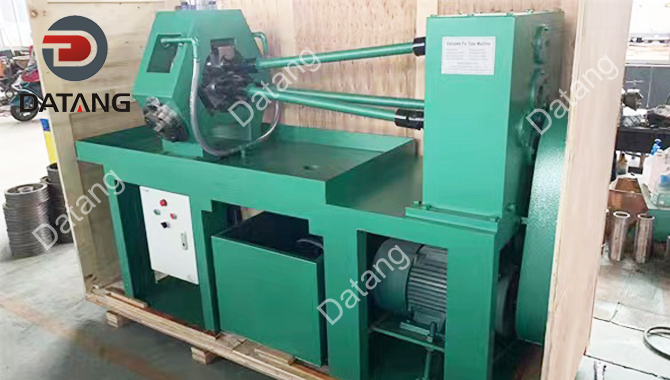


Extruded fin tubes also called integral high finned tube are bimetallic tubes that have their wall thickness deformed into fins using a cold rolling process. The core production process is as follows:
Material Preparation
A bimetallic tube structure is used, with an inner base tube (such as steel or copper) and an outer aluminum muff tube.
Cold Rolling Forming
The aluminum muff tube is continuously rolled at approximately 40 m/s using a cold rolling mill at 60-180℃, reducing the wall thickness from 6 mm to 0.06 mm, while simultaneously extruding the fins. This process creates a permanent metallurgical bond between the fins and the base tube, eliminating visible gaps.
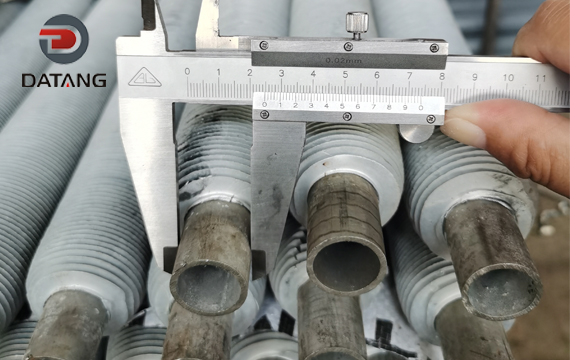
Advantages of Extruded Fin Tube Technology
Corrosion Resistance: The base tube is completely covered by fins, avoiding direct contact with the atmosphere.
Stability: The fins will not break, deform, or loosen, maintaining thermal efficiency over a long period.
Temperature Resistance: Maximum operating temperature can reach 300℃.
The production process of steel finned tubes mainly includes the following steps:
Extruded Finned Tube Material Preparation
The base tube is usually made of 20# carbon steel, Q235, or 304 stainless steel, with a diameter range of 20-159mm and a wall thickness of 2-5mm; the fin strip is mostly made of cold-rolled steel strips such as 08Al and SPCC, with a thickness of 0.5-1.5mm.
1. Base Tube Pretreatment
The oxide scale and oil stains on the surface of the base tube are removed by pickling or sandblasting to ensure a tight weld bond.
2. Fin Forming and Welding
High-Frequency Welding: After the steel strip is rolled into a spiral shape, it is instantly heated to 1300-1500℃ by a high-frequency current (200-400kHz), forming a metallurgical bond with the base tube.
Laser Welding: Suitable for high-precision requirements, it achieves localized melting welding using a laser beam.
Extruded Finned Tube Surface Treatment
Zinc plating (450℃ molten zinc) or passivation treatment improves corrosion resistance.
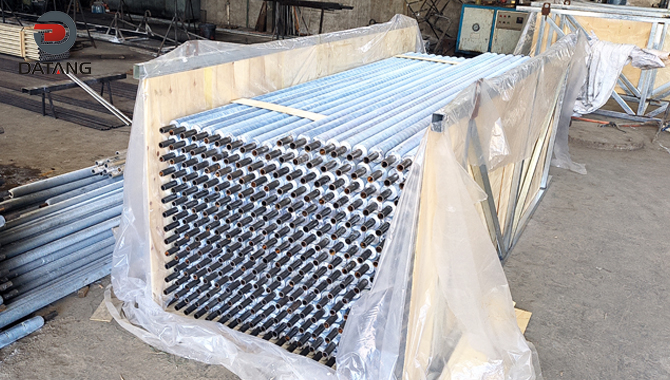
Extruded Finned Tube Quality Inspection
Hydrostatic testing (1.2-1.5 times the working pressure) and X-ray inspection are performed to ensure no leaks and welding defects.
Process Characteristics: High-frequency welding has high efficiency (daily capacity 500-800 meters), with a bond strength ≥200MPa; laser welding has higher precision but is more expensive.
Extruded Fin Tube Making Machine