


Both high-finned tubes and low-finned tubes are heat exchange elements that increase the heat exchange area and improve heat exchange efficiency by adding fins to the surface of the base tube.
What is a high-finned tube?
A high-finned tube is a tube with taller fins added to the outer surface of the base tube, resulting in a larger heat exchange area per unit length.High fin tubes are mainly used when a large increase in external heat transfer area is required, especially for air or gas-side heat transfer.
What are low-finned tubes?
Low-finned tubes have a significantly lower fin height than high-finned tubes.Low fin tubes are mainly used when moderate surface-area enhancement is needed while maintaining compact geometry and good shell-side flow characteristics.
High Finned Tubes vs. Low Finned Tubes
| Item | High Fin Tube | Low Fin Tube |
|---|---|---|
| Fin Height | Relatively high, typically around 6–16 mm | Relatively low, typically around 0.5–3 mm |
| Fin Spacing | Relatively close | Relatively wide |
| Increase in Heat Transfer Area | Significant | Moderate |
| Typical Fluids | Mainly air and gas | Mainly liquids or shell-side fluids |
| Typical Applications | Air cooled heat exchangers, fin fan coolers, air heaters, gas coolers | Shell and tube heat exchangers, condensers, reboilers |
| Equipment Size | Can significantly reduce required heat exchanger size | Provides moderate equipment compactness |
| Cleaning | More difficult, especially in dusty environments | Relatively easy to clean |
| Manufacturing Cost | Generally higher | Generally lower |
| Main Advantage | Significantly increases external heat transfer area and improves air-side heat transfer | Increases heat transfer area while maintaining good flow and cleaning characteristics |
Fin Height:
Low-fin tubes typically have a fin height of 1-2mm (1.6mm), while high-fin tubes range from 6.4-25mm.
Heat Transfer Efficiency
High-fin tubes, due to their greater fin height, have a larger heat transfer area, thereby improving heat transfer efficiency. This makes them particularly suitable for applications with a significant difference in internal and external heat transfer coefficients, such as waste heat recovery devices in the chemical and metallurgical industries. Low-fin tubes, on the other hand, are suitable for applications with a similar difference in internal and external heat transfer coefficients. Their finning coefficient (the ratio of external to internal surface area) is typically less than 4.
Application Scenarios:
Low-fin tubes are primarily used in pressure vessels such as shell-and-tube heat exchangers, while high-fin tubes are commonly found in air-to-air heat exchangers. Fin size must be adjusted according to operating conditions.
High Finned Tubes vs. Low Finned Tubes Production Process
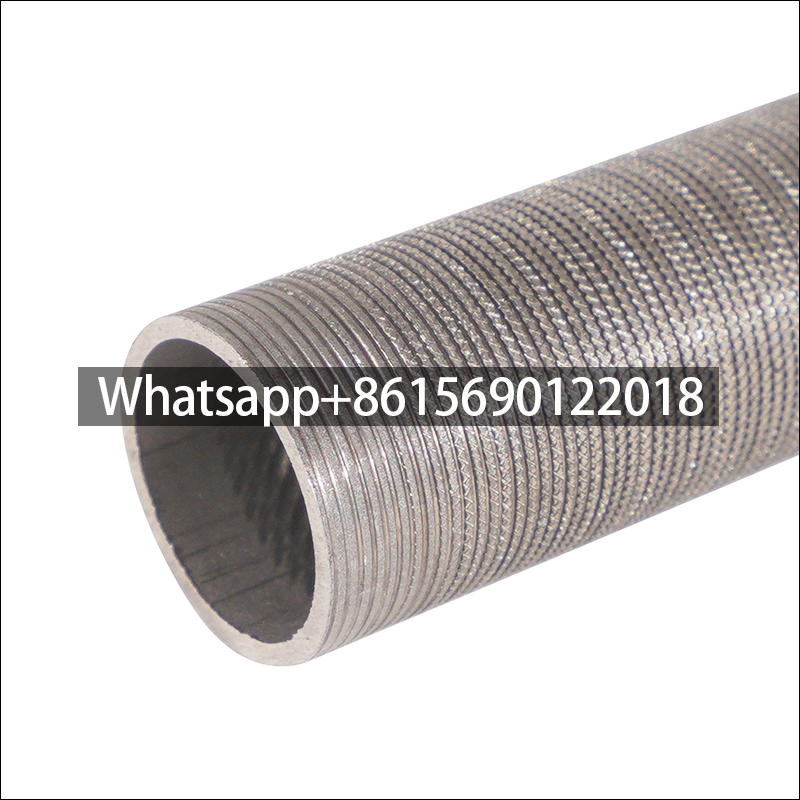
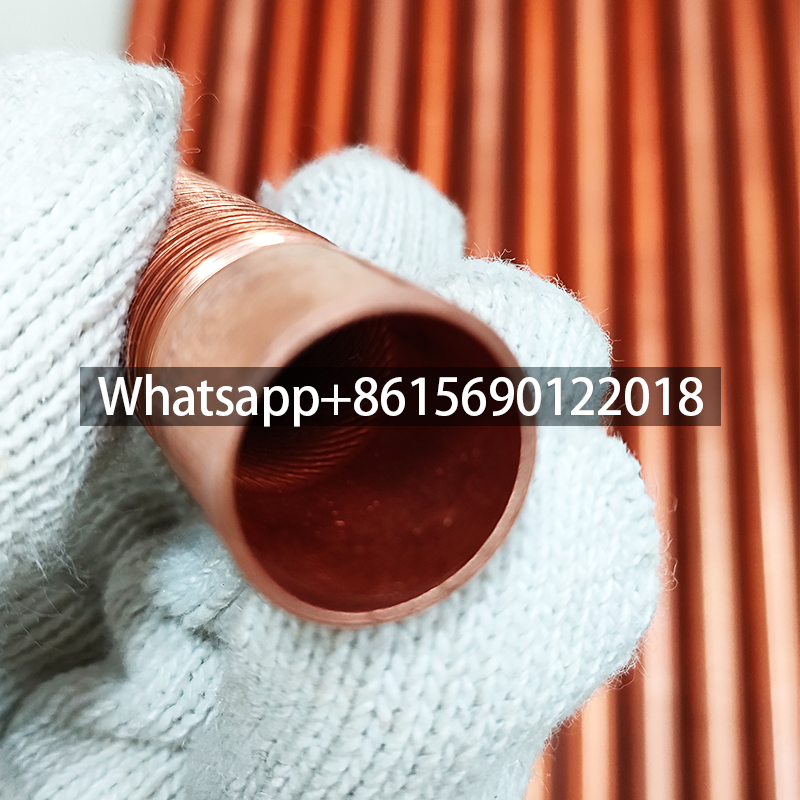
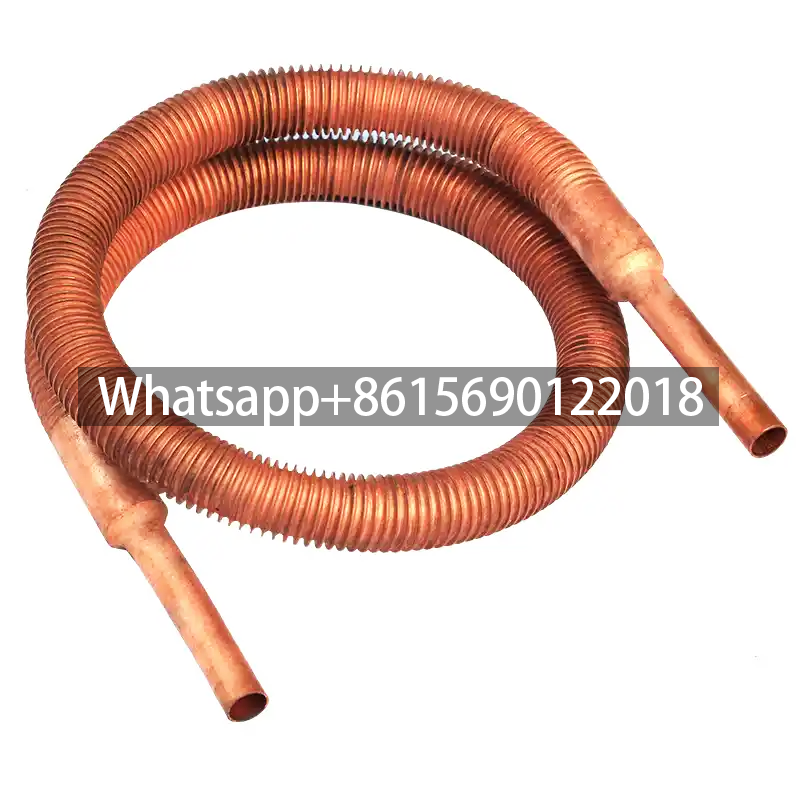
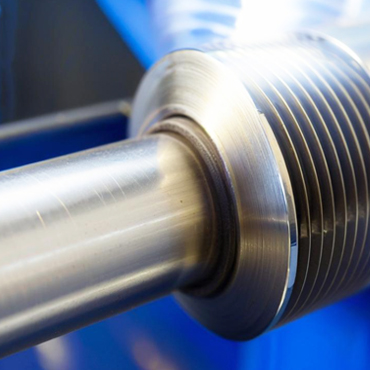
Low fin Tubes
The fins are integrally rolled using a three-roll cross-rolling method, forming a seamless structure with the tube body and eliminating contact thermal resistance. With a finning coefficient of 2-3, the heat transfer area is significantly increased, and the fouling resistance is superior to that of bare tubes.
Suitable for applications such as condensers and oil heat exchangers, it can reduce heat transfer area by 30%.
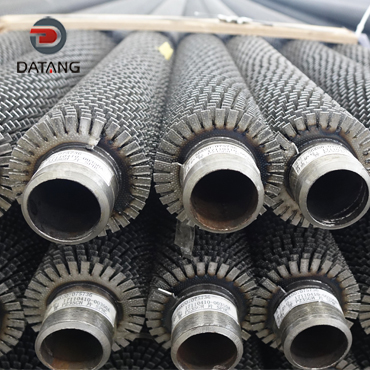
High Fin Tubes
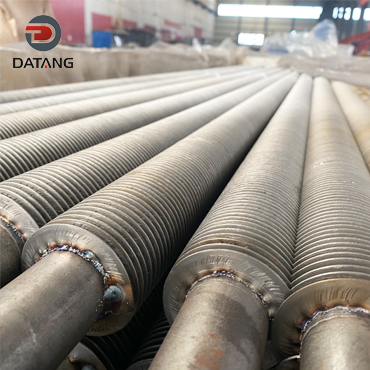
High Fin Welded ensures a strong bond between the fins and the tube, making them suitable for high-flow or high-temperature applications.
Featuring significantly higher fin height than low-fin tubes, they are commonly used in air-to-air heat exchange equipment (such as greenhouse cooling) to enhance air-side heat transfer.
Structure and Performance Comparison
Heat Transfer Efficiency: Low-fin tubes improve efficiency by increasing the heat transfer area, while high-fin tubes rely on their high surface area to enhance air-side convective heat transfer.
Drag Characteristics: High-fin tubes experience a more pronounced increase in flow resistance with flow rate, requiring higher pump power. Low-fin tubes experience a slower increase in resistance, making them suitable for high-pressure differential applications.
Cleaning and Maintenance: Both tubes are similar in cleaning difficulty and are cleaned using bare tube cleaning methods.
High-fin tubes and low-fin tubes are two common heat exchanger components widely used in industry. However, many people are unclear about the difference between the two and the specific meaning of finned tube diameter. These questions will be addressed in detail below.
High-Finned Tubes vs. Low-Finned Tubes Applications
High Finned Tube Applications
The value of high-finned tubes is not simply “increasing area,” but rather addressing the issue of low air-side heat transfer coefficients by significantly increasing the external heat exchange area to improve overall heat transfer capacity.
High-finned tubes are suitable for:
Industrial plant heating, flue gas waste heat recovery, chemical/food drying, and various air conditioning and cooling systems.
Low-Finned Tube Applications
Low-finned tubes are ideal for shell-and-tube heat exchangers because the lower fin height has less impact on shell-side flow, cleaning, and equipment structure.
Low-finned tubes are suitable for:
Shell & Tube Heat Exchangers, Condensers, Reboilers, Evaporators, Oil Coolers, Water Coolers, Process Heat Exchangers
Due to their higher heat transfer efficiency, high-fin tubes are widely used in large industrial heat exchangers, such as power plant condensers. Low-fin tubes, on the other hand, are often used in ventilation and heat exchange applications where space requirements are stringent and air resistance must be strictly controlled, such as heat exchangers in air conditioner outdoor units.
How to choose between high-finned tubes and low-finned tubes?
- High-frequency welded finned tubes: Suitable for flue gas, waste heat recovery, high temperature, and high heat exchange.
- Low-finned tubes: Suitable for condensation, oil cooling, refrigeration, external condensation, and clean media.
Operating Conditions:
High-frequency welded finned tubes: Suitable for boiler flue gas waste heat recovery, factory heating, steam/thermal oil heat exchange, air coolers, etc. Temperature resistance can reach 300–450℃ (some sources say it can withstand 400℃ high temperature and 1.6MPa pressure). Vibration resistant and less prone to fin detachment.
Low-finned tubes: Mainly used in condensers, oil coolers, air conditioning evaporators/condensers, etc., for external condensation or liquid heat exchange, especially suitable when the internal heat transfer coefficient is more than twice that of the external heat transfer coefficient. Common materials include copper, stainless steel, and duplex steel.
Key Limitations:
High-frequency welded finned tubes are prone to dust accumulation in high-dust environments, requiring a larger fin spacing beforehand; not suitable for high-concentration acid and alkali corrosion conditions.
The fin efficiency of low-fin tubes decreases with increasing fin height. Heat exchange performance weakens when the fin pitch exceeds 2mm, and the upper temperature resistance is lower than that of high-frequency welded tubes, making them unsuitable for high-temperature flue gas conditions.
If you require finned tube selection, we recommend providing the medium temperature, the type of medium inside and outside the tube, and whether it contains dust or corrosive components. We will verify the selection based on the operating conditions.
