


Air Cooled Condensers
Air-Cooled Condenser (ACC) are the preferred choice for industrial processing plants, power stations, and chemical refineries in regions where water resources are scarce. As a specialized dry-cooling system, an ACC utilizes fans to force air across finned tubes, removing heat and causing steam to condense.
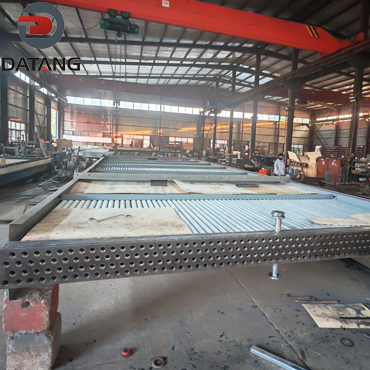
- Heat exchangers with finned tubes
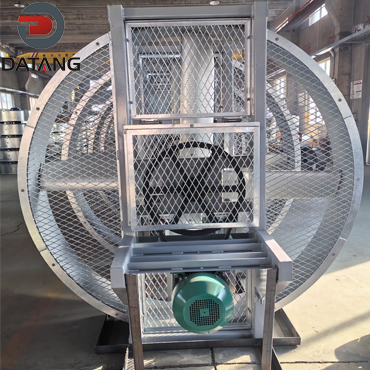
- Axial fans, motors, and gearboxes
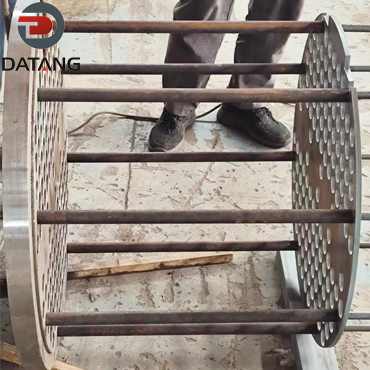
- Support structure
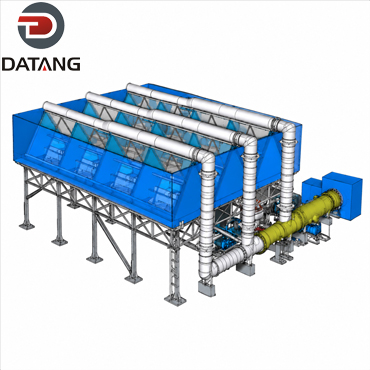
- Air duct flow-guiding system
Air-Cooled Condensers Manufacturer Datang
An air cooled condenser is a type of heat exchange equipment,it uses air as the cooling medium.It employs fans to force air across finned tubes, carrying away heat and condensing gaseous refrigerant into a liquid state.As it requires no water circulation system,it is particularly well suited for use in water scarce regions or for mobile refrigeration units.
To achieve optimal thermal performance in dry cooling systems, air cooled condensers require cooling tubes with a strong structure and a large heat transfer surface area. Air has a much lower specific heat capacity and thermal conductivity than water. Therefore, bare metal tubes alone cannot provide the required heat transfer performance within a practical space.
High performance finned tube designs can solve this problem by greatly increasing the air-side heat transfer area. Common options include high frequency welded solid fin tubes, aluminum L-footed and KL-footed fin tubes, and embedded G-type fin tubes.
Technical Specifications, Materials, and Standards
The finned tubes in an air cooled condenser must withstand vacuum pressure differences, mechanical vibrations caused by axial fans, and exposure to outdoor conditions. The following specifications are typical values and should be confirmed against the engineering requirements of the final project.
| Parameter / Specification Dimension | Typical Range / Technical Limit | Applicable Standard / Material Class |
|---|---|---|
| Base Tube Outer Diameter (OD) | 25.4 mm to 50.8 mm (Round) / 100 mm x 20 mm (Elliptical) | ASTM A106 Gr. B / ASTM A214 |
| Fin Height | 10 mm to 25 mm | Aluminum 1060 / 1100 or Carbon Steel |
| Fin Density (FPI) | 236 to 394 fins per meter (6 to 10 FPI) | Per project specification and dust loading |
| Base Tube Wall Thickness | 2.0 mm to 4.0 mm (Full vacuum rated) | ASME BPVC Section VIII Division 1 |
| Design Pressure / Temperature | Full vacuum to 1.5 MPa / Up to 350°C | API 661 / ISO 13706 |
Air-Cooled Condensers in Water-Scarce Regions
As water resources become increasingly limited, air-cooled condensers have become an important cooling solution for power plants in water-scarce regions. They offer significant water-saving benefits. Unlike traditional wet cooling towers, air-cooled condensers use air to remove heat and consume very little water. This greatly reduces the need for cooling water.
Air-cooled condensers are widely used in combined-cycle power plants, concentrated solar power plants, coal-fired power plants, biomass power plants, and waste to energy facilities.
Since they require little cooling water, power plants no longer need to be built near abundant water sources. This gives operators more flexibility when choosing plant locations, especially in areas with limited water supplies, strict water regulations, or high water costs.
Air-cooled condensers also help power plants operate without relying on traditional wet cooling systems. They improve the ability of power plants to adapt to different environments and support more sustainable power generation.
Technical Parameters of Air Cooled Condensers
Finned tubes are the main heat transfer components of an air cooled condenser. Their performance directly affects the cooling efficiency of the system. The key technical parameters include:
1. Heat Transfer Area
The heat transfer area can range from several square meters to hundreds of square meters. It directly determines the heat dissipation capacity of the equipment.
2. Airflow and Air Pressure
Axial fans drive air across the outer surfaces of the finned tubes. Higher airflow can improve heat dissipation. The air pressure must be sufficient to overcome the resistance caused by the fins.
3. Tube Bundle Types
Power plant ACC systems usually combine parallel flow condensing bundles and counterflow dephlegmator bundles. The counterflow bundles help prevent condensate from becoming too cold or freezing. This helps ensure safe operation during winter.
4. Heat Transfer Area Ratio
For the same heat transfer duty, an air cooled condenser typically requires 10 to 15 times more heat transfer area than a water cooled condenser.
Main Components of an Air Cooled Condenser
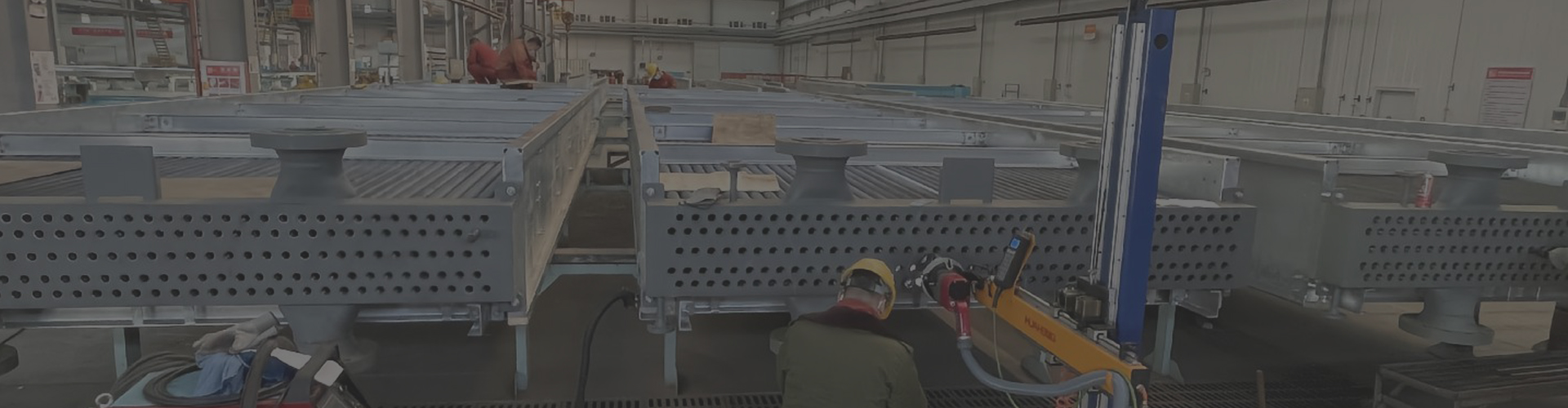
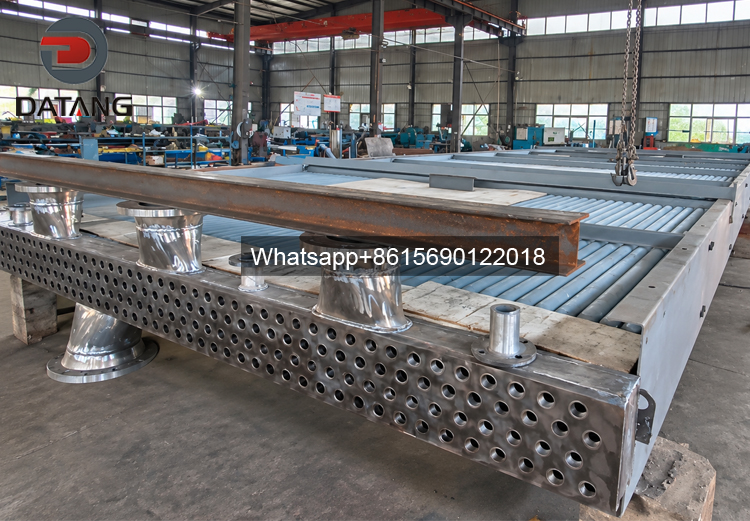
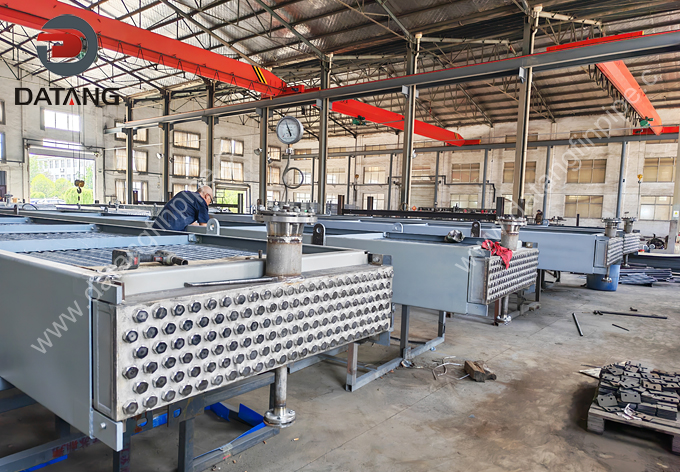
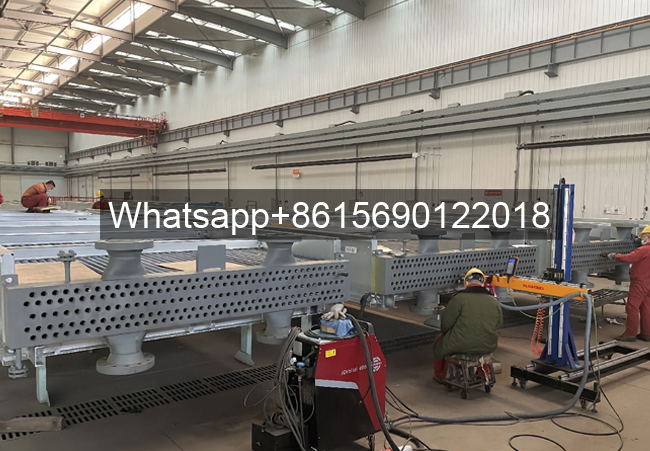
An air cooled condenser consists of several modules connected in parallel. Each module contains several finned tube bundles. Large axial fans move outside air through the finned tubes. This allows heat to transfer from the steam to the air and helps condense the steam into water.
Air cooled condensers (ACC) are available in different designs. In addition to the traditional A frame design, several other configurations are also used. At Datang Finned Tube, we provide a range of advanced solutions. Each product is carefully designed to meet different performance requirements, space limitations, and environmental needs.
A typical ACC installation includes several key components:
Quality Control and Inspection Procedures
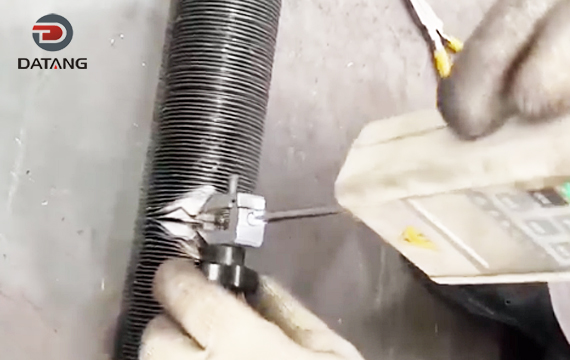
Mechanical pull off tests are used to check the bonding strength between the fins and the base tube. This ensures a tight bond and helps prevent thermal resistance at the contact surface.
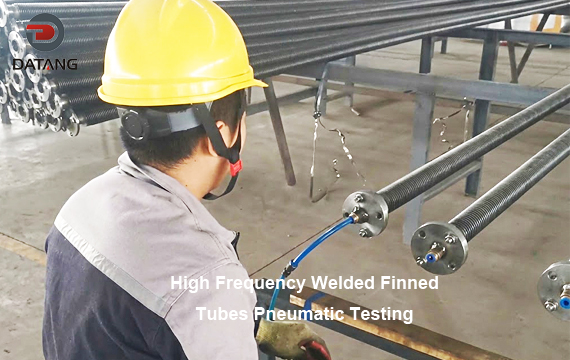
The base tubes are tested under internal pressure according to applicable ASTM standards before the fins are installed. This helps verify the pressure resistance of the tubes.

The assembled finned tube bundles undergo air pressure and hydrostatic leak tests. These tests help ensure that there are no leaks in the tubes or connections.
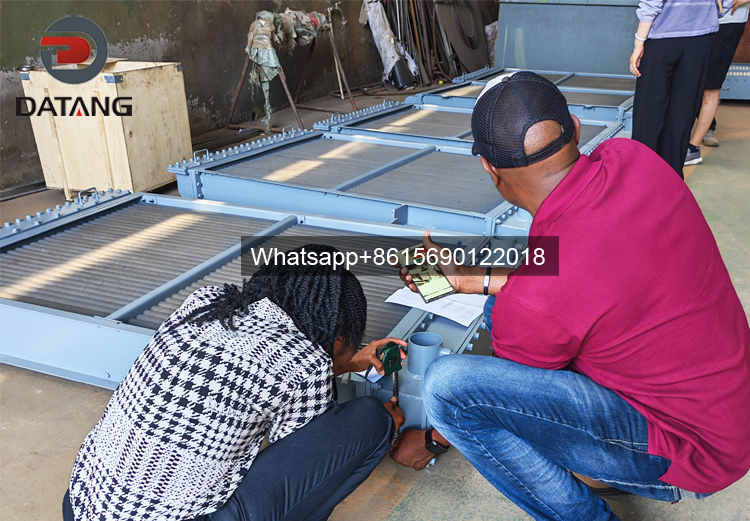
Inspections cover wall thickness, fin pitch consistency, and tube straightness. The straightness tolerance is controlled within 1.0 mm per meter.
Industries Using Air Cooled Condensers
Direct air cooled condenser systems are widely used in heavy industries around the world. They provide an efficient way to remove heat without relying on large amounts of water.
- Thermal Power Plants and Combined Cycle Power Plants: Coal fired power plants, gas turbine combined cycle (CCGT) plants, and biomass power plants located in water scarce regions.
- Concentrated Solar Power Plants: Solar tower and parabolic trough systems, especially those located in dry and desert regions.
- Petrochemical and Oil Refining Plants: Overhead condensers in hydrocarbon distillation units and exhaust systems for steam turbine drives.
- Waste to Energy Plants: Municipal solid waste incineration facilities that require reliable dry condensing systems.
- Geothermal Power Plants: Binary cycle power generation systems located in environmentally protected areas.
Packaging and Transportation Requirements

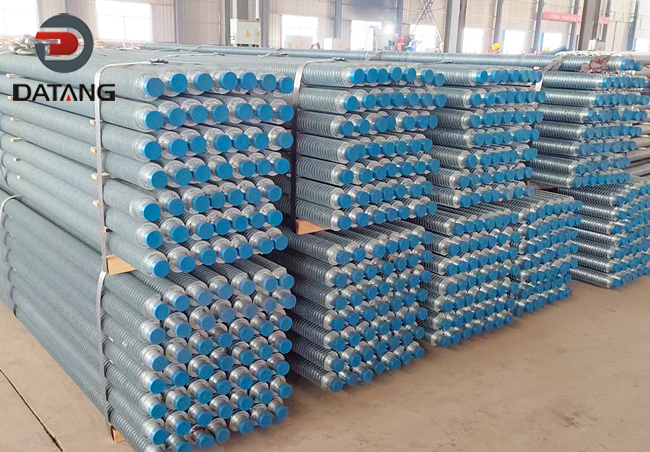
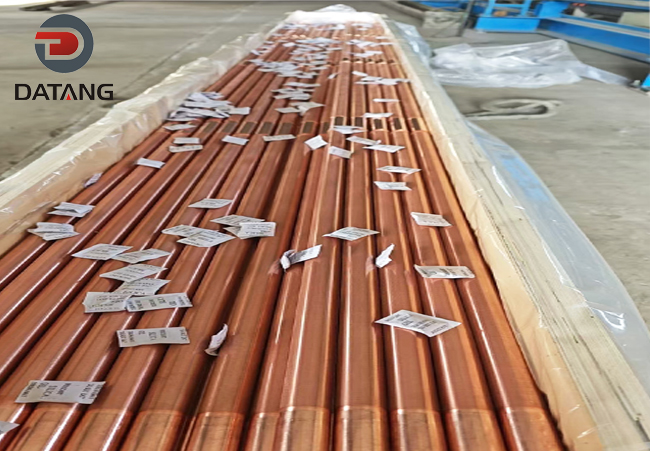
Finned tubes have delicate extended surfaces, so they can be easily damaged by impact during international transportation. Standard export packaging includes the following measures:
1. Heavy Duty Steel Shipping Containers
Strong wooden or steel frames are placed inside the containers to secure the products. Custom HDPE protective padding is also used to prevent direct contact between the fins and metal parts.
2. Protective End Caps
Plastic bevel caps are fitted to the ends of the tubes. They help protect the tube ends and prevent moisture and foreign materials from entering.
3. Corrosion Protection for Sea Transportation
Industrial corrosion protection coatings and moisture resistant foil are used during sea transportation. These measures help protect the products from oxidation and corrosion caused by the marine environment.
Selection Guide for Air Cooled Condensers
Water Scarce Regions (Deserts, Plateaus, and Arid Areas): Air cooled condensers are the preferred choice. Their water saving benefits are difficult to replace.
Small and Medium Sized Projects: Air cooled condensers offer lower initial investment and easier installation. They can provide good overall value for these projects.
Cold Regions: Air cooled condensers can take advantage of low outdoor temperatures for natural cooling. In winter, the compressor can be shut down while fans continue to provide cooling.
The main value of air cooled condensers in water scarce regions is their ability to save water while maintaining cooling performance. They eliminate the need for large amounts of cooling water, reduce water treatment costs, and avoid major investments in water supply infrastructure. As a result, they can offer better cost efficiency over the entire service life of a project.
Why Choose Cangzhou Datang Steel Pipe Co., Ltd. for Your Dry Cooling System?
With over 20 years of experience in finned tube manufacturing, Datang provides a wide range of finned tubes, multiple material options, and customized dry cooling solutions to meet your project requirements. From product selection and technical support to manufacturing and quality inspection, we work closely with you at every stage. With our experienced team and strict quality control, you can count on reliable product performance, consistent quality, and on time delivery for your air cooled condenser projects.
Frequently Asked Questions About Air Cooled Condensers
An air cooled condenser (ACC) is a type of direct dry cooling system that condenses steam inside air-cooled finned tubes. As ambient air flows across the fins, it removes heat from the steam inside, enabling the condensation process. In thermal power plants, steam from the turbine exhaust enters the ACC, where it condenses. Afterward, the condensate flows back to the boiler, completing the closed loop.
An air cooled condenser uses ambient air to remove heat, while a water cooled condenser uses cooling water. Air cooled systems consume very little water and are suitable for areas with limited water supplies. Water cooled systems generally offer higher heat transfer efficiency but require a reliable water supply and additional water treatment.
Ambient temperature has a direct impact on condenser performance. When outdoor temperatures rise, the temperature difference between the air and the working fluid becomes smaller. This can reduce cooling capacity and increase the condensing temperature. Proper system design helps maintain stable operation under different weather conditions.
An air cooled condenser uses air instead of cooling water for heat rejection. It can greatly reduce water consumption compared with traditional wet cooling systems. This helps lower water supply costs and reduces the need for water treatment facilities. Actual water savings depend on the project design and operating conditions.
You should consider the required heat load, ambient temperature, operating pressure, steam flow rate, available installation space, and local climate. Material selection and finned tube design are also important. These factors help determine the required heat transfer area and overall system performance.
Maintenance frequency depends on the operating environment and system design. Regular inspections should cover finned tube surfaces, fans, motors, gearboxes, and supporting structures. Dust and dirt should be removed from the fins when necessary to maintain proper airflow and heat transfer performance.
The service life depends on material selection, operating conditions, manufacturing quality, and maintenance. Proper corrosion protection and regular inspections can help extend equipment life. The finned tubes and other key components should be selected according to the actual operating environment.
Yes. Datang provides customized finned tubes for different air cooled condenser applications. You can select different base tube materials, fin materials, fin types, tube dimensions, and lengths according to your project requirements. We can also review your technical drawings and specifications to support product selection and manufacturing.