


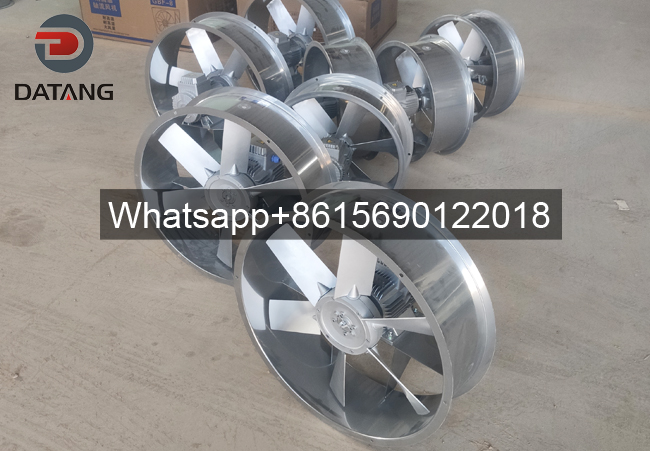
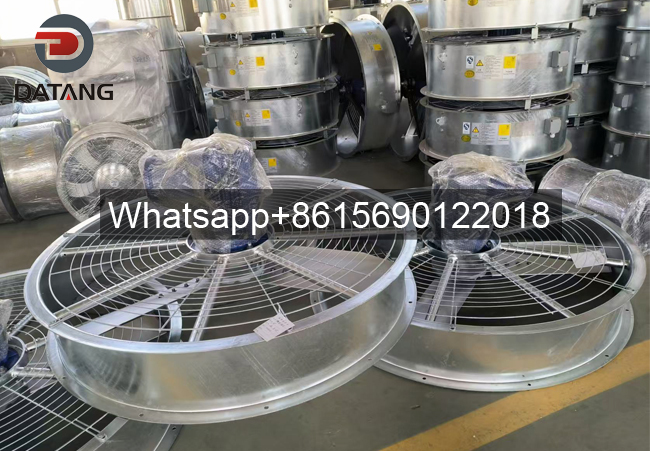
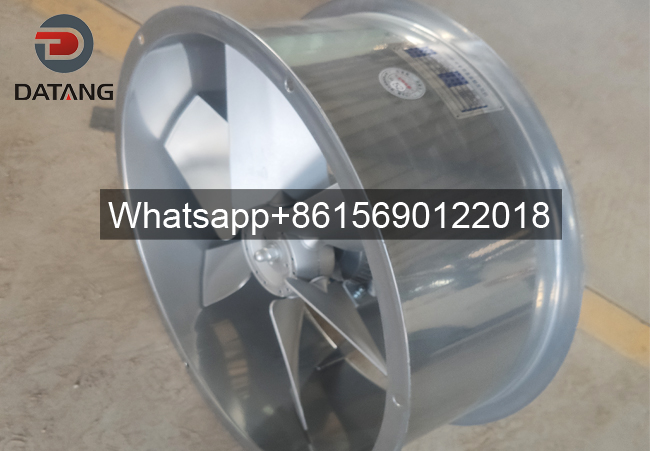
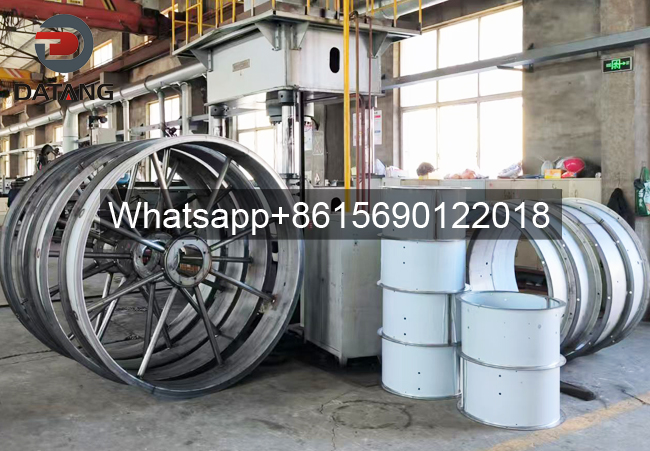
Industrial Axial Flow Fan
The fan serves as the primary power source for driving airflow in an air-cooled system. Since the heat transfer coefficient of air is significantly lower than that of the fluid inside the tubes, the fan must force convection to dissipate the immense heat conducted through the tube bundles.
- Fan: Typically comprises 4 to 8 high-efficiency blades, commonly constructed from aluminum alloy or fiberglass-reinforced plastic (FRP); supports either manual or automatic adjustment of blade angles (variable pitch).
- Configuration: Classified into two types: forced-draft (where the fan is positioned beneath the tube bundle to push air upward) and induced-draft (where the fan is positioned above the tube bundle to draw air upward).
Axial Flow Fan(Air Cooled Heat Exchanger Fan)
What is an Axial Flow Fan?
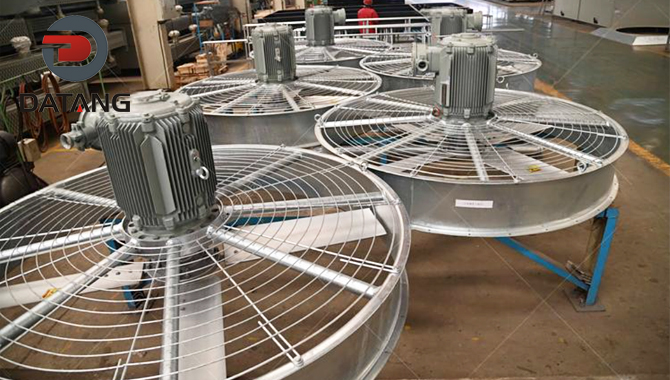
An Axial Flow Fan(Fin Fans) is a type of fan that causes air to flow through it in an axial direction, parallel to the shaft about which the blades rotate. Simply put, the air is drawn in from one side and discharged from the other along the same axis—much like a household desk fan or an airplane propeller.
In an Air Cooled Heat Exchanger (ACHE), the axial flow fan is the most critical component, responsible for forcing massive volumes of ambient air across the finned tube bundles.
Axial Flow Fan Working Principle
Axial fans utilize the airfoil cross-section of rotating blades to generate lift. As the blades rotate at high speeds, they convert mechanical energy into air kinetic and pressure energy, pushing the air forward along the axis.
Air Cooled Heat Exchanger Fan(ACHE Fan) Structure
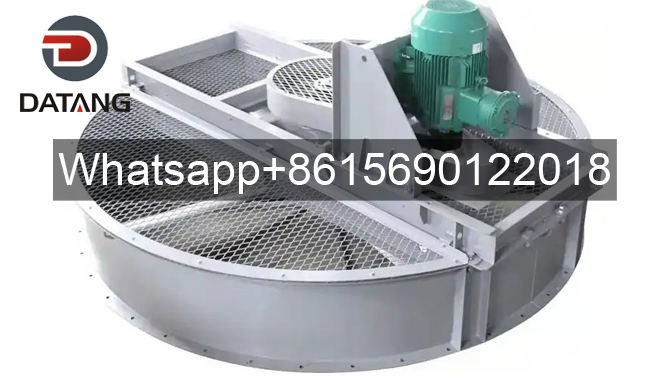
Air-cooled condenser fans typically employ an axial flow design, consisting of a motor, fan blades, hub, and casing.
1. Core Components
-
Blades:
-
Material: Usually Aluminum Alloy (durable, high strength) or Fiberglass Reinforced Plastic (FRP) (lightweight, corrosion-resistant, low noise).
-
Design: Typically utilizes an Airfoil cross-section to provide maximum airflow at minimum energy consumption.
-
-
Hub:
-
Connects the blades to the drive shaft.
-
Available in Manual Pitch Adjustment or Auto-Variable Pitch. Auto-variable hubs can change the blade angle in real-time during operation based on cooling demands.
-
- Motor: The power source driving the rotation.
- Fan Ring/Shroud: Guides the airflow and minimizes “tip vortex” losses to maximize efficiency.
The matching of fan blade size (e.g., 900 mm diameter) with rotational speed directly affects the airflow coverage, while the stamped casing structure enhances corrosion resistance, and powder coating further extends service life.
2. Arrangement Modes: Forced vs. Induced Draft
Air coolers generally use axial flow fans due to their advantages of large air volume, high efficiency, low vibration, and low noise. Based on their position in the system and the ventilation method, they are mainly divided into two types:
| Feature | Forced Draft | Induced Draft |
| Position | Fan located below the tube bundle. | Fan located above the tube bundle. |
| Air Temp | Contacts cold ambient air (longer life). | Contacts heated air after exchange. |
| Air Distribution | Slightly uneven. | Highly uniform, leading to higher efficiency. |
| Maintenance | Convenient (accessible from ground/low platform). | More difficult (requires access to the top). |
| Weather Protection | Bundles are exposed to rain/snow. | Bundles are shielded by the fan ring/hood. |
-
Forced Draft
Features: The fan is installed below the tube bundle and blows air upwards through it.
Advantages: Simple structure, easy installation and maintenance. The fan operates in a lower-temperature atmospheric environment, resulting in relatively lower power consumption. This is currently the most widely used type in China.
Disadvantages: Air distribution in the tube bundle may be uneven, hot air is prone to recirculation, and it is significantly affected by external weather conditions (such as solar radiation). -
Induced Draft
Features: The fan is installed above the tube bundle and draws air through it.
Advantages: More uniform air distribution, less hot air recirculation, more stable operation, and less impact from weather conditions. This type is more commonly used abroad.
Disadvantages: The fan operates in a high-temperature air environment, requiring high temperature resistance (typically above 80°C). The structure is relatively complex, and maintenance is inconvenient.
3.Capacity Control & Efficiency
-
VFD (Variable Frequency Drive): Controls airflow by changing the motor speed. This is the most energy-efficient method and significantly reduces operating noise.
-
Auto-Variable Pitch: Changes the blade angle while the motor runs at a constant speed, offering extremely high precision for temperature control.
-
Louver Coordination: The fan provides the power, while louvers help fine-tune the airflow to prevent over-cooling or freezing of the fluid in winter.
4.Axial Flow Fan Maintenance and Safety Precautions
- Regular Inspections: Quarterly cleaning of dust accumulation on fan blades is required, along with checks of the motor’s insulation resistance (which should be ≥ 0.5 MΩ), to prevent efficiency degradation or motor burnout caused by dust buildup.
- Vibration Monitoring: Use a vibration meter to monitor the vibration levels of the fan bearings (which should be ≤ 6.3 mm/s). If readings exceed this limit, immediately shut down the unit for inspection and repair to prevent shaft bending or impeller imbalance.
- Safety Protection: Install protective guards (with mesh openings ≤ 10 mm) to prevent foreign objects from entering the fan assembly. Additionally, ensure that all connections between the fan and the ductwork are tightly sealed to prevent air leakage and the resulting loss of energy efficiency.
Axial Flow Fan Features
-
High Volume, Low Pressure: Compared to centrifugal fans, axial fans are designed to move immense volumes of air but have a relatively lower capacity to overcome high resistance (static pressure). This perfectly matches the requirements of air coolers.
-
Compact Design: The motor, blades, and shroud are typically integrated into a single unit to save space.
-
Flexible Installation: They can be mounted horizontally (for side-blowing) or vertically (the standard for Forced or Induced draft ACHEs).
Axial Flow Fan Common Classifications
- By Material: Steel, fiberglass reinforced plastic (FRP), aluminum alloy, stainless steel, etc., to meet corrosion resistance requirements for different environments.
- By Application: General purpose, explosion-proof, corrosion-resistant, and high-temperature smoke extraction types.
- By Drive Method: Direct drive (motor coupled directly) and belt-driven.
Axial Flow Fan Package
Payment Terms:T/T, LC
Delivery: 15-30 days after payment
Marking: Standard + Steel Grade + Size + Heat No + Lot No
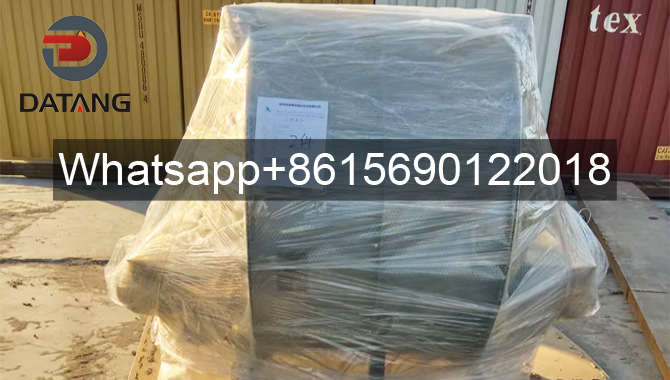
Package: Iron frame packing boxes and the desiccants are put into each package for continental transportation as well. or as required
Axial Flow Fan Application
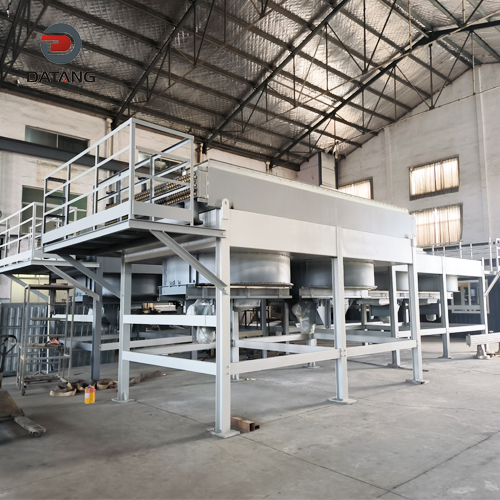
The use of air cooler finned tubes in Fan Fin Coolers essentially involves leveraging a larger metal surface area (fins) to enable an operational mode that requires no water resources and entails extremely low maintenance costs. This represents the optimal choice for water-scarce regions, projects with stringent environmental requirements, and facilities seeking to reduce long-term operating expenses (OPEX).
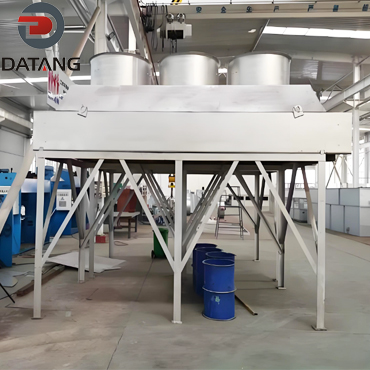
An Axial Flow Fan is a type of fan that causes air to flow through it in an axial direction, parallel to the shaft about which the blades rotate.
In an Air Cooled Heat Exchanger (ACHE), the axial flow fan is the most critical component, responsible for forcing massive volumes of ambient air across the finned tube bundles.
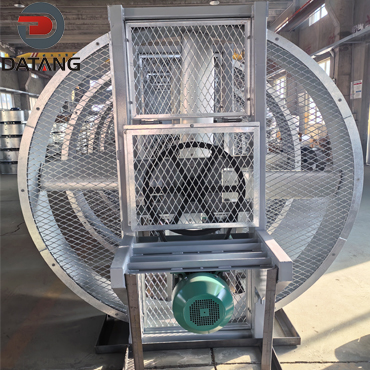
The air cooler fan is the core component of an air cooler; its function is to drive airflow—either through forced or natural convection—to facilitate heat exchange with the process fluid flowing within the heat exchange tube bundle, thereby achieving efficient cooling. It is primarily utilized for heat recovery and fluid cooling in refining, chemical processing, and natural gas treatment operations.
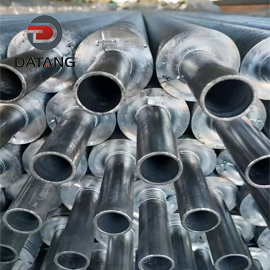
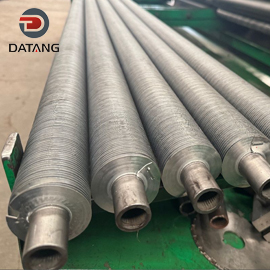
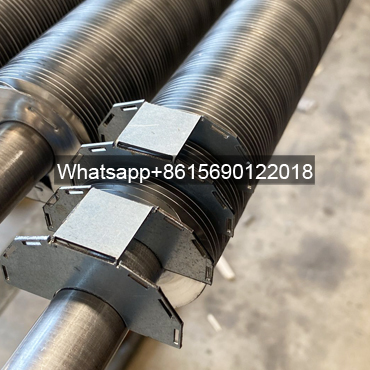
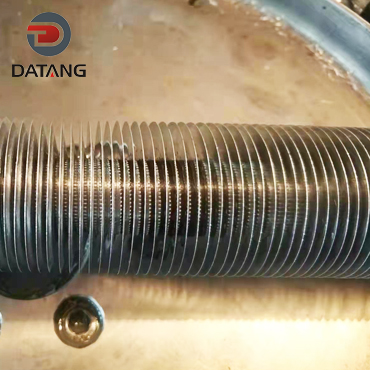
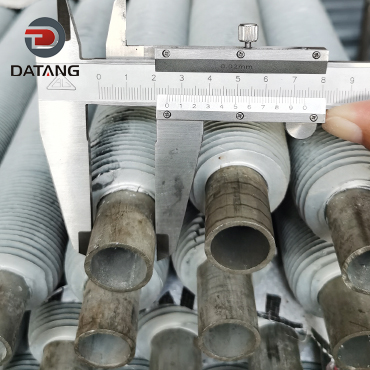
Air Cooler Tubes
Axial Flow Fan FAQs
A: We can provide samples.
A: After you confirm sample details, the samples will be ready for delivery in 3-7days,and will be sent to you via express and arrive in 3-5days.
A: Axial flow fan can be customized, we can make the new thermoforming or extruding mode based on your drawings and we can sign a confidentiality agreement about your patented product, pls contact us for any further information.
A: Always a pre-production sample,before mass production;always final inspection before shipment.
Inspection & Guarantee Certificate is supplied with shipment, and the Third Party Inspection is available.