


The Guide to Finned Tubes for Air Coolers: Efficiency, Types, and Applications
In the world of industrial heat exchange, the finned tube for air cooler is the unsung hero that drives efficiency. As global industries push towards stricter energy standards and “Net Zero” goals in 2026, the demand for high-performance air-cooled heat exchangers has never been higher. At the heart of every efficient air cooler lies a critical component: the finned tube.
This guide explores everything you need to know about finned tubes for air coolers, from working principles and manufacturing technologies to selection criteria and industry trends. Whether you are an engineer, a procurement specialist, or a plant manager, understanding these components is key to optimizing your thermal systems.
Why Are Finned Tubes Essential for Air Coolers?
Air coolers (also known as air-cooled heat exchangers) use ambient air to cool process fluids like steam, oil, or gas. However, air is a notoriously poor conductor of heat. Its convective heat transfer coefficient is roughly 50 to 100 times lower than that of water or process liquids.
The Heat Transfer Bottleneck
Without enhancement, an air cooler using plain tubes would need to be impractically large to achieve the required cooling capacity. This is where the finned tube for air cooler applications becomes indispensable.
- Surface Area Expansion: By attaching metal fins to the base tube, the external surface area is increased by a factor of 5 to 20 times (known as the finning ratio).
- Balancing Thermal Resistance: This massive increase in surface area compensates for the low heat transfer coefficient of air, balancing the thermal resistance between the inside and outside of the tube.
- Compact Design: The result is a compact, cost-effective unit that delivers high thermal performance without occupying excessive floor space.
At Datang Finned Tube, we specialize in engineering these critical components to maximize heat transfer efficiency while minimizing pressure drop and energy consumption.
Core Types of Finned Tubes for Air Coolers
Not all finned tubes are created equal. The choice of manufacturing technology dictates the tube’s durability, temperature limits, and suitability for specific environments. Here are the primary types used in modern industrial applications:
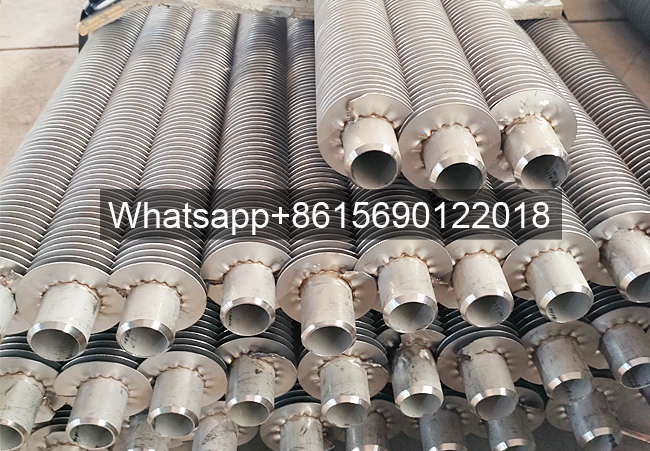
1. High-Frequency Welded Spiral Finned Tubes
This is the gold standard for heavy-duty industrial applications, particularly in petrochemical and power generation sectors.
- Process: A steel strip is spirally wound around the base tube and welded continuously using high-frequency electric resistance welding.
- Advantages:
- Zero Contact Resistance: The metallurgical bond ensures perfect heat transfer from the base tube to the fin.
- High Strength: Capable of withstanding high pressures, temperatures up to 450°C+, and severe thermal shocks.
- Durability: Fins will not loosen or detach over time, ensuring consistent performance throughout the equipment’s lifecycle.
- Best For: Refinery processes, power plant air-cooled islands, and high-temperature waste heat recovery. Datang Finned Tube utilizes advanced automated welding lines to ensure every weld meets standards.
2. Extruded (Integral) Finned Tubes
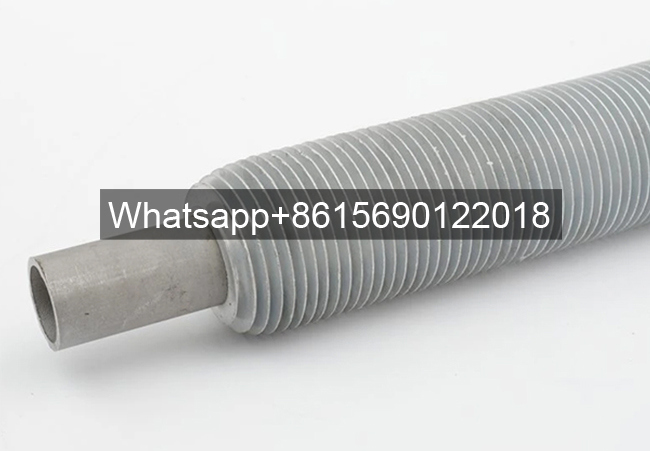
Ideal for corrosive environments where longevity is paramount.
- Process: An aluminum sleeve is fitted over the base tube and then extruded under high pressure to form the fins. The base tube is completely encapsulated by aluminum.
- Advantages:
- Superior Corrosion Resistance: The base tube (often carbon steel) is fully protected from the atmosphere by the aluminum layer.
- Low Contact Resistance: The mechanical bonding under extreme pressure creates an excellent thermal interface.
- Aesthetic & Clean: Smooth surface reduces dirt accumulation.
- Limitations: Generally limited to temperatures below 280°C due to aluminum properties.
- Best For: Offshore platforms, chemical plants with corrosive gases, and marine environments.
3. L-Type, G-Type, and KL-Type Wrapped Finned Tubes
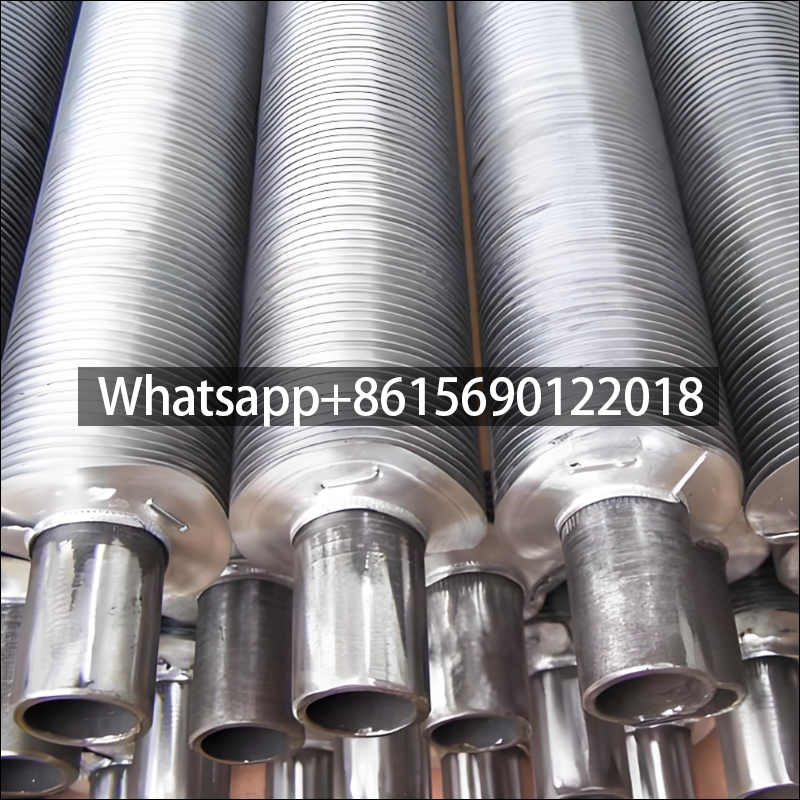
These are mechanically wrapped solutions, often used for less demanding applications.
- L-Type: Simple overlap wrap. Low cost but prone to loosening under thermal cycling. Not recommended for high-temperature air coolers.
- G-Type (Embedded): The fin strip is embedded into a groove machined into the base tube. Better stability than L-type.
- KL-Type (Knurled-Locked): The base tube is knurled before wrapping to lock the fin in place.
- Best For: Air coole.
4. Serpentine Finned Tubes or Plate Finned Tubes (Stacked)
Common in compact units like automotive radiators and small commercial AC units.
- Process: Pre-formed fins are stacked onto the tube and expanded mechanically.
- Advantages: Allows for complex fin geometries (louvered, wavy) to enhance turbulence.
- Best For: Compact refrigeration and air conditioning systems.
Key Design Parameters for Optimal Performance
When specifying a finned tube for air cooler, engineers must balance several critical parameters to achieve the best efficiency-to-cost ratio.
1. Finning Ratio
The ratio of the total finned surface area to the bare tube surface area.
- Typical Range: 8:1 to 15:1 for industrial air coolers.
- Consideration: A higher ratio increases area but may reduce fin efficiency (temperature drop at the fin tip) and increase air-side pressure drop. Datang Finned Tube engineers optimize this ratio based on your specific fluid dynamics.
2. Fin Pitch (Spacing)
The distance between adjacent fins.
- Clean Air: Closer spacing (2.0 – 2.3 mm) maximizes surface area.
- Dirty/Dusty Environments: Wider spacing (2.5 – 3.0+ mm) prevents clogging and facilitates easier cleaning. Choosing the wrong pitch can lead to rapid fouling and system failure.
3. Fin Geometry
- Plain Fins: Lowest air resistance, easiest to clean. Best for clean environments.
- Wavy Fins: Induces turbulence, boosting heat transfer by 15-25% with a moderate pressure drop penalty. The most common choice for general industrial air coolers.
- Serrated Fins: Maximum heat transfer but high risk of fouling. Only for clean, high-efficiency requirements.
4. Material Selection
- Carbon Steel Base Tube + Aluminum Fins: The industry standard. Combines the strength of steel with the thermal conductivity and light weight of aluminum.
- Stainless Steel Base Tube + Stainless/Aluminum Fins: For highly corrosive processes or hygiene-critical applications (food/pharma).
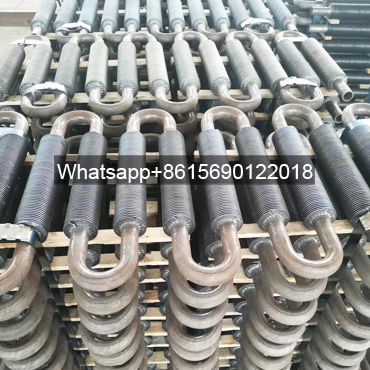
- Secondary Processing: Datang Finned Tubes provides high-quality processing services, such as bending, to fully meet your requirements, saving you time, effort, and costs.
Common Failure Modes and Maintenance Tips
Even the best finned tube for air cooler systems require proper maintenance to sustain performance.
- Fouling and Clogging: Dust, pollen, and industrial particulates can block airflow.
- Solution: Regular cleaning with low-pressure water jets or steam. Design with appropriate fin pitch for the environment.
- Fin Loosening: Common in mechanically wrapped tubes subjected to thermal cycling. This creates an air gap (contact resistance) that kills heat transfer.
- Solution: Use High-Frequency Welded tubes from Datang Finned Tube for any application involving temperature fluctuations.
- Corrosion: Galvanic corrosion between dissimilar metals or atmospheric rust.
- Solution: Specify hot-dip galvanized finishes or extruded tubes for harsh environments.
- Fin Damage: Bent fins from aggressive cleaning or hail.
- Solution: Use thicker gauge fins and train maintenance staff on proper cleaning techniques.
Application Scenarios: Choosing the Right Tube
| Application | Recommended Finned Tube Type | Why? |
|---|---|---|
| Oil & Gas Refineries | Large Diameter HF Welded (Galvanized) | Withstands extreme weather; corrosion resistant; robust. |
| Power Plant Air Cooling | Copper/Alu Stacked or Extruded | High efficiency at low temperatures; cost-effective. |
| Chemical Processing | Extruded (Integral) Finned Tube | Maximum corrosion protection for acidic/salty atmospheres. |
| Waste Heat Recovery | H-Fin or Wide-Spaced Spiral | Resists fouling from dusty flue gases; self-cleaning design. |
| HVAC & Refrigeration | Low fin tube | Increase heat transfer area, enhance external heat transfer, reduce equipment volume. |
| Marine/Offshore | Hot-Dip Galvanized HF Welded | Combats salt spray and high humidity effectively. |
Why Choose Datang Finned Tube?
In a market flooded with generic suppliers, Datang Finned Tube stands out as a leader in thermal engineering innovation.
- Precision Manufacturing: Our state-of-the-art high-frequency welding lines ensure consistent weld depth and fin alignment, guaranteeing optimal heat transfer.
- Custom Engineering: We don’t just sell tubes; we provide solutions. Our team analyzes your specific process data (fluid properties, ambient conditions, space constraints) to recommend the perfect fin geometry and material combination.
- Quality Assurance: Every batch undergoes rigorous testing, including pressure tests, visual inspections, and non-destructive testing (NDT), fully compliant with ISO standards.
- Global Track Record: From the deserts of the Middle East to the coastal refineries of Asia, Datang Finned Tube products are trusted to perform in the world’s toughest environments.
- Sustainability Focus: Our designs help clients reduce fan energy consumption and lower overall carbon emissions, aligning with 2026 global sustainability goals.
Conclusion
The finned tube for air cooler is far more than a simple metal component; it is the engine of thermal efficiency in modern industry. Selecting the right type—whether it’s the robust high-frequency welded tube for high-pressure refining or the corrosion-resistant extruded tube for offshore platforms—is critical for the longevity and performance of your cooling system.
As we move further into 2026, the demand for smarter, more durable, and energy-efficient heat exchange solutions will only grow. Partnering with an experienced manufacturer like Datang Finned Tube ensures that your air coolers deliver peak performance, reduce operational costs, and stand the test of time.
Ready to optimize your air cooling system?
Contact Datang Finned Tube today for a consultation on custom finned tube solutions tailored to your specific industrial needs. Let us help you build a more efficient and sustainable future.
Contact Datang Finned Tube today for a consultation on custom finned tube solutions tailored to your specific industrial needs. Let us help you build a more efficient and sustainable future.
Email:info@datangpipe.com
Whatsapp/Wechat:+86 15690122018