


Heat exchanger tubes are the core components of a heat exchanger, housed within the shell, used for heat exchange between two media. They possess high thermal conductivity and isothermal properties. Often called heat transfer superconductors, their thermal conductivity is thousands of times that of copper, enabling rapid heat transfer with virtually no heat loss.
Heat Pipe Heat Exchanger Tube
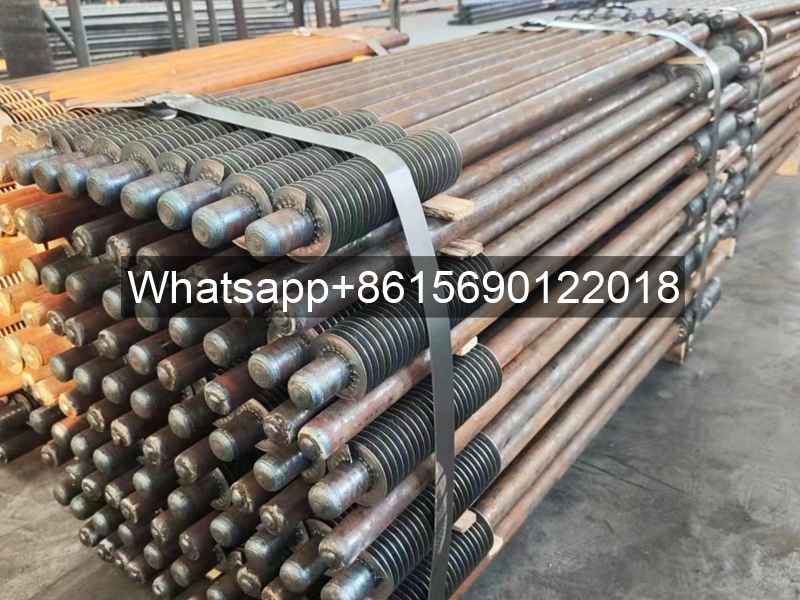
Common materials include carbon steel, low-alloy steel, stainless steel, and copper-nickel alloys. Besides plain tubes, they also include finned tubes, threaded tubes, and other enhanced heat transfer tubes. Tube diameters are typically seamless steel or stainless steel tubes ranging from Φ19mm to Φ38mm, with tube bundles primarily arranged in equilateral triangles.
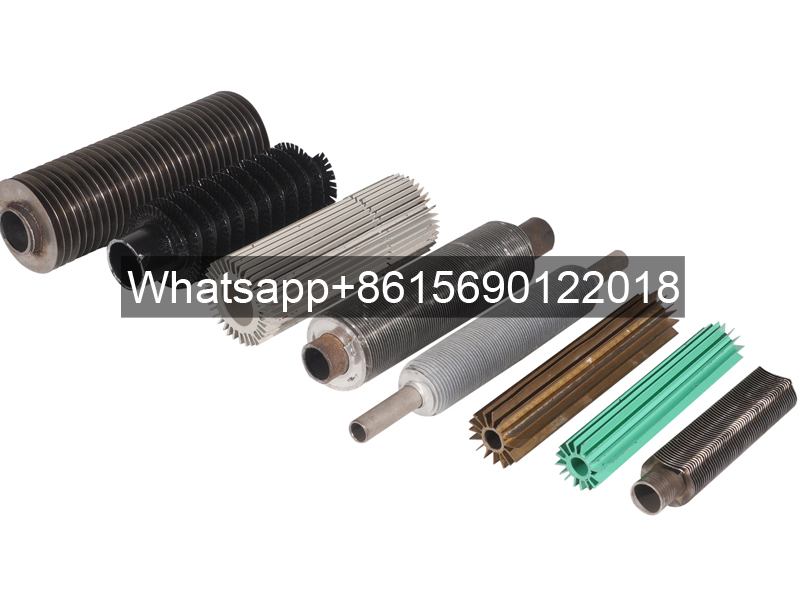
In addition to plain tubes, heat exchangers can also utilize various enhanced heat transfer tubes, such as finned tubes, threaded tubes, and spiral grooved tubes. When there is a significant difference in heat transfer coefficients on both sides of the tube’s inner diameter, the fins of the finned tube should be arranged on the side with the lower heat transfer coefficient.
Steel Finned Tubes Fin Tube Pipe Fins for Heating Pipes
Heat Exchanger Tube Dimensions
Common Heat Exchanger Tube Sizes
| Material | Outer Diameter × Wall Thickness (mm) | Standard Lengths (m) |
|---|---|---|
| Seamless Steel | Φ19×2, Φ25×2.5, Φ38×2.5 | 1.5, 2.0, 3.0, 4.5, 6.0, 9.0 |
| Stainless Steel | Φ25×2, Φ38×2.5 | 1.5, 2.0, 3.0, 4.5, 6.0, 9.0 |
Using smaller diameter heat exchanger tubes increases the heat transfer area per unit volume, results in a more compact structure, reduces metal consumption, and improves the heat transfer coefficient. Replacing the heat exchanger tubes of the same diameter from Φ25mm to Φ19mm can increase the heat transfer area by approximately 40% and save over 20% of metal.
However, smaller diameter tubes result in higher fluid resistance, are more difficult to clean, and are prone to scaling and clogging. Generally, larger diameter tubes are used for highly viscous or turbid fluids, while smaller diameter tubes are used for cleaner fluids.
Heat Exchanger Tube Materials
Common materials for heat exchanger tubes include carbon steel, low-alloy steel, stainless steel, copper, copper-nickel alloy, aluminum alloy, and titanium. In addition, there are some non-metallic materials, such as graphite, ceramics, and polytetrafluoroethylene (PTFE). Appropriate materials should be selected based on operating pressure, temperature, and the corrosiveness of the medium during design.
Heat Exchanger Tube Center Spacing
The main arrangement of heat exchanger tubes on the tube sheet is equilateral triangle, square, and angular equilateral triangle/angular square. The equilateral triangle arrangement allows for the maximum number of tubes to be arranged on the same tube sheet area, making it the most common, but it is difficult to clean the outside of the tubes. For easier external cleaning, square or angular square tube bundles can be used.
The center spacing of the heat exchanger tubes must ensure sufficient strength and width for the tube bridge (the clear distance between adjacent tubes) when the tubes are connected to the tube sheet. A channel must also be provided for cleaning when cleaning is required between the tubes.
The center spacing of the heat exchanger tubes should preferably be no less than 1.25 times the outer diameter of the heat exchanger tubes. The most commonly used center spacings are shown in the table below. The commonly used center distance of heat exchange tubes is mm.
Heat Exchanger Tube Dimensions
| Outer Diameter (mm) | 10 | 12 | 14 | 16 | 19 | 20 | 25 | 32 | 35 | 38 | 45 | 50 | 57 |
|---|---|---|---|---|---|---|---|---|---|---|---|---|---|
| Center-to-Center Pitch (mm) | 13-14 | 16 | 19 | 22 | 25 | 26 | 32 | 40 | 44 | 48 | 57 | 64 | 72 |