


In industrial thermal management, air-cooled heat exchangers (ACHE) are generally classified by how the air moves across the tube bundles. The choice between Induced Draft and Forced Draft depends on the specific requirements for temperature control, maintenance, and environmental protection.
1. Forced Draft Air Coolers
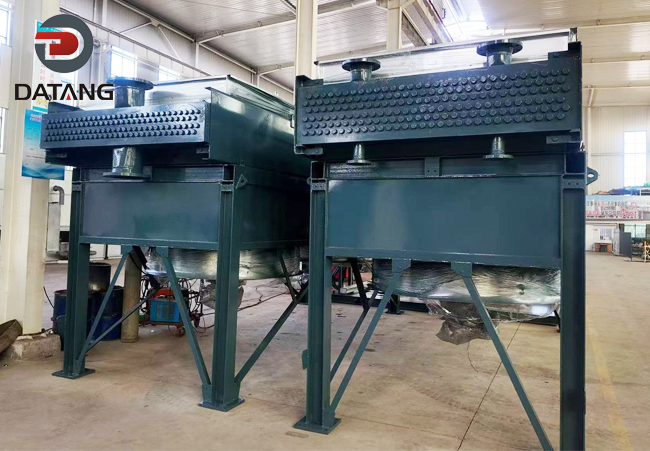
In a forced draft design, the fans are located below the tube bundles. They push (force) ambient air upward through the fins.
Key Characteristics
-
Ease of Maintenance: Since the fans, motors, and drive mechanisms are located at the bottom, they are easily accessible for routine inspections and repairs.
-
Mechanical Longevity: The mechanical components are exposed to ambient air rather than the hot exhaust air coming off the process tubes, which reduces wear and tear from heat.
-
Structural Simplicity: Generally requires less structural steel, often making it the more cost-effective initial investment.
Primary Drawback: Hot Air Recirculation
Because the exit air velocity is relatively low, the hot air leaving the top of the unit can be sucked back into the intake at the bottom, especially in windy conditions. This reduces the cooling efficiency significantly.
Forced Draft Air Coolers
2. Induced Draft Air Coolers
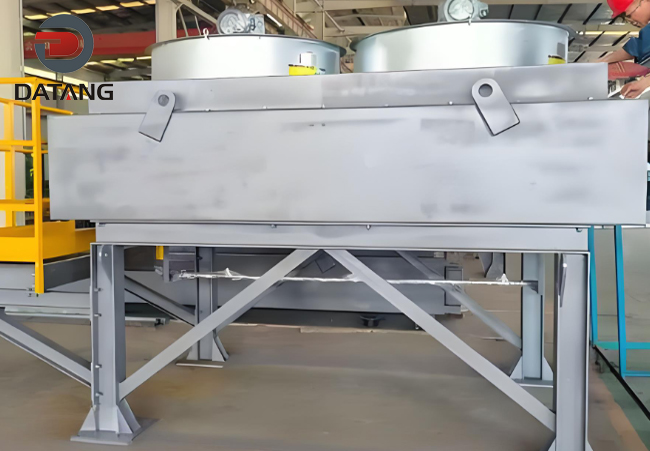
In an induced draft design, the fans are located above the tube bundles. They pull (induce) air through the tubes and discharge it upward.
Key Characteristics
-
Better Air Distribution: Pulling air creates a more uniform flow across the entire surface of the tube bundle, minimizing “dead spots.”
-
Reduced Recirculation: The fans discharge the hot air at high velocity straight up into the atmosphere, making it much less likely for the hot air to return to the intake.
-
Weather Protection: The fan deck on top acts as a partial shield, protecting the tube bundles from rain, snow, and hail.
Primary Drawback: Heat Exposure
The mechanical components (bearings, seals, and belts) are located in the hot exit air stream. This requires specialized high-temperature lubricants and more frequent maintenance of the drive system.
Induced Draft Air Coolers
Comparison Table
| Feature | Forced Draft | Induced Draft |
| Fan Location | Below the bundle | Above the bundle |
| Air Flow | Pushed through | Pulled through |
| Exit Air Velocity | Low | High |
| Recirculation Risk | Higher | Lower |
| Maintenance | Easier (Ground level/Platform) | Harder (Top of unit) |
| Mechanical Life | Longer (Ambient air) | Shorter (Hot air stream) |
| Process Control | Good | Better (Uniform distribution) |
3.Performance and Application Differences
1. Heat Exchange Efficiency & Stability
-
Induced Draft: Provides more uniform airflow distribution and a higher heat transfer coefficient. It has strong resistance to hot air recirculation, making it ideal for processes requiring high-precision temperature control.
-
Forced Draft: Since the fan is on the cold air side, the motor has better heat dissipation and a longer service life, with easier maintenance. However, in hot weather, hot air recirculation is more likely to occur, which can negatively impact cooling performance.
2. Environmental Adaptability
-
Induced Draft: More advantageous in hot, windless regions due to its superior exhaust capacity and ability to discharge heat away from the intake.
-
Forced Draft: More common in cold northern regions or areas with heavy sand and wind, thanks to its simpler structure and better anti-freezing properties.
3. Noise and Space Requirements
-
Induced Draft: The fan is located at the top, resulting in lower noise levels in the ground-level operating area. However, the total height of the equipment is greater, requiring more vertical installation space.
-
Forced Draft: Noise is concentrated at the bottom, which can affect onsite operators. Conversely, the overall height is lower, making it more compact.
4. Maintenance Convenience
-
Forced Draft: The motor is located at the bottom, allowing for inspection and repairs without high-altitude work, resulting in lower maintenance costs.
-
Induced Draft: The motor operates in a hot air environment, leading to higher temperature rises and stricter insulation requirements. Maintenance typically requires scaffolding or cranes, making it more difficult and costly to service.
4.Which should you choose?
-
Choose Forced Draft if you are working with extremely high-temperature fluids where the exhaust air would damage the fan motors, or if ease of maintenance is your top priority.
-
Choose Induced Draft if you need precise cooling, are operating in a windy environment where recirculation is a threat, or need to protect the tubes from the elements.
5.Choosing the Right Type
- Space Constraints: Forced draft towers are often more compact and better suited for tight spaces.
- Performance Stability: Induced draft towers generally offer more stable and predictable performance, especially under varying loads and weather conditions.
- Maintenance Access: If easy, ground-level maintenance is a priority, forced draft is the better option.
- Environmental Considerations: If a less visible vapor plume is desired (e.g., in urban or commercial areas), a forced draft tower is often preferred.