


Studded Fin Tubes, as highly efficient heat transfer elements, are widely used in various industrial fields. To ensure their long-term stable operation and optimal performance, routine maintenance is crucial.
1. Regular cleaning is a key step in maintaining a Studded Fin Tube.
During use, dust, oil, and other impurities may accumulate on the surface of the Studded Fin Tube. These substances can affect heat transfer efficiency and lead to performance degradation. Therefore, the surface of the Studded Fin Tube should be gently wiped regularly with a soft cloth or brush to remove adhering dirt.
For hard-to-clean areas, a mild detergent can be used, but avoid using strong corrosive chemicals to prevent damage to the tubing.
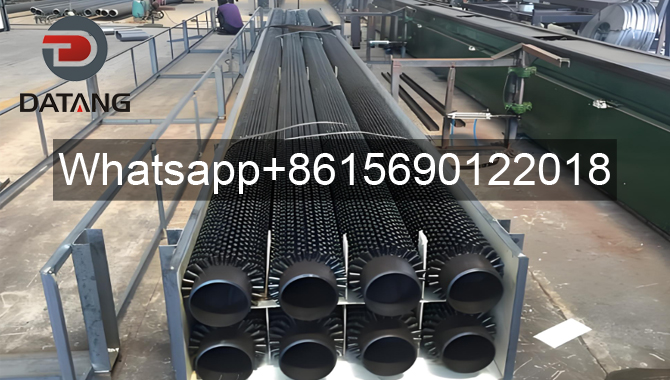
2. Inspecting the connections of the Studded Fin Tube is also very important.
Loose connections can lead to leaks, affecting the normal operation of the system. Regularly check and tighten all connecting bolts to ensure a secure and reliable connection.
Inspect the seals for aging or damage, and replace them promptly if necessary to prevent leaks.
3. Monitoring the operating status of the Studded Fin Tube is also part of routine maintenance.
Pay attention to any abnormal sounds or vibrations, as these may be early signs of malfunction. If any abnormalities are found, stop the machine immediately for inspection, identify the problem, and resolve it promptly to prevent the malfunction from escalating.
Properly controlling operating parameters directly affects the lifespan of the Studded Fin Tube. Avoid prolonged operation under overload or extreme temperature conditions, as this will accelerate the aging and damage of the studded tubes.
Adjust operating parameters according to the equipment’s design requirements to ensure the Studded Fin Tube operates under safe and stable conditions.
Regular cleaning, inspection of connections, monitoring of operating status, and proper control of operating parameters can effectively extend the lifespan of the Studded Fin Tube, improve its efficiency, and provide reliable heat transfer for industrial production.
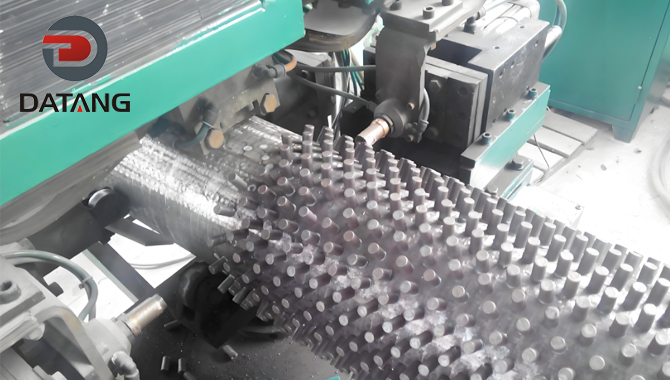
Applications of Studded Fin Tubes
Studded Fin Tubes, with their enhanced heat transfer characteristics, play a role in various heat exchange scenarios. Their manufacturing process needs to be adjusted based on materials and application requirements to ensure performance and lifespan.
1. The application scenarios for Studded Fin Tubes vary depending on their structural characteristics.
In boiler economizers, Studded Fin Tubes enhance heat transfer on the flue gas side, withstand high temperatures of 400-600℃, and are suitable for dusty flue gas environments. In chemical heat exchangers, corrosion-resistant Studded Fin Tubes are used for heat exchange in acid and alkali media, with the stub density adjusted according to the degree of corrosiveness.
In waste heat recovery equipment, Studded Fin Tubes improve the utilization rate of low-temperature flue gas heat, while in marine propulsion systems, their vibration resistance adapts to turbulent environments.
2. The processing techniques for Studded Fin Tubes require a balance between precision and robustness.
When welding the stubs, argon arc welding is used, with the current controlled at 80-120A to ensure adequate penetration and avoid incomplete welds. Integral-formed Studded Fin Tubes are suitable for thin-walled tubing; the stamping pressure is set according to the material thickness, with carbon steel pressure being 10%-15% higher than stainless steel. The stub spacing deviation is controlled within ±0.5mm, and the height error does not exceed 0.3mm to ensure uniform heat transfer.
3. Surface treatment of the Studded Fin Tube affects its performance.
In high-temperature environments, a high-temperature resistant coating with a thickness of 0.1-0.2 mm is required. In corrosive environments, an anti-corrosion coating is applied, and the coating adhesion must pass a cross-cut adhesion test. After processing, a hydrostatic test is conducted at 1.5 times the working pressure, maintaining the pressure for 30 minutes without leakage.
By appropriately selecting application scenarios and adhering to processing specifications, the Studded Fin Tube can fully leverage its heat transfer advantages, ensuring stable operation in energy, chemical, and other fields, balancing heat exchange efficiency and equipment durability.