


High-Frequency Welded Steel Fin Tubes utilize seamless steel tubes as their base tubes. 12mm fins expand the heat transfer area, combined with a high-frequency welding process to achieve efficient heat conduction. Suitable for high-temperature, high-pressure applications such as the chemical and power industries, they offer both durability and low maintenance.
In the industrial heat transfer field, fin tubes are widely used as efficient heat exchange elements in various heat exchange equipment. Their unique structure and performance make them a top choice in many industrial applications.
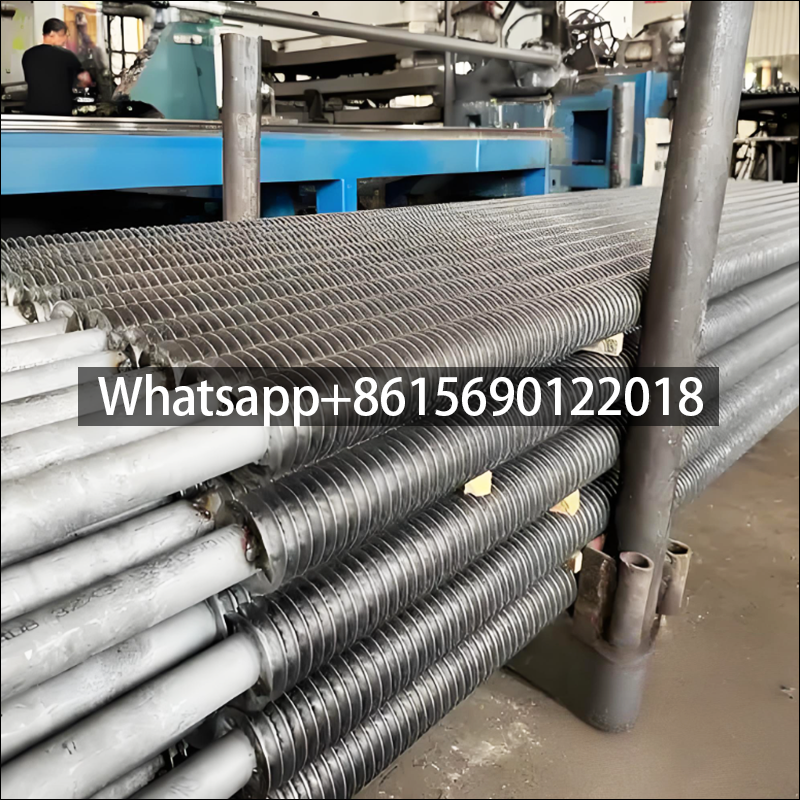
High-Frequency Welded Steel Fin Tubes used in electromechanical manufacturing plants utilize seamless steel tubes as their base tubes, ensuring overall robustness and reliability. Designed for practicality and durability, these fin tubes can withstand long-term use in complex industrial environments.
The core function of high-frequency welded steel fin tubes is to enhance heat transfer efficiency. By adding fins to the outer surface of the tube, the heat transfer area is effectively expanded, thereby improving overall heat exchange performance.
In practical applications, this design significantly accelerates heat transfer and is suitable for processes requiring rapid temperature increases or decreases.
In systems such as air heating and waste heat recovery, finned tubes efficiently transfer heat and reduce energy loss.
Specifically, the steel high-frequency welded finned tubes feature fins with a height of 12mm, a thickness of 0.8mm, and a pitch of 8mm. This optimal combination of parameters ensures sufficient heat transfer area while avoiding dust accumulation or clogging caused by overcrowding of the fins.
The fins are bonded to the base tube via high-frequency welding, ensuring a secure and uniform connection and efficient heat transfer from the base tube to the fins.
The base tube is seamless steel with no intermediate joints, further enhancing its overall mechanical strength and pressure resistance, making it suitable for applications requiring high safety.
High-frequency welding technology plays a key role in the production process. This process uses the heat generated by the high-frequency current to instantly fuse the fins to the base tube, forming a metallurgical bond.
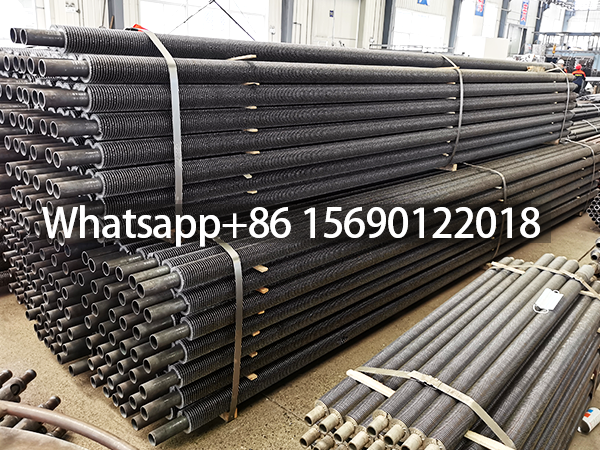
This bonding method is not only strong but also has low thermal resistance, facilitating rapid heat transfer. The entire production process emphasizes precision control, ensuring dimensional consistency and stable performance for each high-frequency welded steel fin tube.
From an application perspective, high-frequency welded steel fin tubes are suitable for a wide range of industrial applications.
For example, in the chemical industry, they are used for reactor temperature control; in the power industry, they serve as heat exchange units in waste heat boilers; and in HVAC systems, fin tubes are core components of air heaters. Their reliable structure enables stable operation in high-temperature and high-pressure environments, reducing maintenance requirements.
The material choice of high-frequency welded steel fin tubes also reflects their practicality. Steel inherently has excellent thermal conductivity and mechanical properties, and the seamless design further enhances the product’s durability.
In actual use, these fin tubes are resistant to certain corrosion and wear, extending the service life of equipment.
High-frequency welded steel fin tubes, with their efficient heat transfer and durability, have earned them a prominent place in the industrial heat exchange field. Through reasonable structural design and manufacturing process, it not only improves the heat exchange efficiency, but also adapts to diverse industrial needs.