


What are Finned Tubes?
Finned tubes are specialized heat exchanger components consisting of a base tube with extended metal surfaces (fins) attached to its exterior, drastically increasing surface area for improved thermal transfer. This makes them an ideal solution for heat transfer applications where space is limited, as they provide greater efficiency than ordinary tubes alone.Used to heat or cool air/gas, these tubes maximize efficiency in HVAC, industrial, and power plant applications.
What is the purpose of finned tubes?
The finned tubes increase the external surface area to enhance heat transfer, especially when the fluid outside the tube has a lower heat transfer coefficient than the fluid inside.
Finned Tubes Construction:
Base tubes are typically made of carbon steel, stainless steel, or copper, while fins are often aluminum or copper for high thermal conductivity.
Types of Fins: Common types include helical (wrapped), longitudinal, and embedded (G-fin).
Finned Tubes Manufacturing Methods:
Fins can be tension-wrapped, soldered, brazed, or extruded (integral) onto the base tube.
Finned Tubes Applications:
They are essential in air-cooled heat exchangers, refrigeration condensers, HVAC heaters, boiler economizers, and waste heat recovery units.
Types of Finned Tubes
Knurled Fin (KL): A specialized, high-efficiency type that bonds the fin to the base tube for improved heat transfer.
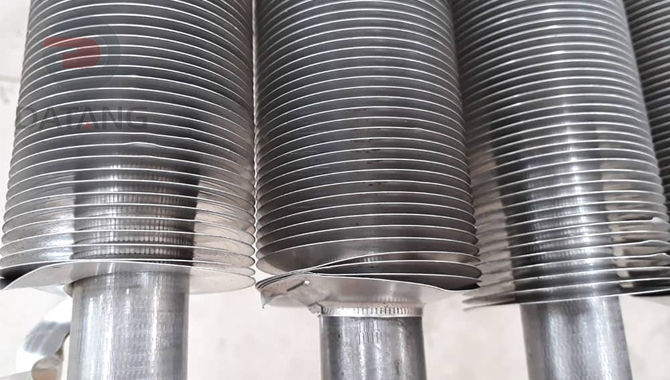
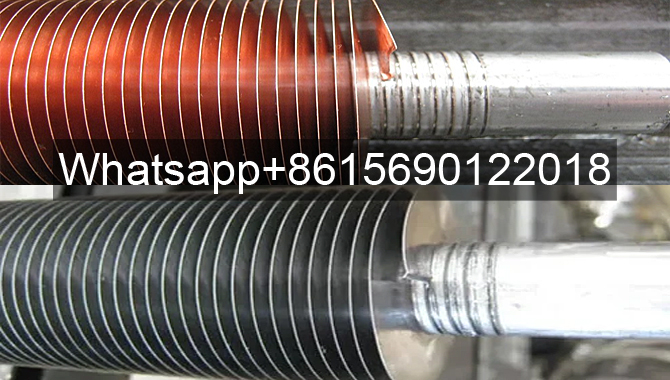
G-Fin (Embedded): Fins are wound into a groove machined on the tube surface and locked, allowing for high-temperature operations.
Extruded/Muff Fins: Fins are created by extruding a thicker aluminum sleeve to form the fins, creating a continuous, high-efficiency unit.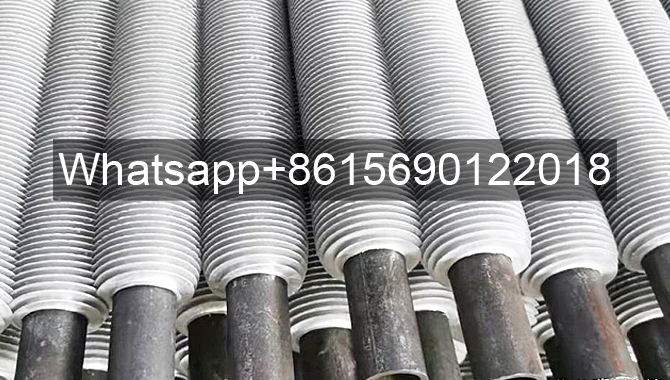
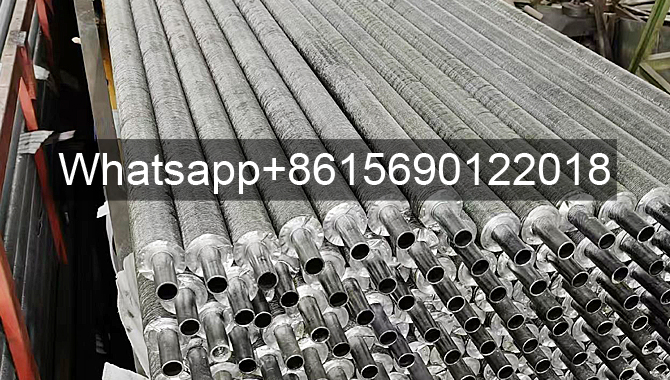
L-Foot/LL Fins: Fins are wrapped around the tube, with the base knurled or footed to provide a tight fit and improve thermal efficiency, suitable for temperatures up to 260°C.
Advantages Of Finned Tubes
Increase Heat Transfer Rate
A finned tube exchanger typically has tubes with fins attached to the outside. Usually, there will be some liquid flowing through the inside of the tubes and air or some other gas flowing outside the tubes, where the additional heat transfer surface area due to the finned tube increase the heat transfer rate. In a crossflow fin tube exchanger, the fins will typically be radial fins and they’ll either be circular or square in shape.
Improve Heat Transfer Coefficient
By not using a finned tube, the outside surface area is not significantly greater than the inside surface area. Because of which, the fluid with the lowest heat transfer coefficient will dictate the overall heat transfer rate. When the heat transfer coefficient of the fluid inside the tube is several times larger than that of the fluid outside the tube, the overall heat transfer rate can be greatly improved by increasing the outside surface area of the tube.
Increase Outside Surface Area
By having a finned tube in place, it increases the overall heat transfer rate. Finned tubes increase the outside surface area. This decreases the total number of tubes required for a given application which then, also reduces overall equipment size and can in the long-run decrease the cost of the project.
Versatility
Fin tube can be designed for a wide range of temperatures and pressures. They can be used in applications that require high or low temperatures, high or low pressures, or corrosive fluids. This versatility makes them suitable for a variety of industries, including petrochemical, HVAC, and power generation.
