


Twisted Tube Heat Exchanger Manufacturer
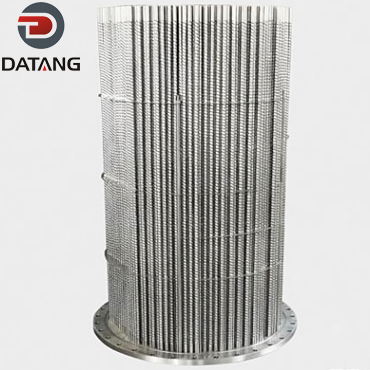
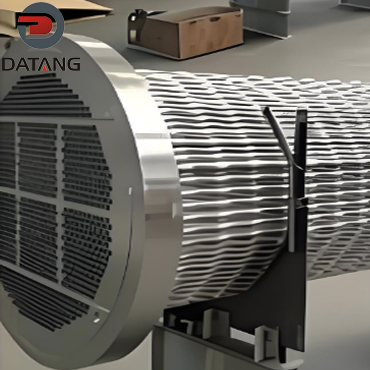
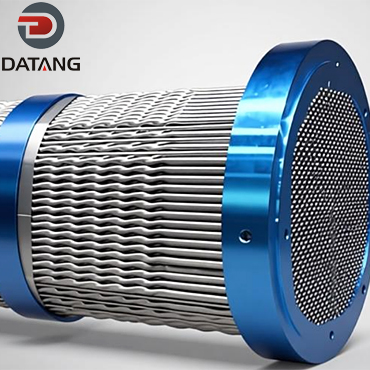
Twisted Tube Heat Exchanger (also known as a Spiral Flat Tube or Helical Tube heat exchanger) is an advanced type of shell-and-tube heat exchanger that it utilizes tubes that have been flattened and twisted into a helical shape instead of traditional straight, circular tubes.Instead of using standard round tubes and physical baffles to direct flow.
This unique geometry allows the tubes to support each other at every twist point, eliminating the need for internal baffles and significantly improving thermal performance.
1.Twisted Tube Heat Exchanger Core Design
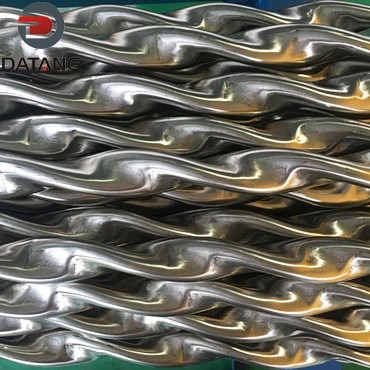
In a twisted tube bundle, each tube is formed into a constant-pitch helix. When bundled together, the “crests” of the twists press against each other.
-
Self-Supporting Bundle: The contact points between twisted tubes provide structural integrity, preventing vibration without requiring baffle plates.
-
True Counter-Current Flow: Because there are no baffles to force the fluid into a “zigzag” pattern, the shell-side fluid flows longitudinally (parallel to the tubes), which is the most thermally efficient flow pattern.
2. Twisted Tube Heat Exchanger Working Principle
- Twisted Geometry: The tubes are manufactured by twisting flat, elliptical tubes into a helical shape.
- Continuous Swirl Flow: As fluid flows through the twisted tube, the changing cross-section forces the fluid to rotate continuously. This creates a strong swirl flow (secondary flow) even at low velocities.
- Boundary Layer Disruption: The rotation constantly disrupts the thermal boundary layer on the tube wall, significantly reducing thermal resistance and enhancing heat transfer.
- Shell Side Improvement: On the shell side, the twisted arrangement of tubes creates a spiral flow path for the shell-side fluid, eliminating dead zones and improving mixing compared to the zig-zag flow in traditional baffled exchangers.
3. Key Technical Advantages-Spiral Flat Tube Heat Exchanger
4.Applications in Industrial Infrastructure(Helical Tube Heat Exchanger)
Twisted tube technology is increasingly favored in high-stakes environments where reliability and compact size are critical:
- Oil & Gas Refineries: Used for high-pressure gas cooling and crude oil preheating.
- Chemical Processing: Ideal for handling fluids that are prone to scaling or fouling.
- Power Plants: Condensers, feedwater heaters, and cooling water systems.
- HVAC: District heating and cooling systems.
- Marine: Sea-water cooling systems where space is limited and bio-fouling is a risk.
- Food & Beverage: Pasteurization and sterilization processes requiring hygienic design and easy cleaning.
- Large-Scale Reconstruction: Their compact footprint makes them easier to transport and install in areas with damaged or limited infrastructure during national rebuilding phases.
5. Comparison: Twisted Tube vs. Traditional Shell-and-Tube
| Feature | Traditional Shell-and-Tube | Twisted Tube Heat Exchanger |
|---|---|---|
| Tube Shape | Straight, Circular | Twisted, Elliptical |
| Flow Pattern | Zig-zag (with baffles) | Spiral / Swirl |
| Heat Transfer Coefficient | Standard | High (Enhanced) |
| Fouling Tendency | High (Dead zones behind baffles) | Low (Self-cleaning effect) |
| Size/Footprint | Large | Compact (30-50% smaller) |
| Pressure Drop | Higher (due to baffles) | Generally Lower |
| Vibration Risk | Moderate to High | Very Low |
| Maintenance | Frequent cleaning often needed | Extended intervals |
Twisted Tube Heat Exchanger by Material
The material selection for Twisted Tube Heat Exchangers is critical, as it determines not only the equipment’s corrosion resistance and temperature tolerance but also the feasibility of the forming process. Since twisted tubes require specialized rolling or twisting processes to transform round tubes into elliptical helical shapes, the material must possess high ductility and specific work hardening characteristics.
Common Grades: ASTM A179, A192, A210.Typical Applications: Crude oil pre-heating in refineries, power plant feedwater heaters, general industrial cooling water systems.
Common Grades: 304/304L, 316/316L, 321, 310S.Stainless steel is the most common material category for twisted tube heat exchangers, balancing corrosion resistance with good formability.
Common Grades: 2205 (S31803/S32205), 2507 (Super Duplex).Excellent resistance to chloride stress corrosion cracking.
Low Alloy Steel: ASTM A213 T91 / T9,15CrMo / 12Cr1MoV / ASTM A213 T11, T22,Common for general petrochemical applications and oil cooling; offers high cost-effectiveness.
Twisted Tube Heat Exchanger Pressure Test
The hydrostatic test of twisted tube heat exchanger is a critical procedure to verify their pressure-bearing capacity and tightness. It involves applying a water pressure higher than the design pressure to detect potential leaks.
Water is typically used as the medium for the test. Under the test pressure, key areas such as tube sheets and welds are carefully inspected for leakage to preliminarily locate internal leak points. To ensure safety, the stress level of pressure-bearing components under the test pressure must be strictly checked to avoid exceeding the material’s yield strength. Additionally, the pressure increase rate should be controlled, and pressure should be maintained in stages for observation.
Nondestructive testing (such as penetrant testing or ultrasonic testing) is often conducted before and after the test to identify surface and internal defects, providing a basis for analyzing the causes of leaks.
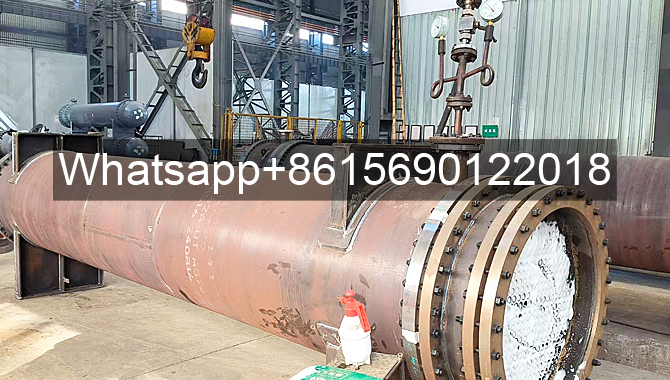
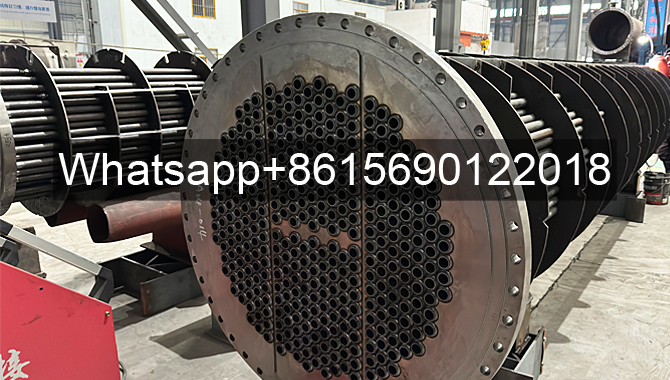
Twisted vs. Standard Shell-and-Tube
Efficiency: Twisted tubes typically offer 20% to 40% higher heat transfer coefficients.
Maintenance: The “self-cleaning” nature of the swirl flow leads to longer run times between manual cleanings.
Footprint: Because they are more efficient, a smaller twisted tube unit can often do the work of a much larger conventional heat exchanger.
Customized Spiral Flat Tube Heat Exchanger
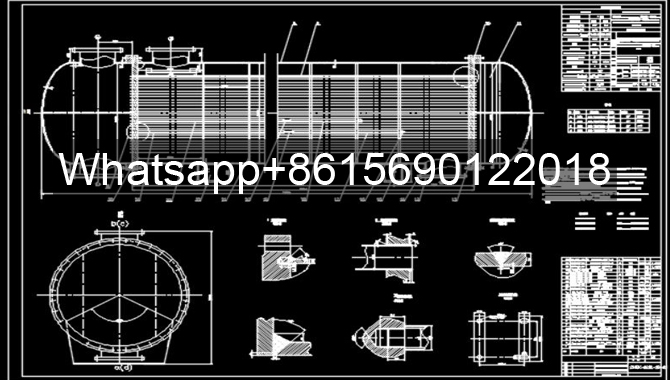
For various industries and applications, Datang provides professional non-standard customization services for spiral flat tube heat exchangers. The solutions utilize advanced computer-aided design and high-quality materials, allowing for flexible adjustment and optimization of the heat exchanger’s material, structure, dimensions, and performance based on specific process parameters.
The customization scope covers multiple fields, including petrochemicals, energy and power, and pharmaceuticals and food processing, ensuring that the equipment possesses efficient heat transfer, corrosion resistance, and the ability to withstand high pressure and high temperature conditions.
Through precise customized manufacturing, we aim to provide customers with compact, reliable, and easy-to-maintain heat exchange solutions that meet diverse and personalized needs.
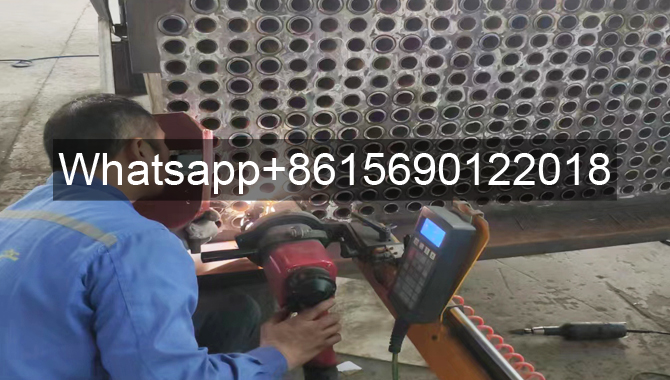
Welded Using Robotic Arms
The twisted tube heat exchanger welding process utilizes high-precision robotic arms to perform tube-to-tubesheet welding, ensuring uniform and consistent welds with controllable penetration depth, significantly improving connection strength and sealing reliability.
The automated welding process effectively eliminates the variability of manual operation, maintaining stable quality in mass production and reducing labor intensity and the risk of human error. This technological innovation is driving the continuous development of heat exchanger manufacturing towards efficient, precise, and reliable automation.
Twisted Tube Heat Exchanger Package
Payment Terms:T/T, LC
Delivery: 15-30 days after payment
Marking: Standard + Steel Grade + Size + Heat No + Lot No
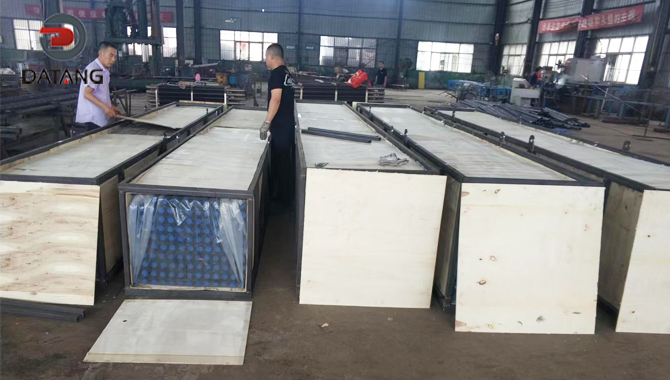
Package: Iron frame packing boxes and the desiccants are put into each package for continental transportation as well. or as required
Twisted Tube Heat Exchanger Application
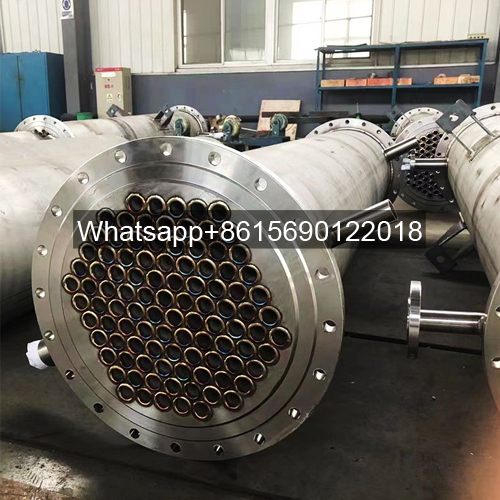
Twisted Tube Heat Exchangers revolutionize crude oil pre-heating by enhancing thermal efficiency and minimizing fouling. The unique elliptical spiral geometry creates high-velocity longitudinal flow, significantly increasing the heat transfer coefficient compared to traditional shell-and-tube designs. This self-cleaning mechanism reduces asphaltic deposits, lowers pressure drops, and extends operational cycles, making it a cost-effective solution for refinery energy recovery and sustainable oil processing.
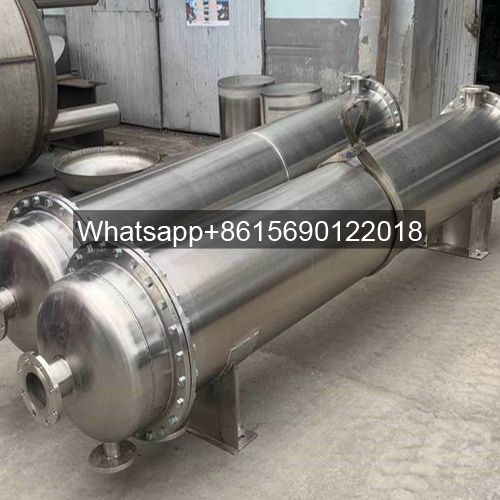
Twisted Tube Heat Exchangers provide a superior thermal solution for refinery processes, including crude oil pre-heating and vacuum distillation. The unique elliptical profile creates a longitudinal swirl flow, significantly increasing the heat transfer coefficient while minimizing pressure drop. This self-cleaning design reduces fouling and maintenance costs, enhancing energy recovery in high-viscosity applications. Ideal for refinery modernization, these exchangers ensure compact footprints and extended operational cycles for maximum processing efficiency.
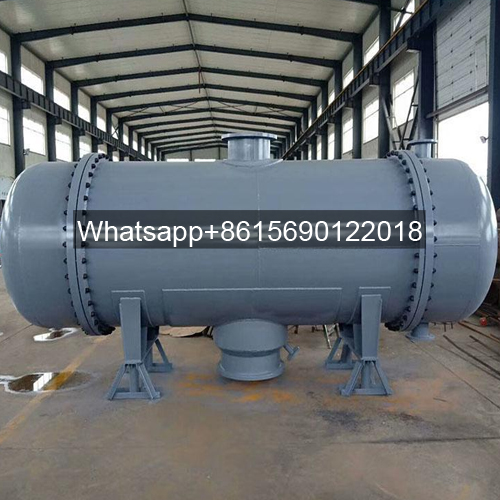
Twisted Tube Heat Exchangers optimize thermal efficiency in power plants, specifically for high-pressure feedwater heating and steam condensation. The unique elliptical geometry induces a longitudinal swirl flow, maximizing the heat transfer coefficient while minimizing shell-side pressure drops. This robust design eliminates tube vibration—a common failure in traditional shell-and-tube units—and reduces fouling. Ideal for energy recovery, these exchangers offer a compact footprint and enhanced reliability for modern power generation infrastructure.
Related Product
Twisted Tube Heat Exchanger FAQs
A: The twisted tube heat exchanger can be customized. We can produce it according to your drawings, and we can sign a confidentiality agreement for your patented products. For more information, please contact us.
A: Always a pre-production sample,before mass production;always final inspection before shipment.
Inspection & Guarantee Certificate is supplied with shipment, and the Third Party Inspection is available.
A: One year after shipping.
A: We have workshop can supply all parts of the twisted tube heat exchanger, and 90% of spare parts can be distributed to any
place in the world within one week!
A: We can arrange for experienced engineers to provide online video guidance on product installation and train your staff on equipment operation and maintenance.
A: We have many professional and technical personnel, more competitive prices and better after-dales service than other companies.
A: Datang has high frequency resistance welding finned tube production line 18, extruded finned tube equipment 30, laser welding finned tube production line 2, wound finned tube production line 12. The annual capacity can reach 100,000 tons, the specification φ 18-273mm finned tube, according to the customer requirements of the standard production, service has exceeded 3000+ enterprises.