


Shell and Tube Heat Exchanger Manufacturer and Supplier in China OEM Factory
What is a shell and tube heat exchanger?
Shell and tube heat exchangers, also known as tubular heat exchangers, are indirect contact heat exchangers that use the walls of a tube bundle enclosed in a shell as the heat transfer surface. This type of heat exchanger has a simple structure, low cost, wide flow cross-section, and is easy to clean; however, it has a low heat transfer coefficient and requires a large footprint. It can be manufactured from various structural materials (mainly metals) and can be used under high temperature and high pressure conditions, making it the most widely used type.
Basic components of shell and tube heat exchanger:
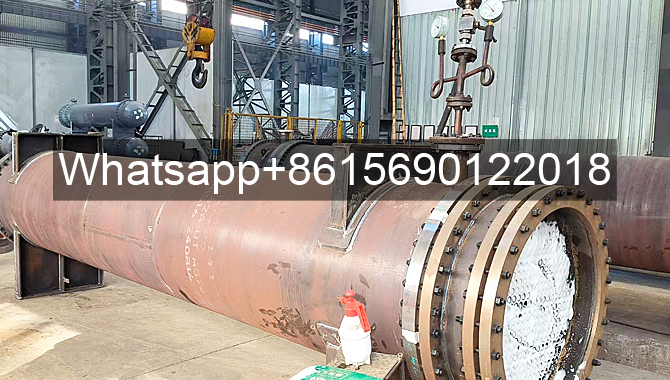
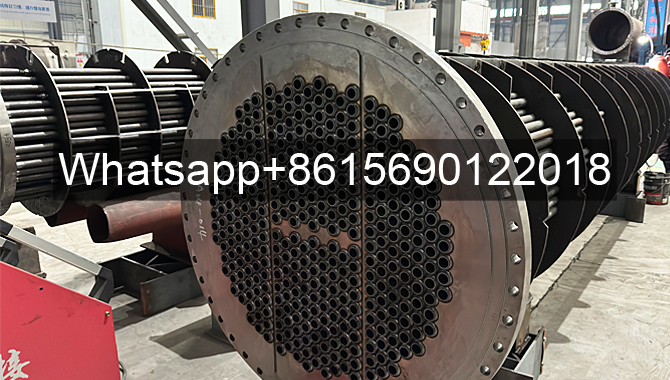
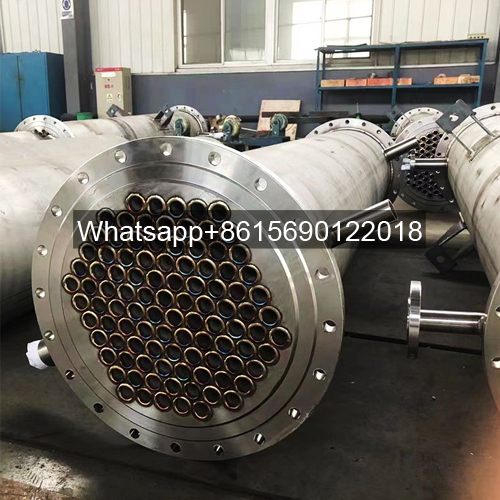
Shell-and-tube heat exchanger consists of components such as the shell, tube bundle, tube sheets, baffles (or flow deflectors), and tube boxes.
The shell is typically cylindrical and houses the tube bundle, with the tube bundle fixed at both ends to the tube sheets. The two fluids undergoing heat exchange flow through different paths: one flows inside the tubes (called the tube-side fluid), while the other flows outside the tubes (called the shell-side fluid). To enhance the heat transfer coefficient of the shell-side fluid, baffles are commonly installed inside the shell.
These baffles increase the velocity of the shell-side fluid and force it to flow in a prescribed path, repeatedly crossing the tube bundle transversely, thereby enhancing turbulence.
The heat exchanger tubes in the tube bundle can be arranged in either an equilateral triangular or square pattern. The equilateral triangular arrangement is more compact, resulting in higher turbulence of the shell-side fluid and a greater heat transfer coefficient. In contrast, the square arrangement facilitates easier cleaning of the tube exterior and is suitable for fluids prone to fouling.
Performance Comparison of Various Types of Shell and Tube Heat Exchanger
| Comparison Items | Floating Coil Heat Exchanger | Threaded Tube Heat Exchanger | Vortex Heat Transfer Film Heat Exchanger |
|---|---|---|---|
| Applicable Medium Types | Steam, Water | Steam, Water | Weakly Corrosive Chemical Raw Materials, Steam, Water |
| Medium Parameter Range | Temperature: 0-150°C Pressure: 0-1.0MPa |
Temperature: 0-150°C Pressure: 0-1.6MPa |
Temperature: -40-400°C Pressure: 0-10.0MPa |
| Thermal Efficiency | Thermal Efficiency = 92% | Thermal Efficiency = 93% | Thermal Efficiency = 96% |
| Anti-Scaling Performance | Automatic Scale Removal | Manual Scale Removal | Scale-Resistant |
| Vibration and Noise Resistance | Large Vibration, High Noise | Small Vibration, Low Noise | Minimal Vibration, Low Noise |
| Service Life | Approximately 7 Years | Approximately 10 Years | Approximately 20 Years |
| Maintenance | Shutdown Maintenance, Tube Bundle Replacement | Shutdown Maintenance, Tube Extraction and Re-expansion | Maintenance-Free |
Shell and Tube Heat Exchanger Compensation Measures
Shell-and-tube heat exchangers experience temperature differences between the shell and tube bundle due to varying fluid temperatures. When this difference is significant, thermal stresses arise, potentially causing tube bending, cracking, or detachment from the tube sheet. Thus, when the temperature difference exceeds 50°C, compensation measures are required to mitigate thermal stress. Based on compensation methods, shell-and-tube heat exchangers are classified into the following main types:
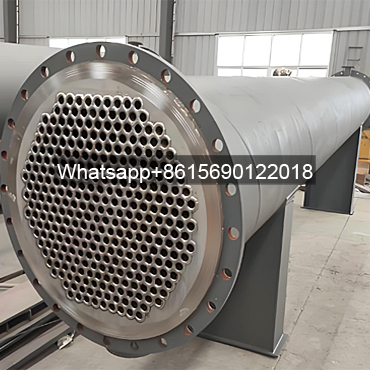
In fixed tubesheet heat exchangers,the tubesheets at both ends of the tube bundle are integrated with the shell.The structure is simple,it is only suitable for heat exchange operations where the temperature difference between the hot and cold fluids is not large,mechanical cleaning of the shell side is not required.
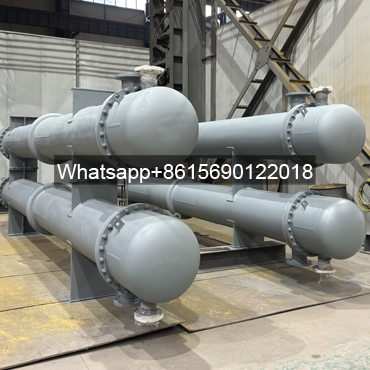
The tubesheet at one end of the tube bundle can float freely, completely eliminating thermal stress; and the entire tube bundle can be withdrawn from the shell, facilitating mechanical cleaning and maintenance. Floating head heat exchangers are widely used, but the structure is more complex and the cost is higher.
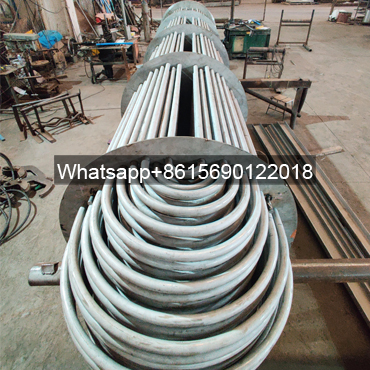
Each heat exchange tube is bent into a U-shape, with both ends fixed in the upper and lower sections of the same tubesheet, separated into inlet and outlet chambers by a baffle in the tube box. This type of heat exchanger completely eliminates thermal stress, and the structure is simpler than the floating head type, but the tube side is difficult to clean.
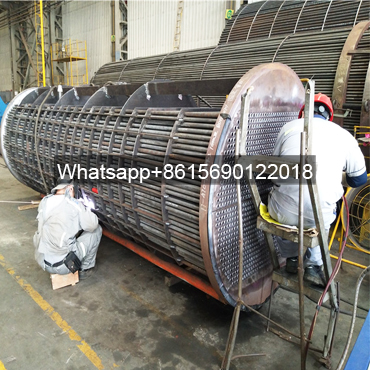
Tubular heat exchanger is a device that transfers thermal energy through the exchange of heat between hot and cold fluids flowing through a bundle of tubes. It mainly consists of a shell, tube bundle, tube sheets, and baffles, with the tube bundle being the core component.
Shell and Tube Heat Exchanger By Material
The material classification of shell-and-tube heat exchangers is primarily based on the material characteristics of key components such as the shell, tube sheet, and heat exchange tubes, in order to adapt to different process conditions such as temperature, pressure, and corrosiveness.
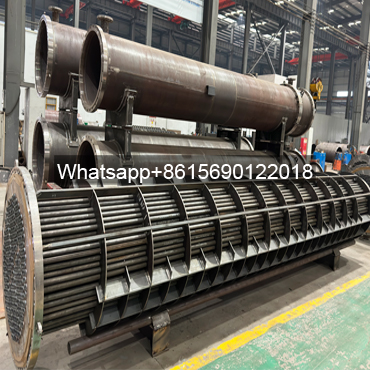
Carbon steel and low-alloy steel shell and tube heat exchangers: Suitable for general industrial applications, with lower cost, but poor corrosion resistance.
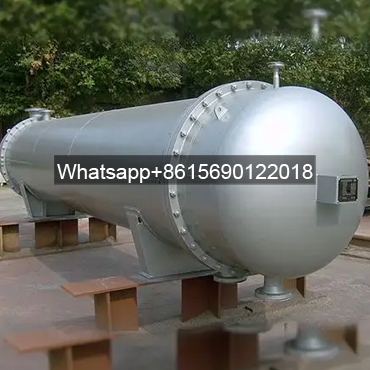
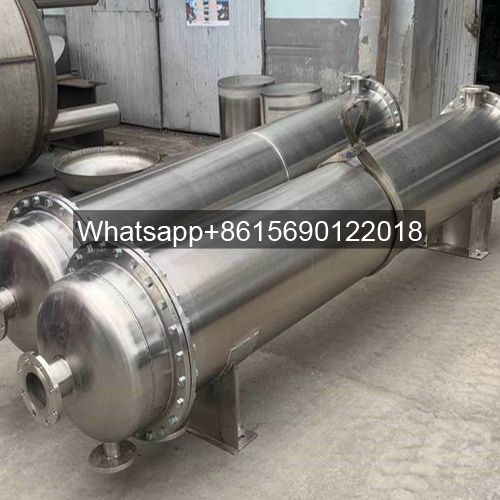
Stainless steel shell and tube heat exchangers: Possess good corrosion resistance and mechanical strength, suitable for moderately corrosive environments.
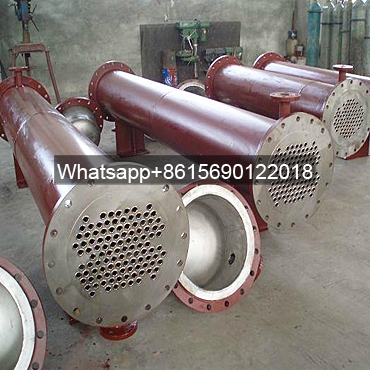
Titanium alloy shell and tube heat exchangers: Possess excellent corrosion resistance, especially suitable for chloride ion environments or strong oxidizing media.
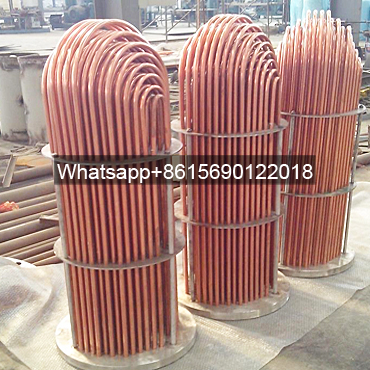
Copper alloy (such as brass, nickel-copper alloy) shell and tube heat exchangers: Good corrosion resistance, often used in seawater cooling and other applications.
Shell and Tube Heat Exchanger Pressure Test
The hydrostatic test of shell-and-tube heat exchangers is a critical procedure to verify their pressure-bearing capacity and tightness. It involves applying a water pressure higher than the design pressure to detect potential leaks.
Water is typically used as the medium for the test. Under the test pressure, key areas such as tube sheets and welds are carefully inspected for leakage to preliminarily locate internal leak points. To ensure safety, the stress level of pressure-bearing components under the test pressure must be strictly checked to avoid exceeding the material’s yield strength. Additionally, the pressure increase rate should be controlled, and pressure should be maintained in stages for observation.
Nondestructive testing (such as penetrant testing or ultrasonic testing) is often conducted before and after the test to identify surface and internal defects, providing a basis for analyzing the causes of leaks.
Shell and Tube Heat Exchanger Features:
1. High efficiency and energy saving, with a heat transfer coefficient of 6000-8000 W/m²·°C.
2. Made entirely of stainless steel, ensuring a long service life of over 20 years.
3. Converts laminar flow to turbulent flow, improving heat exchange efficiency and reducing thermal resistance.
4. Fast heat exchange speed, resistant to high temperatures (400℃) and high pressure (2.5 MPa).
5. Compact structure, small footprint, lightweight, easy installation, saving on civil engineering costs.
6. Flexible design, complete specifications, strong practicality, and cost-effective.
7. Wide range of applications, suitable for a wide range of pressures, temperatures, and various media heat exchange.
8. Low maintenance costs, easy operation, long descaling cycle, and convenient cleaning.
Customized Shell and Tube Heat Exchanger
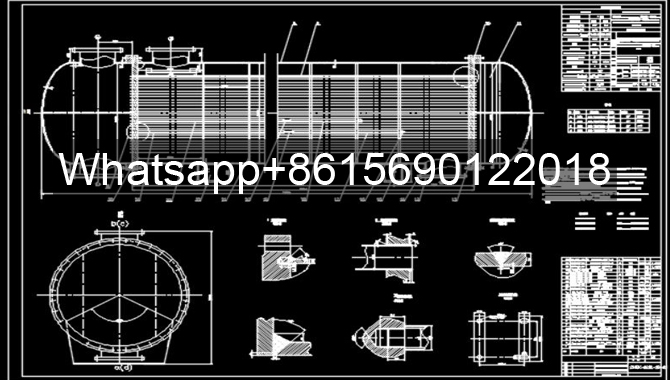
For various industries and applications, Datang provides professional non-standard customization services for shell and tube heat exchangers. The solutions utilize advanced computer-aided design and high-quality materials, allowing for flexible adjustment and optimization of the heat exchanger’s material, structure, dimensions, and performance based on specific process parameters.
The customization scope covers multiple fields, including petrochemicals, energy and power, and pharmaceuticals and food processing, ensuring that the equipment possesses efficient heat transfer, corrosion resistance, and the ability to withstand high pressure and high temperature conditions.
Through precise customized manufacturing, we aim to provide customers with compact, reliable, and easy-to-maintain heat exchange solutions that meet diverse and personalized needs.
Welded Using Robotic Arms
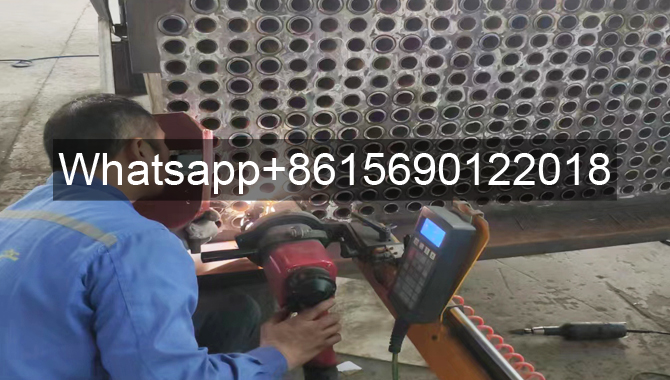
The shell-and-tube heat exchanger welding process utilizes high-precision robotic arms to perform tube-to-tubesheet welding, ensuring uniform and consistent welds with controllable penetration depth, significantly improving connection strength and sealing reliability.
The automated welding process effectively eliminates the variability of manual operation, maintaining stable quality in mass production and reducing labor intensity and the risk of human error. This technological innovation is driving the continuous development of heat exchanger manufacturing towards efficient, precise, and reliable automation.
Fin Fan Cooler Package
Payment Terms:T/T, LC
Delivery: 15-30 days after payment
Marking: Standard + Steel Grade + Size + Heat No + Lot No
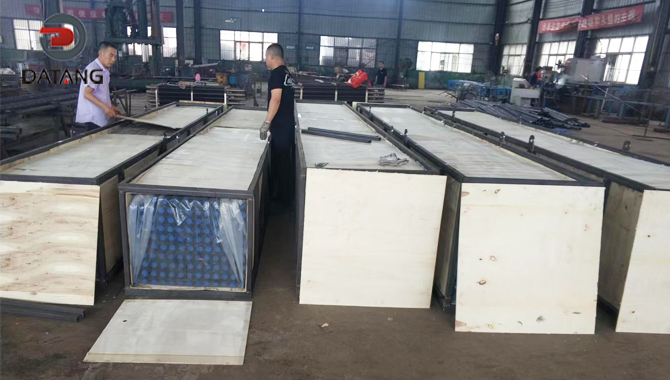
Package: Iron frame packing boxes and the desiccants are put into each package for continental transportation as well. or as required
Shell and Tube Heat Exchanger Application
The shell-and-tube heat exchanger is a key equipment in refineries for heating crude oil, cooling refined products, and recovering waste heat. It realizes heat exchange between two fluids through the tube wall, featuring advantages such as high heat transfer efficiency, resistance to high pressure, high temperature, and corrosion.
In the field of Bio-refinery, shell-and-tube heat exchangers are mainly used for biodiesel wastewater treatment, heating and cooling of process fluids, and waste heat recovery. They feature a simple structure and convenient manufacturing, and can adapt to wastewater treatment scenarios with large flow rates and high temperatures. Heat exchange is achieved by passing wastewater through the tube side and cooling medium through the shell side. Meanwhile, they can recover heat from wastewater to preheat raw material water, reducing steam consumption, thus having both economic benefits and environmental value.
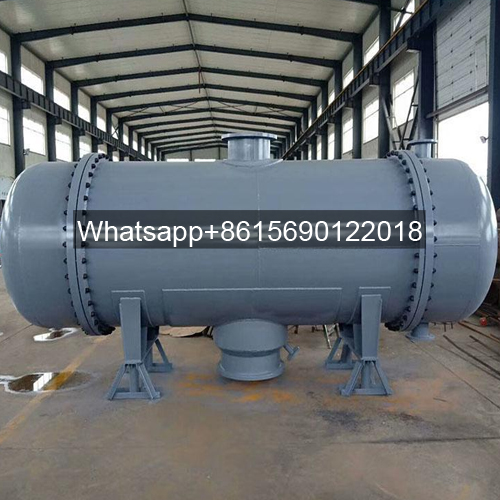
Floating crude oil heat exchangeris one end of the tubesheet is fixed to the shell while the other one can “float” freely inside theshell. Floating head heat exchangeris widely used for the service where the temperature is high between the shell and tubebundle, or the dirty service, like the petroleum refinery.
Related Product
Shell and Tube Heat Exchanger FAQs
A: The shell and tube heat exchanger can be customized. We can produce it according to your drawings, and we can sign a confidentiality agreement for your patented products. For more information, please contact us.
A: Always a pre-production sample,before mass production;always final inspection before shipment.
Inspection & Guarantee Certificate is supplied with shipment, and the Third Party Inspection is available.
A: One year after shipping.
A: We have workshop can supply all parts of the shell and tube heat exchanger, and 90% of spare parts can be distributed to any
place in the world within one week!
A: We can arrange for experienced engineers to provide online video guidance on product installation and train your staff on equipment operation and maintenance.
A: We have many professional and technical personnel, more competitive prices and better after-dales service than other companies.
A: Datang has high frequency resistance welding finned tube production line 18, extruded finned tube equipment 30, laser welding finned tube production line 2, wound finned tube production line 12. The annual capacity can reach 100,000 tons, the specification φ 18-273mm finned tube, according to the customer requirements of the standard production, service has exceeded 3000+ enterprises.