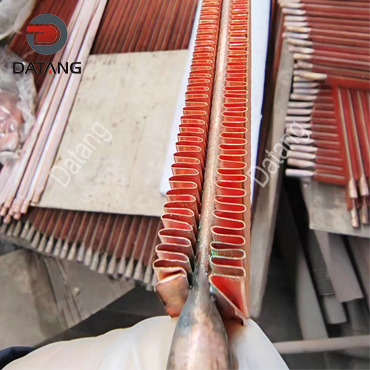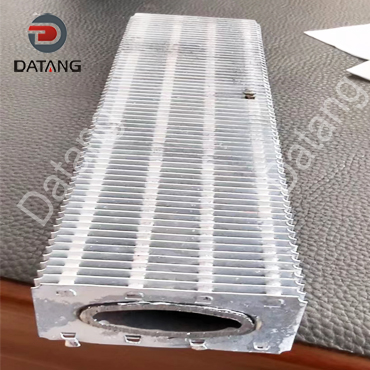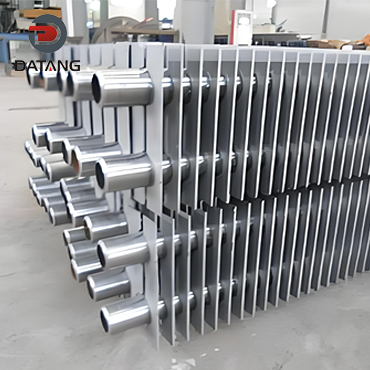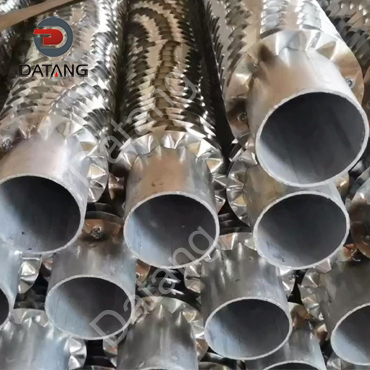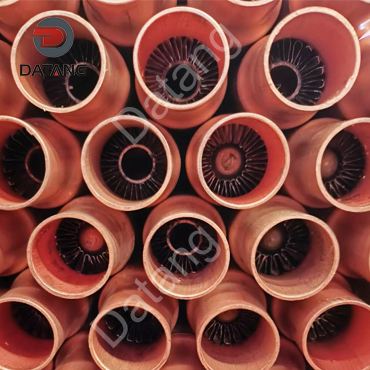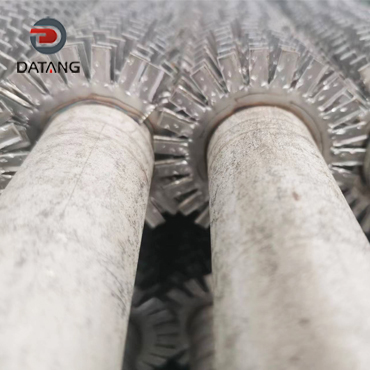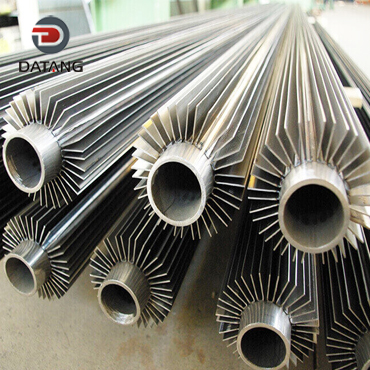


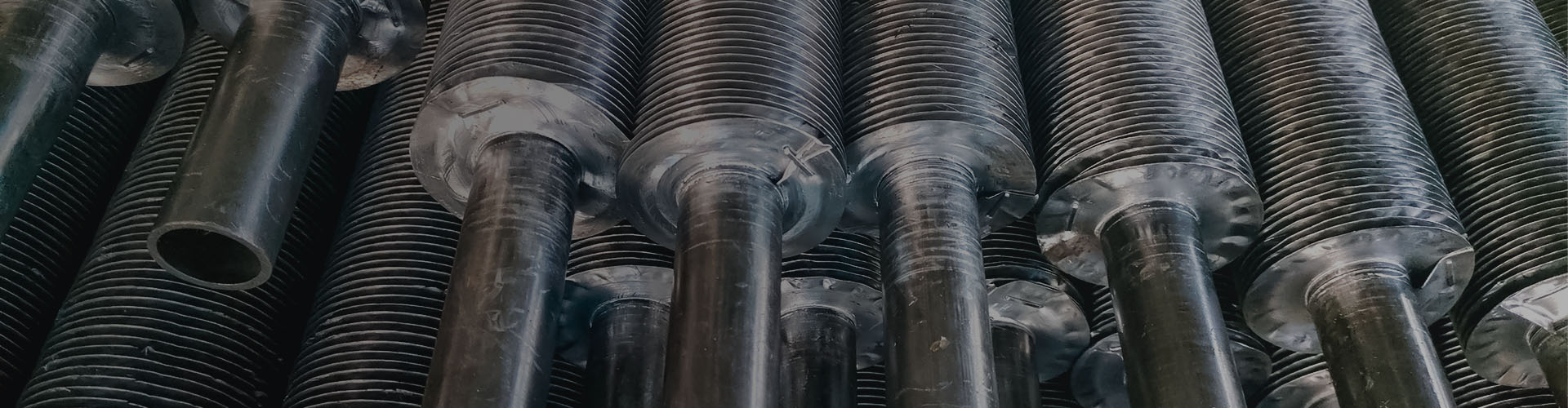
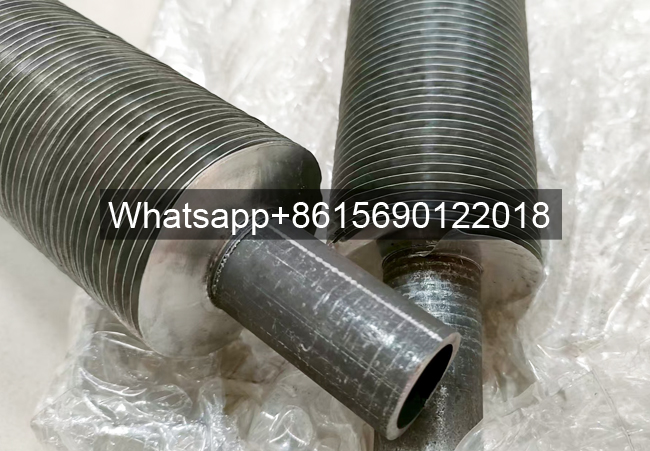
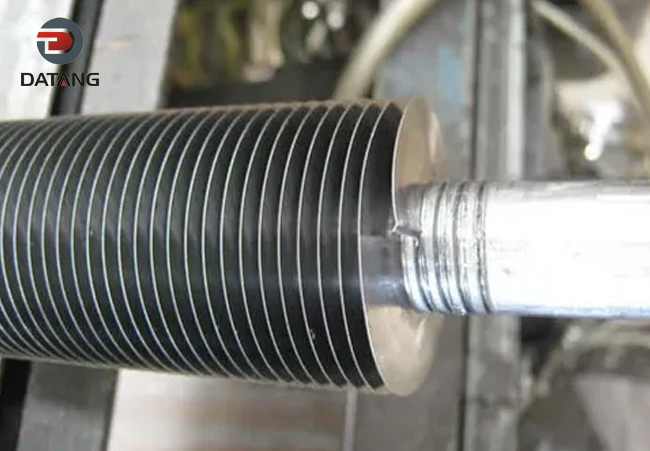
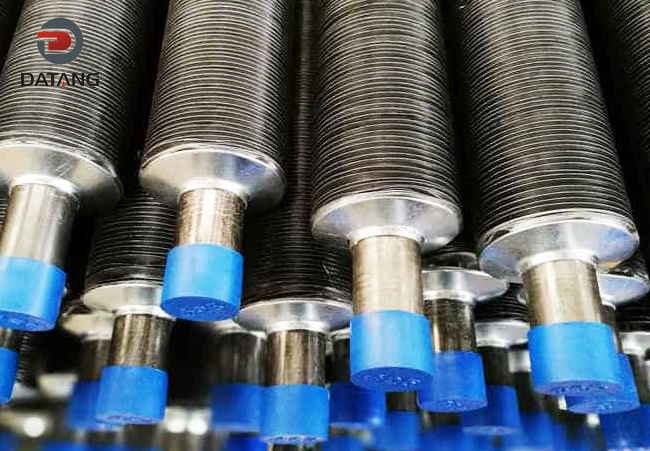
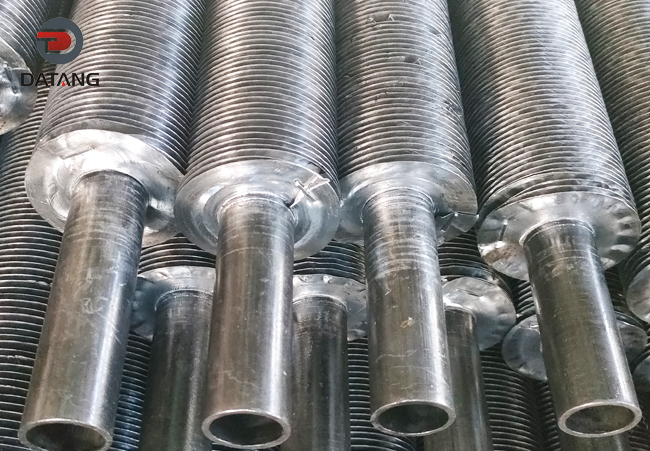
Metallic Heat Transfer Finned Tube G Fins
A metallic heat transfer finned tube is a heat transfer element that significantly expands the heat exchange area by adding fins to the surface of a metal base tube, aiming to enhance heat exchange efficiency.
- Tube Material:Stainless steel,Tube Diameter:15.88-50.80 mm,Wall Thickness:1.0-3.0 mm
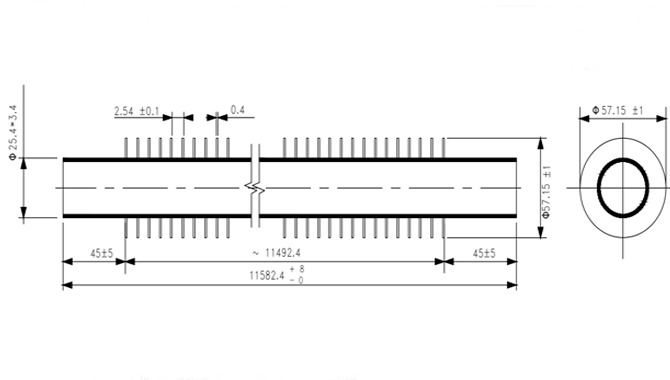
- Fin Material:Aluminum,Fin Thickness:0.4-0.5 mm,Fin Pitch:2.1-6.0 mm,Fin Height:6.35-25.4 mm
Metallic Heat Transfer Finned Tube G Fins
The core principle of a metallic heat transfer finned tube is to increase the heat transfer rate between media such as gas-to-gas, gas-to-liquid, or liquid-to-liquid by expanding the surface area through fins.
A metallic heat transfer finned tube typically consists of two parts: a base tube and fins. The material of the base tube needs to be selected according to the operating conditions, commonly carbon steel, stainless steel (such as 304/316L), or copper alloy, to meet the requirements of pressure resistance, temperature resistance, or corrosion resistance; the fin material is mostly aluminum, carbon steel, or stainless steel. Aluminum fins have excellent thermal conductivity, carbon steel fins have high strength, and stainless steel fins have strong corrosion resistance. Fin shapes are diverse, including spiral, annular, and serrated, with spiral fins being the most widely used due to their uniform heat transfer and low fluid resistance.
The manufacturing processes for metallic heat transfer finned tubes mainly include inlaying, welding (such as high-frequency resistance welding and brazing), and rolling composite processes. Different processes affect the tightness and durability of the bond between the fins and the base tube.
Metallic heat transfer finned tubes are widely used in industrial fields, such as economizers and air preheaters in boilers, waste heat recovery systems in chemical processes, and industrial radiators. Their advantages include high-efficiency heat transfer (heat transfer coefficient can reach 150-400 W/(m²·K)), strong weather resistance (suitable for high-temperature, corrosive, or abrasive environments), and compact structure.
G-type finned tubes are heat exchange elements that enhance heat transfer by machining a specific structure on the surface of a base tube and inlaying fins. The core manufacturing process of G-type finned tubes involves pre-machining equidistant spiral grooves or channels into a steel tube, then embedding aluminum strips (or steel strips) within these channels. Rolling is then used to firmly bond the fins to the base tube, creating a structure with high heat transfer efficiency.
The embedded finned tube design significantly increases the heat exchange surface area, typically several to tens of times larger than that of a bare tube, thereby enhancing heat conduction and reducing fluid resistance.
Its embedded connection ensures tight contact between the fins and the base tube, effectively reducing contact thermal resistance. It also possesses high-temperature resistance and mechanical shock resistance, allowing for media operating temperatures up to 400℃. However, its corrosion resistance is relatively weak, making it suitable for operating conditions with temperatures not exceeding 150℃.
- Datasheet
- Drawing
- Certificates
| Tube Material | Wall Thickness | Tube Diameter | Tube Length |
| All types | From 1.0 to 3.0 mm | 15.88 / 50.80 mm | Max. 18500 mm |
| 0.039 in to 0.118 in | 0.625 / 2 in | 728 in | |
| Fin Strip Material | Fin Strip Thickness | Fin Pitch | Production Capacity |
| Aluminum/Copper | From 0.4 to 0.5 mm | From 2.1 to 3.0 mm | 12000 m per day |
| From 0.015 to 0.019 in | From 8 to 11 fins/inch |

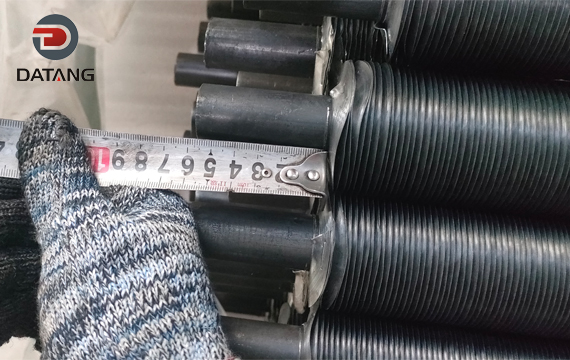
Metallic Heat Transfer Finned Tube G Fins Appearance Dimension Inspection
Metallic heat transfer finned tube G fins appearance dimension inspection is one of the important links to ensure the quality and performance of fin tubes.
The inspection items mainly include fin height, fin spacing, fin thickness, base tube wall thickness and outer diameter, etc.
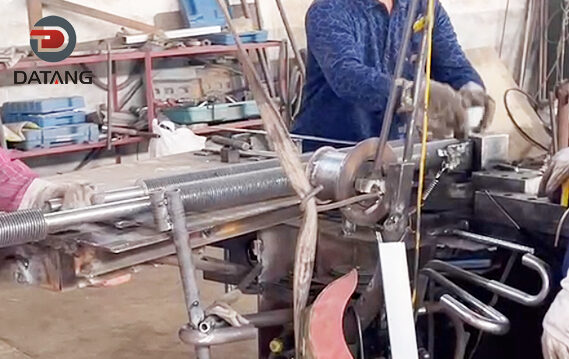
Datang Metallic Heat Transfer Finned Tube G Fins Bending Processing
Bending of fin tubes is an important step in the production process of metallic heat transfer finned tube G fins. Bending is to bend the embedded fin tube material through specific mechanical equipment to form a suitable curvature to meet different usage requirements.
This step requires strict control of the bending angle and curvature to ensure the fit between the fin and the base tube and the heat dissipation effect.
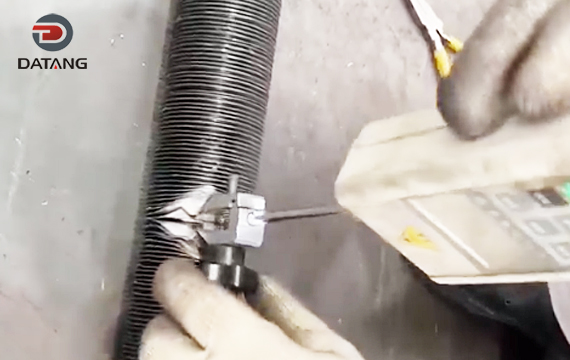
Metallic Heat Transfer Finned Tube Pull Off Test
G type embedded finned tube pull-off test is a test used to detect whether the fin tube will fall off when subjected to tension, mainly used to ensure the quality and reliability of the fin tube.
Datang’s this test is very important in the production process because the g type finned tubes will be subjected to various stresses during operation, such as temperature changes and pipe expansion, which may cause the fin to fall off, thereby affecting the performance and safety of the heat exchanger .