

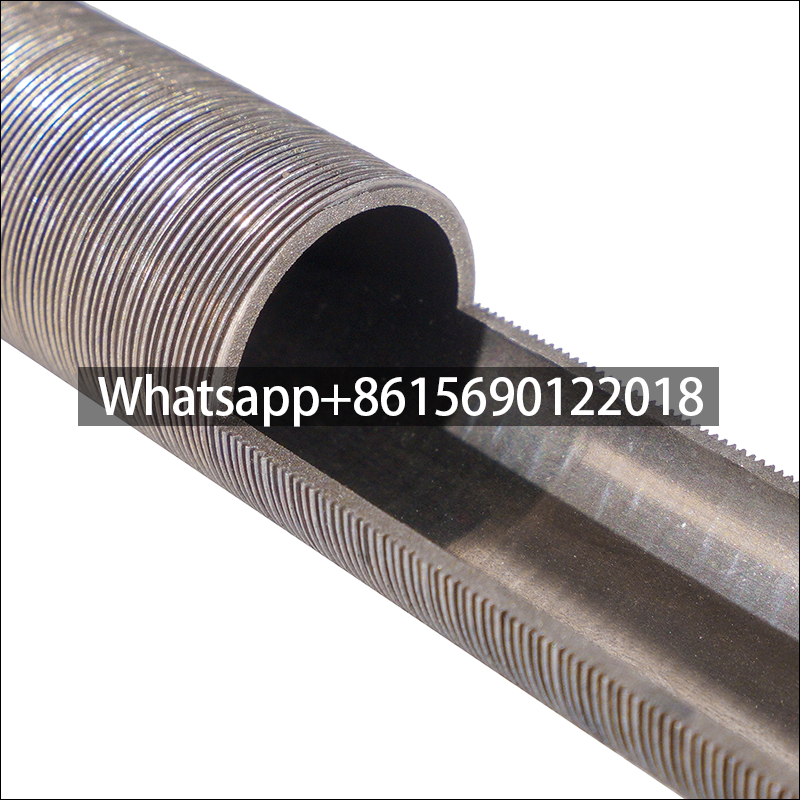
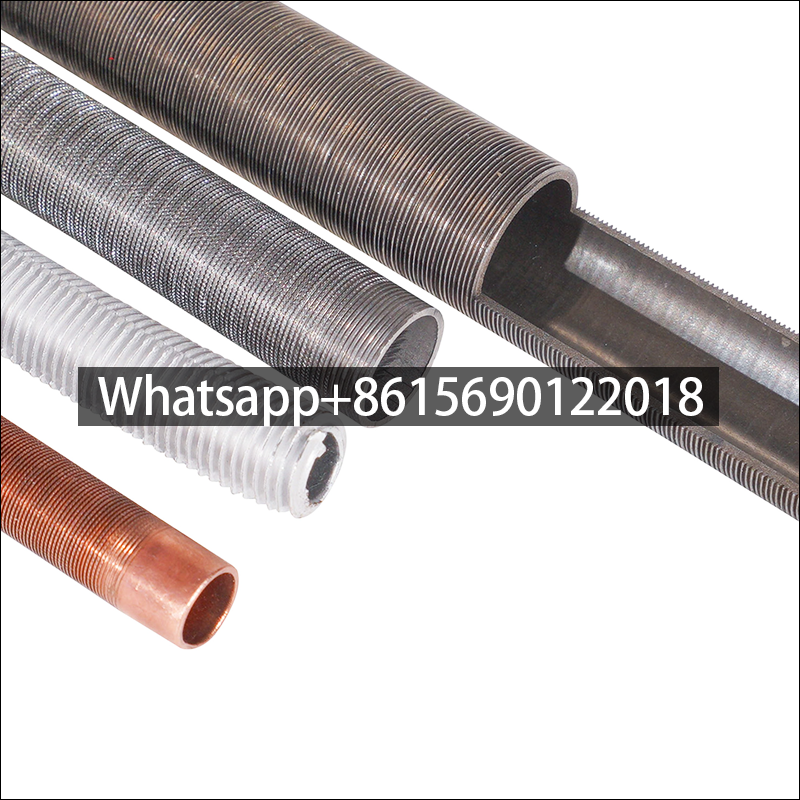
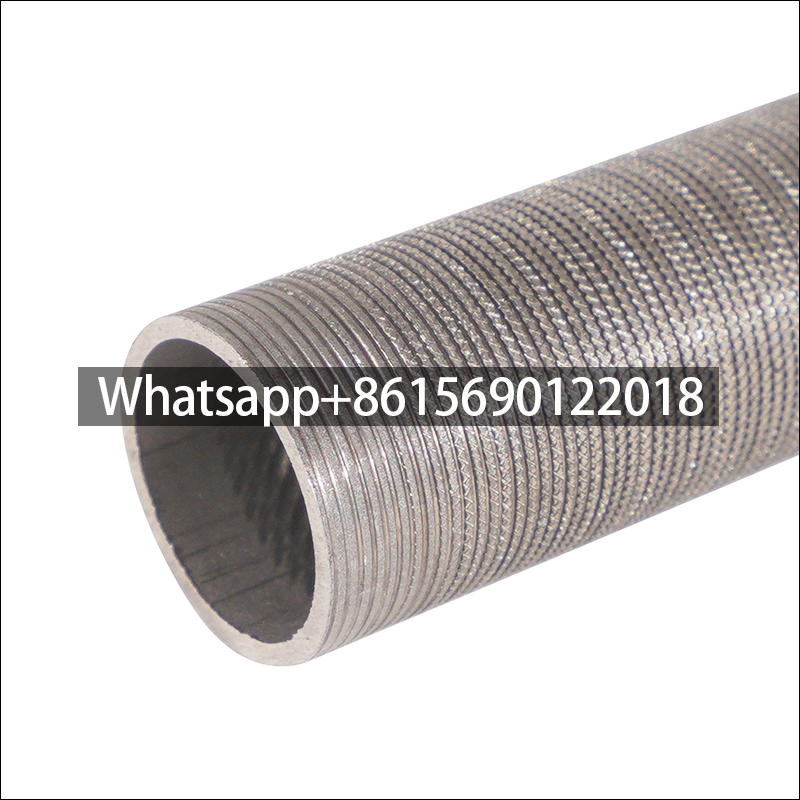
Integral Internal Grooved Low Finned Tubes for Condenser
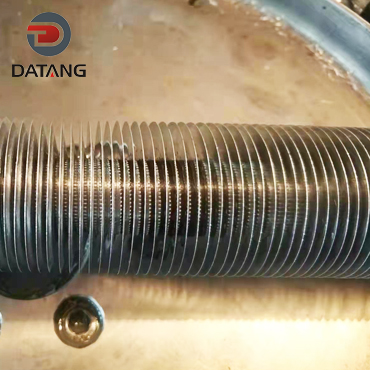
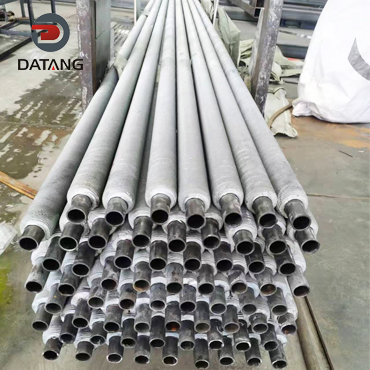
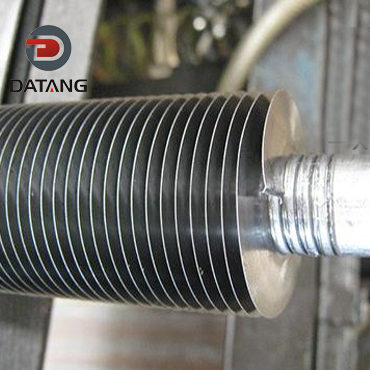
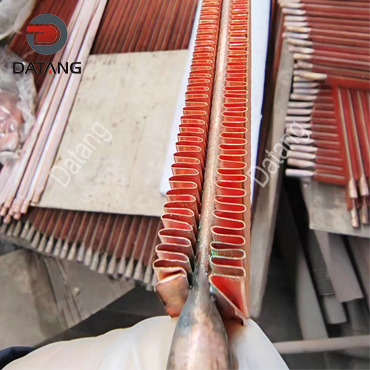
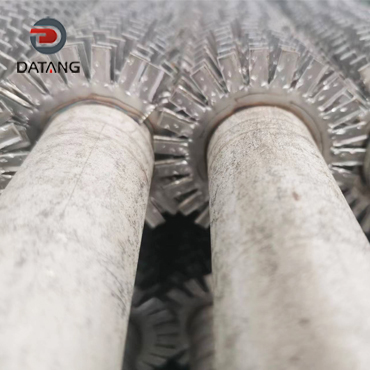
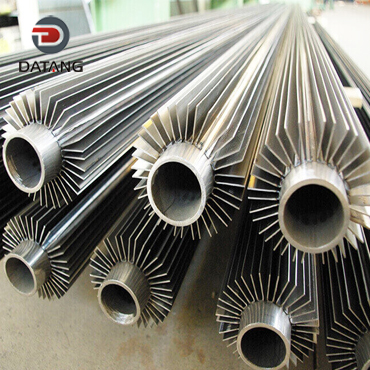
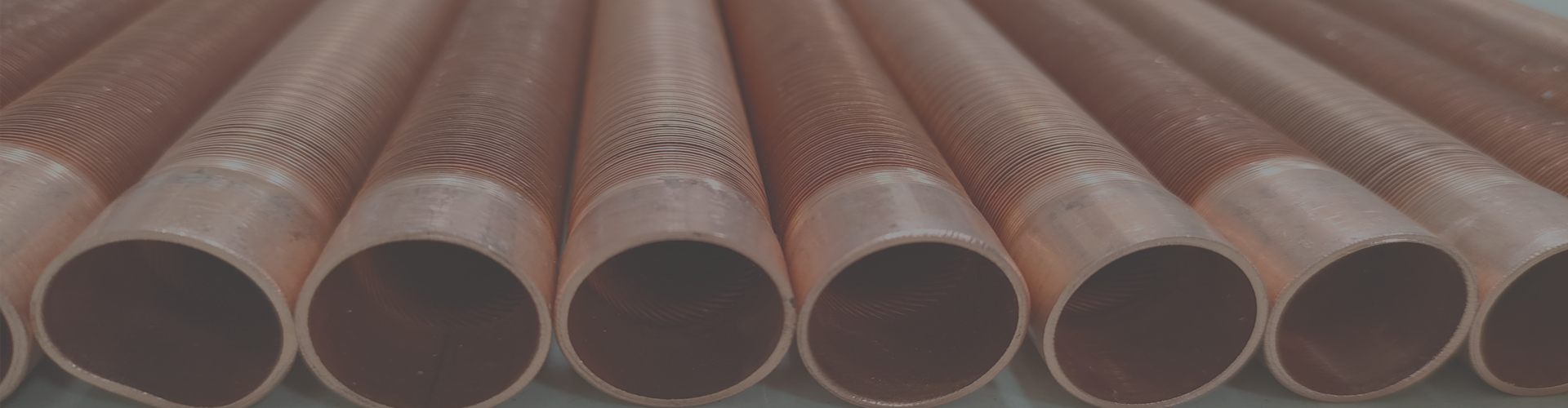
Integral finned tubes, also known as low-finned tubes or internally grooved tubes, are reinforced tubes. Fins are typically added to the surface of the heat exchange tube to increase its external (or internal) surface area, thereby improving heat transfer efficiency.
- Standard:ASTM B359/ASME SB 359 Material:Red Copper T2/TP2,Cupronickel B7,Copper Nickel Iron Alloy BFe 10-1-1,BFe 30-1-1,Complex Brass Hsn 70-1,HA177-2,Carbon Steel,Stainless Steel,Titanium
- Base Tube OD:12-25.4mm ;Base Tube Thickness:1-1.5mm ;Fin Height:Max 1.45mm ;FPI:19-50 ;Length:Max 20m
Application of Integral Internal Grooved Low Finned Tubes in Condensers
Integral finned tubes, also known as low-finned tubes or internally grooved tubes, are reinforced tubes. Fins are typically added to the surface of the heat exchange tube to increase its external (or internal) surface area, thereby improving heat transfer efficiency.
A condenser is a component of an air conditioning system that quickly transfers heat from the tubes to the surrounding air. Most cars have condensers located in front of the radiator. It is a device that converts gas or vapor into liquid.
Power plants use numerous condensers to condense turbine exhaust steam; refrigeration plants use condensers to condense refrigerant vapors such as ammonia and Freon. In the petrochemical industry, condensers are used to condense hydrocarbons and other chemical vapors. In distillation, the device that converts vapor into liquid is called a condenser. All condensers operate by removing heat from gas or steam.
Commonly used heat transfer finned tubes in condensers
The heat transfer process is the process of heat being transferred from one fluid to another through a solid wall. The heat transfer performance of the heat exchanger is mainly enhanced by enhancing the convective heat transfer process between the media on both sides and the inner and outer walls of the heat exchange tube.
Commonly used heat transfer enhancement technologies include:
(1) surface coating;
(2) rough surface;
(3) extended surface;
(4) various internal and external threaded tubes;
(5) turbulent elements;
(6) additives;
(7) impact heat transfer.
Application of Integral Internal Grooved Low Finned Tubes
Among various heat transfer enhancement technologies, adding fins to the wall is a major means of enhancing heat transfer and is widely used in engineering. Finned tube heat exchangers have the characteristics of high efficiency heat transfer and compact structure. They have been widely used in various fields such as refrigeration and air conditioning equipment, aerospace equipment, solar collectors and electronic equipment. Their application in condensers is particularly common.
Types of Integral Finned Tubes in Condensers
1) Internally Threaded Tubes
2) Integral Spiral Finned Tubes
3) Spirally Grooved Tubes
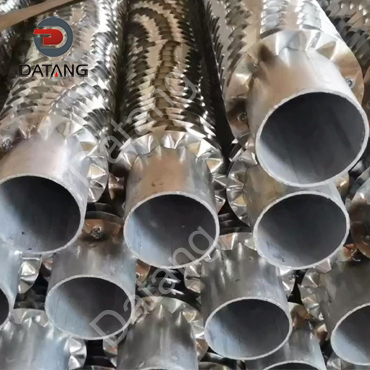
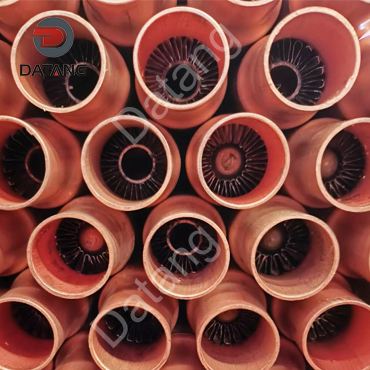
Integral Internal Grooved Low Finned Tubes for Condenser
The turbulence caused by the rough surface of Integral Internal Grooved Low Finned Tubes destroys the static boundary layer, making it difficult for dirt to adhere;
If dirt adheres, it will also appear in the form of discrete scales. The temperature change during equipment operation causes the tube to expand and contract, which will cause peeling due to the huge expansion difference between the dirt and the tube wall material, and will fall off by itself under the impact of the medium.
The scale layer of smooth tubes is cylindrical and has no self-detachment force. The fouling of Integral Internal Grooved Low Finned Tubes is not much more serious than that of smooth tubes.
- Datasheet
- Drawing
- Certificates
Data sheet of Integral Internal Grooved Low Finned Tubes
|
||||||||||||||||||||||||||||||||||||||||||||||||||||||||||||||||||||||||||||||||||||||||||
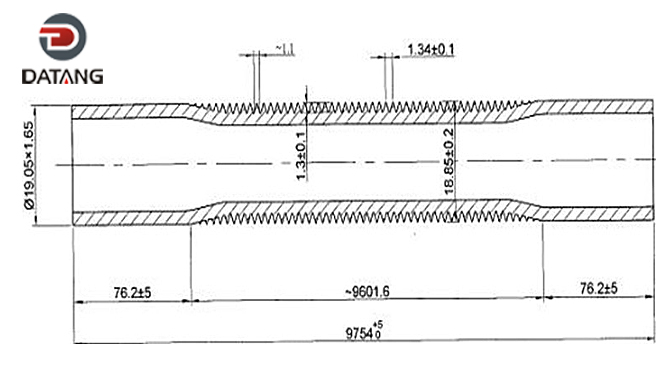

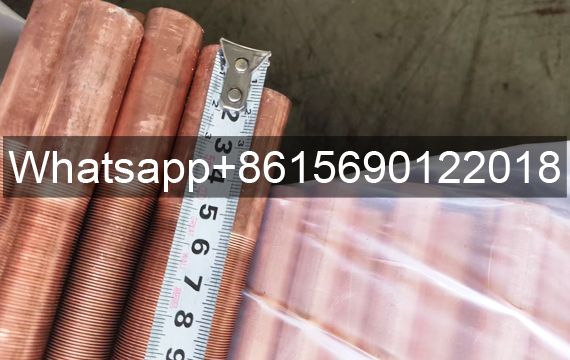
Integral Internal Grooved Low Finned Tubes Appearance Dimension Inspection
Integral Internal Grooved Low Finned Tubes appearance dimension inspection is one of the important links to ensure the quality and performance of fin tubes.
The inspection items mainly include fin height, fin spacing, fin thickness, base tube wall thickness and outer diameter, etc.
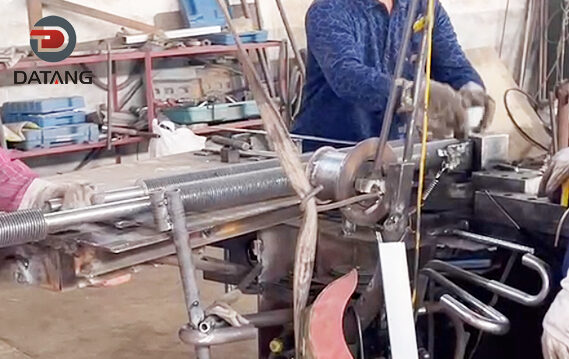
Datang Integral Finned Tubes Bending Processing
Bending of fin tubes is an important step in the production process of Integral Finned Tube. Bending is to bend the low finned tube material through specific mechanical equipment to form a suitable curvature to meet different usage requirements.
This step requires strict control of the bending angle and curvature to ensure the fit between the fin and the base tube and the heat dissipation effect.
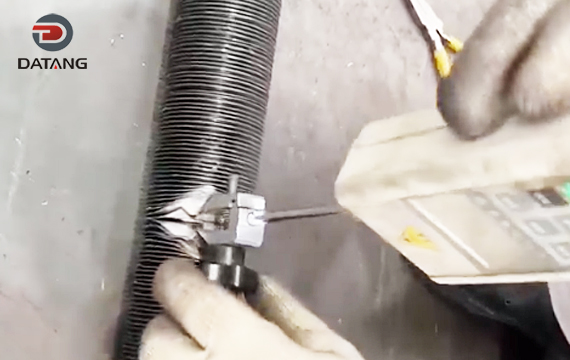
Integral Finned Tube Pull Off Test
Low finned tube for heat exchangers pull-off test is a test used to detect whether the fin tube will fall off when subjected to tension, mainly used to ensure the quality and reliability of the fin tube.
Datang’s this test is very important in the production process because the low finned tube for heat exchangers will be subjected to various stresses during operation, such as temperature changes and pipe expansion, which may cause the fin to fall off, thereby affecting the performance and safety of the heat exchanger .