

Crimped Fin Tube: Helical Tension Wound Spiral Fin Tubes for Heat Exchanger
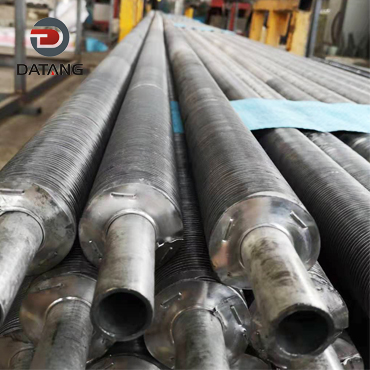
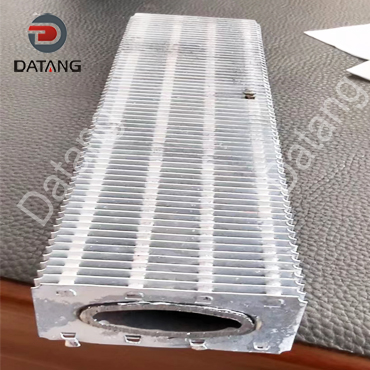
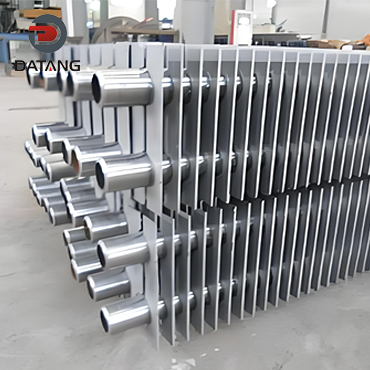
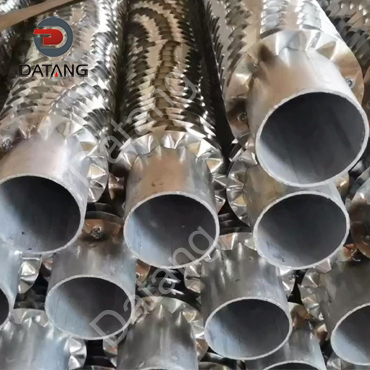
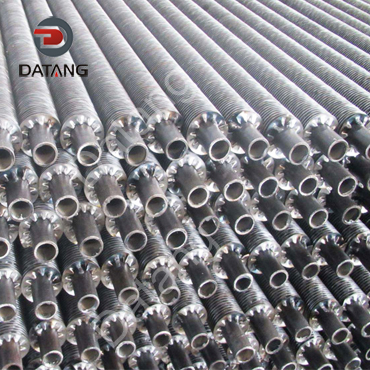
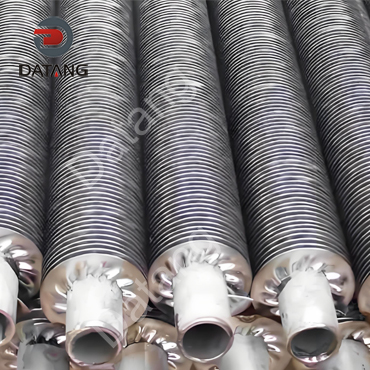
Helical tension wound spiral fin tubes is a heat exchange element. Fins are added to the outer surface of the heat exchange tube to increase the outer surface area of the heat exchange tube and improve the heat exchange efficiency.
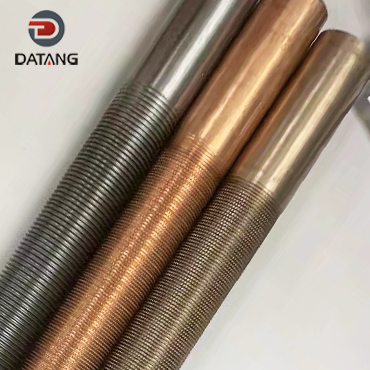
- Tube Material:Carbon Steel,Stainless Steel,Alloy Steel,Tube Diameter:16-273 mm,Wall Thickness:2.0-15.0 mm
- Fin Material:Carbon Steel Strip,Stainless Steel Strip,Fin Thickness:0.5-3.0 mm,Fin Pitch:3.0-30.0 mm,Fin Height:8.0-35.0 mm
Helical Tension Wound Spiral Fin Tubes for Heat Exchanger
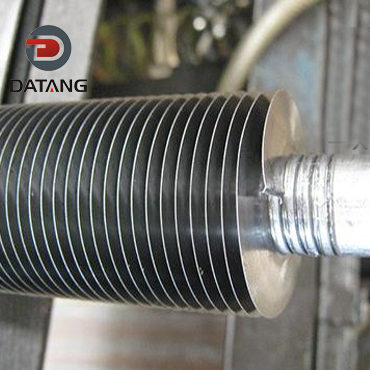
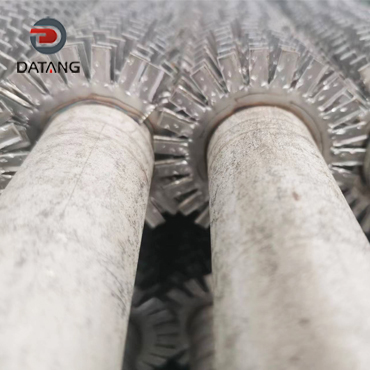
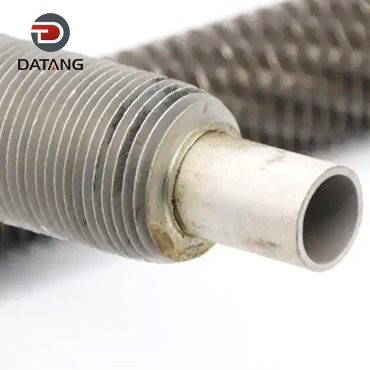
Helical tension-wound spiral fin tubes are highly efficient heat exchange components. They are formed by continuously wrapping a metal strip in a spiral pattern and affixing it to the surface of a base tube, creating a seamless fin structure. This process not only overcomes the performance limitations of traditional fin tubes but also demonstrates irreplaceable technological advantages in the energy, chemical, and HVAC industries.
High heat transfer performance is the core characteristic of helical tension-wound spiral fin tubes, stemming from maximizing heat transfer area and minimizing contact thermal resistance. Compared to discontinuous fins, the continuous spiral structure increases the contact length between the fin and the base tube by over 30%. Combined with high-frequency welding or expansion joints, this reduces the contact thermal resistance to below 0.0005 m²・K/W, significantly lower than the 0.002 m²・K/W of a series-finned tube.
For example, wrapping a 25mm Φ base tube with aluminum fins (0.3mm thick and 12mm high) creates a heat transfer area of 1.2-1.5 cm per meter, 8-10 times that of a plain tube. At the same flow rate, the heat transfer coefficient (K value) is 2-3 times higher than that of a plain tube, making it suitable for applications with limited space but high heat transfer requirements.
Basic Structure of a Helical Tension Wound Spiral Fin Tube
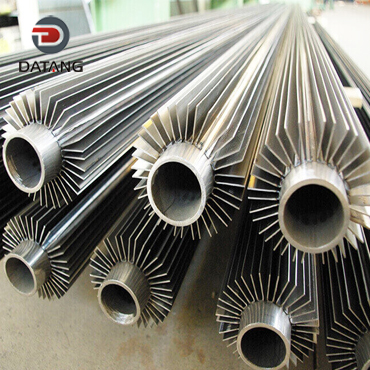
A helical tension wound spiral fin tube consists of an inner tube and outer spiral fins. The fins are typically wound around the inner tube at a specific angle. This structure not only increases the heat transfer area but also enhances the turbulence of the fluid within the tube, thereby improving heat exchange efficiency. As the fluid flows through the inner tube, heat is exchanged between the fins and the inner tube, creating a highly efficient heat exchange process.
- Datasheet
- Drawing
- Certificates
| Sr. No | Particulars | Range |
|---|---|---|
| 1 | Base Tube Material | Stainless Steel, Carbon Steel, Alloy Steel, Titanium, Copper, Duplex Stainless Steel, and Inconel etc. (all material in the theoretical limit) |
| 2 | Base Tube Outside Diameter | 15.88 mm to 219.00 mm OD (⅜” NB pipe to 8” NB pm) |
| 3 | Base Tube Thickness | 1.00 mm And Above |
| 4 | Base Tube Length | 500 mm Min To 30000 mm |
| 5 | Fin Material | Aluminum, Copper, Stainless Steel, Carbon Steel. |
| 6 | Fin Thickness | 0.15mm, 2.00mm |
| 7 | Fin Density | 118 FPM (3 FPI) to 433 FPM (11 FPI) |
| 8 | Fin Height | 6 mm to 25.40 mm |
| 9 | Bare Ends | As per Client Requirement |
| 10 | Manufacturing Capacity | 4,00,000 Meter Per Annum |
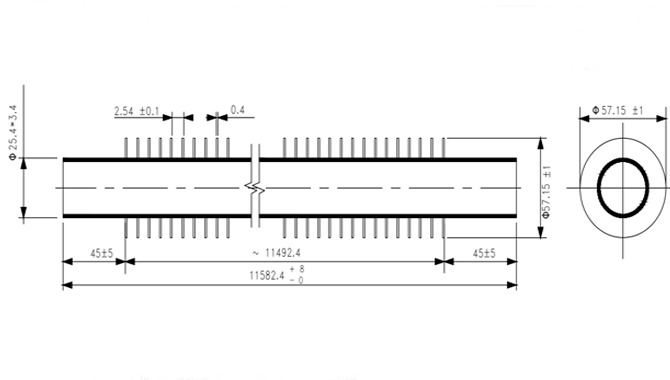

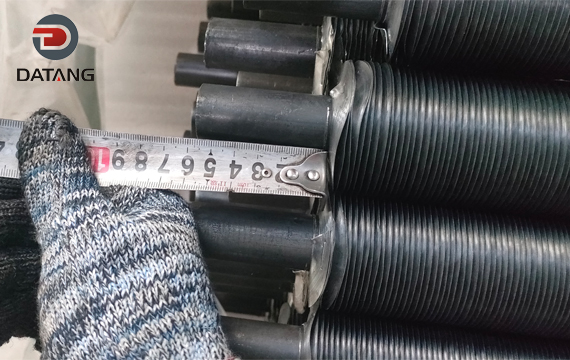
Helical Tension Wound Spiral Fin Tube Appearance Dimension Inspection
Helical tension wound spiral fin tubes appearance dimension inspection is one of the important links to ensure the quality and performance of fin tubes.
The inspection items mainly include fin height, fin spacing, fin thickness, base tube wall thickness and outer diameter, etc.
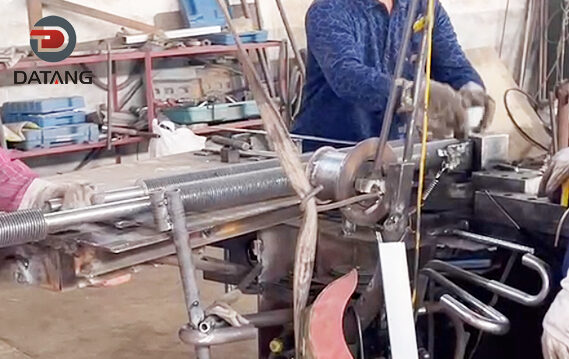
Datang Helical Tension Wound Spiral Fin Tube Bending Processing
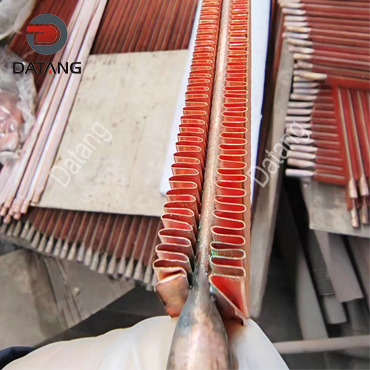
Bending of fin tubes is an important step in the production process of G type fin tubes. Bending is to bend the helical tension wound spiral fin tubes material through specific mechanical equipment to form a suitable curvature to meet different usage requirements.
This step requires strict control of the bending angle and curvature to ensure the fit between the fin and the base tube and the heat dissipation effect.
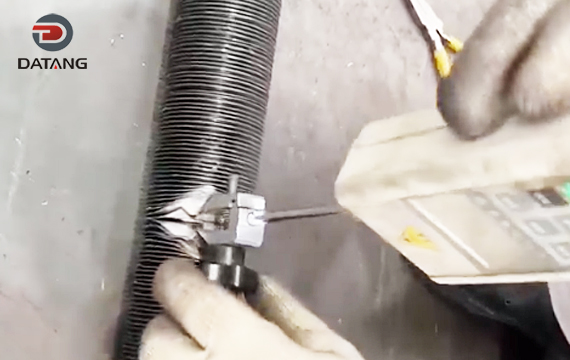
Helical Tension Wound Spiral Fin Tube Pull Off Test
Helical tension wound spiral fin tubes pull-off test is a test used to detect whether the fin tube will fall off when subjected to tension, mainly used to ensure the quality and reliability of the fin tube.
Datang’s this test is very important in the production process because the g type finned tubes will be subjected to various stresses during operation, such as temperature changes and pipe expansion, which may cause the fin to fall off, thereby affecting the performance and safety of the heat exchanger .