


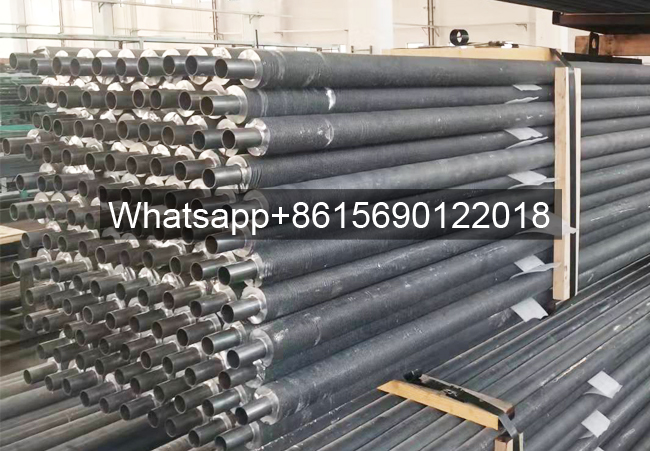
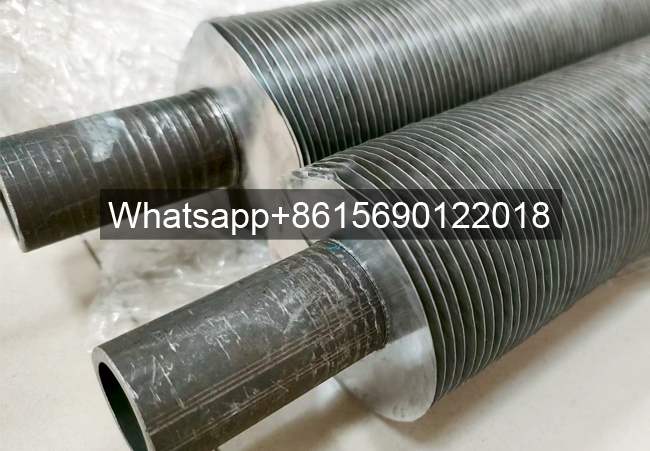
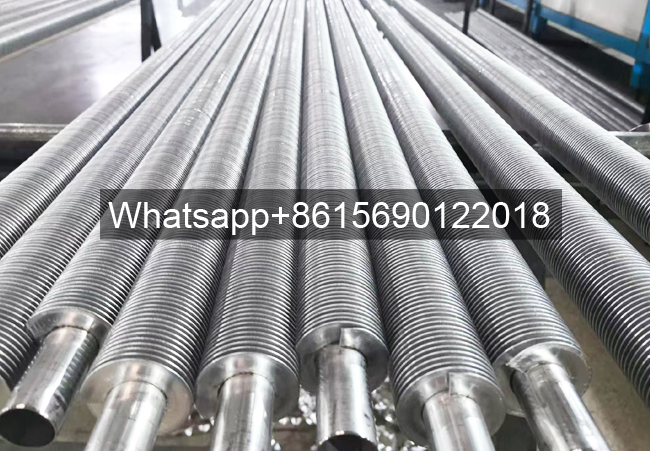
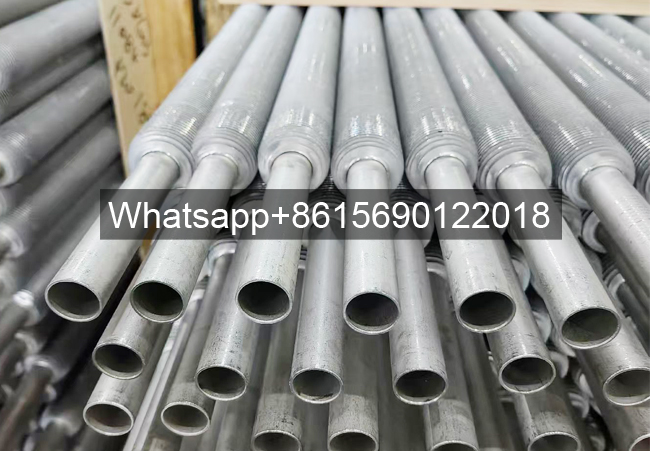
Carbon Steel Finned Metallic Tube ASTM A179
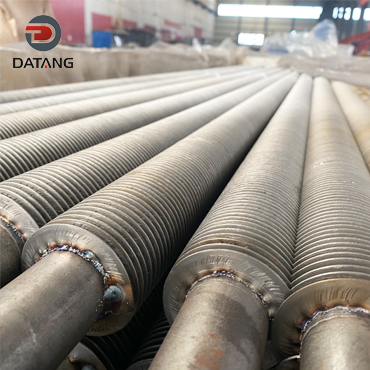
As your trusted partner for carbon steel finned tubes, we are committed to redefining heat exchange efficiency through superior craftsmanship. Our seamless carbon steel finned tubes, built to ASTM A179 standards, enhance heat transfer. ASTM A179 Carbon Steel Finned Tube includes Wound Finned Tube (L, LL, KL),Embedded Finned Tube (G-Fin),High Frequency Welded (HFW) Finned Tube and Extruded Finned Tubes.
- Product Item: ASTM A179 Finned Tube
- Base Tube Material: ASTM A179
- Usage: Heat Exchange Application
Carbon Steel Finned Metallic Tube ASTM A179 Suppliers in China
What is Carbon Steel Finned Metallic Tube ASTM A179?
The carbon steel finned metallic tube ASTM a179 is a workhorse in the heat transfer world. It is specifically designed for tubular heat exchangers, condensers, and similar heat transfer apparatus where low-carbon steel is required for its ductility and thermal conductivity.
ASTM A179 finned tube refers to a heat exchange element made by adding fins to a seamless steel tube conforming to the ASTM A179 standard as the base tube, and then machining it (such as winding, extrusion, welding, etc.). It is the basic tube standard for “Seamless Cold-Drawn Low-Carbon Steel Tubes” used in the manufacture of heat exchangers and condensers.
Material Specifications: ASTM A179. ASTM A179 (ASME SA179) covers minimum wall thickness, seamless cold-drawn low-carbon steel tubing.
Manufacturing Process: The cold-drawing process ensures tight dimensional tolerances and a smooth surface.
Heat Treatment: After the final cold drawing, the tubing is heat-treated at 650°C (1200°F) or higher to ensure its ductility.
Key Characteristics: Excellent thermal conductivity and easy bending/flaring.
Why Add Fins?
Adding fins to standard ASTM A179 tubing significantly increases its external surface area. This is crucial when the heat transfer coefficient of the fluid outside the tube (typically air or gas) is much lower than that of the fluid inside the tube (typically liquid or vapor).
Common Fin Types: Depending on your application, these tubes are equipped with different fin structures:
| Fin Type | Description | Temperature Limit |
|---|---|---|
| G-Fin (Embedded) | Fin strip is wound into a machined groove and locked by back-filling. | Up to 400°C |
| L-Fin (Wrap-on) | Fin strip is formed into an ‘L’ shape and tension-wound around the tube. | Up to 130°C |
| Extruded | A bimetallic tube (often an Al sleeve over the A179 core) is cold-rolled into fins. | Up to 285°C |
| High Frequency Welded | Fin is helically wound and welded to the tube continuously. | Up to 450°C |
ASTM A179 Finned Tube Manufacturing Processes
1. Wound Finned Tube (L, LL, KL)
Features: Fins are typically made of aluminum strip (1060/1100). Due to tension wrapping, the fins are very thin (typically $0.4$ mm).
Limitations: When the base tube outer diameter is too large, tension control of the fins becomes more difficult, therefore base tubes exceeding $2 inches ($50.8$ mm) are rarely seen.
2. Embedded Finned Tube (G-Fin)
Features: High heat transfer limit. Because the fins are embedded in grooves at the bottom, the fin thickness is slightly thicker than the wound fins to increase root strength.
Spacing: Fin spacing is generally dense, typically $7 to $11 fins per inch ($2.3 – 3.6$ mm).
3. High Frequency Welded (HFW) Finned Tube
Features: Widest size range. It can handle extremely large base tubes (such as large-diameter tubes in power plant boilers).
Thickness: Both the fins and the base tube are typically made of carbon steel. To ensure weld strength, the fin thickness is usually above 0.8 mm, and the fin spacing is relatively sparse to prevent weld spatter blockage.
Features: This process is essentially “bimetallic.” The outer aluminum tube is extruded into fins, tightly wrapping around the inner ASTM A179 steel tube.
Advantages: Because the outer aluminum tube completely shields the base tube, its corrosion resistance is the best among the four types.
Carbon Steel Finned Metallic Tube ASTM A179 Technical Advantages
Increased Efficiency: The expanded surface area allows for a smaller, more compact heat exchanger design.
Durability: The ASTM A179 standard provides reliable pressure boundaries, while the fins perform the primary heat exchange function.
Cost-Effectiveness: In non-corrosive environments, carbon steel is more economical than stainless steel or special alloys.
Typical Applications and Characteristics of ASTM A179 Finned Tubes
When ASTM A179 steel tubes are manufactured into finned tubes, they are primarily used in:
1. Air Coolers (Fin Fan Coolers)
2. Boiler Economizers
3. Industrial Heaters
4. Heating, Ventilation, and Air Conditioning (HVAC) Systems
Procurement and Acceptance Recommendations
If you need to procure “Carbon Steel Finned Tube ASTM A179”, please specify the following points in the technical agreement, as ASTM A179 only covers the base tube:
1.Base Tube Standard: Clearly require the base tube to conform to ASTM A179/A179M.
2.Fin Specifications:
- Fin Height
- Fin Spacing (FPI – Fins Per Inch)
- Fin Thickness
- Fin Material (usually the same as the base tube, carbon steel, or aluminum/stainless steel)
- Fining Process (High-Frequency Welding (HFW), Wound, Extruded, etc.)
3.Surface Treatment: Whether galvanizing, painting, or bare tube is required (ASTM A179 base tubes are usually pickled or have a black finish, which is prone to rust; finned tubes often require anti-corrosion treatment).
4.Testing Requirements:
- Non-destructive testing of the base tube (eddy current or hydrostatic testing).
- Fin bonding strength test (Wrap test / Shear test).
- Pressure test.
Ordering Instructions (Checklist)
If you need to request a quote from the supplier, please provide the following parameters:
- Base Tube Specifications: Outer Diameter (OD) × Wall Thickness (WT) × Length (L).
- Fin Parameters: Fin Height, Thickness, Fin Spacing (or Number of Fins per Inch).
- Material Combination: For example, A179 base tube + aluminum fins (1060 Al).
- Type: L-type, G-type, or high-frequency welded.
Carbon Steel Finned Metallic Tube ASTM A179 Quality Checks
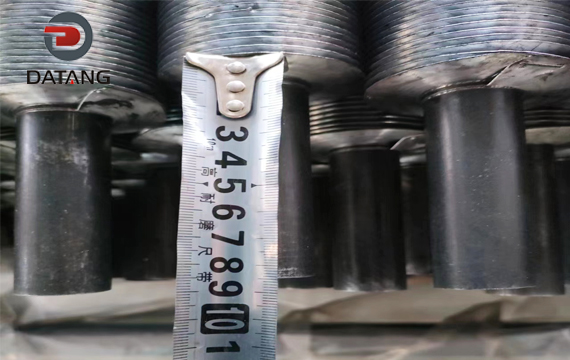
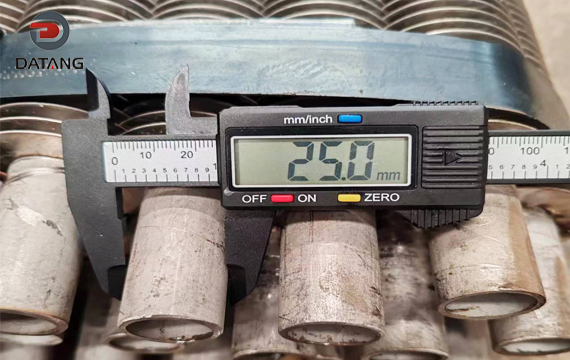
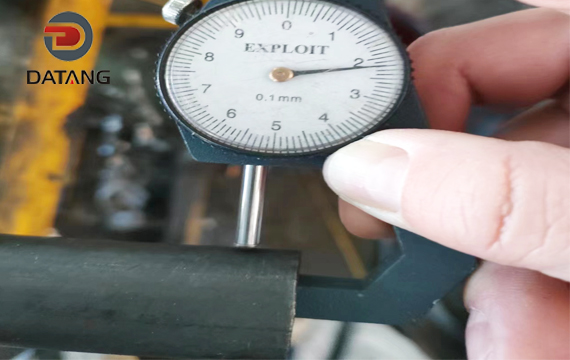
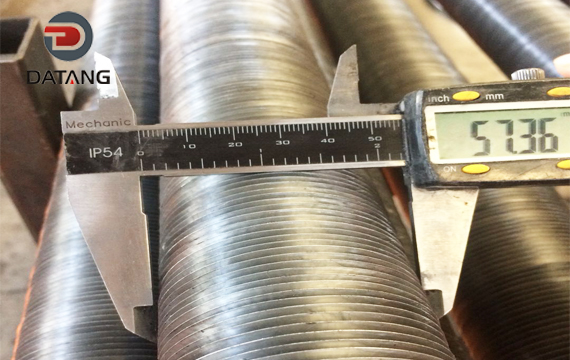
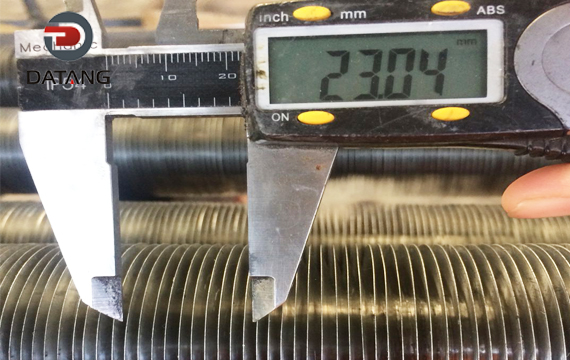
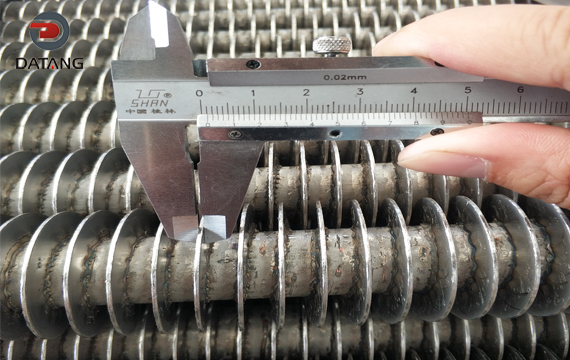
Each of Datang’s carbon steel finned metallic tube ASTM A179 is subjected to stringent quality checks.Inspection and Tests Performed:
1.Chemical Composition inspection。
2.Mechanical Properties Test(Tensile Strength, Yield Strength, Elongation, Flaring, Flattening, Hardness, Impact Test).
3.Surface and Dimension Test.
4.No-destructive Test.
5.Hydrostatic Test.
Please kindly look at the required item below and give us Quotation.
CARBON STEEL FINNED METALLIC TUBE ASTM A179
DIAMETER: 25.4 MM ,
LENGTH: 8500 MM,
WALL THICKNESS: 2.77 MM,
APPLICATION: AIR FIN COOLER;
FFT: MANUFACTURING
PROCESS: SEAMLESS,
FIN MATERIAL: SB221-1060,
SIZE: OD 57.15 X THK 0.55X 394 FIN/M;
Quantity: 80
Related Product
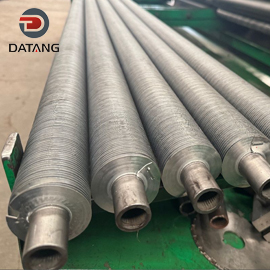
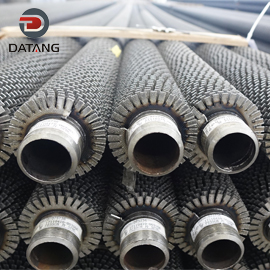
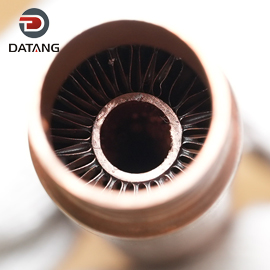
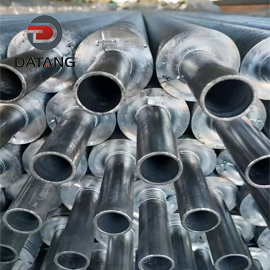
Carbon Steel Finned Metallic Tube ASTM A179 FAQs
A:We possess multiple industry-leading specialized production lines capable of meeting the heat exchange needs of various complex operating conditions:
Comprehensive Process Types: Covering high-frequency welded finned tubes, laser-welded finned tubes, steel-aluminum composite extruded finned tubes, single-metal rolled finned tubes, spiral wound finned tubes (KL/L/LL type), H-type finned tubes, longitudinally welded finned tubes, etc. Whether the operating conditions involve high temperature and high pressure, or require corrosion-resistant heat exchange, we can match the corresponding process solution.
Wide Specification Coverage: High-frequency finned tube specifications range from 19 mm to 273 mm in diameter, with the longest capable of being processed up to 30 meters.
Complete Supporting Processing: The factory is equipped with bending, galvanizing, and anti-corrosion post-processing capabilities. Equipment can process according to drawings, simplifying intermediate steps and improving project collaboration efficiency.
A:ASTM A179 is a cold-drawn seamless low-carbon steel tube. Its advantages are:
Good thermal conductivity: Low-carbon steel has a higher thermal conductivity than stainless steel.
High ductility: The cold-drawing process gives it excellent dimensional accuracy, facilitating fin winding or high-frequency welding without cracking.
Cost-effectiveness: In non-corrosive media, it is the most economical choice for achieving heat exchange.
A:This depends on the base tube material and the fin bonding method:
Base tube limitation: ASTM A179 itself recommends use below 425°C.
Fin limitation: If aluminum fins (L-type) are used, due to differences in thermal expansion, the temperature is typically limited to around 130°C; if high-frequency welded carbon steel fins are used, the temperature can reach above 400°C, depending on the base tube.
A:
A: Wound Fin (L/LL/KL-Fin): Fins are tension-wound around the tube surface. Suitable for air coolers, low cost, but prone to loosening at high temperatures.
Embedded Fin (G-Fin): Fins are embedded in grooves cut into the tube wall. Excellent heat transfer, can withstand higher temperatures, but the base tube wall thickness is somewhat reduced.
High Frequency Welding (HFW): Fins are fused to the tube material, providing the highest structural strength. Suitable for boiler economizers operating under harsh conditions.
Extruded Fin: Bimetallic composite (e.g., carbon steel liner + aluminum fins), offering the best corrosion resistance.
A: Depending on the fin height, thickness, and fin spacing (FPI), the effective heat transfer area of a finned tube is typically 8 to 20 times that of a plain tube.
A:Since ASTM A179 is prone to rust, the following measures are usually taken:
Surface coating: Spraying with anti-rust paint or high-temperature resistant paint.
Hot-dip galvanizing: Overall galvanizing treatment, providing excellent physical and electrochemical protection.
Sacrificial anode: Using aluminum fins (extruded type), allowing the aluminum layer to cover the carbon steel tube to reduce atmospheric corrosion.
A: Dust buildup will severely impede heat transfer.
It is recommended to install a soot blower (steam or sonic).
If the machine is shut down for maintenance, it can be cleaned with high-pressure water jet or compressed air, but care must be taken not to use excessive pressure to avoid blowing the fins down.