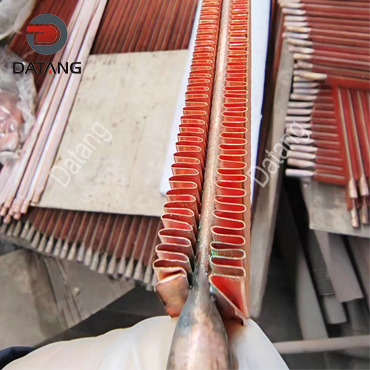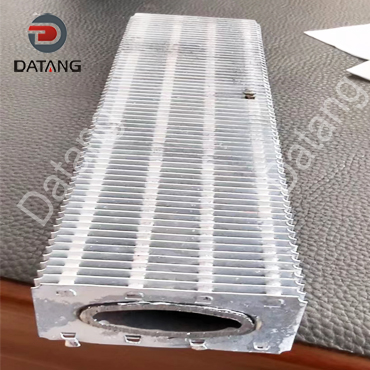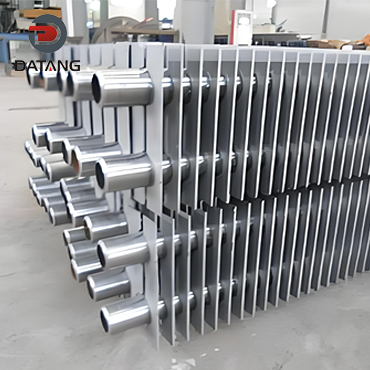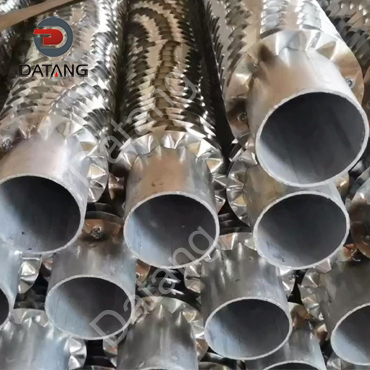


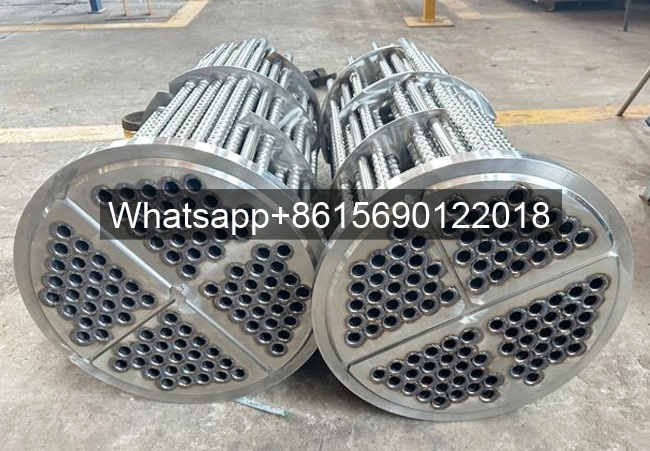
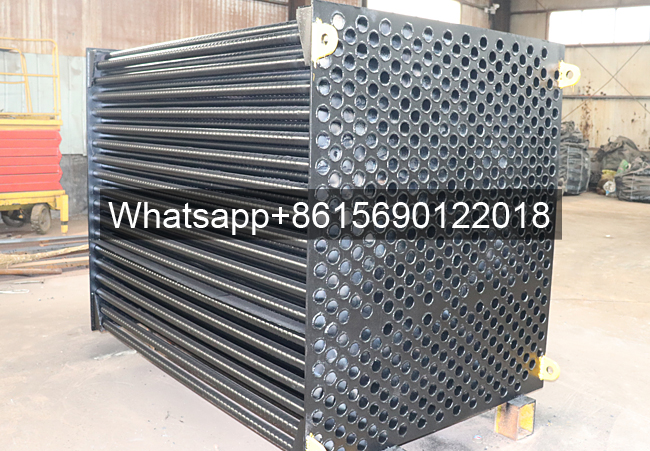
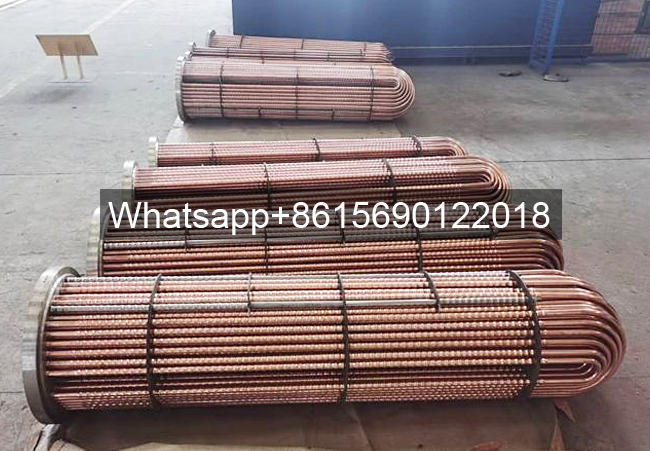
Corrugated Tube Air Preheater Heat Exchanger
Corrugated tube heat exchangers utilize tubes with alternating grooves and ridges to generate turbulence, significantly improving heat transfer efficiency and reducing fouling compared to smooth tube designs.
- Food and Beverage: Heating/cooling viscous products like sauces, purees, soups, and dairy.
- Chemical/Pharmaceutical: Processing, heating, and cooling of complex chemical mixtures.
- Industrial: Steam-water heating, energy recovery, condensation, and general heat transfer for fluids with high fouling potential.
What is a corrugated tube heat exchanger?
Corrugated tube heat exchangers utilize tubes with alternating grooves and ridges to create turbulence, significantly improving heat transfer efficiency and reducing fouling compared to smooth tube designs. These heat exchangers are ideal for highly viscous, fouling, or particulate-laden fluids in the food and chemical industries, and are typically made of stainless steel or special alloys for increased durability. They provide superior heat transfer performance in a smaller volume by disrupting the boundary layer that would otherwise hinder fluid heat transfer.
Corrugated tube heat exchangers offer advantages such as robustness, durability, safety, and reliability, while overcoming the limitations of poor heat transfer capacity and susceptibility to fouling. A disadvantage is their relatively poor oxidation resistance and high-temperature performance. This drawback can be addressed by installing a ceramic heat exchanger at the front end, which effectively solves the problems of high-temperature resistance and corrosion resistance.
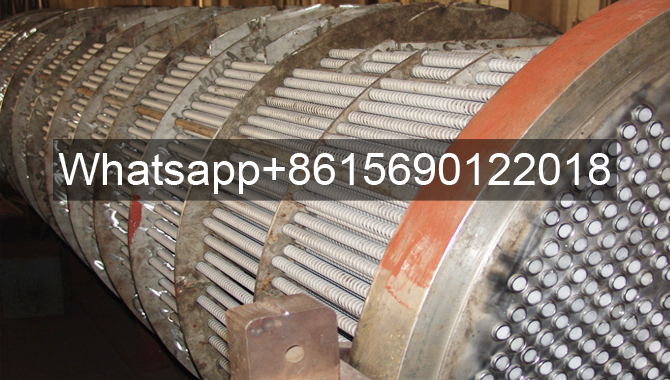
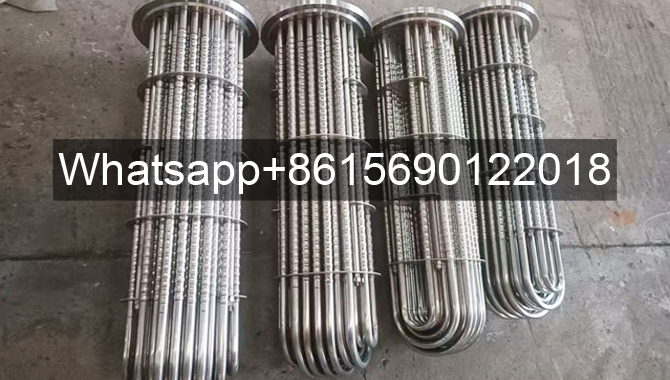
Corrugated tubes are a type of heat transfer tube processed using a special process on the basis of ordinary heat exchange tubes, resulting in a corrugated shape both inside and outside the tube, thus enhancing heat transfer on both sides.
They are divided into two main categories based on their waveform: spiral corrugated and annular corrugated. Due to the difficulty in handling the joints of spiral corrugated tubes, their use is limited, and annular corrugated tubes are now widely used. Annular corrugated tubes are further divided into several categories, including trough-type corrugated tubes, trapezoidal corrugated tubes, tapered tubes, and nodal tubes.
Advantages of Corrugated Tube Heat Exchangers
1. Heat Transfer Efficiency
Due to the crest and trough design of the corrugated tube, the continuous abrupt changes in the cross-section inside and outside the tube create strong turbulence during fluid flow. Even at very low flow velocities, strong turbulence can be formed inside and outside the tube, greatly improving the heat transfer coefficient of the heat exchange tube.
2. Heat Exchange Area
Compared with smooth tubes, the concave-convex structure of the corrugated tube increases the contact area between the hot and cold fluids. Under the same heat exchange capacity, the length of the heat exchange tube can be shortened.
3. Fouling Performance
After the fluid flows through the variable cross-section of the corrugated tube, small vortices are generated, continuously scouring the boundary layer and forming a turbulent state at lower flow velocities. This prevents the accumulation of fouling and hinders the formation of a fouling layer.
RFQ
1.REQUEST FOR Corrugated Tube Heat Exchanger —— January 27, 2026
The equipment has an air inlet flow rate of 46800 Kg/Hr
with the inlet temperature being ambient and the outlet temperature at 90°C.
The gas inlet flow rate is 54000 Kg/Hr
Entering at 180°C
Exiting at 130°C.
The tube specifications are OD 50.8 MM × 3.25 MM thickness,conforming to the BS3059 standard
The cast sleeve has a thickness of 6 MM
Material: 210 GR FG260
There are 20 tubes across the gas flow direction 40 tubes along the gas flow direction
The heating surface area is 395 M²
The total raw weight of the equipment is 42500 KG
Drop wise condensation resulting in better condensation compared to thin film formation in plain tubes. The corrugation provides a channel to the condensate layer formed on the surface of the tube, always providing a fresh new surface for the vapours to condense.
Turbulent flow inside the corrugated tubes due to it’s helical indentation enables a more effective mixing & agitation resulting in a high heat transfer.
Even temperature distribution due to flow pattern, since new layers come in contact with the tube boundary.
Higher periphery turbulence does not allow the suspended solid particle in the tubes to settle, thus giving it a self-cleaning effect which results in reduced fouling that ensures a longer running time. Easier to clean due to intermittent scaling as compared to plain tube.
- Datasheet
- Drawing
- Certificates
| Technical Parameters | Description |
|---|---|
| Design Pressure (Shell Side & Tube Side) | Normally available in three types: 0.6 Mpa, 1.0 Mpa, 1.6 Mpa; can also be specially designed according to user requirements. |
| Operating Temperature Range | -20~350℃ |
| Corrugated Tube Diameter | Generally φ19 and φ25 |
| Shell Material | Carbon steel, stainless steel, etc. |
| Corrugated Tube Material | Stainless steel such as 0Cr18Ni9, 0Cr18Ni12Mo2Ti, 0Cr18Ni14Mo2, etc. |
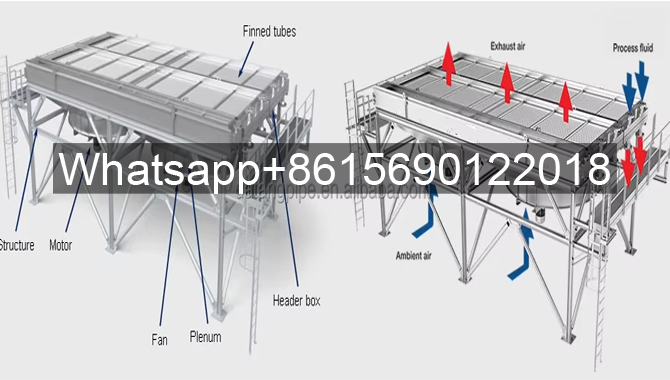

Applications of Corrugated Tube Heat Exchangers
Corrugated tube heat exchangers are mainly suitable for applications where there is heating and cooling heat exchange between the media inside and outside the tubes. The heat exchange tube materials include carbon steel, copper, and thin-walled stainless steel. The inner wall can change the fluid flow state, and the outer wall can increase the heat transfer area and turbulence, thus achieving the purpose of double-sided enhanced heat transfer.
Corrugated Tube Heat Exchanger vs Steel Tube Shell-and-Tube Heat Exchanger
The heat transfer coefficient of a corrugated tube heat exchanger is 1.2 to 2.4 times that of a conventional shell-and-tube heat exchanger. Due to the special corrugated cross-section of the corrugated heat exchange tube, it has excellent compensation capabilities, and the tube sheet thermal stress will not cause failure due to cracking caused by high tensile stress.
Corrugated Tube Heat Exchanger Package
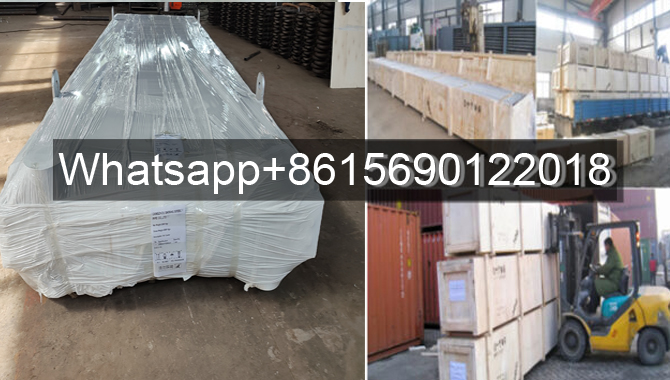
Datang corrugated tube heat exchangers are meticulously encased in robust, high-quality wooden cases, perfectly designed to withstand a multitude of shipping methods, be it by sea, rail, or expedited courier services. You can have complete confidence that your product will be delivered in pristine condition, safeguarded against any potential transit damage.