

Embedded Finned Tubes for Heat Exchangers in Power Plants
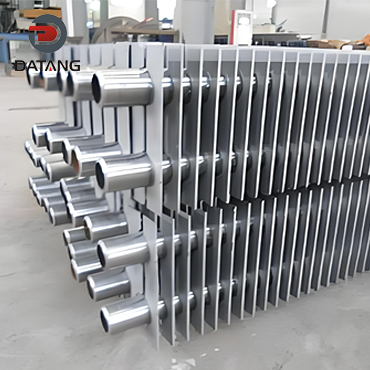
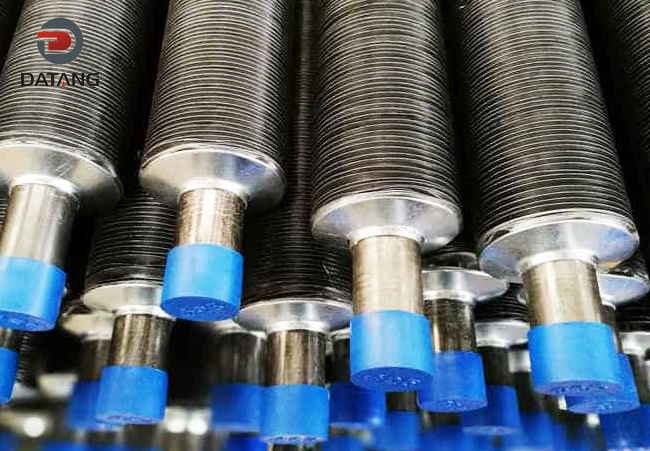
In power plant heat exchangers, Embedded finned tubes significantly increases the outer surface area of the tube, enhancing heat transfer and making it suitable for high-temperature and high-pressure equipment such as boilers and air coolers.
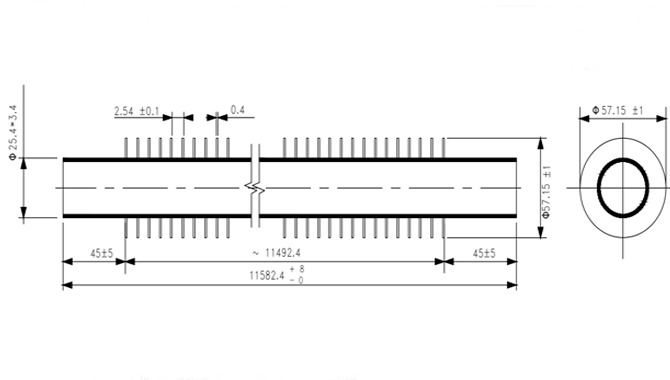
- Tube Material:SA179,Tube Diameter:15.88-50.80 mm,Wall Thickness:1.0-3.0 mm
- Fin Material:Aluminum,Fin Thickness:0.4-0.5 mm,Fin Pitch:2.1-6.0 mm,Fin Height:6.35-25.4 mm
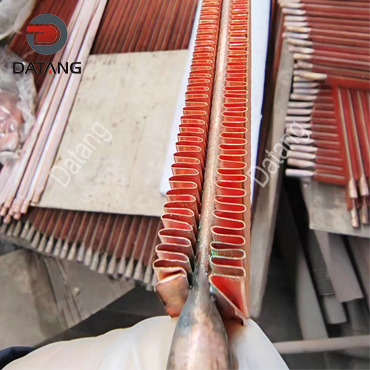
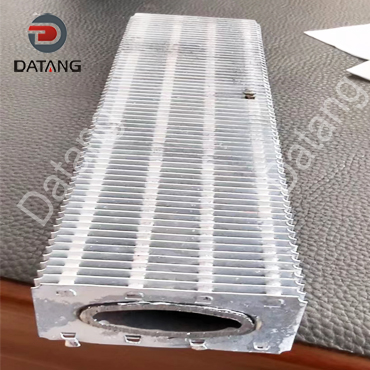
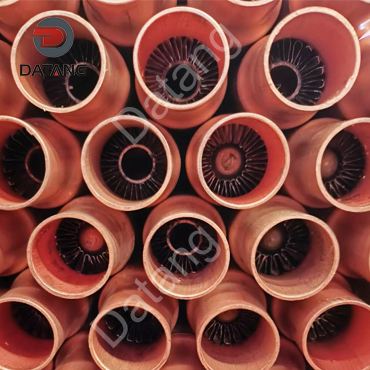
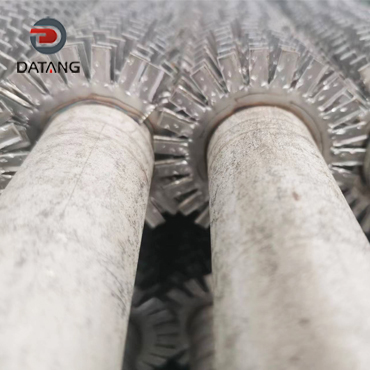
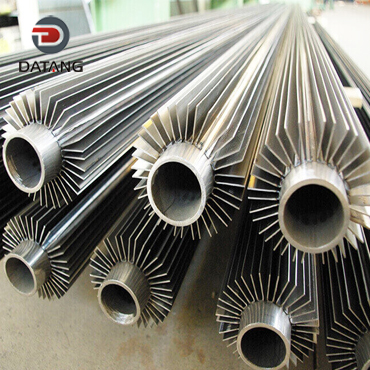
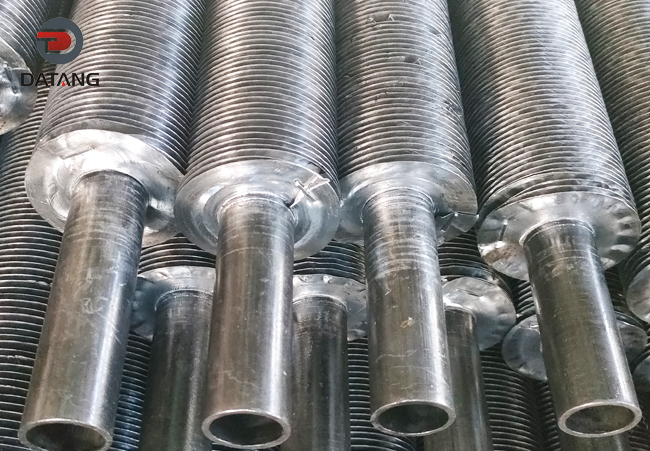
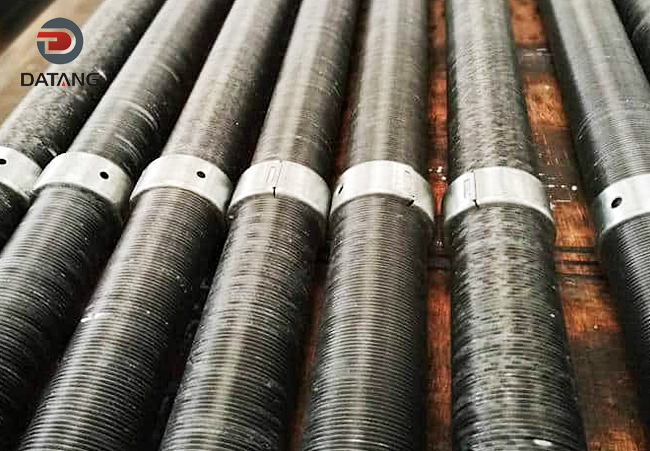
Embedded finned tubes (also known as g type finned tube or inlaid finned tubes) are heat transfer elements that enhance heat exchange efficiency by mechanically embedding pre-stamped fins into grooves in the base tube.
In power plant heat exchangers, Embedded finned tubes significantly increases the outer surface area of the tube, enhancing heat transfer and making it suitable for high-temperature and high-pressure equipment such as boilers and air coolers.
Structural Characteristics and Manufacturing Process:
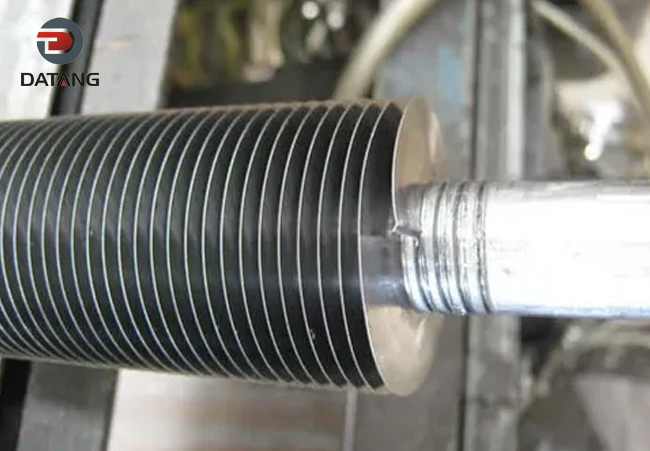
The fins and base tube of embedded finned tubes are tightly nested and fixed together by mechanical force, forming an integrated metal structure. This eliminates the need for welding, reducing the risk of leakage and improving corrosion resistance and overall strength.
Manufacturing involves machining helical grooves or channels on the surface of the base tube, then embedding the fin strip (such as aluminum or steel) and applying a pre-tensioning force. To prevent rebound and detachment, the fin ends are usually welded for secure fixation. This process requires high machining precision to ensure tight contact, but it increases costs.
Advantages in Power Plant Heat Exchangers:
This structure offers a high heat transfer coefficient and good thermal stability, effectively handling the high-pressure and high-temperature conditions of power plant equipment; its integrated design reduces the risk of leakage and requires less maintenance.
For example, in flue gas waste heat recovery systems, embedded finned tubes can improve heat exchange efficiency and reduce energy loss.
Comparison with Other Finned Tubes:
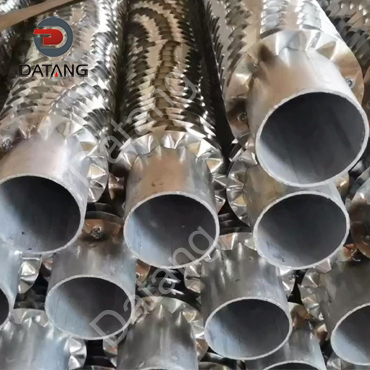
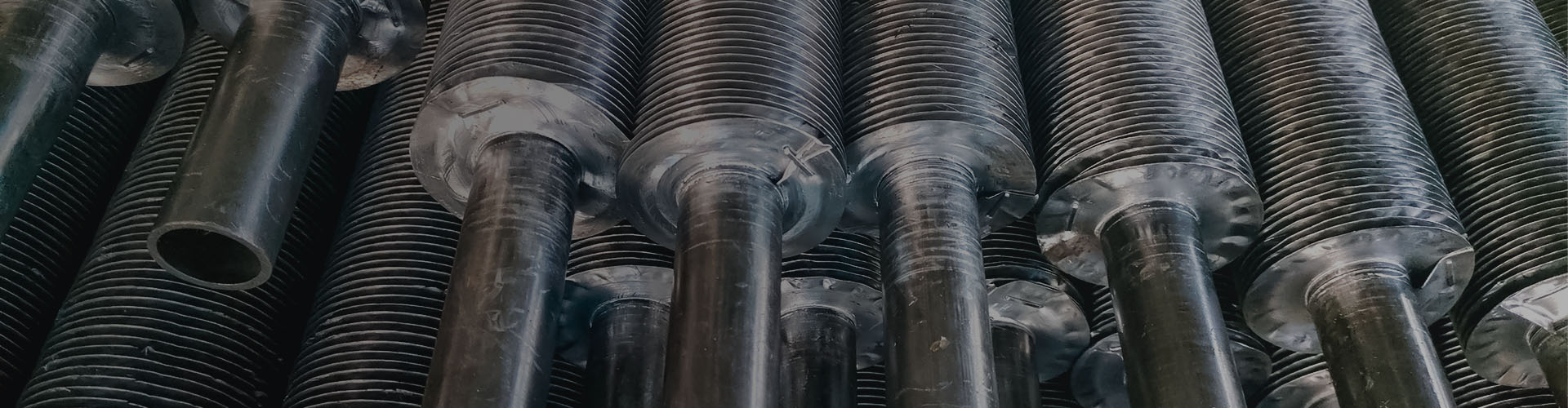
Compared to expanded finned tubes, embedded finned tubes have a larger contact area but require less material ductility; while serrated finned tubes focus more on enhancing fluid turbulence and are suitable for gas heat exchange, the embedded structure prioritizes reliability under high pressure.
In power plant applications, the appropriate type should be selected based on pressure, temperature, and fluid characteristics.
- Datasheet
- Drawing
- Certificates
| Tube Material | Wall Thickness | Tube Diameter | Tube Length |
| All types | From 1.0 to 3.0 mm | 15.88 / 50.80 mm | Max. 18500 mm |
| 0.039 in to 0.118 in | 0.625 / 2 in | 728 in | |
| Fin Strip Material | Fin Strip Thickness | Fin Pitch | Production Capacity |
| Aluminum/Copper | From 0.4 to 0.5 mm | From 2.1 to 3.0 mm | 12000 m per day |
| From 0.015 to 0.019 in | From 8 to 11 fins/inch |

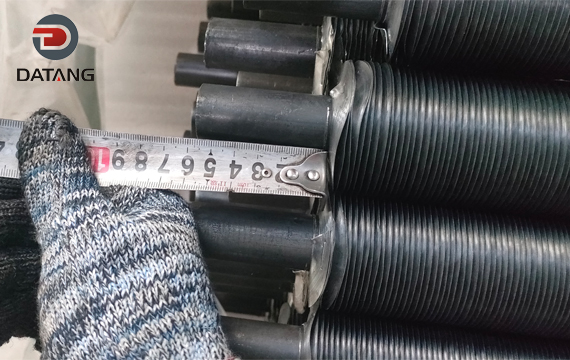
Embedded Finned Tubes for Heat Exchangers in Power Plants Appearance Dimension Inspection
Embedded fin tube appearance dimension inspection is one of the important links to ensure the quality and performance of fin tubes.
The inspection items mainly include fin height, fin spacing, fin thickness, base tube wall thickness and outer diameter, etc.
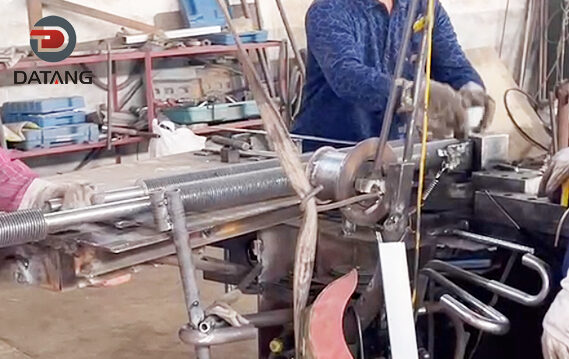
Datang Embedded Fin Tube Bending Processing
Bending of fin tubes is an important step in the production process of G type fin tubes. Bending is to bend the embedded fin tube material through specific mechanical equipment to form a suitable curvature to meet different usage requirements.
This step requires strict control of the bending angle and curvature to ensure the fit between the fin and the base tube and the heat dissipation effect.
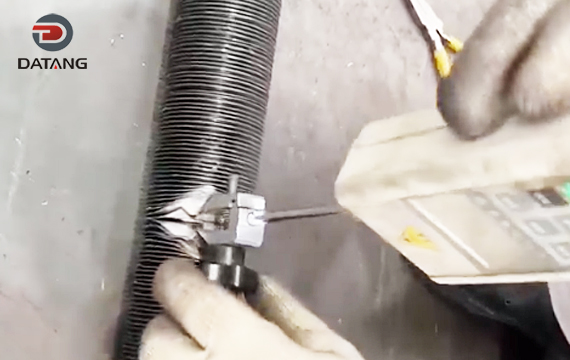
G Type Embedded Finned Tube Pull Off Test
G type embedded finned tube pull-off test is a test used to detect whether the fin tube will fall off when subjected to tension, mainly used to ensure the quality and reliability of the fin tube.
Datang’s this test is very important in the production process because the g type finned tubes will be subjected to various stresses during operation, such as temperature changes and pipe expansion, which may cause the fin to fall off, thereby affecting the performance and safety of the heat exchanger .